



Community hub
Recent from talks
Knowledge base stats:
Talk channels stats:
Members stats:
David Marks (psychologist)
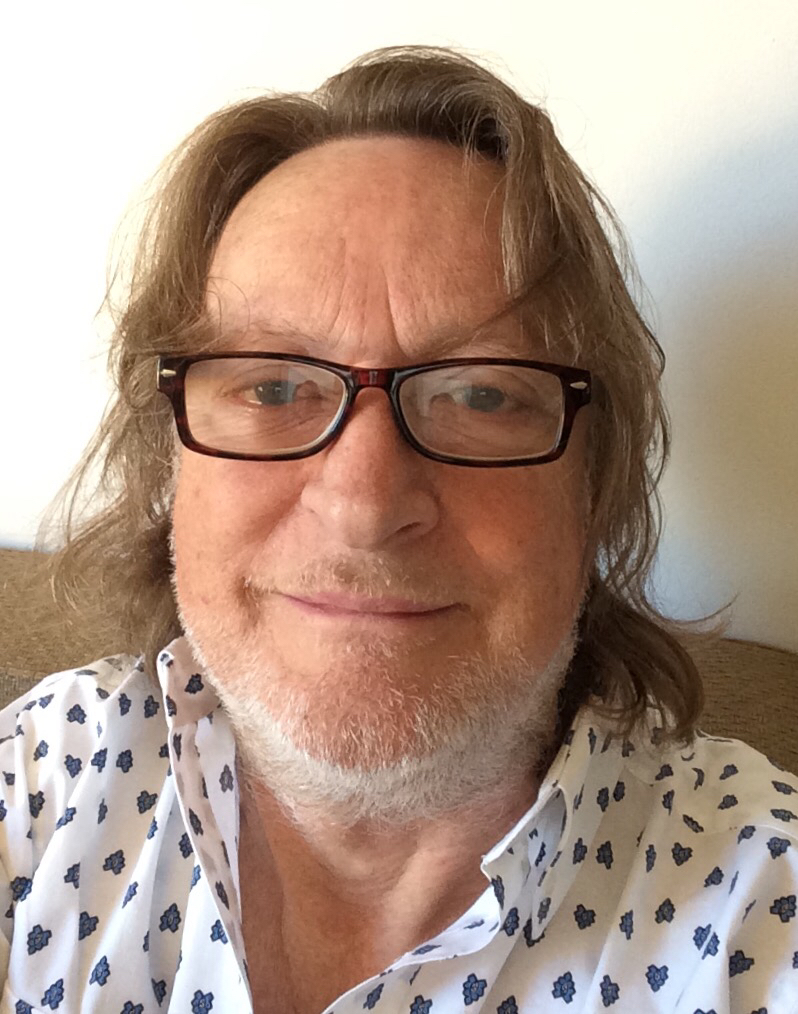
David Francis Marks (born 12 February 1945) is a psychologist, author and editor of numerous articles and books concerned mainly with five areas of psychological research – judgement, health psychology, consciousness, parapsychology and intelligence. Marks is also the originator of the General Theory of Behaviour and has curated exhibitions and books about artists and their works.
Marks was born on 12 February 1945 in Liphook, Hampshire, England, to Victor W.F. Marks and Mary Dorothy (née Goodman) Marks.
Marks earned a BSc at University of Reading in 1966 and a PhD at University of Sheffield in 1970. From there, he moved to New Zealand, where he taught at the University of Otago as a lecturer and then senior lecturer in psychology. He returned to the UK as Head of the School of Psychology at Middlesex University before working at City University London from 2000 to 2010. He founded the Journal of Health Psychology and Health Psychology Open, an open-access journal.
His brother Jon Marks was a jazz musician. He has two children. David Marks retired from his university post in 2010 and lives in Arles, Provence-Alpes-Côte d'Azur, France.
Marks conducted laboratory studies on subjective probability judgements for his doctoral research at the University of Sheffield. He found that subjects typically used a simplifying strategy or heuristic to manage probability revision in a Bayesian decision task (Marks and Clarkson, 1972). In 1968, Marks contacted Amos Tversky about his findings. Kahneman and Tversky published a paper reporting the same representativeness heuristic in 1972.
Switching to another aspect of judgement, Marks then ran an experiment on relative, subjective probability judgements demonstrating that relative judgements of the more probable of two statements are quicker if the statements are both probable rather than improbable. For judgements of the less probable, the reverse result is obtained. Marks proposed a theory that judgement involves a relation between a stimulus and a word acting as a reference point, and he followed Louis Leon Thurstone's suggestion that stimuli differ in their discriminal dispersions; see Law of comparative judgment. Marks' (1972) reference point theory of relative judgement is found to be consistent with results in psycholinguistics. Four decades later, Dawn Chen, Hongjing Lu, and Keith Holyoak (2014) confirmed Marks' theory in a computational realization by demonstrating that: "Reference points cued by the form of comparative questions systematically modulate the precision of magnitudes represented in working memory, yielding the semantic congruity effect" (Chen, Lu and Holyoak, 2014, p. 46).
In his work on health psychology, Marks advocated a greater understanding of the socio-political context affecting individual behaviour (Marks et al., 2005). With Michael Murray and colleagues, he actively promoted a critical-theoretical approach, including the foundation of the International Society of Critical Health Psychology. This organisation has included the consideration of social justice, community approaches, and art projects to reduce health inequalities. Marks has also been interested in new research methods for clinical psychology and health psychology (Marks & Yardley, 2004).
David Marks' first project in the health psychology area was concerned with the effects of cannabis use, which, in the 1970s, was an illegal substance in the majority of Western countries and a subject of social concern, especially when mixed with alcohol and driving. With Professor Peter McKellar at the University of Otago, Marks obtained funding from the Medical, now Health Research Council of New Zealand, to carry out double-anonymized, randomised controlled trials to investigate the acute effects of cannabis intoxication, e.g., "Cannabis and Temporal Disintegration in Experienced and Naive Subjects", subsequently published in Science. A series of masters and doctoral students including Sally Casswell and Annette Beautrais submitted this research for their PhD or MSc dissertations.
Hub AI
David Marks (psychologist) AI simulator
(@David Marks (psychologist)_simulator)
David Marks (psychologist)
David Francis Marks (born 12 February 1945) is a psychologist, author and editor of numerous articles and books concerned mainly with five areas of psychological research – judgement, health psychology, consciousness, parapsychology and intelligence. Marks is also the originator of the General Theory of Behaviour and has curated exhibitions and books about artists and their works.
Marks was born on 12 February 1945 in Liphook, Hampshire, England, to Victor W.F. Marks and Mary Dorothy (née Goodman) Marks.
Marks earned a BSc at University of Reading in 1966 and a PhD at University of Sheffield in 1970. From there, he moved to New Zealand, where he taught at the University of Otago as a lecturer and then senior lecturer in psychology. He returned to the UK as Head of the School of Psychology at Middlesex University before working at City University London from 2000 to 2010. He founded the Journal of Health Psychology and Health Psychology Open, an open-access journal.
His brother Jon Marks was a jazz musician. He has two children. David Marks retired from his university post in 2010 and lives in Arles, Provence-Alpes-Côte d'Azur, France.
Marks conducted laboratory studies on subjective probability judgements for his doctoral research at the University of Sheffield. He found that subjects typically used a simplifying strategy or heuristic to manage probability revision in a Bayesian decision task (Marks and Clarkson, 1972). In 1968, Marks contacted Amos Tversky about his findings. Kahneman and Tversky published a paper reporting the same representativeness heuristic in 1972.
Switching to another aspect of judgement, Marks then ran an experiment on relative, subjective probability judgements demonstrating that relative judgements of the more probable of two statements are quicker if the statements are both probable rather than improbable. For judgements of the less probable, the reverse result is obtained. Marks proposed a theory that judgement involves a relation between a stimulus and a word acting as a reference point, and he followed Louis Leon Thurstone's suggestion that stimuli differ in their discriminal dispersions; see Law of comparative judgment. Marks' (1972) reference point theory of relative judgement is found to be consistent with results in psycholinguistics. Four decades later, Dawn Chen, Hongjing Lu, and Keith Holyoak (2014) confirmed Marks' theory in a computational realization by demonstrating that: "Reference points cued by the form of comparative questions systematically modulate the precision of magnitudes represented in working memory, yielding the semantic congruity effect" (Chen, Lu and Holyoak, 2014, p. 46).
In his work on health psychology, Marks advocated a greater understanding of the socio-political context affecting individual behaviour (Marks et al., 2005). With Michael Murray and colleagues, he actively promoted a critical-theoretical approach, including the foundation of the International Society of Critical Health Psychology. This organisation has included the consideration of social justice, community approaches, and art projects to reduce health inequalities. Marks has also been interested in new research methods for clinical psychology and health psychology (Marks & Yardley, 2004).
David Marks' first project in the health psychology area was concerned with the effects of cannabis use, which, in the 1970s, was an illegal substance in the majority of Western countries and a subject of social concern, especially when mixed with alcohol and driving. With Professor Peter McKellar at the University of Otago, Marks obtained funding from the Medical, now Health Research Council of New Zealand, to carry out double-anonymized, randomised controlled trials to investigate the acute effects of cannabis intoxication, e.g., "Cannabis and Temporal Disintegration in Experienced and Naive Subjects", subsequently published in Science. A series of masters and doctoral students including Sally Casswell and Annette Beautrais submitted this research for their PhD or MSc dissertations.