
Recent from talks
Dawei Port Project
Knowledge base stats:
Talk channels stats:
Members stats:
Dawei Port Project
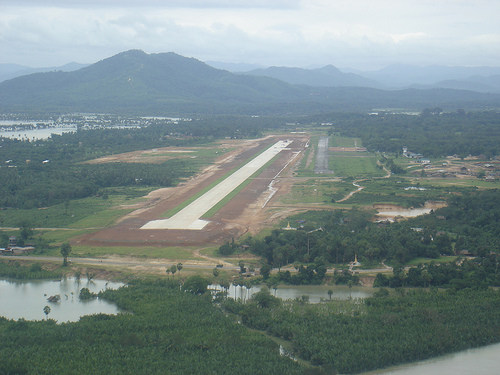
The Dawei deep-sea port and special economic zone (Dawei SAR), is an infrastructure project in Burma. Construction started but was suspended in 2013. Plans to resume construction were announced in August 2015. It is in Dawei, the capital of the Tanintharyi Region. It aims to transform Dawei into Myanmar's and Southeast Asia's largest industrial and trade zone. It aims to develop local businesses, provide local employment opportunities, and stimulate the construction of infrastructure. It is notable for its tumultuous history, as many financial and human rights violations have arisen during the project's history. If completed, it will be the largest industrial zone in Southeast Asia.
The Dawei Special Economic Zone Law, officially known as The State Peace and Development Council Law No. 17, was passed on 27 January 2011. The law has a number of notable tax breaks for investors and developers, in order to spur investment in the region. The law stipulates that two zones, the promotion zone and the exempted zone, are to exist within the special economic zone itself. The two zones differ in their tax breaks.
Investors in the project are exempt from income taxes on their businesses for their first seven years of operation in the exempted zone, and for their first five years of operation in the promotion zone. In both zones, investors receive 50% relief in their second five years of operation, and 50% relief on all profits in their third year of operation. Developers have all of the same stipulations, except they are exempted from income tax in their first eight years of operation.
Developers are exempted from customs duties for construction materials, machinery, equipment, heavy machinery, and vehicles. Investors have the same exemption in the exempted zone, but in the promotion zone pay 50% of normal duties for the first five years of transport into Dawei.
Businesses in the Dawei port project have been granted a number of rights by the law which are not common elsewhere in Burma. They are given the right to open foreign bank accounts, and have relaxed currency exchange restrictions. Additionally, foreign companies and investors are allowed to invest in the project, and the government does not regulate product pricing. The law also stipulates that the government will not seize, or nationalize businesses in the zone.
The project, as stipulated by The Dawei Special Economic Zone Law, aims to construct many differentiated zones. High-tech industrial zones, information technology zones, export processing zones, port area zones, transportation zones, technological research & development zones, service business zones, sub-trading zones, and governmental zones are all part of the construction project. In the construction of these zones, law also stipulates that investors and developers must employ local workers. Businesses are supposed to find these workers via labor recruitment agents. Twenty-five percent of their non-specialist workforce is required to be employed by Burmese citizens during their first five years, 50% during their second five years, and 75% during their third five years. Businesses are also required to supply adequate training for all of their employees. The project is also set to include a 160 kilometer-long two lane super highway that connects the zone to the Thai-Burma border. A large amount of infrastructure is required to be built as well, so a high-speed railway, an electric grid, a dockyard, a deep sea port, and oil and gas pipelines are slated for construction. The entirety of the special economic zone is slated to be 196 square kilometers, and will be ten times larger than Thailand's largest industrial zone.
Thailand and Burma signed a memorandum of understanding (MOU) to develop the Dawei Special Economic Zone (ထားဝယ်အထူးစီးပွားရေးဇုန်) in 2008. Another MOU was signed in July 2012. The Burmese and Thai governments then agreed to complete the project by 2015 at an ASEAN summit in November 2012. The estimated total costs of the project were US$8.6 billion, but those estimates have since risen to US$10.7 billion.
Burma initially granted Italian-Thai Development PCL (ITD) a 75-year concession in 2008 to construct the project, and attract investment, as a part of the first memorandum of understanding. The investment required to develop the zone at the time was estimated to total US$8.6 billion, and require 1,000 laborers. Progress slowed due to a lack of funds, but the Thai and Burmese government opted to continue construction despite this. In 2012, Max Burma Conglomerate confirmed that it would pull out, giving up its 25% stake in the project. In 2013, after failing to attract enough investment, and failing to commit to a power source, ITD was stripped of its position as the sole leader of development in the zone. The Thai and Burmese governments temporarily seized responsibility from ITD, in an attempt to rescue the floundering project. Han Sein, the Chairman of the Dawei Special Economic Zone Management Committee told reporters, "In this economic zone, there needs to be a lot of investors." The ITD was then required to halt activities so that the three international auditing companies Ernst & Young, PricewaterhouseCoopers, and Deloitte could check to see if the project was being built to international standards. Up until the suspension of construction in 2013, the ITD had spent US$189 million on the project.
Hub AI
Dawei Port Project AI simulator
(@Dawei Port Project_simulator)
Dawei Port Project
The Dawei deep-sea port and special economic zone (Dawei SAR), is an infrastructure project in Burma. Construction started but was suspended in 2013. Plans to resume construction were announced in August 2015. It is in Dawei, the capital of the Tanintharyi Region. It aims to transform Dawei into Myanmar's and Southeast Asia's largest industrial and trade zone. It aims to develop local businesses, provide local employment opportunities, and stimulate the construction of infrastructure. It is notable for its tumultuous history, as many financial and human rights violations have arisen during the project's history. If completed, it will be the largest industrial zone in Southeast Asia.
The Dawei Special Economic Zone Law, officially known as The State Peace and Development Council Law No. 17, was passed on 27 January 2011. The law has a number of notable tax breaks for investors and developers, in order to spur investment in the region. The law stipulates that two zones, the promotion zone and the exempted zone, are to exist within the special economic zone itself. The two zones differ in their tax breaks.
Investors in the project are exempt from income taxes on their businesses for their first seven years of operation in the exempted zone, and for their first five years of operation in the promotion zone. In both zones, investors receive 50% relief in their second five years of operation, and 50% relief on all profits in their third year of operation. Developers have all of the same stipulations, except they are exempted from income tax in their first eight years of operation.
Developers are exempted from customs duties for construction materials, machinery, equipment, heavy machinery, and vehicles. Investors have the same exemption in the exempted zone, but in the promotion zone pay 50% of normal duties for the first five years of transport into Dawei.
Businesses in the Dawei port project have been granted a number of rights by the law which are not common elsewhere in Burma. They are given the right to open foreign bank accounts, and have relaxed currency exchange restrictions. Additionally, foreign companies and investors are allowed to invest in the project, and the government does not regulate product pricing. The law also stipulates that the government will not seize, or nationalize businesses in the zone.
The project, as stipulated by The Dawei Special Economic Zone Law, aims to construct many differentiated zones. High-tech industrial zones, information technology zones, export processing zones, port area zones, transportation zones, technological research & development zones, service business zones, sub-trading zones, and governmental zones are all part of the construction project. In the construction of these zones, law also stipulates that investors and developers must employ local workers. Businesses are supposed to find these workers via labor recruitment agents. Twenty-five percent of their non-specialist workforce is required to be employed by Burmese citizens during their first five years, 50% during their second five years, and 75% during their third five years. Businesses are also required to supply adequate training for all of their employees. The project is also set to include a 160 kilometer-long two lane super highway that connects the zone to the Thai-Burma border. A large amount of infrastructure is required to be built as well, so a high-speed railway, an electric grid, a dockyard, a deep sea port, and oil and gas pipelines are slated for construction. The entirety of the special economic zone is slated to be 196 square kilometers, and will be ten times larger than Thailand's largest industrial zone.
Thailand and Burma signed a memorandum of understanding (MOU) to develop the Dawei Special Economic Zone (ထားဝယ်အထူးစီးပွားရေးဇုန်) in 2008. Another MOU was signed in July 2012. The Burmese and Thai governments then agreed to complete the project by 2015 at an ASEAN summit in November 2012. The estimated total costs of the project were US$8.6 billion, but those estimates have since risen to US$10.7 billion.
Burma initially granted Italian-Thai Development PCL (ITD) a 75-year concession in 2008 to construct the project, and attract investment, as a part of the first memorandum of understanding. The investment required to develop the zone at the time was estimated to total US$8.6 billion, and require 1,000 laborers. Progress slowed due to a lack of funds, but the Thai and Burmese government opted to continue construction despite this. In 2012, Max Burma Conglomerate confirmed that it would pull out, giving up its 25% stake in the project. In 2013, after failing to attract enough investment, and failing to commit to a power source, ITD was stripped of its position as the sole leader of development in the zone. The Thai and Burmese governments temporarily seized responsibility from ITD, in an attempt to rescue the floundering project. Han Sein, the Chairman of the Dawei Special Economic Zone Management Committee told reporters, "In this economic zone, there needs to be a lot of investors." The ITD was then required to halt activities so that the three international auditing companies Ernst & Young, PricewaterhouseCoopers, and Deloitte could check to see if the project was being built to international standards. Up until the suspension of construction in 2013, the ITD had spent US$189 million on the project.
Recent media