
Recent from talks
DeSoto (automobile)
Knowledge base stats:
Talk channels stats:
Members stats:
DeSoto (automobile)
DeSoto (sometimes De Soto) was an American automobile brand that was manufactured and marketed by the DeSoto division of Chrysler Corporation from 1928 to the 1961 model year. More than two million passenger cars and trucks bore the DeSoto brand in North American markets during its existence.
The De Soto Motor Car Company was formed in Auburn, Indiana, in November 1912, by L.M. Field, Hayes Fry and Glenn Fry of Iowa City, Iowa, and V.H. Van Sickle and H.J. Clark of Des Moines, Iowa. It was a subsidiary of the Zimmerman Manufacturing Company of Auburn, which had been founded in 1886 as a manufacturer of horse buggies. It entered automobile production in 1908 with a line of high wheel automobiles and from 1912 to 1916 with light high wheel trucks, but switched to conventional cars and trucks around the time it was bought by the Auburn Automobile Company. Advertisements listed the 1910 Zimmerman Z-35 at $650 to $1,500 ($21,935 to $50,620 in 2024 dollars ).
The De Soto Company was started with $20,000 ($636,296 in 2024 dollars ) and produced two models. The De Soto Six was a rebadged version of the Zimmerman and was listed at $2,185 ($69,515 in 2024 dollars ) which was more expensive than the Zimmerman on which it was based. It offered electric lights and a compressed air engine starter, which a customer could decline for a credit of $100 ($3,181 in 2024 dollars ). In 1914, the De Soto Six was joined by a two-cylinder, two-passenger, inline-seating cyclecar, which listed at $385 ($12,086 in 2024 dollars ). There were plans to move manufacturing to Fort Wayne in 1915 and rename the company as Motorette, but when there were deaths in the Zimmerman family the company was bought by Auburn Automobile Company.
The DeSoto marque was founded by Walter Chrysler on August 4, 1928, to compete with Pontiac, Studebaker, Hudson and Willys in the mid-price class. Introduced for the 1929 model year, DeSoto served as a lower-priced version of Chrysler products, with Dodge positioned above DeSoto, while Plymouth was added as the entry-level product of the Chrysler hierarchy in 1928.
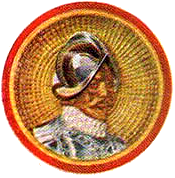
The marque was named after the Spanish explorer Hernando de Soto, who led the first European expedition deep into the territory of the modern-day United States (Florida, Georgia, Alabama, and Mississippi) and was the first documented European to have crossed the Mississippi River. The DeSoto logo featured a stylized image of the explorer.
In 1929 a total of 81,065 single-model DeSoto Sixes were produced, a first-year production record in the U.S. that stood for 31 years until eclipsed by the 1960 Ford Falcon. However, shortly after the DeSoto was introduced, Chrysler completed its purchase of Dodge Brothers, giving the company two mid-priced makes. Initially, the two-make strategy was relatively successful, as Chrysler was hoping to benefit from the market reputation Dodge had when it was run by Horace Elgin Dodge and John Francis Dodge, with DeSoto priced below Dodge models. Despite the economic times, DeSoto sales were relatively healthy, equaling Dodge at around 25,000 units in 1932.
In 1933, Chrysler reversed the market positions of the two marques in hopes of boosting Dodge sales, ranking DeSoto above Dodge. As a result, the DeSoto received Chrysler's streamlined 1934 Airflow bodies, but on a shorter wheelbase; the design proved unpopular with consumers. Unlike Chrysler, which still had more traditional models on which to fall back, DeSoto was hobbled by the Airflow design until its 1935 Airstream arrived.
Aside from its Airflow models, DeSoto's 1942 model is probably its second-most memorable model from its early years, when the cars were fitted with powered pop-up headlights, a first for a North American mass-production vehicle. (The Cord 810 introduced dashboard hand-cranked hidden headlamps in the 1936 model year.) DeSoto marketed the feature as "Air-Foil" lights ("Out of Sight Except at Night").
Hub AI
DeSoto (automobile) AI simulator
(@DeSoto (automobile)_simulator)
DeSoto (automobile)
DeSoto (sometimes De Soto) was an American automobile brand that was manufactured and marketed by the DeSoto division of Chrysler Corporation from 1928 to the 1961 model year. More than two million passenger cars and trucks bore the DeSoto brand in North American markets during its existence.
The De Soto Motor Car Company was formed in Auburn, Indiana, in November 1912, by L.M. Field, Hayes Fry and Glenn Fry of Iowa City, Iowa, and V.H. Van Sickle and H.J. Clark of Des Moines, Iowa. It was a subsidiary of the Zimmerman Manufacturing Company of Auburn, which had been founded in 1886 as a manufacturer of horse buggies. It entered automobile production in 1908 with a line of high wheel automobiles and from 1912 to 1916 with light high wheel trucks, but switched to conventional cars and trucks around the time it was bought by the Auburn Automobile Company. Advertisements listed the 1910 Zimmerman Z-35 at $650 to $1,500 ($21,935 to $50,620 in 2024 dollars ).
The De Soto Company was started with $20,000 ($636,296 in 2024 dollars ) and produced two models. The De Soto Six was a rebadged version of the Zimmerman and was listed at $2,185 ($69,515 in 2024 dollars ) which was more expensive than the Zimmerman on which it was based. It offered electric lights and a compressed air engine starter, which a customer could decline for a credit of $100 ($3,181 in 2024 dollars ). In 1914, the De Soto Six was joined by a two-cylinder, two-passenger, inline-seating cyclecar, which listed at $385 ($12,086 in 2024 dollars ). There were plans to move manufacturing to Fort Wayne in 1915 and rename the company as Motorette, but when there were deaths in the Zimmerman family the company was bought by Auburn Automobile Company.
The DeSoto marque was founded by Walter Chrysler on August 4, 1928, to compete with Pontiac, Studebaker, Hudson and Willys in the mid-price class. Introduced for the 1929 model year, DeSoto served as a lower-priced version of Chrysler products, with Dodge positioned above DeSoto, while Plymouth was added as the entry-level product of the Chrysler hierarchy in 1928.
The marque was named after the Spanish explorer Hernando de Soto, who led the first European expedition deep into the territory of the modern-day United States (Florida, Georgia, Alabama, and Mississippi) and was the first documented European to have crossed the Mississippi River. The DeSoto logo featured a stylized image of the explorer.
In 1929 a total of 81,065 single-model DeSoto Sixes were produced, a first-year production record in the U.S. that stood for 31 years until eclipsed by the 1960 Ford Falcon. However, shortly after the DeSoto was introduced, Chrysler completed its purchase of Dodge Brothers, giving the company two mid-priced makes. Initially, the two-make strategy was relatively successful, as Chrysler was hoping to benefit from the market reputation Dodge had when it was run by Horace Elgin Dodge and John Francis Dodge, with DeSoto priced below Dodge models. Despite the economic times, DeSoto sales were relatively healthy, equaling Dodge at around 25,000 units in 1932.
In 1933, Chrysler reversed the market positions of the two marques in hopes of boosting Dodge sales, ranking DeSoto above Dodge. As a result, the DeSoto received Chrysler's streamlined 1934 Airflow bodies, but on a shorter wheelbase; the design proved unpopular with consumers. Unlike Chrysler, which still had more traditional models on which to fall back, DeSoto was hobbled by the Airflow design until its 1935 Airstream arrived.
Aside from its Airflow models, DeSoto's 1942 model is probably its second-most memorable model from its early years, when the cars were fitted with powered pop-up headlights, a first for a North American mass-production vehicle. (The Cord 810 introduced dashboard hand-cranked hidden headlamps in the 1936 model year.) DeSoto marketed the feature as "Air-Foil" lights ("Out of Sight Except at Night").
Recent media