
Recent from talks
De Divinatione
Knowledge base stats:
Talk channels stats:
Members stats:
De Divinatione
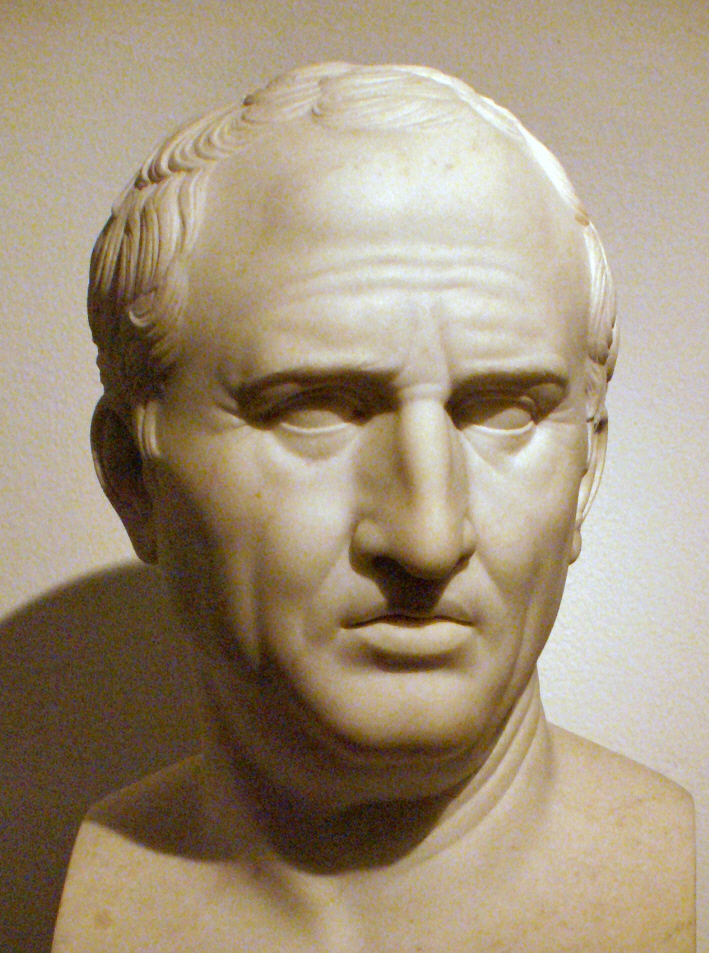
De Divinatione (Latin, "Concerning Divination") is a philosophical dialogue about ancient Roman divination written in 44 BC by Marcus Tullius Cicero.
De Divinatione is set in two books, taking the form of a dialogue whose interlocutors are Cicero himself (speaking mostly in Book II, and including a fragment of Cicero's poem on his own consulship) and his brother Quintus. Book I deals with Quintus' apologetics in favor of divination (in line with his essentially Stoic beliefs), while Book II contains Cicero's refutation of these from his Academic skeptic philosophical standpoint. Cicero concerns himself in some detail with the types of divination, dividing them into the "inspired" type (Latin furor, Gk. mania, "madness"), especially dreams, and the type which occurs via some form of skill of interpretation (i.e., haruspicy, extispicy, augury, astrology, and other oracles).
De Divinatione may be considered as a supplement to Cicero's De Natura Deorum. In De Divinatione, Cicero professes to relate the substance of a conversation held at Tusculum with his brother, in which Quintus, following the principles of the Stoics, supported the credibility of divination, while Cicero himself controverted it. The dialogue consists of two books, in the first Quintus enumerates the different kinds or classes of divination, with reasons in their favour. The second book contains a refutation by Cicero of his brother's arguments.
In the first book Quintus, after observing that divinations of various kinds have been common among all people, remarks that it is no argument against different forms of divination that we cannot explain how or why certain things happen. It is sufficient, that we know from experience and history that they do happen. He argues that although events may not always succeed as predicted, it does not follow that divination is not an art, any more than that medicine is not an art, because it does not always cure. However, he proposes the idea that there are two types of augury. The first one which is fuelled by deduction and skill, is an art. The other, foreseeing the future while dreaming or in a frenzy, is ‘devoid of art’. Quintus offers various accounts of the different kinds of omens, dreams, portents, and divinations. He includes two remarkable dreams, one of which had occurred to Cicero and one to himself. He also asks if Greek history with its various accounts of omens should be also considered a fable.
In the second book Cicero provides arguments against auguries, auspices, astrology, lots, dreams, and every species of omens and prodigies. For example, he argues that he dreamt of Marius during his banishment because he often thought about him, not because it was some sort of omen. He states that during one's sleep, the soul is in a relaxed state and remnants of one's waking thoughts move freely within the soul. Using an example where an unnamed interpreter and Antipho interpret an Olympic runner’s dream as both a victory and defeat, he suggests that that divination is based on the interpretation of the augur, and has no logical grounds or skill.
Cicero also disagrees with Cratippus’s certainty of the existence of divination. He states that prophecies come true due to luck or chance, while mythical tellings of Oracles are myths, and should not be taken for fact. He further criticizes the ‘riddles’ that divination and ‘dream messages’ provide. He questions whether the gods genuinely intend to warn mortals of the future if such omens are obscure and prone to misunderstanding.
Book Two concludes with a chapter on the evils of superstition, and Cicero's efforts to extirpate it. The whole thread is interwoven by curious and interesting stories.
De Divinatione is notable as one of posterity's primary sources on the workings of Roman religion, and as a source for the conception of scientificity in Roman classical antiquity.
Hub AI
De Divinatione AI simulator
(@De Divinatione_simulator)
De Divinatione
De Divinatione (Latin, "Concerning Divination") is a philosophical dialogue about ancient Roman divination written in 44 BC by Marcus Tullius Cicero.
De Divinatione is set in two books, taking the form of a dialogue whose interlocutors are Cicero himself (speaking mostly in Book II, and including a fragment of Cicero's poem on his own consulship) and his brother Quintus. Book I deals with Quintus' apologetics in favor of divination (in line with his essentially Stoic beliefs), while Book II contains Cicero's refutation of these from his Academic skeptic philosophical standpoint. Cicero concerns himself in some detail with the types of divination, dividing them into the "inspired" type (Latin furor, Gk. mania, "madness"), especially dreams, and the type which occurs via some form of skill of interpretation (i.e., haruspicy, extispicy, augury, astrology, and other oracles).
De Divinatione may be considered as a supplement to Cicero's De Natura Deorum. In De Divinatione, Cicero professes to relate the substance of a conversation held at Tusculum with his brother, in which Quintus, following the principles of the Stoics, supported the credibility of divination, while Cicero himself controverted it. The dialogue consists of two books, in the first Quintus enumerates the different kinds or classes of divination, with reasons in their favour. The second book contains a refutation by Cicero of his brother's arguments.
In the first book Quintus, after observing that divinations of various kinds have been common among all people, remarks that it is no argument against different forms of divination that we cannot explain how or why certain things happen. It is sufficient, that we know from experience and history that they do happen. He argues that although events may not always succeed as predicted, it does not follow that divination is not an art, any more than that medicine is not an art, because it does not always cure. However, he proposes the idea that there are two types of augury. The first one which is fuelled by deduction and skill, is an art. The other, foreseeing the future while dreaming or in a frenzy, is ‘devoid of art’. Quintus offers various accounts of the different kinds of omens, dreams, portents, and divinations. He includes two remarkable dreams, one of which had occurred to Cicero and one to himself. He also asks if Greek history with its various accounts of omens should be also considered a fable.
In the second book Cicero provides arguments against auguries, auspices, astrology, lots, dreams, and every species of omens and prodigies. For example, he argues that he dreamt of Marius during his banishment because he often thought about him, not because it was some sort of omen. He states that during one's sleep, the soul is in a relaxed state and remnants of one's waking thoughts move freely within the soul. Using an example where an unnamed interpreter and Antipho interpret an Olympic runner’s dream as both a victory and defeat, he suggests that that divination is based on the interpretation of the augur, and has no logical grounds or skill.
Cicero also disagrees with Cratippus’s certainty of the existence of divination. He states that prophecies come true due to luck or chance, while mythical tellings of Oracles are myths, and should not be taken for fact. He further criticizes the ‘riddles’ that divination and ‘dream messages’ provide. He questions whether the gods genuinely intend to warn mortals of the future if such omens are obscure and prone to misunderstanding.
Book Two concludes with a chapter on the evils of superstition, and Cicero's efforts to extirpate it. The whole thread is interwoven by curious and interesting stories.
De Divinatione is notable as one of posterity's primary sources on the workings of Roman religion, and as a source for the conception of scientificity in Roman classical antiquity.
Recent media