


Community hub
Recent from talks
Contribute something
Nothing was collected or created yet.
Haruspex
View on Wikipedia
| Part of a series on |
| Anthropology of religion |
|---|
 |
| Social and cultural anthropology |
A haruspex[a] was a person trained to practise a form of divination called haruspicy in the religion of ancient Rome,[b] the inspection of the entrails[c] of sacrificed animals, especially the livers of sacrificed sheep and poultry. Various ancient cultures of the Near East, such as the Babylonians, also read omens specifically from the liver, a practice also known by the Greek term hepatoscopy (also hepatomancy).
The Roman concept is directly derived from Etruscan religion, as one of the three branches of the disciplina Etrusca.
Etymology
[edit]The Latin terms haruspex and haruspicina are from an archaic word, hīra = "entrails, intestines" (cognate with hernia = "protruding viscera" and hira = "empty gut"; PIE *ǵʰer-) and from the root spec- = "to watch, observe". The Greek ἡπατοσκοπία hēpatoskōpia is from hēpar = "liver" and skop- = "to examine".
Ancient Near East
[edit]
The spread of hepatoscopy is one of the clearest examples of cultural contact in the orientalizing period. It must have been a case of East-West understanding on a relatively high, technical level. The mobility of migrant charismatics is the natural prerequisite for this diffusion, the international role of sought-after specialists, who were, as far as their art was concerned, nevertheless bound to their father-teachers. We cannot expect to find many archaeologically identifiable traces of such people, other than some exceptional instances.
— Walter Burkert, 1992. The Orientalizing Revolution: Near Eastern Influence on Greek Culture in the Early Archaic Age (Thames and Hudson), p. 51.
The Babylonians were famous for hepatoscopy. This practice is mentioned in the Book of Ezekiel 21:21:
For the king of Babylon standeth at the parting of the way, at the head of the two ways, to use divination; he shaketh the arrows to and fro, he inquireth of the teraphim, he looketh in the liver.[1][2]
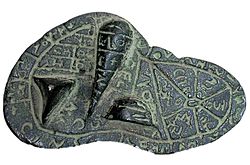
One Babylonian clay model of a sheep's liver, dated between 1900 and 1600 BCE, is conserved in the British Museum.[3]
The Assyro-Babylonian tradition was also adopted in Hittite religion. At least thirty-six liver-models have been excavated at Hattusa. Of these, the majority are inscribed in Akkadian, but a few examples also have inscriptions in the native Hittite language, indicating the adoption of haruspicy as part of the native, vernacular cult.[4]
Ancient Italy
[edit]Roman haruspicy was a form of communication with the gods. Rather than strictly predicting future events, this form of Roman divination allowed humans to discern the attitudes of the gods and react in a way that would maintain harmony between the human and divine worlds (pax deorum).[5] Before taking important actions, especially in battle, Romans conducted animal sacrifices to discover the will of the gods according to the information gathered through reading the animals' entrails.[5] The entrails (most importantly the liver, but also the lungs and heart) contained a large number of signs that indicated the gods' approval or disapproval. These signs could be interpreted according to the appearance of the organs, for example, if the liver was "smooth, shiny and full" or "rough and shrunken".[6] The Etruscans looked for the caput iocineris, or "head of the liver". It was considered a bad omen if this part was missing from the animal's liver. The haruspex would then study the flat visceral side of the liver after examining the caput iocineris.[7]


Haruspicy in Ancient Italy originated with the Etruscans. Textual evidence for Etruscan divination comes from an Etruscan inscription: the priest Laris Pulenas' (250–200 BCE) epitaph mentions a book he wrote on haruspicy. A collection of sacred texts called the Etrusca disciplina, written in Etruscan, were essentially guides on different forms of divination, including haruspicy and augury.[8] In addition, a number of archeological artifacts depict Etruscan haruspicy. These include a bronze mirror with an image of a haruspex dressed in Etruscan priest's clothing, holding a liver while a crowd gathers near him. Another significant artifact relating to haruspicy in Ancient Italy is the Piacenza Liver. This bronze model of a sheep's liver was found by chance by a farmer in 1877. Names of gods are etched into the surface and organized into different sections.[8] Artifacts depicting haruspicy exist from the ancient Roman world as well, such as stone relief carvings located in Trajan's Forum.[6]
At the most influential time of haruspicy, the Roman senate decreed that 'a certain number of young Etruscans' should be instructed in it to provide haruspices for the state.[9] These Etruscans were later appointed as Roman augurs.[10]
In later days when haruspicy became a neglected art, Emperor Claudius, who ruled from AD 41-54 attempted to revive it. He directed the Senate to pass a decree to examine what parts of it should be ‘maintained or strengthened’. [11]
Northeast Africa
[edit]In southwest Ethiopia and adjacent area of South Sudan, a number of ethnic communities have had the practice of reading animal entrails to divine the future.[12] Some of the groups that have been documented as having this practice include Suri, Mursi , Topsa , Nyangatom, Didinga, Murle, Me'en, Turkana, Konso,[13] Dime,[14] Karamojong,[15] Dodoth,[16] Kalenjin people[17]
Haruspication has also been practiced in Kenya, such as the Kamba[18] and the Kipsikis.[19]
See also
[edit]Notes
[edit]- ^ /həˈrʌ.spɛks/ hə-RUH-spehks, plural haruspices /həˈrʌ.spɪˌsiz/ hə-RUH-spih-sees, also called aruspex
- ^ /həˈrʌ.spɪˌsiː/ hə-RUH-speh-see (L. haruspicina)
- ^ exta—hence also extispicy (L. extispicium)
References
[edit]- ^ "Ezekiel 21". Hebrew Bible in English. Mechon-Mamre. Archived from the original on 2016-04-24. Retrieved 2018-05-11.
- ^ See also: Darshan, Guy, "The Meaning of bārēʾ (Ez 21,24) and the Prophecy Concerning Nebuchadnezzar at the Crossroads (Ez 21,23-29)", ZAW 128 (2016), 83-95. A more modern translation, from the New English Bible, translates the verse as follows: "For the king of Babylon stood at the parting of the way, at the head of the two ways, to use divination: he made his arrows bright, he consulted with images, he looked in the liver." New English Bible online
- ^ The Liver tablet 92668.
- ^ four specimens are known to Güterbock (1987): CTH 547 II, KBo 9 67, KBo 25, KUB 4 72 (VAT 8320 in Vorderasiatisches Museum Berlin), for which see also George Sarton, Ancient Science Through the Golden Age of Greece (1952, 1970), p. 93, citing Alfred Boissier, Mantique babylonienne et mantique hittite (1935).
- ^ a b Johnston, Sarah Iles. "Divination: Greek and Roman Divination". In Encyclopedia of Religion, 2nd ed., edited by Lindsay Jones, 2375–2378. Vol. 4. Detroit, Michigan: Macmillan Reference USA, 2005. Gale eBooks.
- ^ a b Driediger-Murphy, Lindsay G, and Eidinow, Esther. Ancient Divination and Experience. Oxford: Oxford University Press USA - OSO, 2019.
- ^ Stevens, Natalie L. C. “A New Reconstruction of the Etruscan Heaven.” American Journal of Archaeology, vol. 113, no. 2, Archaeological Institute of America, 2009
- ^ a b MacIntosh Turfa, Jean, and Tambe, Ashwini, eds. The Etruscan World. London: Taylor & Francis Group, 2013. ProQuest Ebook Central.
- ^ “LacusCurtius • Haruspices (Smith’s Dictionary, 1875).” Accessed March 19, 2025. https://penelope.uchicago.edu/Thayer/E/Roman/Texts/secondary/SMIGRA*/Haruspices.html.
- ^ Kobori, K. 2013: “An Observation on the Religion of the Romans in Republican Rome – on the concept of Religio”, PhD thesis (Tokyo University)
- ^ “LacusCurtius • Tacitus, Annals — Book XI Chapters 1‑15.” Accessed March 19, 2025. https://penelope.uchicago.edu/Thayer/E/Roman/Texts/Tacitus/Annals/11A*.html#15.
- ^ Abbink, Jon. "Reading the entrails: analysis of an African divination discourse." Man (1993): 705-726.
- ^ Otto, Shako. "Traditional Konso culture and the missionary impact." In Annales d'Ethiopie, vol. 20, no. 1, pp. 149-180. 2004.
- ^ Todd, Dave M. "Herbalists, Diviners and Shamans in Dimam." Paideuma (1977): 189-204.
- ^ Knighton, Ben. "The State as Raider among the Karamojong:‘Where there are no Guns, they use the Threat of Guns’." Africa 73, no. 3 (2003): 427-455.
- ^ Hazama, Itsuhiro. "A review of Kaori Kawai's works on Dodoth and raiding." Nomadic Peoples 14, no. 2 (2010): 164-167.
- ^ Karani, Shiyuka Elvis. Religious Experience of the Kalenjin of Kerio-Valley Cultural Complex, Kenya, 1800-1965. PhD Diss., Kenyatta University. 2023.
- ^ Harris, Grace. "Possession “Hysteria” in a Kenya Tribe 1." American Anthropologist 59, no. 6 (1957): 1046-1066.
- ^ Barton, Juxon. "Notes on the Kipsikis or Lumbwa Tribe of Kenya Colony." The Journal of the Royal Anthropological Institute of Great Britain and Ireland 53 (1923): 42-78.
Bibliography
[edit]- Walter Burkert, 1992. The Orientalizing Revolution: Near Eastern Influence on Greek Culture in the Early Archaic Age (Thames and Hudson), pp 46–51.
- Derek Collins, "Mapping the Entrails: The Practice of Greek Hepatoscopy" American Journal of Philology 129 [2008]: 319-345
- Marie-Laurence Haack, Les haruspices dans le monde romain (Bordeaux : Ausonius, 2003).
- Hans Gustav Güterbock, 'Hittite liver models' in: Language, Literature and History (FS Reiner) (1987), 147–153, reprinted in Hoffner (ed.) Selected Writings, Assyriological Studies no. 26 (1997).[1] Archived 2013-10-29 at the Wayback Machine
External links
[edit]- Chisholm, Hugh, ed. (1911). . Encyclopædia Britannica. Vol. 13 (11th ed.). Cambridge University Press. pp. 37–38. This source suggests that Greek and Roman haruspices used the entrails of human corpses; the victim should be "without spot or blemish".
- Haruspices, article in Smith's Dictionary of Greek and Roman Antiquities
- Figurine of Haruspex, 4th Cent. B.C. Vatican Museums Online, Gregorian Etruscan Museum, Room III
- l. Starr (1992). "Chapters 1 and 2 of the bārûtu". State Archives of Assyria Bulletin. 6: 45–53.
| Deities (Dii Consentes) |  | |
|---|---|---|
| Legendary figures | ||
| Legendary beings | ||
| Texts | ||
| Concepts and practices | ||
| Philosophy | ||
| Events | ||
| Objects | ||
| Variations | ||
| See also | ||


Haruspex
View on GrokipediaOrigins and Etymology
Etymology
The term "haruspex" originates from Latin, formed as a compound of hīra (or hara), an archaic word denoting "entrails," "intestines," or "gut," and specere, meaning "to observe," "to inspect," or "to look at."[3][4] This etymology reflects the core practice of a haruspex as an inspector of sacrificial animal viscera for divinatory purposes, with hīra cognate to terms like hernia (protruding viscera) and linked to Indo-European roots for internal organs.[5] In Greek, the equivalent practice is termed hepatoscopy (ἡπατοσκοπία, hēpatoskopía), derived from hēpar (ἧπαρ), meaning "liver," and skopein (σκοπεῖν), "to examine" or "to view," underscoring the emphasis on liver inspection in divination.[6] This terminology highlights a specialized focus within broader extispicy, distinguishing it from the more general Latin haruspex by prioritizing the liver as the primary organ of omen.[7] The word "haruspex" appears in ancient Latin texts with consistent usage but occasional spelling variations, such as aruspex or aruspex, particularly in earlier or regional inscriptions.[8] In the plural form haruspices (or aruspices), it denotes a college of such diviners, as seen in Cicero's De Divinatione (1st century BCE), where the term evolves in discourse to describe Etruscan-origin soothsayers interpreting entrails for public and private omens. Cicero employs haruspex and haruspices over 20 times across the dialogue, framing them as practitioners of "artificial" divination based on observed signs rather than innate inspiration, thus standardizing the terminology in Roman philosophical and religious literature.Early Practices in the Ancient Near East
Hepatoscopy, the divination practice involving the examination of animal livers, emerged prominently in Babylonian culture during the 2nd millennium BCE, particularly in the Old Babylonian period (c. 1900–1600 BCE). This method was integral to Mesopotamian religious and decision-making processes, where priests known as bārû interpreted anomalies in the liver's shape, color, and markings as omens from the gods. Textual evidence from this era, including omen compendia, documents the systematic classification of liver features to predict future events, with the practice rooted in the belief that the liver served as a conduit for divine communication.[9] A biblical reference underscores the prevalence of Babylonian hepatoscopy in royal decision-making, as described in Ezekiel 21:21, where the king of Babylon consults arrows, teraphim, and the liver at a crossroads to determine his military path—likely alluding to Nebuchadnezzar's campaigns around 588 BCE, though the practice predates this by centuries. In these rituals, a sheep was sacrificed, and its liver inspected for signs indicating success or failure in endeavors. The technique's sophistication is evident in instructional clay models, which divided the liver into zones for omen interpretation; for instance, the "flesh" (parakku) region and the gall bladder (martu) were key areas scrutinized for irregularities, such as unusual firmness or positioning, portending outcomes like victory or peril.[10] One exemplary artifact is the Babylonian Liver Tablet housed in the British Museum (museum number 92668), dating to c. 1900–1600 BCE and likely originating from Sippar in southern Iraq. This baked clay model depicts a sheep's liver divided into 55 inscribed sections, each detailing the prognostic implications of blemishes in specific positions, serving as a training tool for diviners. Such models highlight the standardized approach to hepatoscopy, where zones like the flesh and gall bladder were labeled to guide interpretations of divine intent.[11] The Hittites adopted and adapted Babylonian hepatoscopy during the 16th century BCE, integrating it into their religious framework during the Old Hittite Kingdom. Archaeological excavations at Hattusa (modern Boğazkale, Turkey) have uncovered 58 inscribed clay liver models, primarily from the 16th–15th centuries BCE, used for teaching and reference in extispicy rituals. These models, influenced by Mesopotamian traditions, feature cuneiform inscriptions detailing omens and were employed by specialized priests to interpret livers in state contexts.[12][13] In both Babylonian and Hittite societies, hepatoscopy played a crucial role in state rituals, particularly for predicting military outcomes and assessing royal health. Diviners conducted examinations before campaigns to forecast battlefield success or defeat, with favorable liver signs bolstering troop morale and strategic choices. Similarly, omens related to the king's well-being—such as indications of illness or longevity—guided protective rituals and political stability, underscoring the practice's centrality to governance and warfare. These Near Eastern foundations later influenced haruspical traditions in Italy.[14]Development in Ancient Italy
Etruscan Haruspicy
Haruspicy emerged among the Etruscans during the 8th to 6th centuries BCE, evolving as a sophisticated divinatory practice within the broader context of Mediterranean cultural exchanges. This development was heavily influenced by Near Eastern models of extispicy, particularly Mesopotamian techniques transmitted through Anatolian and Levantine intermediaries, which the Etruscans adapted to their local polytheistic framework. By the Orientalizing period (c. 720–580 BCE), haruspicy had become a professionalized art, practiced by specialized priests known as netśvis, reflecting the Etruscans' intense religious temperament and their belief in interpreting divine signs to navigate human affairs.[15][16] Central to Etruscan haruspicy was the examination of the sacrificial animal's internal organs, with particular emphasis on the liver and gallbladder, viewed as a "map" or "tablet of the gods" inscribed with celestial messages. The Etruscans believed that gods imprinted their will onto these organs through natural formations, patterns, or markings, which haruspices interpreted using specialized knowledge to discern future events and guide decisions. This practice represented a sophisticated system that integrated anatomical observation with spiritual interpretation. The organ was divided into zones corresponding to deities and cosmic regions, with interpretations read in a counter-clockwise direction starting from the right side. The caput iecoris (head of the liver), or caudate lobe, held particular significance as the primary indicator of divine will; an enlarged or prominent caput signified favorable omens, while its absence or malformation portended disaster for individuals or the state. This symbolic mapping integrated haruspicy into the Etruscans' cosmological worldview, where the liver mirrored the heavens and earthly templa (sacred spaces).[15][17][16][18] In Etruscan society, haruspicy played a vital role in state rituals, particularly during foundation ceremonies for cities and temples, where it complemented augury to ensure divine approval for urban expansion and political endeavors. These practices were essential for elites and rulers seeking guidance on matters of war, governance, and territorial establishment, underscoring the religion's emphasis on ritual precision to maintain harmony with the gods. The interpretations were guided by the Libri Haruspicini, part of the sacred Etrusca Disciplina corpus attributed to the mythical prophet Tages, who according to legend appeared as a childlike being to Tarchon, a Tarquinian figure, and taught the art of haruspicy to the Lucumones, the high priests of the twelve Etruscan tribes, before disappearing; these teachings were preserved in the Libri Tagetici, a collection of books codifying the sacred knowledge. Although most texts are lost, surviving references indicate their comprehensive nature in codifying liver-based prophecies.[16][15][19] This Etruscan system of haruspicy was transmitted to Rome through ongoing cultural and political interactions in central Italy.[15]Roman Adoption and Practices
The Romans adopted haruspicy from Etruscan practitioners during the early Republic, with the first recorded consultations occurring in the 3rd century BCE when the Senate summoned Etruscan experts to interpret omens and prescribe expiations for prodigies.[20] This integration reflected Rome's broader assimilation of Etruscan religious expertise to safeguard civic life. These haruspices operated as an empirical discipline, providing formalized responsa on divine will derived from observations of entrails, thunderbolts, and other signs.[20] Central to Roman state religion, haruspices played a key role in maintaining the pax deorum, the harmonious relationship between the Roman people and the gods believed necessary for military success, political stability, and protection from calamity.[21] They were routinely consulted for public events such as triumphs, where sacrificial entrails were examined to confirm divine approval, and eclipses, interpreted as warnings of disrupted celestial order requiring ritual restoration. Unlike augury, which focused on bird signs and was performed by Roman magistrates, haruspicy remained an imported Etruscan art, emphasizing visceral inspection to avert threats to the state's welfare.[20] Under Emperor Claudius (r. AD 41–54), haruspicy experienced a deliberate revival as part of efforts to reinforce traditional Italic cults amid growing Hellenistic influences. In AD 47, Claudius addressed the Senate, proposing the creation of a permanent public college of 60 haruspices drawn from Etruscan elites to preserve and elevate the discipline, which he described as the "oldest of Italian sciences" rooted in Etruscan nobility and ratified by Roman precedent and divine consent. The Senate approved, formalizing the ordo LX haruspicum under state oversight and promoting Etruscan lore through public rituals, though the initiative faced resistance from those favoring Roman-native practices.[22] Notable consultations underscored haruspicy's role in crises; prodigies such as lightning strikes on sacred sites were interpreted by haruspices to recommend supplications and rituals to restore divine peace amid civil unrest.[23] Similarly, natural disasters threatening the pax deorum were addressed through such expiatory measures.Methods and Artifacts
Interpretation Techniques
Haruspices selected sacrificial animals, typically sheep or lambs, that were deemed immaculate and free from defects to ensure the purity of the omen.[15] These sacrifices occurred on auspicious days, avoiding inauspicious dates such as the 7th, 14th, 19th, 21st, and 28th of the month, as well as periods near the new moon, to align with favorable celestial conditions.[15] Bulls were occasionally used for larger public rituals, but sheep livers were preferred for their clarity in revealing divine signs.[24] The core of interpretation involved examining the liver, known as hepatoscopy, by inspecting its visceral surface in a counter-clockwise manner.[15] The liver was divided into symbolic zones, with the right side representing favorable outcomes ("my side") and the left side indicating unfavorable ones ("side of the enemy").[15] Specific areas, such as the porta (gate) and umbilicus (navel), were scrutinized for abnormalities like creases, fissures, holes, or scars, which were classified as positive or negative based on their location and form; for instance, a well-formed right side signified prosperity, while defects on the left foretold adversity.[25] Overall omen classification relied on tallying these signs, with a preponderance of positive indicators confirming divine approval.[15] Haruspicy was integrated with other forms of divination, particularly augury, to provide a comprehensive reading of the gods' will.[26] While augurs observed bird behaviors for initial omens, haruspices consulted entrails to confirm or elaborate on these signs, as both were essential components of Roman state rituals.[27] Cicero notes that such methods, rooted in Etruscan tradition, were employed together in public consultations to interpret complex events.[26] Training for haruspices emphasized rigorous apprenticeship, often within families, to master the disciplina etrusca.[15] Novices studied standardized omen texts, such as the Libri Haruspicini, which cataloged interpretations of entrails and other signs, ensuring consistency in readings.[15] This education included practical instruction on identifying liver zones and correlating them with celestial and earthly events, preserving the art's symbolic framework.[25]Key Artifacts and Models
One of the most significant artifacts associated with haruspicy is the Piacenza Liver, a bronze model of a sheep's liver discovered in 1877 near the town of Piacenza in northern Italy. Dating to the 2nd–1st century BCE, this Etruscan object measures approximately life-sized and features intricate zonal divisions on its surface, subdivided into sections that correspond to different anatomical and divinatory regions. It is inscribed with the names of 28 Etruscan deities, each associated with specific zones, illustrating the polytheistic framework underlying the practice of hepatoscopy in ancient Italy.[28] The artifact, now housed in the Municipal Museums of Piacenza, served as an instructional tool for haruspices, mapping omens to liver features and reflecting the integration of religious and anatomical knowledge.[29] In the ancient Near East, Hittite liver models from the capital city of Hattusa (modern Boğazkale, Turkey) provide early evidence of hepatoscopic practices, with at least 36 clay exemplars excavated from temple and archival contexts. These models, primarily from the 14th century BCE, are shaped as sheep livers and inscribed with cuneiform omens detailing interpretations of surface features such as protuberances, pits, and markings. Most inscriptions are in Akkadian, indicating Mesopotamian influence, though some include Hittite translations, highlighting the adaptation of extispicy in Anatolian culture.[30] The models, cataloged under CTH 547 in the Catalogue des Textes Hittites, demonstrate standardized zonal divisions similar to Babylonian traditions, used for training diviners in omen reading.[31] An earlier exemplar is the Babylonian clay liver model held in the British Museum (BM 1889,0426.238), originating from Sippar in southern Iraq and dated to the Old Babylonian period, circa 1900–1600 BCE. This complete tablet, measuring about 14.6 cm in length and width, depicts a sheep's liver divided into 55 sections, each inscribed in cuneiform with omen prototypes describing the prognostic implications of blemishes or anomalies in corresponding positions.[11] Crafted from fired clay for durability, it exemplifies the instructional role of such models in Mesopotamian extispicy schools, where novices learned to correlate visceral signs with events like military outcomes or royal fortunes.[32] Excavations at Ras Shamra (ancient Ugarit) in Syria have yielded Near Eastern liver models, including terra-cotta and ivory examples with inscriptions, underscoring the regional spread of hepatoscopic tools during the Late Bronze Age. These finds, such as the inscribed terra-cotta model RS 24.326 from the South Acropolis, illustrate Ugarit's role as a cultural hub integrating extispicy practices influenced by broader Levantine and Anatolian traditions.[33][34]Haruspicy in Other Regions
Practices in Northeast Africa
In Northeast Africa, entrail divination remains a living tradition among various pastoralist ethnic groups in Ethiopia and Kenya, such as the Suri, Mursi, Kalenjin, Me'en, Dizi, Turkana, Nyangatom, and Karimojong. These groups typically employ the entrails of cattle or goats, sacrificed during rituals, to interpret omens and guide decision-making in uncertain environments shaped by livestock herding, inter-group conflicts, and environmental challenges.[35][36] The techniques involve meticulous examination of the animal's internal organs, particularly the liver and intestines, for signs conveyed through color variations, structural shapes, bile distribution, and unusual patterns like red spots or clots. Among the Kalenjin of Kenya, for instance, diviners select an unblemished sheep or goat, slaughter it ritually, and scrutinize the intestines (known as matumbo) for their form and markings to discern messages from ancestral or spiritual forces. Similarly, in southwestern Ethiopia's Me'en society, interpreters analyze intestinal configurations to activate cultural presuppositions, deriving meaning from contextual clues rather than fixed symbols alone. These methods, rooted in oral traditions, allow predictions of critical events such as impending raids, outbreaks of illness, crop failures, or livestock losses, often before major undertakings like migrations or conflicts. Ethnographic accounts from the 1990s through the 2010s highlight how such readings function as indirect communication, blending the diviner's intent with communal expectations to foster consensus.[35][36] Within these pastoralist societies, the practice holds profound cultural significance, serving as a mechanism for risk assessment and social cohesion amid volatile arid landscapes. It is predominantly performed by male elders or designated specialists endowed with inherited or demonstrated divinatory expertise, though select women among the Kalenjin may also participate in interpretations. For the Suri and neighboring Dizi in southern Ethiopia, as well as the Turkana in northern Kenya, entrail readings inform warfare strategies, such as gauging raid directions and intensities, reinforcing group identity and authority structures. Despite pressures from modernization, including urbanization and Christian influences, field observations in the early 2020s confirm the tradition's endurance, with communities adapting it to contemporary concerns like climate variability and resource disputes while preserving its ritual core.[35][36]Analogues in Other Cultures
In various non-European cultures, practices analogous to haruspicy have emerged independently, involving the interpretation of animal entrails to discern omens or divine will. These traditions highlight a cross-cultural tendency to view internal organs as conduits for supernatural insight, often tied to rituals of sacrifice and decision-making. A modern parallel is seen in Indonesian Mentawai shamanism, where chicken entrails are examined for guidance on daily and communal matters, illustrating ongoing vitality in the region.[37] Recent post-2020 anthropological scholarship has explored symbolic universals in entrail divination, positing that the focus on "guts" as liminal spaces between body and cosmos recurs across cultures, from ancient Near Eastern models to indigenous practices. A 2024 comparative volume highlights how these methods encode shared human concerns with uncertainty and agency, drawing on interdisciplinary analyses to reveal patterns in organ symbolism without direct historical transmission.[38]Decline and Legacy
Decline in Classical Antiquity
Haruspicy attained its institutional height during the Roman Empire's first three centuries CE, when Emperor Claudius formalized a collegium of sixty haruspices in 47 CE to systematize Etruscan-style divination for state and imperial needs.[39] This body of salaried experts advised on omens from animal entrails, integrating the practice into official rituals amid the Empire's expansion and administrative consolidation. However, early Christian apologists began challenging these pagan customs, portraying them as fraudulent and inspired by demons; Tertullian, in his Apologeticus (c. 197 CE), denounced augurs, soothsayers, and related diviners as tools of apostate angels that Christians rejected outright.[40] The decisive suppression came under Emperor Theodosius I, whose decrees in 391–392 CE explicitly outlawed animal sacrifices and the inspection of entrails, equating haruspicy with high treason punishable by death, property confiscation, or fines of twenty-five pounds of gold. The edict of 8 November 392 CE targeted not only overt rituals but also private veneration involving victims' entrails, prohibiting any consultation of "still warm" organs for omens and closing temples across the Empire. These measures, reiterated by subsequent emperors like Arcadius and Honorius, marginalized the haruspices' collegium, transforming public practice into clandestine activity amid escalating Christian dominance. Isolated instances of haruspicy persisted into the fifth century CE, particularly during crises like the Visigothic invasions. By the sixth century, however, the art had vanished from official records, as evidenced by Byzantine writer John Lydus' antiquarian references to it as a relic of pagan antiquity without contemporary application.[41] This extinction stemmed from Christianity's ascendance, which reframed divination as idolatry; the erosion of specialized Etruscan knowledge following Rome's assimilation of Etruria; and imperial centralization, which prioritized Christian orthodoxy over traditional polytheistic expertise.[42]Modern Relevance and Interpretations
In the 19th century, during Italy's Risorgimento movement, archaeological excavations of Etruscan sites fueled a revival of interest in haruspicy as part of constructing a pre-Roman national heritage, with the 1877 discovery of the Piacenza Liver artifact exemplifying how such finds inspired scholarly and artistic engagements with ancient divination practices.[43] This Etruscan Revival extended into the 20th century, influencing archaeological studies that emphasized haruspicy's role in Etruscan cosmology, as seen in analyses linking the liver model to celestial mappings.[44] Modern neo-pagan and reconstructionist groups, particularly those drawing from Etruscan and Roman polytheism since the 1970s, have adapted haruspicy in rituals, using symbolic interpretations of animal entrails or replicas to connect with ancient spiritual traditions, though actual animal sacrifice remains rare due to ethical concerns.[45] Recent academic studies from 2021 to 2025 have applied cognitive science to haruspicy, exploring how ancient diviners' pattern recognition in entrails reflects innate human cognitive biases toward agency detection and causal inference in uncertain environments.[46] Anatomical studies correlating the Piacenza Liver's zones with fresh sheep livers have advanced understandings of its anatomical basis and potential divinatory function.[47] Haruspicy's cultural legacy persists in literature and art, notably in Shakespeare's Julius Caesar, where omens and soothsayers evoke haruspical warnings, symbolizing the tension between fate and human agency in political tragedy.[48] Symbolic analyses, including Freudian interpretations viewing the liver as a map of the unconscious, have further embedded haruspicy in modern psychoanalytic discussions of divination as projective revelation.[49]References
- https://en.wiktionary.org/wiki/hepatoscopy