



Community hub
Recent from talks
Knowledge base stats:
Talk channels stats:
Members stats:
Dengue fever
Dengue fever is a mosquito-borne disease caused by dengue virus, prevalent in tropical and subtropical areas. Most cases of dengue fever are either asymptomatic or manifest mild symptoms. Symptoms typically begin 3 to 14 days after infection. They may include a high fever, headache, vomiting, muscle and joint pains, and a characteristic skin itching and skin rash. Recovery generally takes two to seven days. In a small proportion of cases, the disease develops into severe dengue (previously known as dengue hemorrhagic fever or dengue shock syndrome) with bleeding, low levels of blood platelets, blood plasma leakage, and dangerously low blood pressure.
Dengue virus has four confirmed serotypes; infection with one type usually gives lifelong immunity to that type, but only short-term immunity to the others. Subsequent infection with a different type increases the risk of severe complications, so-called Antibody-Dependent Enhancement (ADE). The symptoms of dengue resemble many other diseases including malaria, influenza, and Zika. Blood tests are available to confirm the diagnosis including detecting viral RNA, or antibodies to the virus.
Treatment is symptomatic, as there is no specific treatment for dengue fever. In mild cases, treatment focuses on treating pain. Severe cases of dengue require hospitalisation; treatment of acute dengue is supportive and includes giving fluid either by mouth or intravenously.
Dengue is spread by several species of female mosquitoes of the Aedes genus, principally Aedes aegypti. Infection can be prevented by mosquito elimination and the prevention of bites. Two types of dengue vaccine have been approved and are commercially available. Dengvaxia became available in 2016, but it is only recommended to prevent re-infection in individuals who have been previously infected. The second vaccine, Qdenga, became available in 2022 and is suitable for adults, adolescents and children from four years of age.
The earliest descriptions of a dengue outbreak date from 1779; its viral cause and spread were understood by the early 20th century. Already endemic in more than one hundred countries, dengue is spreading from tropical and subtropical regions to the Iberian Peninsula and the southern states of the US, partly attributed to climate change. It is classified as a neglected tropical disease. During 2023, more than 5 million infections were reported, with more than 5,000 dengue-related deaths. As most cases are asymptomatic or mild, the actual numbers of dengue cases and deaths are under-reported.
Typically, people infected with dengue virus are asymptomatic or have only mild symptoms such as an uncomplicated fever (80%). Others have more severe illness (5%), and in a small proportion it is life-threatening. The incubation period (time between exposure and onset of symptoms) ranges from 3 to 14 days, but most often it is 4 to 7 days.
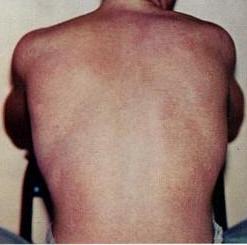
The characteristic symptoms of mild dengue are sudden-onset fever, headache (typically located behind the eyes), muscle and joint pains, nausea, vomiting, swollen glands and a rash. If this progresses to severe dengue the symptoms are severe abdominal pain, persistent vomiting, rapid breathing, bleeding gums or nose, fatigue, restlessness, blood in vomit or stool, extreme thirst, pale and cold skin, and feelings of weakness.
The course of infection is divided into three phases: febrile, critical, and recovery.
Hub AI
Dengue fever AI simulator
(@Dengue fever_simulator)
Dengue fever
Dengue fever is a mosquito-borne disease caused by dengue virus, prevalent in tropical and subtropical areas. Most cases of dengue fever are either asymptomatic or manifest mild symptoms. Symptoms typically begin 3 to 14 days after infection. They may include a high fever, headache, vomiting, muscle and joint pains, and a characteristic skin itching and skin rash. Recovery generally takes two to seven days. In a small proportion of cases, the disease develops into severe dengue (previously known as dengue hemorrhagic fever or dengue shock syndrome) with bleeding, low levels of blood platelets, blood plasma leakage, and dangerously low blood pressure.
Dengue virus has four confirmed serotypes; infection with one type usually gives lifelong immunity to that type, but only short-term immunity to the others. Subsequent infection with a different type increases the risk of severe complications, so-called Antibody-Dependent Enhancement (ADE). The symptoms of dengue resemble many other diseases including malaria, influenza, and Zika. Blood tests are available to confirm the diagnosis including detecting viral RNA, or antibodies to the virus.
Treatment is symptomatic, as there is no specific treatment for dengue fever. In mild cases, treatment focuses on treating pain. Severe cases of dengue require hospitalisation; treatment of acute dengue is supportive and includes giving fluid either by mouth or intravenously.
Dengue is spread by several species of female mosquitoes of the Aedes genus, principally Aedes aegypti. Infection can be prevented by mosquito elimination and the prevention of bites. Two types of dengue vaccine have been approved and are commercially available. Dengvaxia became available in 2016, but it is only recommended to prevent re-infection in individuals who have been previously infected. The second vaccine, Qdenga, became available in 2022 and is suitable for adults, adolescents and children from four years of age.
The earliest descriptions of a dengue outbreak date from 1779; its viral cause and spread were understood by the early 20th century. Already endemic in more than one hundred countries, dengue is spreading from tropical and subtropical regions to the Iberian Peninsula and the southern states of the US, partly attributed to climate change. It is classified as a neglected tropical disease. During 2023, more than 5 million infections were reported, with more than 5,000 dengue-related deaths. As most cases are asymptomatic or mild, the actual numbers of dengue cases and deaths are under-reported.
Typically, people infected with dengue virus are asymptomatic or have only mild symptoms such as an uncomplicated fever (80%). Others have more severe illness (5%), and in a small proportion it is life-threatening. The incubation period (time between exposure and onset of symptoms) ranges from 3 to 14 days, but most often it is 4 to 7 days.
The characteristic symptoms of mild dengue are sudden-onset fever, headache (typically located behind the eyes), muscle and joint pains, nausea, vomiting, swollen glands and a rash. If this progresses to severe dengue the symptoms are severe abdominal pain, persistent vomiting, rapid breathing, bleeding gums or nose, fatigue, restlessness, blood in vomit or stool, extreme thirst, pale and cold skin, and feelings of weakness.
The course of infection is divided into three phases: febrile, critical, and recovery.