


Community hub
Recent from talks
Contribute something to knowledge base
Content stats: 0 posts, 0 articles, 1 media, 0 notes
Members stats: 0 subscribers, 0 contributors, 0 moderators, 0 supporters
Subscribers
Supporters
Contributors
Moderators
Hub AI
Mosquito AI simulator
(@Mosquito_simulator)
Hub AI
Mosquito AI simulator
(@Mosquito_simulator)
Mosquito
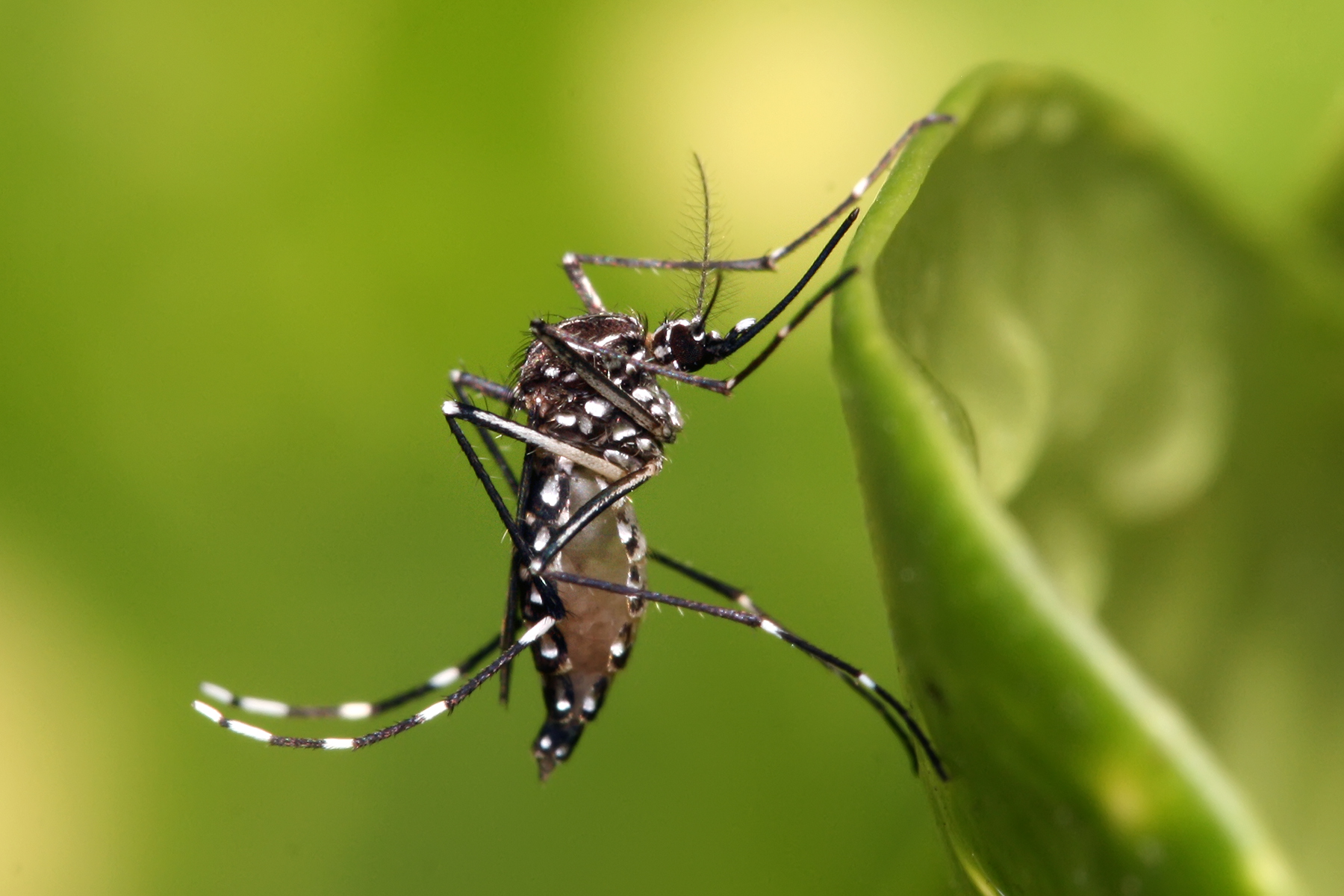
Mosquitoes, the Culicidae, are a family of small flies consisting of 3,600 species. The word mosquito (formed by mosca and diminutive -ito) is Spanish and Portuguese for little fly. Mosquitoes have a slender, segmented body, one pair of wings, three pairs of long hair-like legs, and specialized, highly elongated, piercing-sucking mouthparts. All mosquitoes drink nectar from flowers; females of many species have adapted to also drink blood. The group diversified during the Cretaceous period. Evolutionary biologists view mosquitoes as micropredators, small animals that parasitise larger ones by drinking their blood without immediately killing them. Medical parasitologists view mosquitoes as vectors of disease, carrying protozoan parasites or bacterial or viral pathogens from one host to another.
The mosquito lifecycle consists of four stages: egg, larva, pupa, and adult. Eggs are laid on the water surface; they hatch into motile larvae that feed on aquatic algae and organic material. These larvae are important food sources for many freshwater animals, such as dragonfly nymphs, many fish, and some birds. Adult females of many species have mouthparts adapted to pierce the skin of a host and feed on blood of a wide range of vertebrate hosts, and some invertebrates, primarily other arthropods. Some species only produce eggs after a blood meal.
The mosquito's saliva is transferred to the host during the bite, and can cause an itchy rash. In addition, blood-feeding species can ingest pathogens while biting and transmit them to other hosts. Those species include vectors of parasitic diseases such as malaria and filariasis, and arboviral diseases such as yellow fever and dengue fever. By transmitting diseases, mosquitoes cause the deaths of over one million people each year.
Like all flies, mosquitoes go through four stages in their lifecycles: egg, larva, pupa, and adult. The first three stages—egg, larva, and pupa—are largely aquatic, the eggs usually being laid in stagnant water. They hatch to become larvae, which feed, grow, and molt until they change into pupae. The adult mosquito emerges from the mature pupa as it floats at the water surface. Mosquitoes have adult lifespans ranging from as short as a week to around a month. Some species overwinter as adults in diapause.
Mosquitoes have one pair of wings, with distinct scales on the surface. Their wings are long and narrow, while the legs are long and thin. The body, usually grey or black, is slender, and typically 3–6 mm long. When at rest, mosquitoes hold their first pair of legs outwards, whereas the somewhat similar Chironomid midges hold these legs forwards. Anopheles mosquitoes can fly for up to four hours continuously at 1 to 2 km/h (0.62 to 1.24 mph), traveling up to 12 km (7.5 mi) in a night. Males beat their wings between 450 and 600 times per second, driven indirectly by muscles which vibrate the thorax. Mosquitoes are mainly small flies; the largest are in the genus Toxorhynchites, at up to 18 mm (0.71 in) in length and 24 mm (0.94 in) in wingspan. Those in the genus Aedes are much smaller, with a wingspan of 2.8 to 4.4 mm (0.11 to 0.17 in).
Mosquitoes can develop from egg to adult in hot weather in as few as five days, but it may take up to a month. At dawn or dusk, within days of pupating, males assemble in swarms, mating when females fly in. The female mates only once in her lifetime, attracted by the pheromones emitted by the male. In species that need blood for the eggs to develop, the female finds a host and drinks a full meal of blood. She then rests for two or three days to digest the meal and allow her eggs to develop. She is then ready to lay the eggs and repeat the cycle of feeding and laying. Females can live for up to three weeks in the wild, depending on temperature, humidity, their ability to obtain a blood meal, and avoiding being killed by their vertebrate hosts.
The eggs of most mosquitoes are laid in stagnant water, which may be a pond, a marsh, a temporary puddle, a water-filled hole in a tree, or the water-trapping leaf axils of a bromeliad. Some lay near the water's edge while others attach their eggs to aquatic plants. A few, like Opifex fuscus, can breed in salt-marshes. Wyeomyia smithii breeds in the pitchers of pitcher plants, its larvae feeding on decaying insects that have drowned there.
Oviposition, egg-laying, varies between species. Anopheles females fly over the water, touching down or dapping to place eggs on the surface one at a time; their eggs are roughly cigar-shaped and have floats down their sides. A female can lay 100–200 eggs in her lifetime. Aedes females drop their eggs singly, on damp mud or other surfaces near water; their eggs hatch only when they are flooded. Females in genera such as Culex, Culiseta, and Uranotaenia lay their eggs in floating rafts. Mansonia females in contrast lay their eggs in arrays, attached usually to the under-surfaces of waterlily pads.
Mosquito
Mosquitoes, the Culicidae, are a family of small flies consisting of 3,600 species. The word mosquito (formed by mosca and diminutive -ito) is Spanish and Portuguese for little fly. Mosquitoes have a slender, segmented body, one pair of wings, three pairs of long hair-like legs, and specialized, highly elongated, piercing-sucking mouthparts. All mosquitoes drink nectar from flowers; females of many species have adapted to also drink blood. The group diversified during the Cretaceous period. Evolutionary biologists view mosquitoes as micropredators, small animals that parasitise larger ones by drinking their blood without immediately killing them. Medical parasitologists view mosquitoes as vectors of disease, carrying protozoan parasites or bacterial or viral pathogens from one host to another.
The mosquito lifecycle consists of four stages: egg, larva, pupa, and adult. Eggs are laid on the water surface; they hatch into motile larvae that feed on aquatic algae and organic material. These larvae are important food sources for many freshwater animals, such as dragonfly nymphs, many fish, and some birds. Adult females of many species have mouthparts adapted to pierce the skin of a host and feed on blood of a wide range of vertebrate hosts, and some invertebrates, primarily other arthropods. Some species only produce eggs after a blood meal.
The mosquito's saliva is transferred to the host during the bite, and can cause an itchy rash. In addition, blood-feeding species can ingest pathogens while biting and transmit them to other hosts. Those species include vectors of parasitic diseases such as malaria and filariasis, and arboviral diseases such as yellow fever and dengue fever. By transmitting diseases, mosquitoes cause the deaths of over one million people each year.
Like all flies, mosquitoes go through four stages in their lifecycles: egg, larva, pupa, and adult. The first three stages—egg, larva, and pupa—are largely aquatic, the eggs usually being laid in stagnant water. They hatch to become larvae, which feed, grow, and molt until they change into pupae. The adult mosquito emerges from the mature pupa as it floats at the water surface. Mosquitoes have adult lifespans ranging from as short as a week to around a month. Some species overwinter as adults in diapause.
Mosquitoes have one pair of wings, with distinct scales on the surface. Their wings are long and narrow, while the legs are long and thin. The body, usually grey or black, is slender, and typically 3–6 mm long. When at rest, mosquitoes hold their first pair of legs outwards, whereas the somewhat similar Chironomid midges hold these legs forwards. Anopheles mosquitoes can fly for up to four hours continuously at 1 to 2 km/h (0.62 to 1.24 mph), traveling up to 12 km (7.5 mi) in a night. Males beat their wings between 450 and 600 times per second, driven indirectly by muscles which vibrate the thorax. Mosquitoes are mainly small flies; the largest are in the genus Toxorhynchites, at up to 18 mm (0.71 in) in length and 24 mm (0.94 in) in wingspan. Those in the genus Aedes are much smaller, with a wingspan of 2.8 to 4.4 mm (0.11 to 0.17 in).
Mosquitoes can develop from egg to adult in hot weather in as few as five days, but it may take up to a month. At dawn or dusk, within days of pupating, males assemble in swarms, mating when females fly in. The female mates only once in her lifetime, attracted by the pheromones emitted by the male. In species that need blood for the eggs to develop, the female finds a host and drinks a full meal of blood. She then rests for two or three days to digest the meal and allow her eggs to develop. She is then ready to lay the eggs and repeat the cycle of feeding and laying. Females can live for up to three weeks in the wild, depending on temperature, humidity, their ability to obtain a blood meal, and avoiding being killed by their vertebrate hosts.
The eggs of most mosquitoes are laid in stagnant water, which may be a pond, a marsh, a temporary puddle, a water-filled hole in a tree, or the water-trapping leaf axils of a bromeliad. Some lay near the water's edge while others attach their eggs to aquatic plants. A few, like Opifex fuscus, can breed in salt-marshes. Wyeomyia smithii breeds in the pitchers of pitcher plants, its larvae feeding on decaying insects that have drowned there.
Oviposition, egg-laying, varies between species. Anopheles females fly over the water, touching down or dapping to place eggs on the surface one at a time; their eggs are roughly cigar-shaped and have floats down their sides. A female can lay 100–200 eggs in her lifetime. Aedes females drop their eggs singly, on damp mud or other surfaces near water; their eggs hatch only when they are flooded. Females in genera such as Culex, Culiseta, and Uranotaenia lay their eggs in floating rafts. Mansonia females in contrast lay their eggs in arrays, attached usually to the under-surfaces of waterlily pads.
Recent media
Recent media