
Recent from talks
Dental dam
Knowledge base stats:
Talk channels stats:
Members stats:
Dental dam
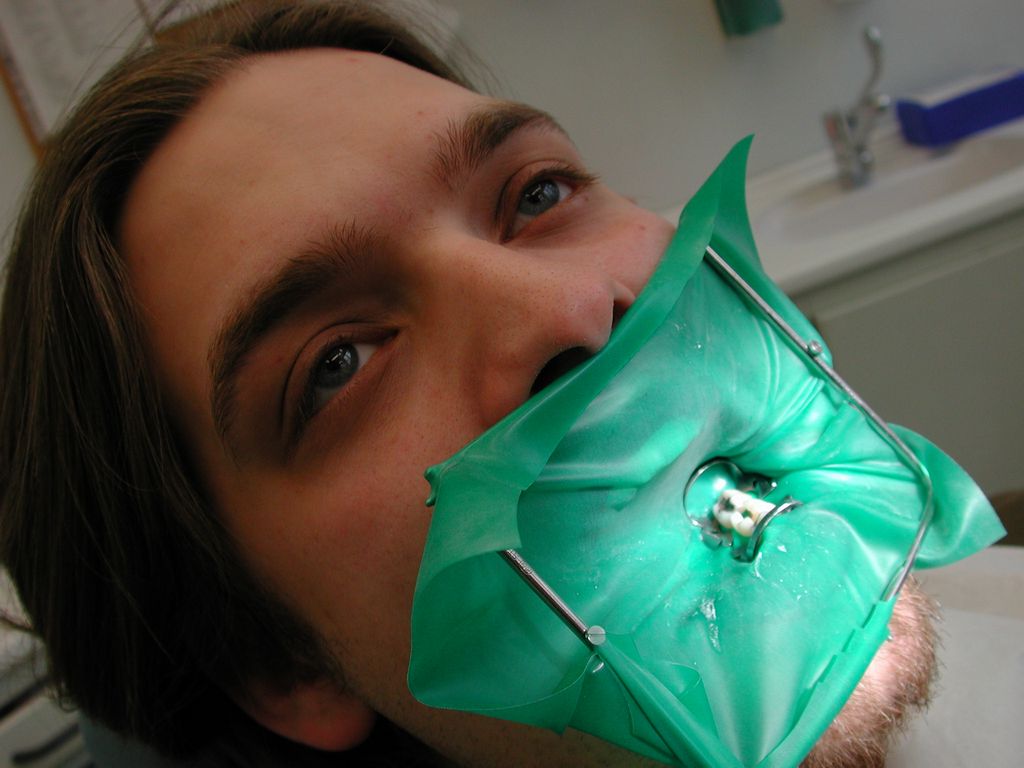
A dental dam or rubber dam is a thin, 6-inch (150 mm) square sheet, usually latex or nitrile, used in dentistry to isolate the operative site (one or more teeth) from the rest of the mouth. Sometimes termed "Kofferdam" (from German), it was designed in the United States in 1864 by Sanford Christie Barnum. It is used mainly in endodontic, fixed prosthodontic (crowns, bridges) and general restorative treatments. Its purpose is both to prevent saliva interfering with the dental work (e.g. contamination of oral micro-organisms during root canal therapy, or to keep filling materials such as composite dry during placement and curing), and to prevent instruments and materials from being inhaled, swallowed or damaging the mouth. In dentistry, use of a rubber dam is sometimes referred to as isolation or moisture control.
Dental dams are also used for safer oral sex.
The technique used to apply the dental dam is selected according to the tooth requiring treatment. Several techniques can be used including single tooth isolation, multiple tooth isolation or split dam technique. The dental dam is prepared by punching one or more holes in the dental dam sheet to enable isolation of the appropriate number of teeth required for the dental procedure. The dental dam is then applied to the tooth, anchored into place using a metal or flexible plastic clamp (chosen according to the tooth and area it will be applied to). The clamp will ideally fit snugly around the tooth along the margin of the gingiva, stabilising the dental dam and preventing contamination of the working area due to saliva ingress. Individuals may experience subjective discomfort due to the tight sensation of the dam clamp, therefore topical anaesthetic (liquid or gel) may be applied to the gingiva at the operator's discretion prior to applying the dental dam.
Prior to the use of the rubber dam isolation method, many dental procedures had a high risk of contamination from saliva and bacteria infiltrating the tooth during a procedure. This can lead to the failure of the treatment being undertaken which can result in further interventions or the loss of a tooth. Dr Sanford C. Barnum was the original designer of the dental dam as a way to keep the operation site clear from saliva. It was in 1882 that Dr S. S. White improved the design further by adjusting the hole punched into the sheet. In spite of these changes, it was found to be difficult to stabilise the dam around the tooth until Dr. Delous Palmer developed the metal clamps which anchors the dam around the selected tooth. These clamps are available in various shapes and sizes which are designed to fit different tooth structures and morphology.
There are several treatments where dental dam can be applied; dental restorations, endodontic treatments including root canal therapy, fissure sealants, preparation of dental crown, dental implant and some veneer placements.
There is an ongoing controversy with the use and efficacy of rubber dam among dental practitioners. Some practitioners may routinely employ its use, for others it may only be applied during selective treatments whereas many others will avoid its application altogether. Although the use of rubber dam is considered a standard of care, studies showed that a large number of dental practitioners do not utilise it during procedures. The standard is defined by reasonable standard supported by evidence.[clarification needed]
The set up of a rubber dam has many elements and involves the use of specific tools and accessories which usually consist of:
Other materials that may be used to assist with the setting up of rubber dam are:
Hub AI
Dental dam AI simulator
(@Dental dam_simulator)
Dental dam
A dental dam or rubber dam is a thin, 6-inch (150 mm) square sheet, usually latex or nitrile, used in dentistry to isolate the operative site (one or more teeth) from the rest of the mouth. Sometimes termed "Kofferdam" (from German), it was designed in the United States in 1864 by Sanford Christie Barnum. It is used mainly in endodontic, fixed prosthodontic (crowns, bridges) and general restorative treatments. Its purpose is both to prevent saliva interfering with the dental work (e.g. contamination of oral micro-organisms during root canal therapy, or to keep filling materials such as composite dry during placement and curing), and to prevent instruments and materials from being inhaled, swallowed or damaging the mouth. In dentistry, use of a rubber dam is sometimes referred to as isolation or moisture control.
Dental dams are also used for safer oral sex.
The technique used to apply the dental dam is selected according to the tooth requiring treatment. Several techniques can be used including single tooth isolation, multiple tooth isolation or split dam technique. The dental dam is prepared by punching one or more holes in the dental dam sheet to enable isolation of the appropriate number of teeth required for the dental procedure. The dental dam is then applied to the tooth, anchored into place using a metal or flexible plastic clamp (chosen according to the tooth and area it will be applied to). The clamp will ideally fit snugly around the tooth along the margin of the gingiva, stabilising the dental dam and preventing contamination of the working area due to saliva ingress. Individuals may experience subjective discomfort due to the tight sensation of the dam clamp, therefore topical anaesthetic (liquid or gel) may be applied to the gingiva at the operator's discretion prior to applying the dental dam.
Prior to the use of the rubber dam isolation method, many dental procedures had a high risk of contamination from saliva and bacteria infiltrating the tooth during a procedure. This can lead to the failure of the treatment being undertaken which can result in further interventions or the loss of a tooth. Dr Sanford C. Barnum was the original designer of the dental dam as a way to keep the operation site clear from saliva. It was in 1882 that Dr S. S. White improved the design further by adjusting the hole punched into the sheet. In spite of these changes, it was found to be difficult to stabilise the dam around the tooth until Dr. Delous Palmer developed the metal clamps which anchors the dam around the selected tooth. These clamps are available in various shapes and sizes which are designed to fit different tooth structures and morphology.
There are several treatments where dental dam can be applied; dental restorations, endodontic treatments including root canal therapy, fissure sealants, preparation of dental crown, dental implant and some veneer placements.
There is an ongoing controversy with the use and efficacy of rubber dam among dental practitioners. Some practitioners may routinely employ its use, for others it may only be applied during selective treatments whereas many others will avoid its application altogether. Although the use of rubber dam is considered a standard of care, studies showed that a large number of dental practitioners do not utilise it during procedures. The standard is defined by reasonable standard supported by evidence.[clarification needed]
The set up of a rubber dam has many elements and involves the use of specific tools and accessories which usually consist of:
Other materials that may be used to assist with the setting up of rubber dam are:
Recent media