



Community hub
Community hub
Recent from talks
Knowledge base stats:
Talk channels stats:
Members stats:
Dhiban, Jordan
Dhiban (Arabic: ذيبان, romanized: Ḏībān) is a Jordanian town located in Madaba Governorate approximately 70 kilometres south of Amman and east of the Dead Sea. It was the site of an ancient Moabite town (Moabite: 𐤃𐤉𐤁𐤍, romanized: Daybōn;, Biblical Hebrew: דִּיבוֹן, romanized: Divon)
Previously nomadic, the current community settled the town in the 1950s. Dhiban's current population is approximately 15,000, with many residents working in the army, government agencies, or engaged in seasonal agricultural production. Several young people study in nearby universities in al Karak, Madaba, and Amman. Most inhabitants practise Islam.
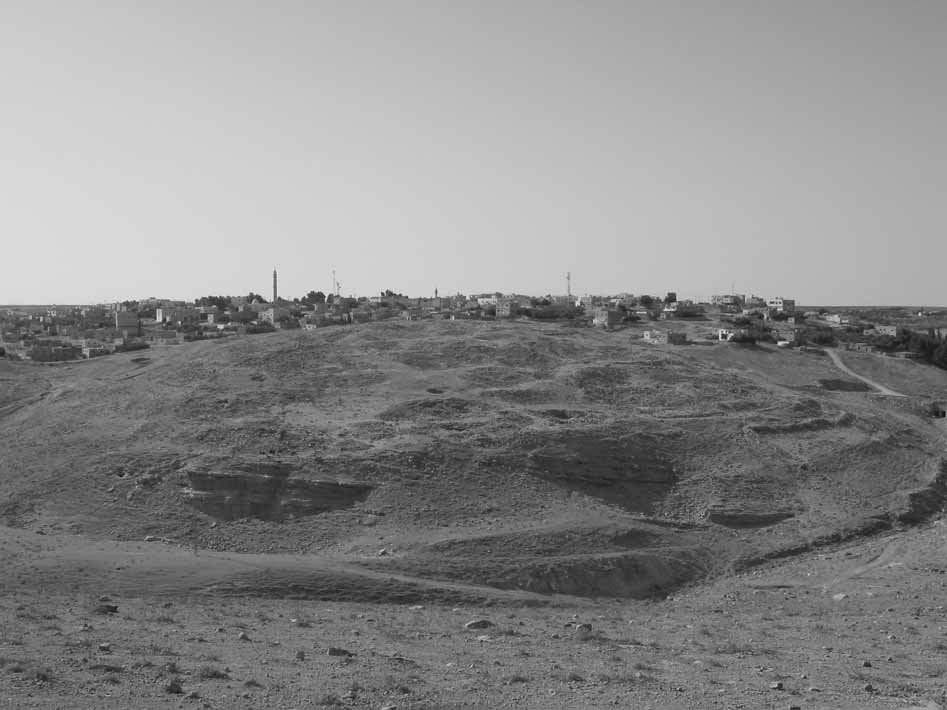
The ancient settlement lies adjacent to the modern town. Excavations have revealed that the site was occupied intermittently over the past 5,000 years, its earliest occupation occurring in the Early Bronze Age in the third millennium BC. The site's extensive settlement history is in part due to its location on the King's Highway, a major commercial route in antiquity. The majority of evidence for this population is concentrated in a 15-hectare tel. The release of the Mesha Inscription in 1868 led to an upsurge in visitors to the town (including tourists and scholars) due to its ostensible confirmation of biblical passages.
The site was occupied in the Early Bronze Age based on the finds of Canaanean blades. The earliest archaeological settlement remains date to the Iron Age.
The Hebrew Bible calls the city Divon or Divon Gad (דִּיבֹן גָּד Diḇon Gād) because it was said to have been occupied by the tribe of Gad.
According to the Bible, the city was conquered by the Amorite king Sihon from the Moabites. Later, it fell into the hands of the Israelites and was allocated to either the tribe of Gad or Reuben. According to the Mesha Stele, which was found at the site, the Moabite king Mesha ruled from Divon in the 9th century BC after his father had ruled it for 30 years. It was thus probably a Moabite town from at least the late 10th century BC. Biblical texts suggest that Divon remained under Moabite control until the end of the Southern Levantine Iron Age. Archaeological excavations conducted in the 1950s revealed settlements dating back to the Chalcolithic (early 5th millennium BCE), as well as later structures. However, in the early sixth century BCE, the Neo-Babylonian Empire destroyed Divon alongside Judah and Jerusalem and the region remained uninhabited until the Roman era.
The Mesha Stele, discovered in this region, describes the histories of Divon, Moab, and the Kingdom of Judah. The inscription recounts King Mesha’s rebellion against the northern Kingdom of Israel (Samaria), a pivotal event referenced in 2 Kings 3 in the Bible.
The Mesha Stele linked the tell (archaeological site) at Dhiʾban with the biblical Divon, while also implying that it was the capital of Mesha, a prominent Moabite king; however, its role in Mesha's reign has not been confirmed. In the Iron IIb period (IIb-c: 925-586 BCE), the tell at Dhiʾban underwent at least three large building projects. The site was artificially enlarged during this period, incorporating several new architectural features. These include retaining walls, towers, and a monumental city wall. The dates of these features' construction have not been confirmed, but they may be somewhere between the 9th and 8th centuries BCE. These large buildings appear to have been abandoned in the Iron IIc period. The site also featured a large necropolis to the northeast of the tel. This contained multi-generational burials with corresponding funerary offerings, and one had a clay coffin with an anthropomorphic lid. The necropolis appears to be contemporary with these building projects.
Hub AI
Dhiban, Jordan AI simulator
(@Dhiban, Jordan_simulator)
Dhiban, Jordan
Dhiban (Arabic: ذيبان, romanized: Ḏībān) is a Jordanian town located in Madaba Governorate approximately 70 kilometres south of Amman and east of the Dead Sea. It was the site of an ancient Moabite town (Moabite: 𐤃𐤉𐤁𐤍, romanized: Daybōn;, Biblical Hebrew: דִּיבוֹן, romanized: Divon)
Previously nomadic, the current community settled the town in the 1950s. Dhiban's current population is approximately 15,000, with many residents working in the army, government agencies, or engaged in seasonal agricultural production. Several young people study in nearby universities in al Karak, Madaba, and Amman. Most inhabitants practise Islam.
The ancient settlement lies adjacent to the modern town. Excavations have revealed that the site was occupied intermittently over the past 5,000 years, its earliest occupation occurring in the Early Bronze Age in the third millennium BC. The site's extensive settlement history is in part due to its location on the King's Highway, a major commercial route in antiquity. The majority of evidence for this population is concentrated in a 15-hectare tel. The release of the Mesha Inscription in 1868 led to an upsurge in visitors to the town (including tourists and scholars) due to its ostensible confirmation of biblical passages.
The site was occupied in the Early Bronze Age based on the finds of Canaanean blades. The earliest archaeological settlement remains date to the Iron Age.
The Hebrew Bible calls the city Divon or Divon Gad (דִּיבֹן גָּד Diḇon Gād) because it was said to have been occupied by the tribe of Gad.
According to the Bible, the city was conquered by the Amorite king Sihon from the Moabites. Later, it fell into the hands of the Israelites and was allocated to either the tribe of Gad or Reuben. According to the Mesha Stele, which was found at the site, the Moabite king Mesha ruled from Divon in the 9th century BC after his father had ruled it for 30 years. It was thus probably a Moabite town from at least the late 10th century BC. Biblical texts suggest that Divon remained under Moabite control until the end of the Southern Levantine Iron Age. Archaeological excavations conducted in the 1950s revealed settlements dating back to the Chalcolithic (early 5th millennium BCE), as well as later structures. However, in the early sixth century BCE, the Neo-Babylonian Empire destroyed Divon alongside Judah and Jerusalem and the region remained uninhabited until the Roman era.
The Mesha Stele, discovered in this region, describes the histories of Divon, Moab, and the Kingdom of Judah. The inscription recounts King Mesha’s rebellion against the northern Kingdom of Israel (Samaria), a pivotal event referenced in 2 Kings 3 in the Bible.
The Mesha Stele linked the tell (archaeological site) at Dhiʾban with the biblical Divon, while also implying that it was the capital of Mesha, a prominent Moabite king; however, its role in Mesha's reign has not been confirmed. In the Iron IIb period (IIb-c: 925-586 BCE), the tell at Dhiʾban underwent at least three large building projects. The site was artificially enlarged during this period, incorporating several new architectural features. These include retaining walls, towers, and a monumental city wall. The dates of these features' construction have not been confirmed, but they may be somewhere between the 9th and 8th centuries BCE. These large buildings appear to have been abandoned in the Iron IIc period. The site also featured a large necropolis to the northeast of the tel. This contained multi-generational burials with corresponding funerary offerings, and one had a clay coffin with an anthropomorphic lid. The necropolis appears to be contemporary with these building projects.