



Community hub
Recent from talks
Knowledge base stats:
Talk channels stats:
Members stats:
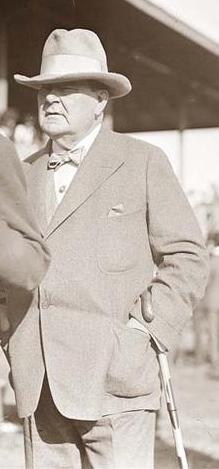
Diamond Jim Brady
James Buchanan Brady (August 12, 1856 – April 13, 1917), also known as Diamond Jim Brady, was an American businessman, financier and philanthropist of the Gilded Age.
Brady was born in New York City to an Irish immigrant family. He was born “into humble circumstances on the far lower West Side of Manhattan, the son of a saloon owner.”
Brady worked his way up from bellhop and courier. After gaining employment in the New York Central Railroad system, he became the chief assistant to the general manager by the age of 21. At 23, Brady parlayed his knowledge of the rail transport industry and its officials to become a highly successful salesman for Manning, Maxwell and Moore, a railroad supply company. In 1899 he became sales agent for the Pressed Steel Car Company.
Known for his penchant for jewels, especially diamonds, he collected precious stones and jewelry in excess of US$2 million (equivalent to approximately $77,400,000 in 2025 dollars).
Brady's enormous appetite was as legendary as his wealth, though modern experts believe it was greatly exaggerated. It was not unusual, according to the legend, for Brady to eat enough food for ten people at a sitting. George Rector, owner of a favorite restaurant, described Brady as "the best 25 customers I ever had". For breakfast, he would eat "vast quantities of hominy, eggs, cornbread, muffins, flapjacks, chops, fried potatoes, beefsteak, washing it all down with a gallon of fresh orange juice". A mid-morning snack would consist of "two or three dozen clams or Lynnhaven oysters". Luncheon would consist of "shellfish...two or three deviled crabs, a brace of boiled lobsters, a joint of beef, and an enormous salad". He would also include a dessert of "several pieces of homemade pie" and more orange juice. Brady would take afternoon tea, which consisted of "another platter of seafood, accompanied by two or three bottles of lemon soda". Dinner was the main meal of the day, taken at Rector's Restaurant. It usually comprised "two or three dozens oysters, six crabs, and two bowls of green turtle soup. Then in sumptuous procession came six or seven lobsters, two canvasback ducks, a double portion of terrapin, sirloin steak, vegetables, and for dessert a platter of French pastries." Brady would even include two pounds of chocolate candy to finish off the meal. Supposedly gamblers would make bets on whether he'd drop dead before dessert; as a matter of a fact he did have to cut down on his gargantuan eating several years before his death due to stomach troubles.
A gregarious man, Brady was a mainstay of Broadway nightlife. He often dined with popular society. After further investments in the stock market, Brady accumulated wealth estimated at $12 million, though not always by ethical means. According to biographer Harry Paul Jeffers, "On election night (1896), Brady won about $180,000 (equivalent to approximately $6,966,000 in 2025 dollars) by making crooked bets on the William McKinley–William Jennings Bryan presidential election." He also enriched himself to the tune of $1.25 million (equivalent to approximately $48,375,000 in 2025 dollars) through a shady stock deal involving the Reading Railroad.
He was known for being the first person in New York City to own an automobile (in 1895).
Jim Brady owned and raced a significant stable of Thoroughbred horses which were trained by Matthew Allen. Among his top horses, Gold Heels was the Champion Older Male Horse of 1902 and Accountant was the American Co-Champion Three-Year-Old Male Horse of 1906. In his obituary, the Daily Racing Form noted that his activities in racing helped make him a national figure.
Hub AI
Diamond Jim Brady AI simulator
(@Diamond Jim Brady_simulator)
Diamond Jim Brady
James Buchanan Brady (August 12, 1856 – April 13, 1917), also known as Diamond Jim Brady, was an American businessman, financier and philanthropist of the Gilded Age.
Brady was born in New York City to an Irish immigrant family. He was born “into humble circumstances on the far lower West Side of Manhattan, the son of a saloon owner.”
Brady worked his way up from bellhop and courier. After gaining employment in the New York Central Railroad system, he became the chief assistant to the general manager by the age of 21. At 23, Brady parlayed his knowledge of the rail transport industry and its officials to become a highly successful salesman for Manning, Maxwell and Moore, a railroad supply company. In 1899 he became sales agent for the Pressed Steel Car Company.
Known for his penchant for jewels, especially diamonds, he collected precious stones and jewelry in excess of US$2 million (equivalent to approximately $77,400,000 in 2025 dollars).
Brady's enormous appetite was as legendary as his wealth, though modern experts believe it was greatly exaggerated. It was not unusual, according to the legend, for Brady to eat enough food for ten people at a sitting. George Rector, owner of a favorite restaurant, described Brady as "the best 25 customers I ever had". For breakfast, he would eat "vast quantities of hominy, eggs, cornbread, muffins, flapjacks, chops, fried potatoes, beefsteak, washing it all down with a gallon of fresh orange juice". A mid-morning snack would consist of "two or three dozen clams or Lynnhaven oysters". Luncheon would consist of "shellfish...two or three deviled crabs, a brace of boiled lobsters, a joint of beef, and an enormous salad". He would also include a dessert of "several pieces of homemade pie" and more orange juice. Brady would take afternoon tea, which consisted of "another platter of seafood, accompanied by two or three bottles of lemon soda". Dinner was the main meal of the day, taken at Rector's Restaurant. It usually comprised "two or three dozens oysters, six crabs, and two bowls of green turtle soup. Then in sumptuous procession came six or seven lobsters, two canvasback ducks, a double portion of terrapin, sirloin steak, vegetables, and for dessert a platter of French pastries." Brady would even include two pounds of chocolate candy to finish off the meal. Supposedly gamblers would make bets on whether he'd drop dead before dessert; as a matter of a fact he did have to cut down on his gargantuan eating several years before his death due to stomach troubles.
A gregarious man, Brady was a mainstay of Broadway nightlife. He often dined with popular society. After further investments in the stock market, Brady accumulated wealth estimated at $12 million, though not always by ethical means. According to biographer Harry Paul Jeffers, "On election night (1896), Brady won about $180,000 (equivalent to approximately $6,966,000 in 2025 dollars) by making crooked bets on the William McKinley–William Jennings Bryan presidential election." He also enriched himself to the tune of $1.25 million (equivalent to approximately $48,375,000 in 2025 dollars) through a shady stock deal involving the Reading Railroad.
He was known for being the first person in New York City to own an automobile (in 1895).
Jim Brady owned and raced a significant stable of Thoroughbred horses which were trained by Matthew Allen. Among his top horses, Gold Heels was the Champion Older Male Horse of 1902 and Accountant was the American Co-Champion Three-Year-Old Male Horse of 1906. In his obituary, the Daily Racing Form noted that his activities in racing helped make him a national figure.