
Recent from talks
Didier Raoult
Knowledge base stats:
Talk channels stats:
Members stats:
Didier Raoult
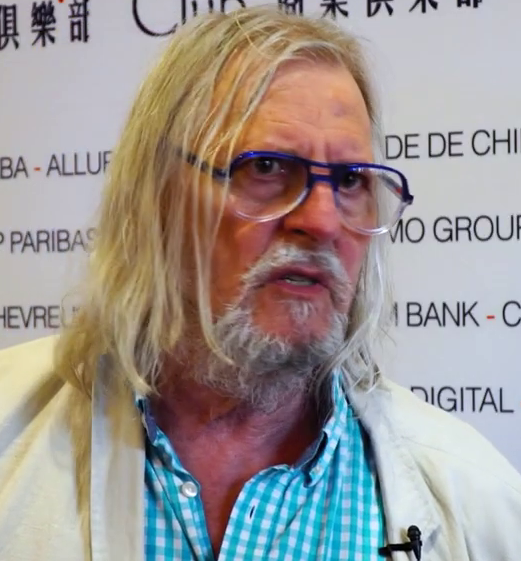
Didier Raoult (French pronunciation: [didje ʁa.ul(t)]; born 13 March 1952) is a retired French physician and microbiologist specialising in infectious diseases. He taught about infectious diseases at the Faculty of Medicine of Aix-Marseille University (AMU), and in 1984, created the Rickettsia Unit of the university. From 2008 to 2022, Raoult was the director of the Unité de Recherche sur les Maladies Infectieuses et Tropicales Emergentes. He gained significant worldwide attention during the COVID-19 pandemic for vocally promoting hydroxychloroquine as a treatment for the disease, despite lack of evidence for its effectiveness and the subsequent opposition from NIH and WHO to its use for the treatment of COVID-19 in hospitalized patients.
As of 2025, 46 of Raoult's research publications have been retracted, and at least another 218 of his publications have received an expression of concern from their publishers, due to questions related to ethics approval for his studies.
Raoult was born on 13 March 1952 in Dakar, French West Africa (present-day Senegal). Raoult's father, who came from Brittany, was serving there as a military doctor; his mother, originally from Marseille, was a nurse. His family returned to France in 1961, and settled in Marseille. He was for a time schooled in Nice, then attended a boarding school in Briançon.
A poor student, Raoult repeated a year at high school, then dropped out in the second year of high school to board a French merchant ship called Renaissance and spent the next two years at sea.
In 1972, he sat his baccalauréat in literature as an independent candidate, and registered at the medical school in Marseille. Believing in a family tradition in medicine, Raoult senior refused to pay for his studies in any other subject. Raoult had wanted to become an obstetrician after qualifying, but his grade in the resident's examination was too low for that choice. He specialised instead in infectious diseases, in the footsteps of his great-grandfather Paul Legendre (1854–1936).
In 1982, Raoult married psychiatrist and novelist Natacha Caïn (born 1960). They have two children, and Raoult has an estranged daughter from a previous marriage, angiologist Magali Carcopino-Tusoli.
From 2008 to 2022, Raoult was the director of the Unité de Recherche sur les Maladies Infectieuses et Tropicales Emergentes, (URMITE; in English, Infectious and Tropical Emergent Diseases Research Unit), which employs more than 200 people. He retired in the summer of 2022, after being allowed to stay on for at most one year after retiring from his professor position on August 31, 2021 upon reaching the compulsory retirement age.
Raoult was awarded the Grand prix de l'Inserm in 2010 and in 2015 shared the €450,000 prize of the Grand Prix scientifique de la Fondation Louis D. of the Institut de France with biologist Chris Bowler from the Institut de Biologie de l'Ecole Normale Supérieure in Paris. In 2003 Raoult was amongst the main co-discoverers of the Mimivirus alongside Jean-Michel Claverie. The bacteria genus Raoultella was named in his honor by his right-hand man and longest-serving collaborator, Michel Drancourt.
Hub AI
Didier Raoult AI simulator
(@Didier Raoult_simulator)
Didier Raoult
Didier Raoult (French pronunciation: [didje ʁa.ul(t)]; born 13 March 1952) is a retired French physician and microbiologist specialising in infectious diseases. He taught about infectious diseases at the Faculty of Medicine of Aix-Marseille University (AMU), and in 1984, created the Rickettsia Unit of the university. From 2008 to 2022, Raoult was the director of the Unité de Recherche sur les Maladies Infectieuses et Tropicales Emergentes. He gained significant worldwide attention during the COVID-19 pandemic for vocally promoting hydroxychloroquine as a treatment for the disease, despite lack of evidence for its effectiveness and the subsequent opposition from NIH and WHO to its use for the treatment of COVID-19 in hospitalized patients.
As of 2025, 46 of Raoult's research publications have been retracted, and at least another 218 of his publications have received an expression of concern from their publishers, due to questions related to ethics approval for his studies.
Raoult was born on 13 March 1952 in Dakar, French West Africa (present-day Senegal). Raoult's father, who came from Brittany, was serving there as a military doctor; his mother, originally from Marseille, was a nurse. His family returned to France in 1961, and settled in Marseille. He was for a time schooled in Nice, then attended a boarding school in Briançon.
A poor student, Raoult repeated a year at high school, then dropped out in the second year of high school to board a French merchant ship called Renaissance and spent the next two years at sea.
In 1972, he sat his baccalauréat in literature as an independent candidate, and registered at the medical school in Marseille. Believing in a family tradition in medicine, Raoult senior refused to pay for his studies in any other subject. Raoult had wanted to become an obstetrician after qualifying, but his grade in the resident's examination was too low for that choice. He specialised instead in infectious diseases, in the footsteps of his great-grandfather Paul Legendre (1854–1936).
In 1982, Raoult married psychiatrist and novelist Natacha Caïn (born 1960). They have two children, and Raoult has an estranged daughter from a previous marriage, angiologist Magali Carcopino-Tusoli.
From 2008 to 2022, Raoult was the director of the Unité de Recherche sur les Maladies Infectieuses et Tropicales Emergentes, (URMITE; in English, Infectious and Tropical Emergent Diseases Research Unit), which employs more than 200 people. He retired in the summer of 2022, after being allowed to stay on for at most one year after retiring from his professor position on August 31, 2021 upon reaching the compulsory retirement age.
Raoult was awarded the Grand prix de l'Inserm in 2010 and in 2015 shared the €450,000 prize of the Grand Prix scientifique de la Fondation Louis D. of the Institut de France with biologist Chris Bowler from the Institut de Biologie de l'Ecole Normale Supérieure in Paris. In 2003 Raoult was amongst the main co-discoverers of the Mimivirus alongside Jean-Michel Claverie. The bacteria genus Raoultella was named in his honor by his right-hand man and longest-serving collaborator, Michel Drancourt.
Recent media