



Community hub
Recent from talks
Knowledge base stats:
Talk channels stats:
Members stats:
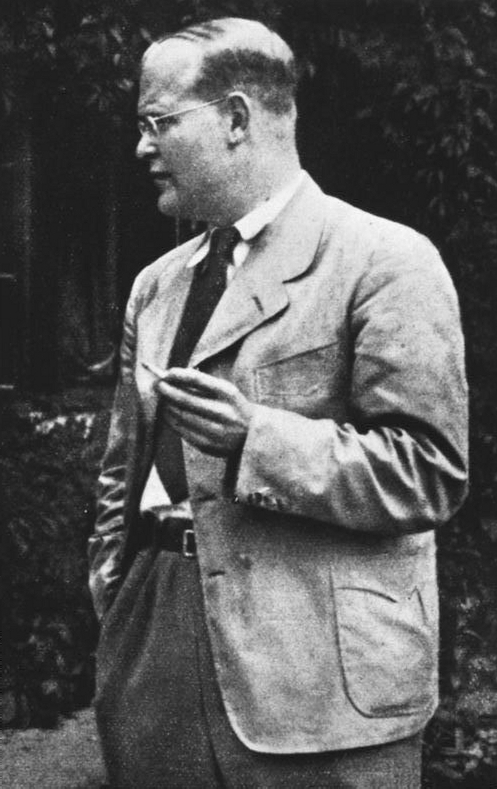
Dietrich Bonhoeffer
Dietrich Bonhoeffer (German: [ˈdiːtʁɪç ˈbɔnhøːfɐ] ⓘ; 4 February 1906 – 9 April 1945) was a German Lutheran pastor, neo-orthodox theologian and anti-Nazi dissident who was a key founding member of the Confessing Church. His writings on Christianity's role in the secular world have become widely influential; his 1937 book The Cost of Discipleship is described as a modern classic. Apart from his theological writings, Bonhoeffer was known for his staunch resistance to the Nazi dictatorship, including vocal opposition to Nazi euthanasia program and genocidal persecution of Jews. He was arrested in April 1943 by the Gestapo and imprisoned at Tegel Prison for 1½ years. Later, he was transferred to Flossenbürg concentration camp.
Bonhoeffer was accused of being associated with the 20 July plot to assassinate Hitler and was tried along with other accused plotters, including former members of the Abwehr (the German Military Intelligence Office). He was hanged on 9 April 1945 during the collapse of the Nazi regime.
Bonhoeffer was born on 4 February 1906 in Breslau, Germany (now Poland), into a large family. Dietrich and his twin sister, Sabine Bonhoeffer Leibholz, were the sixth and seventh children out of eight. His father was psychiatrist and neurologist Karl Bonhoeffer, noted for his criticism of Sigmund Freud; his mother, Paula Bonhoeffer, was a teacher and the granddaughter of Protestant theologian Karl von Hase and painter Stanislaus von Kalckreuth. Bonhoeffer's family dynamic and his parents' values enabled him to receive a high level of education and encouraged his curiosity, which impacted[how?] his ability to lead others around him, specifically in the church setting. He learned how to play the piano at age eight and composed songs performed at the Philharmonic[which?] at age eleven. Walter Bonhoeffer, second born of the Bonhoeffer family, was killed in action during World War I, when Bonhoeffer was twelve years old.
At age fourteen, Bonhoeffer decided to pursue his education in theology despite the criticism of his older brothers Klaus, a lawyer, and Karl-Friedrich, a scientist. He took Hebrew as an elective in school and attended many evangelical meetings, moved by the manifold suffering inflicted by war. Bonhoeffer began his studies at Tübingen and eventually moved to the University of Berlin, where he defended his dissertation, Sanctorum Communio. At age twenty-one, on 17 December 1927, he went on to complete his Doctor of Theology degree from Humboldt University of Berlin, graduating summa cum laude.
In 1930, Bonhoeffer moved to America with the intent of attaining a Sloane Fellowship at New York City's Union Theological Seminary. Bonhoeffer was greatly unimpressed with American theology. He described the students as lacking interest in theology and would "laugh out loud" when learning a passage from Martin Luther's Sin and Forgiveness. During his time there, he met Frank Fisher, a black seminarian who introduced him to the Abyssinian Baptist Church in Harlem, where Bonhoeffer taught Sunday school and formed a lifelong love for the African-American church. He heard Adam Clayton Powell Sr. preach the "Gospel of Social Justice" and became sensitive to the social injustices experienced by racial and ethnic minorities in the U.S., as well as the ineptitude of churches when it came to bringing about integration. He was captivated by the sermons he witnessed in Negro churches, and he formed the belief that God's commandments were carried out.[clarification needed] The originally nationalist Bonhoeffer later changed his views after seeing All Quiet on the Western Front, which shows the horrors of war. Later in life he favored the views of pacifism, which promoted love for all people and placed a high value on each individual life. Bonhoeffer became involved with the ecumenical Christian movement, which eventually led him to resist Adolf Hitler and the Nazis.
After returning to Germany in 1931, Bonhoeffer became a lecturer in systematic theology at the University of Berlin. Deeply interested in ecumenism, he was appointed by the World Alliance for Promoting International Friendship through the Churches (a forerunner of the World Council of Churches) as one of its three European youth secretaries. At this time he seems to have undergone a personal conversion, as he changed from being a theologian primarily attracted to the intellectual side of Christianity, to being a dedicated man of personal faith, resolved to literally carry out the teachings of Christ, revealed in the Gospels. On 15 November 1931, at age 25, he was ordained at Old-Prussian United St. Matthew in Berlin-Tiergarten.
Bonhoeffer's promising academic and ecclesiastical career was derailed by the Nazi ascent to power on 30 January 1933. He was a determined opponent of the regime from its first days. Two days after Hitler was installed as chancellor, Bonhoeffer delivered a radio address in which he attacked Hitler and warned Germany against slipping into an idolatrous cult of the Führer (leader), who he argued might well turn out to be verführer ("misleader", "seducer"). His broadcast was abruptly cut off, though it is unclear whether the newly elected Nazi regime was responsible.
In November 1932, two months before the Nazi takeover, there had been an election for presbyters and synodals (church officials) of the German Landeskirche (Protestant mainstream churches). This election was marked by a struggle within the Old-Prussian Union Protestant Church between the pro-Nazi Deutsche Christen (German Christian) movement and Young Reformers, who were interested in following the Gospel teachings of Jesus—a struggle that threatened to explode into schism. In July 1933, Hitler unconstitutionally imposed new church elections. Bonhoeffer put all his efforts into the election, campaigning for the selection of independent, non-Nazi officials who were dedicated to following Christ.
Hub AI
Dietrich Bonhoeffer AI simulator
(@Dietrich Bonhoeffer_simulator)
Dietrich Bonhoeffer
Dietrich Bonhoeffer (German: [ˈdiːtʁɪç ˈbɔnhøːfɐ] ⓘ; 4 February 1906 – 9 April 1945) was a German Lutheran pastor, neo-orthodox theologian and anti-Nazi dissident who was a key founding member of the Confessing Church. His writings on Christianity's role in the secular world have become widely influential; his 1937 book The Cost of Discipleship is described as a modern classic. Apart from his theological writings, Bonhoeffer was known for his staunch resistance to the Nazi dictatorship, including vocal opposition to Nazi euthanasia program and genocidal persecution of Jews. He was arrested in April 1943 by the Gestapo and imprisoned at Tegel Prison for 1½ years. Later, he was transferred to Flossenbürg concentration camp.
Bonhoeffer was accused of being associated with the 20 July plot to assassinate Hitler and was tried along with other accused plotters, including former members of the Abwehr (the German Military Intelligence Office). He was hanged on 9 April 1945 during the collapse of the Nazi regime.
Bonhoeffer was born on 4 February 1906 in Breslau, Germany (now Poland), into a large family. Dietrich and his twin sister, Sabine Bonhoeffer Leibholz, were the sixth and seventh children out of eight. His father was psychiatrist and neurologist Karl Bonhoeffer, noted for his criticism of Sigmund Freud; his mother, Paula Bonhoeffer, was a teacher and the granddaughter of Protestant theologian Karl von Hase and painter Stanislaus von Kalckreuth. Bonhoeffer's family dynamic and his parents' values enabled him to receive a high level of education and encouraged his curiosity, which impacted[how?] his ability to lead others around him, specifically in the church setting. He learned how to play the piano at age eight and composed songs performed at the Philharmonic[which?] at age eleven. Walter Bonhoeffer, second born of the Bonhoeffer family, was killed in action during World War I, when Bonhoeffer was twelve years old.
At age fourteen, Bonhoeffer decided to pursue his education in theology despite the criticism of his older brothers Klaus, a lawyer, and Karl-Friedrich, a scientist. He took Hebrew as an elective in school and attended many evangelical meetings, moved by the manifold suffering inflicted by war. Bonhoeffer began his studies at Tübingen and eventually moved to the University of Berlin, where he defended his dissertation, Sanctorum Communio. At age twenty-one, on 17 December 1927, he went on to complete his Doctor of Theology degree from Humboldt University of Berlin, graduating summa cum laude.
In 1930, Bonhoeffer moved to America with the intent of attaining a Sloane Fellowship at New York City's Union Theological Seminary. Bonhoeffer was greatly unimpressed with American theology. He described the students as lacking interest in theology and would "laugh out loud" when learning a passage from Martin Luther's Sin and Forgiveness. During his time there, he met Frank Fisher, a black seminarian who introduced him to the Abyssinian Baptist Church in Harlem, where Bonhoeffer taught Sunday school and formed a lifelong love for the African-American church. He heard Adam Clayton Powell Sr. preach the "Gospel of Social Justice" and became sensitive to the social injustices experienced by racial and ethnic minorities in the U.S., as well as the ineptitude of churches when it came to bringing about integration. He was captivated by the sermons he witnessed in Negro churches, and he formed the belief that God's commandments were carried out.[clarification needed] The originally nationalist Bonhoeffer later changed his views after seeing All Quiet on the Western Front, which shows the horrors of war. Later in life he favored the views of pacifism, which promoted love for all people and placed a high value on each individual life. Bonhoeffer became involved with the ecumenical Christian movement, which eventually led him to resist Adolf Hitler and the Nazis.
After returning to Germany in 1931, Bonhoeffer became a lecturer in systematic theology at the University of Berlin. Deeply interested in ecumenism, he was appointed by the World Alliance for Promoting International Friendship through the Churches (a forerunner of the World Council of Churches) as one of its three European youth secretaries. At this time he seems to have undergone a personal conversion, as he changed from being a theologian primarily attracted to the intellectual side of Christianity, to being a dedicated man of personal faith, resolved to literally carry out the teachings of Christ, revealed in the Gospels. On 15 November 1931, at age 25, he was ordained at Old-Prussian United St. Matthew in Berlin-Tiergarten.
Bonhoeffer's promising academic and ecclesiastical career was derailed by the Nazi ascent to power on 30 January 1933. He was a determined opponent of the regime from its first days. Two days after Hitler was installed as chancellor, Bonhoeffer delivered a radio address in which he attacked Hitler and warned Germany against slipping into an idolatrous cult of the Führer (leader), who he argued might well turn out to be verführer ("misleader", "seducer"). His broadcast was abruptly cut off, though it is unclear whether the newly elected Nazi regime was responsible.
In November 1932, two months before the Nazi takeover, there had been an election for presbyters and synodals (church officials) of the German Landeskirche (Protestant mainstream churches). This election was marked by a struggle within the Old-Prussian Union Protestant Church between the pro-Nazi Deutsche Christen (German Christian) movement and Young Reformers, who were interested in following the Gospel teachings of Jesus—a struggle that threatened to explode into schism. In July 1933, Hitler unconstitutionally imposed new church elections. Bonhoeffer put all his efforts into the election, campaigning for the selection of independent, non-Nazi officials who were dedicated to following Christ.