



Community hub
Recent from talks
Knowledge base stats:
Talk channels stats:
Members stats:
Digital Bolex
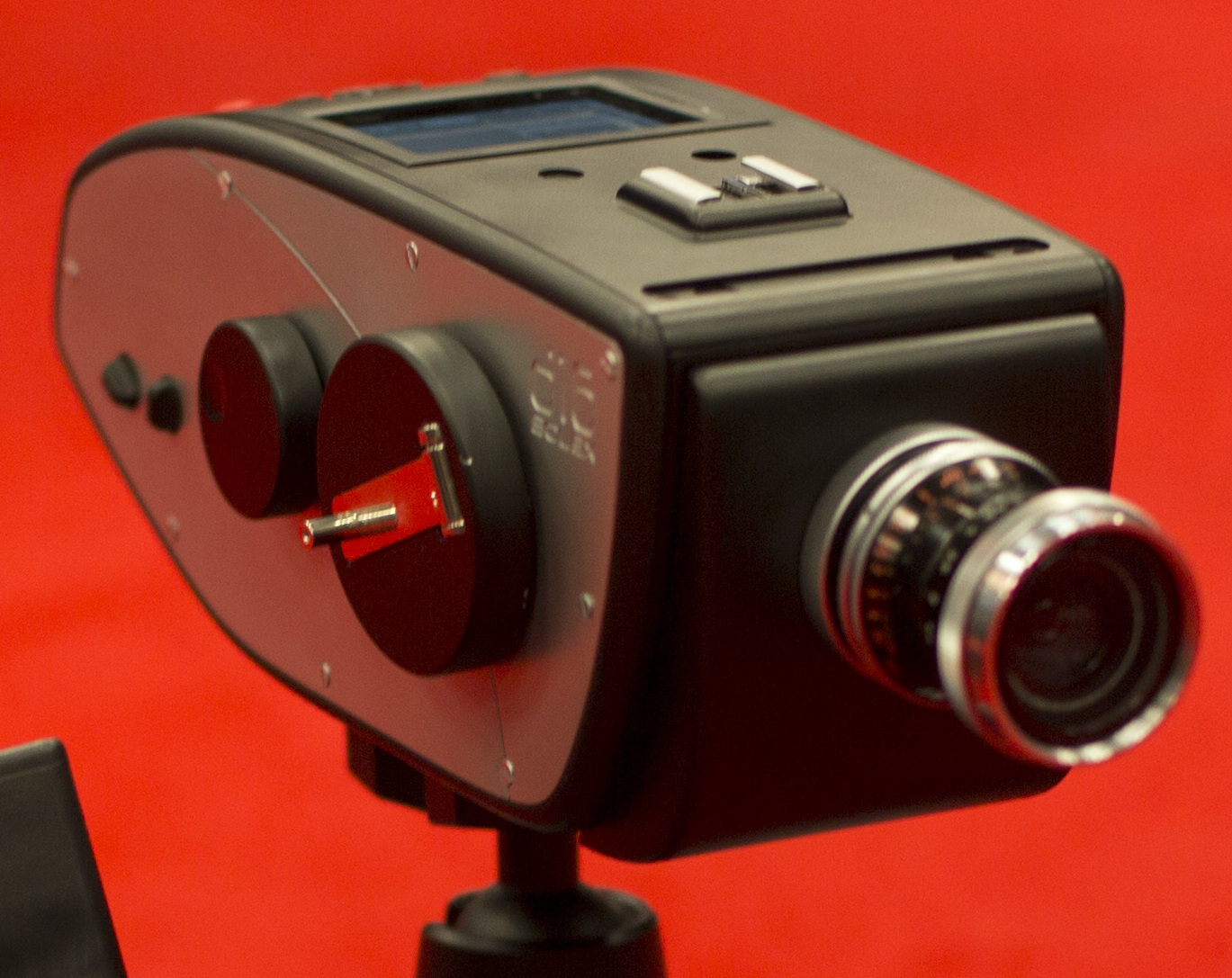
Digital Bolex was a partnership between Cinemeridian, Inc. and Ienso Canada, an engineering company, to develop the Digital Bolex D16 digital cinema camera. Development was funded via a successful Kickstarter in March 2012, raising $262,661.
On June 27, 2016, the company announced on its website that it would no longer be producing cameras as of that month, and would shut down its online store on June 30, 2016. The company website started showing the simple message "Maintenance mode is on" in June 2018, but has not yet been shut down as of January 2025, showing "Digital Bolex: Coming Soon".
Digital Bolex was headquartered in Downtown Los Angeles and Toronto, Canada. Cameras were designed and manufactured in Canada.
In 2012, Cinemeridian licensed the named Bolex from Bolex International, the Swiss camera company that created the first consumer 16mm film camera, the H16, in 1927. The name Bolex is derived from that of its inventor, Jacques Bogopolsky. The Digital Bolex D16 is named after the H16.[citation needed]
The Digital Bolex was initially developed as a side project of CEO Joseph Rubinstein's LA-based photo booth company Polite in Public. Rubinstein wanted to develop a video booth that would require a raw-capable video camera under $10,000. He decided to start a new company to pursue the endeavor in early 2011, and partnered with Canadian design firm Ienso in summer of 2011 to produce the first prototype camera.
In Fall of 2011, Rubinstein hired USC grad and filmmaker Elle Schneider to co-develop the camera. Both film school graduates, Schneider and Rubinstein collaborated on a short film entitled One Small Step to test their prototype. The film premiered at the Short Film Corner of the 2012 Cannes Film Festival.
Digital Bolex announced its camera at the 2012 SXSW Film Festival where it had a trade show booth. Unable to announce the licensing of the Bolex name before the event, they are listed in the festival catalog as Cinemeridian.
Rubinstein and Schneider announced their collaboration with Bolex via the Kickstarter crowdfunding platform on March 12, 2012. Billed "the first affordable digital cinema camera", the project came to the attention of notable film bloggers Philip Bloom and Stu Maschwitz, and by the campaign's second day the $100,000 goal had been met. Within the first 48 hours the campaign exceeded $250,000 and the limited run of 100 cameras had been sold. Rubinstein and Schneider have said they purposely limited the number of cameras to 100 in order to avoid the manufacturing delays that had plagued other runaway crowdfunding successes.[citation needed]
Hub AI
Digital Bolex AI simulator
(@Digital Bolex_simulator)
Digital Bolex
Digital Bolex was a partnership between Cinemeridian, Inc. and Ienso Canada, an engineering company, to develop the Digital Bolex D16 digital cinema camera. Development was funded via a successful Kickstarter in March 2012, raising $262,661.
On June 27, 2016, the company announced on its website that it would no longer be producing cameras as of that month, and would shut down its online store on June 30, 2016. The company website started showing the simple message "Maintenance mode is on" in June 2018, but has not yet been shut down as of January 2025, showing "Digital Bolex: Coming Soon".
Digital Bolex was headquartered in Downtown Los Angeles and Toronto, Canada. Cameras were designed and manufactured in Canada.
In 2012, Cinemeridian licensed the named Bolex from Bolex International, the Swiss camera company that created the first consumer 16mm film camera, the H16, in 1927. The name Bolex is derived from that of its inventor, Jacques Bogopolsky. The Digital Bolex D16 is named after the H16.[citation needed]
The Digital Bolex was initially developed as a side project of CEO Joseph Rubinstein's LA-based photo booth company Polite in Public. Rubinstein wanted to develop a video booth that would require a raw-capable video camera under $10,000. He decided to start a new company to pursue the endeavor in early 2011, and partnered with Canadian design firm Ienso in summer of 2011 to produce the first prototype camera.
In Fall of 2011, Rubinstein hired USC grad and filmmaker Elle Schneider to co-develop the camera. Both film school graduates, Schneider and Rubinstein collaborated on a short film entitled One Small Step to test their prototype. The film premiered at the Short Film Corner of the 2012 Cannes Film Festival.
Digital Bolex announced its camera at the 2012 SXSW Film Festival where it had a trade show booth. Unable to announce the licensing of the Bolex name before the event, they are listed in the festival catalog as Cinemeridian.
Rubinstein and Schneider announced their collaboration with Bolex via the Kickstarter crowdfunding platform on March 12, 2012. Billed "the first affordable digital cinema camera", the project came to the attention of notable film bloggers Philip Bloom and Stu Maschwitz, and by the campaign's second day the $100,000 goal had been met. Within the first 48 hours the campaign exceeded $250,000 and the limited run of 100 cameras had been sold. Rubinstein and Schneider have said they purposely limited the number of cameras to 100 in order to avoid the manufacturing delays that had plagued other runaway crowdfunding successes.[citation needed]