Hubbry Logo
search
logo
2070707

Dillinger Four

logo
Community Hub0 Subscribers
Read side by side
from Wikipedia

Dillinger Four (sometimes abbreviated as D4)[1] is an American punk rock band formed in 1994 in Minneapolis, Minnesota. They have released four full-length studio albums. Since 1996,[4] the band's lineup has been Patrick Costello on bass guitar and vocals, Erik Funk and Bill Morrisette[5] on guitars and vocals, and Lane Pederson on drums.[6]

Key Information

History

[edit]

Dillinger Four was formed in 1994 by guitarist Erik Funk and bassist Patrick Costello. The two had previously played together in the Chicago-based hardcore band Angerhouse.[7]

The original lineup, which also included guitarist Sloan Lorsung and drummer Lane Pedersen, released the 1995 debut 7" single Higher Aspirations: Tempered and Dismantled. Lorsung was replaced by Bill Morrisette before the 1996 follow-up EP The Kids Are All Dead. A series of subsequent singles and compilation appearances were later collected on 1999's This Shit is Genius. In June 1998, Dillinger Four joined As Friends Rust and Discount on a leg of their American tour.[8][9]

The band was signed to California hardcore label Hopeless Records on the strength of what Hopeless founder Louis Posen called its "international following."[10] The label released Dillinger Four's first two full-length records, 1998's Midwestern Songs of the Americas and 2000's Versus God. The band moved to Fat Wreck Chords for 2002's Situationist Comedy and 2008's Civil War.[11]

Funk founded and co-owned the influential Minneapolis music venue Triple Rock Social Club, which opened in 1998 and closed in 2017. Dillinger Four played the venue's final concert in November 2017.[12]

Star honoring Dillinger Four on the outside mural of the Minneapolis nightclub First Avenue

Dillinger Four has been honored with a star on the outside mural of the Minneapolis nightclub First Avenue,[13] recognizing performers that have played sold-out shows or have otherwise demonstrated a major contribution to the culture at the iconic venue.[14]

Discography

[edit]

Studio albums

[edit]

Live albums

[edit]
  • Live at First Avenue (2003)
  • The End. Live At The Death Of The Triple Rock (2020)

Compilation albums

[edit]

EPs

[edit]
  • Higher Aspirations: Tempered and Dismantled (Cerebellum Records, 1995)
  • The Kids Are All Dead (Cerebellum Records, 1996)
  • More Songs About Girlfriends and Bubblegum (Mutant Pop Records, 1997)
  • D4! The Bootleg (Chadwick Records, 2010)

Split releases

[edit]

Compilation appearances

[edit]
  • "Farts are Jazz to Assholes" on Short Music for Short People (1999)
  • "Our Science is Tight" and "Maximum Piss and Vinegar" on Hopelessly Devoted to You Vol. 3 (2000)
  • "Like Sprewells on a Wheelchair" on Rock Against Bush, Vol. 2 (2004)
  • "No Voices In The Sky" (Motorhead) on Pop For Charity [2002]

Videography

[edit]
  • Belt Fighting the Man (with Toys That Kill and Rivethead
  • Plea for Peace/Take Action Vol. 2

References

[edit]
Revisions and contributorsEdit on WikipediaRead on Wikipedia
from Grokipedia
Dillinger Four is an American punk rock band formed in 1994 in Minneapolis, Minnesota, by guitarist and vocalist Erik Funk and bassist and vocalist Patrick "Paddy" Costello.[1][2] The band's lineup was completed with the addition of drummer Lane Pederson and guitarist and vocalist Billy Morrisette in 1995, and they have remained active with occasional releases and tours into the 2020s.[1][2] Known for their high-energy, melodic punk style infused with sharp wit, political commentary, and gang vocals, Dillinger Four has released four studio albums—Midwestern Songs of the Americas (1998), Versus God (2000), Situationist Comedy (2002), and C I V I L W A R (2008)—establishing them as a key influence in the 1990s and 2000s punk scene.[3][2][1] The band emerged from the vibrant Minneapolis punk community, drawing inspiration from 1980s hardcore acts while emphasizing substance and authenticity over fashion or trends, often described as a "plainclothes" approach to punk that prioritized lyrical depth and raw energy.[2] Their debut album, Midwestern Songs of the Americas, sold approximately 17,000 copies in the United States and captured the band's signature blend of abrasive speed, catchy hooks, and humorous skepticism toward authority and societal norms.[2] Subsequent releases like Versus God and Situationist Comedy expanded their sound with more sophisticated songwriting, while C I V I L W A R addressed themes of disillusionment and resilience, solidifying their reputation as punk innovators comparable to Black Flag's impact on the 1980s scene.[2][1] Beyond their recordings, Dillinger Four's enduring legacy lies in their cult following and influence on later punk bands, despite limited mainstream success and infrequent touring due to members' other commitments—such as Pederson's career as a clinical psychologist and Funk's role as co-owner of the Triple Rock Social Club.[1] In 2025, they released the expanded rarities compilation This Shit Is Geniuser via Anxious and Angry, marking a return to new material after years of dormancy and reaffirming their relevance in the genre.[4]

Band members

Current members

The current lineup of Dillinger Four has remained stable since 1996, consisting of founding members Patrick Costello, Erik Funk, and Lane Pederson, alongside guitarist Bill Morrisette.[5][6] Patrick Costello plays bass guitar and provides lead vocals; as a co-founder, he shares primary songwriting duties with Erik Funk, contributing to the band's signature melodic punk structures and introspective lyrics across their discography.[7][8] Erik Funk handles lead guitar and vocals; also a co-founder, he collaborates closely on songwriting with Costello, emphasizing the dual-guitar interplay that defines the band's energetic sound.[7][9] Bill Morrisette joined in 1995 on guitar and backing vocals, enhancing the band's twin-guitar attack and adding harmonic layers to their live performances and recordings.[5][6] Lane Pederson joined as drummer in the band's early years, delivering the propulsive rhythms that underpin Dillinger Four's fast-paced, anthemic style.[10][11]

Former members

Sloan Lorsung was the only former member of Dillinger Four, serving as the band's second guitarist in 1995 until the summer of 1995.[9][12] Prior to joining, Lorsung played guitar in the Minneapolis-based punk band Bombsite.[9] During his brief tenure, he contributed to an unreleased early demo recording but did not perform on the band's debut EP, Higher Aspirations: Tempered and Dismantled (1995), though his image appeared on the release artwork.[9][13] Lorsung also participated in Dillinger Four's inaugural full summer tour in 1995, a five-to-six-week trek alongside the band Scooby Don't.[9] He departed midway through the tour, after which guitarist Bill Morrisette joined as a permanent member.[9]

History

Formation and early years (1994–1999)

Dillinger Four was formed in 1994 in Minneapolis, Minnesota, by guitarist and vocalist Erik Funk and bassist and vocalist Patrick Costello, who had previously played together in the Chicago-based hardcore band Angerhouse.[12] The duo, who met during high school, relocated to the Twin Cities and quickly immersed themselves in the local DIY punk scene, which was experiencing a surge in activity through independent venues, house shows, and labels like Extreme Noise Records.[2][9] To complete the initial lineup, they recruited drummer Lane Pederson and guitarist Sloan Lorsung, with the band playing their first show that year alongside local acts like Kung Fools, Dirt Poor, and Bombsite at an undisclosed DIY location.[14] The band's early years were marked by lineup adjustments and a focus on grassroots performances in Minnesota's punk ecosystem. In 1996, guitarist Sloan Lorsung departed, and Bill Morrisette joined on guitar, stabilizing the core lineup of Funk, Costello, Morrisette, and Pederson that has endured since.[12][9] This period saw Dillinger Four building a local reputation through frequent appearances at DIY spots and small clubs, contributing to the vibrant Midwestern punk community while honing their energetic live sound.[15] Their initial releases captured this raw energy: the debut EP Higher Aspirations: Tempered and Dismantled in 1995 on Cerebellum Records, followed by The Kids Are All Dead EP in 1996, also on Cerebellum.[13][16] In 1997, they issued More Songs About Girlfriends and Bubblegum EP on Mutant Pop Records, further solidifying their presence in the independent punk circuit.[17][16] By 1998, Dillinger Four signed with Hopeless Records, marking a shift toward wider exposure while retaining their DIY roots. Their debut full-length album, Midwestern Songs of the Americas, released on June 23, 1998, featured tracks like "O.K. F.M. D.O.A." and explored themes of Midwestern disillusionment, personal struggles, and everyday absurdities through sharp, humorous lyrics.[12][18] The album's release coincided with expanded touring, including U.S. dates that helped cultivate a dedicated following beyond the Twin Cities scene.[2]

Mainstream recognition and Fat Wreck era (2000–2008)

Dillinger Four achieved greater visibility in the punk scene with their second studio album, Versus God, released on June 20, 2000, by Hopeless Records.[19] The record featured sharp, satirical lyrics targeting religion and societal institutions, exemplified by tracks like "Bleed the Freak" and the title track, which critiqued organized faith through humorous yet biting commentary, including references to televangelists.[20] This release built on the band's growing underground following, solidifying their reputation for blending melodic punk with intelligent, irreverent songwriting.[21] Following Versus God, the band parted ways with Hopeless Records and signed with Fat Wreck Chords in 2001, a label known for its roster of influential punk acts.[22] Their third album, Situationist Comedy, arrived on June 4, 2002, via Fat Wreck, delving into themes of absurdism and punk subculture clichés amid a dystopian societal backdrop.[23] Standout tracks like "Noble Stabbings!!" highlighted the album's raw energy and clever deconstructions of everyday frustrations, earning praise for its unfiltered take on modern alienation.[24] The record marked a creative peak, with its title drawing from Situationist philosophy to underscore punk's role in mocking conformity.[25] In 2003, Dillinger Four released the live album Live at First Avenue on LSD Records, capturing a high-energy performance from their hometown venue in Minneapolis on December 16, 2001.[26] The set showcased the band's chaotic stage presence and fan interaction, preserving a raw snapshot of their mid-career momentum.[27] Following the release of Live at First Avenue, the band entered an extended hiatus attributed to creative burnout among members and the demands of maintaining day jobs alongside sporadic touring.[9] This period of inactivity lasted over six years, during which the group prioritized personal lives over full-time music commitments, though they occasionally performed select shows.[28] Dillinger Four returned in 2008 with their fourth studio album, C I V I L W A R, released on October 14 by Fat Wreck Chords.[29] The album reflected a matured perspective, grappling with internal band tensions and broader political disillusionment, as seen in tracks like "Parishiltonisametaphor," which used celebrity culture as a lens for societal critique.[22] Recorded at The Terrarium in Minneapolis, it balanced the band's signature speed and humor with more introspective elements, signaling growth without abandoning their punk roots.[30] Throughout the 2000s, the band's profile rose through high-profile tours, including multiple dates supporting NOFX on their 2008 East Coast run, and appearances at punk festivals like Punk Rock Bowling in 2000.[31][32] These opportunities, alongside their Fat Wreck affiliation, amplified their influence within the punk community, drawing larger crowds and cementing their status as Midwest punk staples.[33]

Hiatus, reunion, and recent activity (2009–present)

Following the release of their fourth studio album, Civil War, in 2008, Dillinger Four entered a period of hiatus from 2009 to 2012, primarily due to members' personal commitments such as family obligations and work responsibilities, including managing bars in Minnesota, with no new studio material produced during this time.[2] During this inactivity, the band released the bootleg EP D4! The Bootleg (The BBC Sessions) in 2010 through the independent label Chickswithdickrecords, featuring four live tracks recorded for BBC sessions.[34] The band resumed performing with reunion shows in 2013, including participation in the NOFX winter tour across the U.S. and the "D4th of July" multi-city U.S. tour featuring acts like Banner Pilot and A Wilhelm Scream.[35][36] These efforts marked a return to live performances after years of limited activity, extending to European dates such as their appearance at Groezrock festival in Belgium in 2016 and a show at The Dome in London that year.[37][38] Dillinger Four's final performance at the Triple Rock Social Club in Minneapolis took place on November 21, 2017, serving as the venue's closing show and featuring support from Negative Approach and others.[39] This event was later documented in the independent live release The End. Live At The Death Of The Triple Rock (November 21, 2017), issued in 2020 as a limited-edition digital album capturing the full set.[40] Around this period, the band was honored with a star on the mural outside First Avenue in Minneapolis, recognizing their contributions to the local music scene.[41] In 2025, Dillinger Four issued the rarities compilation This Shit Is Geniuser via Anxious and Angry Records, expanding on their earlier out-of-print collection with 19 tracks of out-of-print rarities from 7-inch singles, splits, EPs, and compilations spanning their early career.[42][4] As of late 2025, the band continues with occasional live appearances, including U.S. festival dates at events like Fest and Punk Rock Bowling, alongside a short European tour hitting the UK, Netherlands, France, and Belgium, though no extended full-length tour has been announced beyond these engagements.[43][44]

Musical style and influences

Genre and sound characteristics

Dillinger Four is primarily associated with pop-punk and skate punk, blending melodic hardcore elements with catchy hooks, rapid tempos, and intricate dual guitar harmonies that drive their energetic compositions.[45][8][46] Their sound compresses punk rock's diverse influences into a high-octane package, featuring abrasive hardcore edges alongside pop-punk songwriting that emphasizes rhythmic drive and vocal interplay among band members.[47] The band's early output in the mid-1990s, particularly their EPs and singles, showcased a raw, lo-fi aesthetic that prioritized unrefined aggression and DIY ethos over studio polish, reflecting the gritty origins of Minneapolis punk.[2][48] Transitioning to Fat Wreck Chords in the 2000s, their production evolved toward a more refined yet deliberately distorted quality, enhancing melodic clarity while preserving the chaotic intensity of their roots.[49] This shift allowed for broader appeal without sacrificing the band's core punk identity, as seen in albums engineered to retain a visceral, performance-like feel.[50] Dillinger Four's song structures often incorporate humorous and irreverent twists, subverting expectations with playful dynamics amid relentless pacing to evoke a sense of Midwestern punk irreverence akin to Hüsker Dü and The Replacements.[51][12] Committed to the 1990s punk revival, they steadfastly avoided contemporaneous trends like emo and metalcore, maintaining a distinct sound rooted in classic punk revivalism.[52][10] Engineer Eric Olsen contributed to this ethos on key Fat Wreck releases such as Versus God and C I V I L W A R, focusing on capturing the band's raw live energy rather than flawless perfection.[53][54]

Lyrical themes and influences

Dillinger Four's lyrics frequently explore recurring themes of anti-authority satire, personal failures, Midwestern ennui, and absurdism, often critiquing societal structures through a lens of everyday disillusionment. The album Versus God (2000) and its songs deliver pointed satire against consumerism and institutional hypocrisy, portraying these forces as soul-crushing mechanisms that perpetuate inequality.[12] Personal failures are depicted with raw honesty, as in reflections on individual contradictions and the grind of low-wage existence, while Midwestern ennui manifests in portrayals of regional apathy and slow societal decay, exemplified by tracks addressing alienation in working-class life.[55] Absurdism underscores much of this content, questioning religious indoctrination and cultural norms in a way that highlights life's inherent ridiculousness, such as in explorations of dogmatic ideologies gone awry.[56] The band's humor style is characteristically witty and self-deprecating, infused with pop culture references that avoid overt preachiness and instead opt for clever, relatable jabs. Lyrics often draw on allusions to figures like Billy Bragg or Kurt Vonnegut, blending satire with ironic detachment to underscore human flaws without descending into moralizing.[55] This approach is evident in song titles and verses that poke fun at personal shortcomings and punk scene clichés, fostering a sense of camaraderie through shared absurdity rather than confrontation.[57] Influences on Dillinger Four's lyrical content stem from the local Minneapolis punk scene, including bands like Hüsker Dü, which informed their divided songwriting dynamics and raw emotional delivery. Broader punk inspirations, such as the Dead Kennedys' sharp political satire, shaped their anti-authority edge, while literary absurdism and situationist philosophy influenced album titles like Situationist Comedy and the band's subversive take on spectacle and everyday resistance.[12][55] The songwriting process is collaborative, primarily involving Patrick Costello, Erik Funk, and Bill Morrisette, who contribute lyrics and vocals drawn from real-life band experiences, such as tour mishaps or interpersonal tensions, ensuring authenticity in their thematic explorations.[56][57] Over time, the band's lyrics evolved from early, more relationship-oriented songs focused on personal entanglements to mature reflections on aging within the punk subculture and broader existential concerns. Later works, like those on C I V I L W A R, grapple with the passage of time, individual crises in a flawed society, and a tempered optimism amid ongoing struggles, marking a shift toward deeper introspection while retaining their core satirical bite.[57] These themes align closely with their pop-punk sound, where high-energy delivery amplifies the ironic contrast between upbeat melodies and cynical content.[9]

Discography

Studio albums

Dillinger Four's debut studio album, Midwestern Songs of the Americas, was released on June 23, 1998, by Hopeless Records.[58] The album contains 13 tracks and runs for 31 minutes.[3] It was produced by the band, with recording handled by Dave Gardner.[59] The band's second studio album, Versus God, followed on June 20, 2000, also via Hopeless Records.[60] Like its predecessor, it features 13 tracks over a 31-minute runtime.[61] Production credits include Dave Gardner.[62] In 2002, Dillinger Four shifted to Fat Wreck Chords for their third studio album, Situationist Comedy, released on June 4.[54] The record includes 13 tracks with a total length of 34 minutes.[63] The group's fourth and most recent studio album to date, C I V I L W A R, appeared on October 14, 2008, under Fat Wreck Chords. It comprises 13 tracks spanning 39 minutes.[64] Dave Gardner served as producer.[65]

Live albums

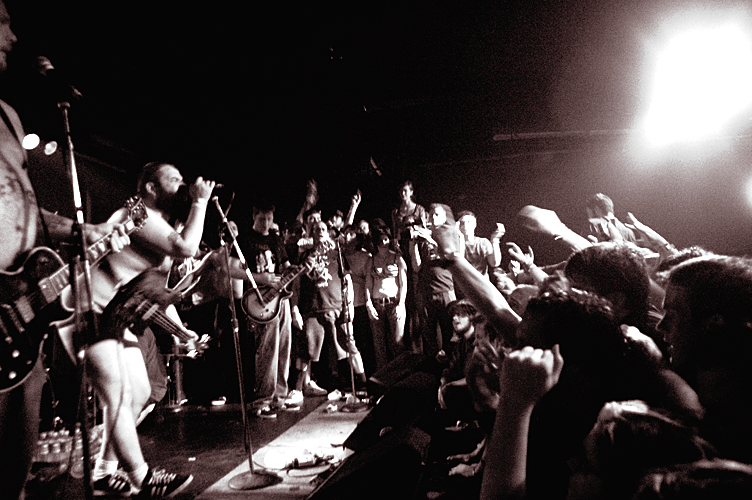
Dillinger Four's live albums capture the band's raucous performances in their native Minneapolis, emphasizing the visceral energy of their punk rock shows. Live at First Avenue, released in 2003 by LSD Records, documents a December 16, 2001, performance at the 7th St. Entry venue within the First Avenue complex.[26] The album spans 15 tracks drawn from the band's catalog up to their 2000 release Versus God, including staples like "Our Science Is Tight," "Mosh for Jesus," and "Doublewhiskeycokenoice," interspersed with crowd banter that underscores the intense audience participation characteristic of Dillinger Four's live dynamic. Clocking in at approximately 35 minutes, it was issued in CD and LP formats, providing fans with a snapshot of the group's early-2000s momentum.[16] The band's second live recording, The End. Live At The Death Of The Triple Rock, appeared independently in 2020 as a digital release. Captured during their November 21, 2017, set at the Triple Rock Social Club—marking the venue's final night after nearly two decades as a cornerstone of the local punk community—the album features 14 tracks surveying their discography, from raw early cuts like "Noble Stabbings!" to later anthems such as "Gainesville."[40] With a runtime of about 54 minutes, it delivers an unfiltered, high-fidelity account of the evening's chaotic fervor, serving as both a farewell to the club and a testament to the band's enduring local ties.[66]

EPs and singles

Dillinger Four's early extended plays (EPs) and singles played a crucial role in establishing their presence in the Minneapolis punk scene, showcasing raw energy and witty songwriting that captured attention from independent labels and fans alike. These shorter releases, often limited to 7-inch vinyl formats, highlighted the band's evolving sound from hardcore-tinged punk to more melodic and humorous compositions, laying the groundwork for their full-length albums.[67] The band's debut EP, Higher Aspirations: Tempered and Dismantled, was self-released on Cerebellum Records in 1995 as a 7-inch vinyl featuring four tracks that demonstrated their initial aggressive style rooted in punk rock. Key songs include "Shotgun Confessional," a fast-paced confessional rant, and "Unemployed," addressing themes of frustration and idleness, with the full tracklist comprising "Shotgun Confessional," "Unemployed," "Smells Like OK Soda," and "One Trick Pony." This release marked their first recorded output and circulated primarily through local shows and DIY networks.[68] In 1996, Dillinger Four followed with The Kids Are All Dead E.P., another 7-inch on Cerebellum Records containing four tracks of high-octane punk anthems that built on their debut's intensity while introducing sharper hooks. Standout tracks such as "I Coulda Been A Contender," evoking regret and ambition, and "Hi-Pro Glow," a satirical take on consumerism, defined the EP's anthemic quality, with the complete lineup being "I Coulda Been A Contender," "Hi-Pro Glow," "Two Cents," and "He's A Shithead (Yeah, Yeah)." It gained traction among punk enthusiasts for its unpolished production and relatable lyrical bite.[69] More Songs About Girlfriends and Bubblegum, released in late 1997 on Mutant Pop Records as a 4-track 7-inch EP, shifted toward humorous and introspective themes, blending pop-punk melodies with the band's signature sarcasm. Notable songs include "An American Banned," a critique of nationalism and conformity, and "Fuck You, Ms. Rochelle," a playful schoolyard revenge tale, alongside "Thanks For Nothing" and "Twin Cities Sinners, United." Limited to an initial pressing of 500 on red vinyl, it exemplified their ability to infuse punk with clever, everyday absurdities, appealing to a broader underground audience.[70] Later, in 2010, the band issued D4! The Bootleg (The BBC Sessions), an independent one-sided 12-inch vinyl on Chickswithdickrecords featuring four live tracks recorded for the BBC, serving as a fan-oriented collection of rarities from their catalog. The EP includes energetic renditions of "A Jingle For The Product," "Folk Song," "Gainesville," and "D4 = Putting The 'F' Back In 'Art'," capturing their performance charisma during the Fat Wreck Chords era. This unofficial-style release highlighted unreleased material and reinforced their cult following during a period of reduced activity.[34] Among their singles, "An American Banned" stands out as a standalone digital release in September 2025 on Anxious and Angry Records, clocking in at 2:44 and serving as the lead track for the expanded compilation This Shit Is Geniuser. The song revisits themes of societal hypocrisy with biting lyrics like "Fuck the banks, I've heard them say / But then someone has to cash this check," accompanied by the band's first official music video directed by Andrew Seward. It marked a rare new output after years of hiatus, reigniting interest in their discography.[71]

Compilation and split releases

Dillinger Four's early material from singles, splits, and other compilations was collected on the 1999 release This Shit Is Genius, issued independently by No Idea Records as a 13-track LP compiling assorted songs recorded between 1994 and 1997.[72][73] The band contributed the track "Noble Stabbings II" to the 2002 charity compilation Plea for Peace/Take Action Vol. 2, a double-disc album on Sub City Records benefiting anti-war and peace initiatives, featuring 33 tracks from various punk and alternative acts.[74][75] In 2004, Dillinger Four appeared on Fat Wreck Chords' political compilation Rock Against Bush, Vol. 2, providing the exclusive track "Like Sprewells on a Wheelchair" as part of a 28-song effort raising funds and awareness against the Iraq War and George W. Bush administration policies.[76] Dillinger Four participated in the 2007 Fat Wreck Chords compilation Protect: A Benefit for the National Association to Protect Children, contributing "An American Banned," an unreleased track originally from their 1997 7-inch, to support child protection advocacy. An expanded rarities compilation, This Shit Is Geniuser, was released on October 15, 2025, by Anxious and Angry Records, featuring 19 tracks including material from out-of-print 7-inches, their split with The Strike, and various early compilations, alongside previously unreleased songs to preserve and update the band's formative punk output.[4][77] The band issued several split releases with fellow punk groups, beginning with the 1996 7-inch The Strike/Dillinger Four on THD Records, where Dillinger Four contributed two tracks alongside The Strike's selections, highlighting their shared melodic hardcore influences.[78] In 2000, Dillinger Four collaborated with Pinhead Gunpowder on a split EP via Adeline Records, each band offering four original songs in a format common to punk subculture for cross-promoting acts within the scene.[79]

Videography and media appearances

Music videos

Dillinger Four released their first official music video in 2025 for the track "An American Banned," a previously unreleased song from their early catalog.[71] Directed by Andrew Seward, formerly of Nighttime Flyers and Against Me!, the video premiered on September 25, 2025, via the band's official YouTube channel as a promotional piece for the expanded compilation album This Shit Is Geniuser.[80][81] The video embodies a DIY punk aesthetic, characteristic of the band's low-budget, grassroots approach to media, with simple production elements that emphasize raw energy over polished visuals.[81] Its themes satirize American societal issues, including economic inequality, low wages, rising rent, personal debt, and skepticism toward patriotism and political institutions, mirroring the song's lyrical frustration and rebellious tone.[71] This aligns briefly with the band's broader humorous yet critical lyrical style. The video received airplay on punk-oriented platforms and garnered positive reception for capturing the band's enduring spirit after years of limited visual media output.[82]

Live recordings and documentaries

Dillinger Four's live recordings extend beyond their studio output to include visual documentation of their energetic performances and tour life, often captured in independent formats. One notable example is the 2002 DVD Belt Fighting the Man, which chronicles snippets from their summer tour alongside Rivethead and Toys That Kill. Produced independently by a tour companion, the documentary-style release features behind-the-scenes footage of the bands' interactions, van life, and raw punk camaraderie during cross-country dates, emphasizing the DIY ethos central to their scene. Released through Plea for Peace Records and later reviewed in punk zine Razorcake, it provides a gritty, unpolished look at early-2000s touring challenges and highlights.[83] Festival appearances have yielded scattered but valuable live video footage, preserving the band's chaotic stage presence for online audiences. These recordings, while not officially compiled, offer glimpses into their ability to command large outdoor stages.[2] Interview compilations from reputable punk media have also been visualized in limited video form, blending discussions with performance elements. In 2011, Razorcake magazine documented Dillinger Four's appearance at The Fest 10 through a series of live performance videos, including full-song captures, filmed during their set at the Gainesville event. These clips, hosted on Razorcake's YouTube channel, intersperse onstage energy with post-show reflections on the band's longevity and Minneapolis roots.[84] A significant 2020 highlight was the online availability of video from Dillinger Four's November 21, 2017, performance at the Triple Rock Social Club in Minneapolis, tied to the venue's closure and the band's announced hiatus. Fan and venue-recorded footage, uploaded to YouTube, documents the final show in full sets, featuring rarities and staples amid emotional crowd interactions; this visual archive gained renewed attention during a one-day Bandcamp audio stream of the gig, benefiting local causes amid pandemic restrictions. The clips underscore the performance's role as a farewell, with the band delivering blistering takes on songs before their brief break.[85] In 2025, promotional efforts for the reissued rarities compilation This Shit Is Geniuser—updated by Anxious & Angry Records with additional tracks—included short video clips shared via the band's social media and YouTube. These feature archival live snippets from early shows and a newly directed music video for "An American Banned," helmed by collaborator Andrew (of Nighttime Flyers and Against Me!), blending animation with performance elements to promote the collection's deep cuts and unreleased material. Released amid reunion tours, the clips contextualize the comp as a career-spanning retrospective, available in digital and vinyl formats.[86][87]

References

User Avatar
No comments yet.