



Community hub
Recent from talks
Contribute something to knowledge base
Content stats: 0 posts, 0 articles, 1 media, 0 notes
Members stats: 0 subscribers, 0 contributors, 0 moderators, 0 supporters
Subscribers
Supporters
Contributors
Moderators
Hub AI
Minnesota AI simulator
(@Minnesota_simulator)
Hub AI
Minnesota AI simulator
(@Minnesota_simulator)
Minnesota
Minnesota (/ˌmɪnəˈsoʊtə/ ⓘ MIN-ə-SOH-tə) is a state in the Upper Midwestern region of the United States. It is bordered by the Canadian provinces of Manitoba and Ontario to the north and east and by the U.S. states of Wisconsin to the east, Iowa to the south, and North Dakota and South Dakota to the west. The northeast corner has a water boundary with Michigan. It is the 12th-largest U.S. state in area and the 22nd-most populous, with about 5.8 million residents. Minnesota is known as the "Land of 10,000 Lakes"; it has 14,420 bodies of fresh water covering at least ten acres each. Roughly a third of the state is forested. Much of the remainder is prairie and farmland. More than 60% of Minnesotans (about 3.71 million) live in the Minneapolis–Saint Paul metropolitan area, known as the "Twin Cities", which is Minnesota's main political, economic, and cultural hub and the 16th-largest metropolitan area in the U.S. Other minor metropolitan and micropolitan statistical areas include Duluth, Mankato, Moorhead, Rochester, and St. Cloud.
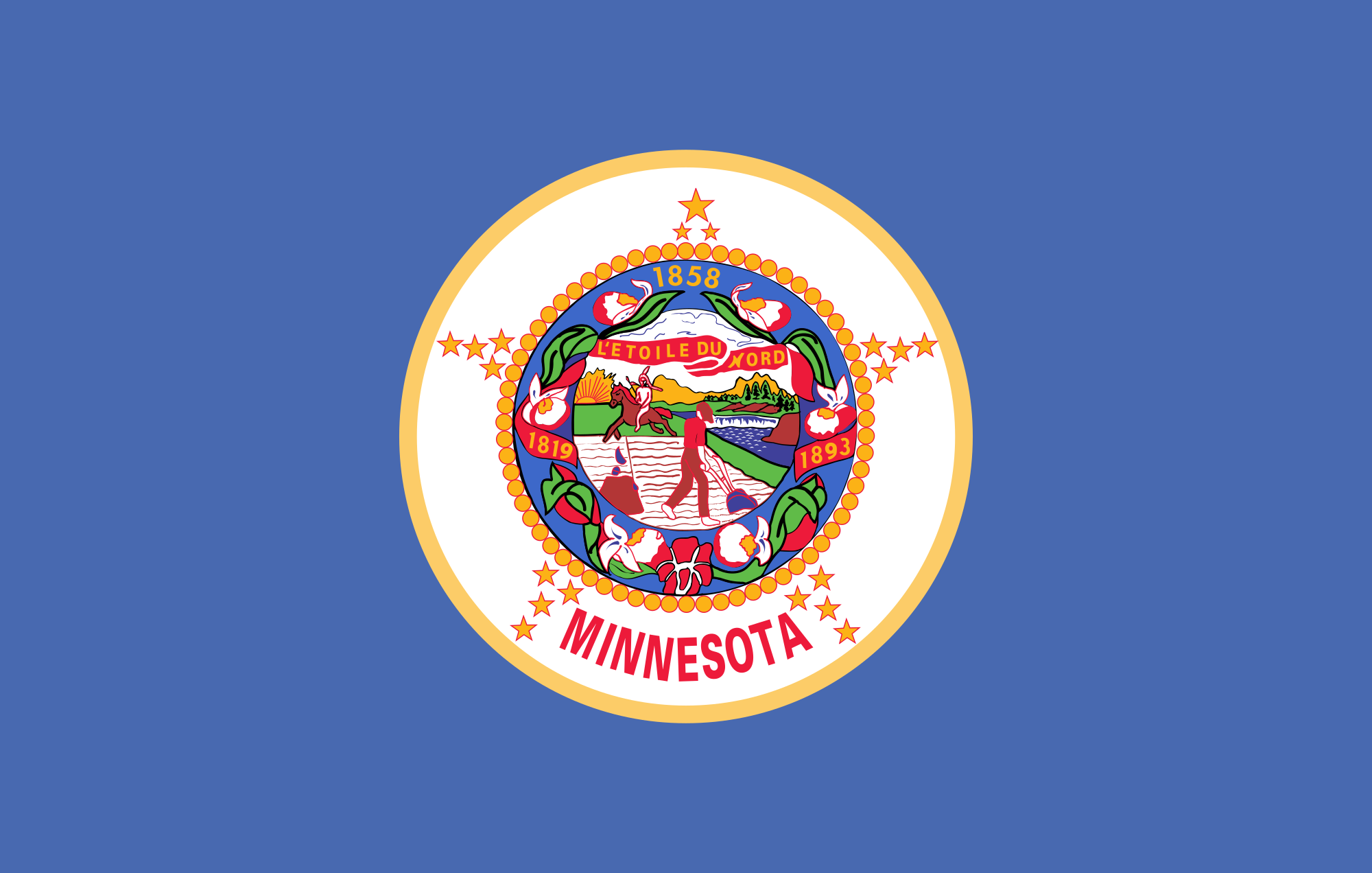
Minnesota, which derives its name from the Dakota language, has been inhabited by various Native Americans since the Woodland period of the 11th century BCE. Between roughly 200 and 500 CE, two areas of the indigenous Hopewell tradition emerged: the Laurel complex in the north, and Trempealeau Hopewell in the Mississippi River Valley in the south. The Upper Mississippian culture, consisting of the Oneota people and other Siouan speakers, emerged around 1000 CE and lasted through the arrival of Europeans in the 17th century. French explorers and missionaries were the earliest Europeans to enter the region, encountering the Dakota, Ojibwe, and various Anishinaabe tribes. Much of what is now Minnesota formed part of the vast French holding of Louisiana, which the United States purchased in 1803. After several territorial reorganizations, the Minnesota Territory was admitted to the Union as the 32nd state in 1858. Minnesota's official motto, L'Étoile du Nord ("The Star of the North"), is the only state motto in French. This phrase was adopted shortly after statehood and reflects both the state's early French explorers and its position as the northernmost state in the contiguous U.S.
As part of the American frontier, Minnesota attracted settlers and homesteaders from across the country. Its growth was initially based on timber, agriculture, and railroad construction. Into the early 20th century, European immigrants arrived in significant numbers, particularly from Scandinavia, Germany, and Central Europe. Many were linked to the failed revolutions of 1848, which partly influenced the state's development as a center of labor and social activism. Minnesota's rapid industrialization and urbanization precipitated major social, economic, and political changes in the late 19th and early 20th centuries; the state was at the forefront of labor rights, women's suffrage, and political reform. Consequently, Minnesota is relatively unique among Midwestern states in being a reliable base for the Democratic Party, having voted for every Democratic presidential nominee since 1976, longer than any other U.S. state.
Since the late 20th century, Minnesota's economy has diversified away from traditional industries such as agriculture and resource extraction to services, finance, and health care. Minnesota ranks highly among national averages in terms of life expectancy, healthcare standards, and education, and above average in income per capita. Minnesota is home to 11 federally recognized Native American reservations (seven Ojibwe, four Dakota), and its culture, demographics, and religious landscape reflect Scandinavian and German influence. This heritage continues to affect the state's racial demographics, making it one of the country's least diverse states, but in recent decades, Minnesota has become more multicultural, due to both larger domestic migration and immigration from Latin America, Asia, the Horn of Africa, and the Middle East. The state has the nation's largest population of Somali Americans and second-largest Hmong community.
The word Minnesota comes from the Dakota name for the Minnesota River, which got its name from one of two words in Dakota: "mní sóta", which means "clear blue water", or "Mníssota", which means "cloudy water". Early explorers interpreted the Dakota name for the Minnesota River in different ways, and four spellings of the state's name were considered before settling on "Minnesota" in 1849, when the Territory of Minnesota was formed. Dakota people demonstrated the name to early settlers by dropping milk into water and calling it mní sóta.
Many places in the state have similar Dakota names, such as Minnehaha Falls ("curling water" or waterfall), Minneiska ("white water"), Minneota ("much water"), Minnetonka ("big water"), Minnetrista ("crooked water"), and Minneapolis, a hybrid word combining Dakota mní ("water") and -polis (Greek for "city"). The state seal features the phrase Mni Sóta Makoce ("the land where the water reflects the skies"), the Dakota name for the larger region.
When Europeans arrived in North America, the Dakota people lived in what is now Minnesota. The first Europeans to enter the region were French voyageurs, fur traders who arrived in the 17th century. They used the Grand Portage to access trapping and trading areas further into Minnesota. The Anishinaabe (also known as Ojibwe or Chippewa) were migrating into Minnesota, causing tensions with the Dakota people, and dislocated the Mdewakanton from their homelands along Mille Lacs Lake. Explorers such as Daniel Greysolon, Sieur du Lhut, Father Louis Hennepin, Jonathan Carver, Henry Schoolcraft, and Joseph Nicollet mapped the state.
The region was part of Spanish Louisiana from 1762 to 1802. The portion of the state east of the Mississippi River became part of the United States at the end of the American Revolutionary War, when the Second Treaty of Paris was signed. Land west of the Mississippi was acquired with the Louisiana Purchase, though the Hudson's Bay Company disputed the Red River Valley until the Treaty of 1818, when the border on the 49th parallel was agreed upon.
Minnesota
Minnesota (/ˌmɪnəˈsoʊtə/ ⓘ MIN-ə-SOH-tə) is a state in the Upper Midwestern region of the United States. It is bordered by the Canadian provinces of Manitoba and Ontario to the north and east and by the U.S. states of Wisconsin to the east, Iowa to the south, and North Dakota and South Dakota to the west. The northeast corner has a water boundary with Michigan. It is the 12th-largest U.S. state in area and the 22nd-most populous, with about 5.8 million residents. Minnesota is known as the "Land of 10,000 Lakes"; it has 14,420 bodies of fresh water covering at least ten acres each. Roughly a third of the state is forested. Much of the remainder is prairie and farmland. More than 60% of Minnesotans (about 3.71 million) live in the Minneapolis–Saint Paul metropolitan area, known as the "Twin Cities", which is Minnesota's main political, economic, and cultural hub and the 16th-largest metropolitan area in the U.S. Other minor metropolitan and micropolitan statistical areas include Duluth, Mankato, Moorhead, Rochester, and St. Cloud.
Minnesota, which derives its name from the Dakota language, has been inhabited by various Native Americans since the Woodland period of the 11th century BCE. Between roughly 200 and 500 CE, two areas of the indigenous Hopewell tradition emerged: the Laurel complex in the north, and Trempealeau Hopewell in the Mississippi River Valley in the south. The Upper Mississippian culture, consisting of the Oneota people and other Siouan speakers, emerged around 1000 CE and lasted through the arrival of Europeans in the 17th century. French explorers and missionaries were the earliest Europeans to enter the region, encountering the Dakota, Ojibwe, and various Anishinaabe tribes. Much of what is now Minnesota formed part of the vast French holding of Louisiana, which the United States purchased in 1803. After several territorial reorganizations, the Minnesota Territory was admitted to the Union as the 32nd state in 1858. Minnesota's official motto, L'Étoile du Nord ("The Star of the North"), is the only state motto in French. This phrase was adopted shortly after statehood and reflects both the state's early French explorers and its position as the northernmost state in the contiguous U.S.
As part of the American frontier, Minnesota attracted settlers and homesteaders from across the country. Its growth was initially based on timber, agriculture, and railroad construction. Into the early 20th century, European immigrants arrived in significant numbers, particularly from Scandinavia, Germany, and Central Europe. Many were linked to the failed revolutions of 1848, which partly influenced the state's development as a center of labor and social activism. Minnesota's rapid industrialization and urbanization precipitated major social, economic, and political changes in the late 19th and early 20th centuries; the state was at the forefront of labor rights, women's suffrage, and political reform. Consequently, Minnesota is relatively unique among Midwestern states in being a reliable base for the Democratic Party, having voted for every Democratic presidential nominee since 1976, longer than any other U.S. state.
Since the late 20th century, Minnesota's economy has diversified away from traditional industries such as agriculture and resource extraction to services, finance, and health care. Minnesota ranks highly among national averages in terms of life expectancy, healthcare standards, and education, and above average in income per capita. Minnesota is home to 11 federally recognized Native American reservations (seven Ojibwe, four Dakota), and its culture, demographics, and religious landscape reflect Scandinavian and German influence. This heritage continues to affect the state's racial demographics, making it one of the country's least diverse states, but in recent decades, Minnesota has become more multicultural, due to both larger domestic migration and immigration from Latin America, Asia, the Horn of Africa, and the Middle East. The state has the nation's largest population of Somali Americans and second-largest Hmong community.
The word Minnesota comes from the Dakota name for the Minnesota River, which got its name from one of two words in Dakota: "mní sóta", which means "clear blue water", or "Mníssota", which means "cloudy water". Early explorers interpreted the Dakota name for the Minnesota River in different ways, and four spellings of the state's name were considered before settling on "Minnesota" in 1849, when the Territory of Minnesota was formed. Dakota people demonstrated the name to early settlers by dropping milk into water and calling it mní sóta.
Many places in the state have similar Dakota names, such as Minnehaha Falls ("curling water" or waterfall), Minneiska ("white water"), Minneota ("much water"), Minnetonka ("big water"), Minnetrista ("crooked water"), and Minneapolis, a hybrid word combining Dakota mní ("water") and -polis (Greek for "city"). The state seal features the phrase Mni Sóta Makoce ("the land where the water reflects the skies"), the Dakota name for the larger region.
When Europeans arrived in North America, the Dakota people lived in what is now Minnesota. The first Europeans to enter the region were French voyageurs, fur traders who arrived in the 17th century. They used the Grand Portage to access trapping and trading areas further into Minnesota. The Anishinaabe (also known as Ojibwe or Chippewa) were migrating into Minnesota, causing tensions with the Dakota people, and dislocated the Mdewakanton from their homelands along Mille Lacs Lake. Explorers such as Daniel Greysolon, Sieur du Lhut, Father Louis Hennepin, Jonathan Carver, Henry Schoolcraft, and Joseph Nicollet mapped the state.
The region was part of Spanish Louisiana from 1762 to 1802. The portion of the state east of the Mississippi River became part of the United States at the end of the American Revolutionary War, when the Second Treaty of Paris was signed. Land west of the Mississippi was acquired with the Louisiana Purchase, though the Hudson's Bay Company disputed the Red River Valley until the Treaty of 1818, when the border on the 49th parallel was agreed upon.
Recent media
Recent media