Hubbry Logo
Disappointment IslandDisappointment IslandMain
Open search
Disappointment Island
Community hub
Disappointment Island
logo
8 pages, 0 posts
0 subscribers
Be the first to start a discussion here.
Disappointment Island
from Wikipedia

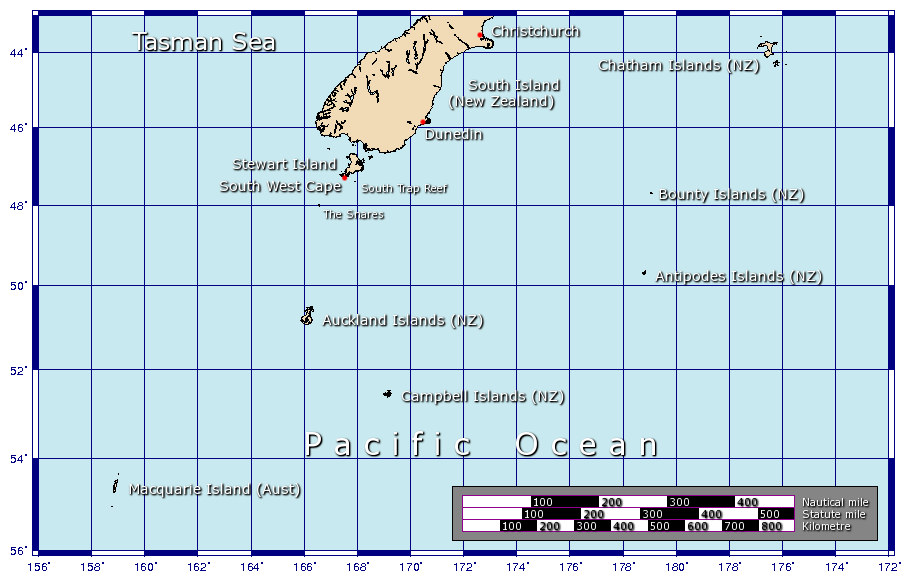
Disappointment Island is one of seven uninhabited islands in the Auckland Islands archipelago, in New Zealand. It is 475 kilometres (295 mi) south of the country's main South Island and 8 kilometres (5 mi) from the northwest end of Auckland Island.

Key Information

It is home to a large colony of white-capped albatrosses: about 65,000 pairs – nearly the entire world's population – nest there.[1] Also on the island is the Auckland rail, endemic to the archipelago; once thought to be extinct, it was rediscovered in 1993.[2] The island is known for being one of the least-modified subantarctic islands in New Zealand.

History

[edit]

On 7 March 1907, the Dundonald, a steel, four-masted barque, sank after running ashore on the west side of Disappointment Island. Twelve men drowned and seventeen men made it ashore.[3] Two of the men died, and fifteen survivors waited seven months for rescue.[4] They survived by eating mainly white-capped albatrosses (mollymawks), seals, and roots of the plant Azorella polaris.[3] They built coracles out of veronica trees and used it to paddle to the mainland, where they eventually found the supplies and boat at Port Ross, a castaway depot, on Auckland Island.[5]

The island was visited by a scientific expedition aboard the Hinemoa in November 1907, after the crew rescued the Dundonald survivors from Auckland Island.[6][3] It was this ship which took the stranded men of the Dundonald home.[5]

Etymology

[edit]

British mariner Abraham Bristow, who was the first European to reach the Auckland Islands, named the island Disappointment Island.[7][8] Whilst aboard the ship Sarah in 1807, he unsuccessfully surveyed the island for fur seals and a base to reach the nearby fur seal rookeries on the western cliffs of Auckland Island.[7][8]

Important Bird Area

[edit]

The island is part of the Auckland Island group Important Bird Area (IBA), identified as such by BirdLife International because of the significance of the group as a breeding site for several species of seabirds, including the white-capped mollymawk and white-chinned petrel, as well as the endemic Auckland shag, Auckland teal, Auckland rail, and Auckland snipe.[9][10]

Over 150,000 pairs of white-chinned petrel breed there.[5]

See also

[edit]

References

[edit]
Revisions and contributorsEdit on WikipediaRead on Wikipedia
from Grokipedia
Disappointment Island is a small, uninhabited in New Zealand's archipelago, situated approximately 8 km off the western coast of the main and 465 km south of the South Island's port of Bluff. Covering an area of about 330 hectares, it rises steeply from the sea with rugged cliffs and peaks at 318 meters elevation, dominated by tussock grasslands of Poa litorosa and diverse communities. The island's name originates from 1806, when British sealing captain Abraham Bristow, the first European to sight the , designated it "Disappointment Island" due to the lack of accessible fur seal rookeries and timber resources for his crew. Historically, it is best known for the 1907 wreck of the Dundonald, which ran aground on its shores, killing 13 of the 28 crew members; the 15 survivors endured seven months on the island, subsisting largely on white-capped albatross chicks before trekking to the main island for rescue. Human visits remain rare, with about 16 recorded landings between 1907 and 2019 and additional scientific expeditions since, including in 2024, primarily for research purposes. Ecologically, Disappointment Island is a globally significant , hosting approximately 95% of the world's breeding population of the endangered white-capped albatross (Thalassarche steadi), with an average of 63,856 pairs recorded between 2009 and 2017 and recent estimates of 96,242–97,486 pairs as of the early 2020s. It also supports key colonies of Gibson's albatross (around 257–352 pairs), white-chinned (an estimated 155,500 pairs), northern giant , Auckland Island rails (over 500 individuals), Auckland Island teals (500–700 birds), subantarctic snipe, and several species, alongside small numbers of yellow-eyed and rockhopper penguins. The island's pristine status—free of introduced mammals like rats or cats—makes it one of the least modified ecosystems in the world, part of the Te Whenua Hou and a since 1998. Ongoing conservation efforts, led by New Zealand's Department of Conservation, include mark-recapture studies to monitor albatross survival rates and burrow counts for , addressing threats like .

Geography

Location and Extent

Disappointment Island is one of seven uninhabited islands comprising the , a remote group administered as part of New Zealand's offshore island territories. The lies approximately 465 km south of the port of Bluff, placing Disappointment Island at a similar distance from mainland . The island is positioned 8 km northwest of the main , the largest in the group, contributing to the archipelago's scattered layout amid the . It lies close to smaller features, including Little Disappointment Island approximately 1 km to the southeast, emphasizing the clustered nature of the outer islands. The precise coordinates of Disappointment Island are 50°36.25′S 165°58.38′E. Measuring 3.35 km in length and 1.53 km at its maximum width, the island covers an area of 330 hectares (3.3 km²), forming a compact with steep coastal profiles. As an uninhabited site with no permanent , it maintains a of 0/km², preserved within New Zealand's protected reserves.

Geology and Topography

Disappointment Island forms part of the northern segment of the archipelago, a group located approximately 465 km south of New Zealand's . The island's geological foundation stems from -era volcanic activity, specifically as a remnant of the Ross Volcano, one of two ancient shield volcanoes that constructed the broader archipelago during the Middle (12–24 million years ago). This intraplate produced a basaltic shield centered on what is now Disappointment Island, with overlying flows of trachyandesite, , , and rhyolite. On Disappointment Island itself, the dominant rocks are trachytic, intruded by rhyolite dikes, representing the eroded upper portions of this volcanic edifice. Topographically, the island exhibits a rugged landscape shaped by extensive Pleistocene glaciation and ongoing marine , resulting in dramatic western cliffs that rise steeply from the . These cliffs, reaching heights of up to 300 meters in places, reflect severe wave-driven on the exposed windward side, while the interior consists of undulating terrain covered in grasslands, with no significant tree cover or forests due to the harsh conditions. The on the island stands at approximately 318 meters above , contributing to an overall average of around 30 meters. The coastline is predominantly precipitous and exposed, lacking sheltered harbors or bays suitable for anchoring. Surrounding the island, the seafloor features steep underwater slopes descending from a shallow (around 200 meters deep), indicative of glacial scouring during past low sea-level periods and limiting accessible marine approaches.

Climate

Disappointment Island experiences a subpolar (Köppen Cfc), characteristic of the subantarctic group, marked by cool temperatures, high humidity, and persistent maritime influences. The annual average temperature ranges from 9–10°C, with mild summers in averaging 11–12°C and cooler winters in July–September around 5–6°C; daily fluctuations are minimal due to the moderating effect of surrounding ocean currents, and extremes below 0°C or above 15°C occur infrequently. is abundant at 1,200–1,500 mm annually, distributed fairly evenly across seasons with a slight peak in autumn, often falling as fine or on more than 300 days per year, accompanied by frequent fog that reduces visibility. Due to the island's relatively low elevation compared to neighboring peaks, its rainfall is somewhat lower than in higher areas of the , though still contributing to a consistently wet environment. Strong westerly winds dominate year-round, averaging 15–25 mph with frequent gusts exceeding 30 knots, driven by the weather systems and exacerbating while enhancing the island's isolation. These winds, combined with the island's exposed , promote frequent mist and overcast conditions. Seasonal patterns feature short summers with up to 16 hours of daylight and relatively calmer periods, contrasting with harsh winters characterized by storms, shorter days around 8 hours, and occasional or on higher ground.

History

European Discovery and Naming

The first confirmed European sighting of Disappointment Island occurred as part of the broader discovery of the group by British mariner Abraham Bristow in August 1806, while captaining the whaler owned by Samuel Enderby and Sons during a voyage from to the South Shetland Islands. Bristow, seeking new sealing grounds amid the booming 19th-century trade, recorded the island group in his log on August 18, 1806, naming the main island after , a patron of the Enderby firm. Disappointment Island, located approximately 8 km west of , was noted during this initial survey but not explored in detail at the time. Bristow returned to the region in 1807 aboard the sealing vessel to further assess potential sites for fur seal exploitation, as Arctocephalus forsteri colonies were highly valued for their pelts in European markets. On November 18, 1807, he specifically surveyed Disappointment Island, landing or approaching its western shores in hopes of finding abundant fur seal rookeries and a secure anchorage for sealing operations. However, the expedition encountered steep, iron-bound cliffs with no suitable landing spots, freshwater sources, timber for repairs, or significant seal populations—contrasting sharply with more promising sites like . Disappointed by these shortcomings, Bristow named the island "Disappointment Island" to reflect the failure to establish a viable base for the Enderby firm's commercial activities. The name's etymology underscores the broader frustrations of the early 19th-century subantarctic sealing era, where remote islands were often scouted for resources but frequently proved inaccessible or resource-poor, leading to similar pessimistic designations for other locations in the region. Bristow's charts from the Ocean and Sarah expeditions incorporated Disappointment Island into the first European maps of the , formally claiming the group for Britain in 1807 and facilitating subsequent visits by sealers in the and . These early mappings highlighted the island's isolation and rugged topography, setting the stage for its limited human interaction until later shipwrecks.

Shipwrecks and Human Impact

The Dundonald, a four-masted steel vessel carrying wheat from to Falmouth, was wrecked on the western cliffs of Disappointment Island during a gale at midnight on March 7, 1907. Of its 28 crew members, 12 drowned in the chaos, including Captain James Thorburn and his son; the remaining 16 survivors, led by first mate Charles Eyre, managed to reach the rocky shore amid crashing waves, though one (Jabez Peters) died shortly after, about 12 days later. The castaways endured nearly eight months of subantarctic hardship, subsisting on a diet of mollymawk (white-capped ) chicks, seals clubbed for and , and roots of the cushion plant Azorella polaris, along with seaweed when available. They constructed rudimentary shelters by digging pits in the peaty soil, lining them with and brushwood, and covering them with skins from slaughtered birds and seals to ward off relentless storms and biting winds. To escape, three men fashioned a from local Hebe branches, skins, and salvaged canvas, paddling approximately 5 kilometers to , where they located a at Port Ross containing basic provisions and a small . They returned to ferry the others, but the group was ultimately rescued by the New Zealand government steamer Hinemoa on November 16, 1907, after the vessel arrived to service island depots and lighthouse keepers. In the aftermath, the Hinemoa deposited additional supplies on Disappointment Island to create a basic for potential future strandings, addressing the absence of one that had forced the survivors' perilous journey. Human presence on the island has otherwise been sparse and transient, with no permanent settlements ever established due to its steep terrain, lack of fresh water, and isolation. Early seal hunting in the group, likely including visits to Disappointment Island by sealers between 1806 and the 1820s, severely depleted populations through intensive exploitation. Subsequent interactions have been limited to occasional scientific expeditions, such as the 1907 Sub-Antarctic Islands Scientific Expedition aboard the Hinemoa, which documented the site shortly after the rescue, and rarer research visits in the late focused on avian populations. The Dundonald incident highlighted the island's profound resource limitations, reinforcing the origins of its name—bestowed in 1807 by British mariner Abraham Bristow upon finding neither abundant seals nor reliable for provisioning. This event spurred recognition of the subantarctic islands' perils for shipwreck victims and influenced subsequent maritime safety measures in the region.

Ecology and Conservation

Flora

The flora of Disappointment Island consists of hardy, low-growing plants adapted to the climate of persistent westerly winds, cool temperatures, and high humidity, which limit growth forms to wind-resistant structures. Vegetation is dominated by tussock grasslands, particularly Poa litorosa along the coastal and lower slopes, forming dense stands that cover much of the island's 330-hectare area. No trees or tall shrubs occur due to extreme wind exposure and the island's small size and steep topography. Key native species include megaherbs that thrive in seabird-enriched soils, such as the cushion-forming Azorella polaris, which creates bog-like mats and was utilized as a scurvy-preventing by 19th-century shipwreck survivors on the island. Other prominent megaherbs are Stilbocarpa polaris and Anisotome latifolia, which grow among tussocks and produce large, fleshy leaves for nutrient storage. Flowering species like Pleurophyllum speciosum and Bulbinella rossii contribute vivid displays in summer, while higher areas support Chionochloa antarctica tussocks and sedges such as Rostkovia magellanica. In wind-sheltered crevices, ferns (e.g., Polystichum vestitum) and lichens establish, adding to microhabitat diversity. Introduced vascular plants are absent or extremely rare, reflecting the island's remoteness and freedom from mammalian herbivores. Vascular plant diversity is low compared to the broader Auckland Islands group, with fewer than 30 native species documented, primarily grasses, forbs, and megaherbs. Peat-forming mosses, including species in genera like Sphagnum and Polytrichum, are abundant in boggy areas and play a key role in soil development by trapping moisture and organic matter. These plants feature adaptations such as compact, cushion-like growth in Azorella polaris and arching, fibrous bases in tussock grasses, enabling them to withstand gale-force winds and resist desiccation. Such forms also stabilize soils, preventing erosion on the island's cliffs and slopes.

Fauna

Disappointment Island is a critical breeding ground for seabirds, forming part of the Important Bird and Area, which supports globally significant populations of several . The island's avifauna is dominated by burrow-nesting and surface-nesting albatrosses, thriving in the absence of introduced predators, which has preserved its status as one of the least modified habitats in the group. Among the key species, the white-capped albatross (Thalassarche steadi) breeds in enormous colonies, with approximately 96,000–97,000 pairs (as of 2017)—representing about 95% of the global population—nesting primarily on the southern slopes. Gibson's albatross (Diomedea antipodensis gibsoni, 257–352 pairs) also breeds in smaller numbers. The white-chinned petrel (Procellaria aequinoctialis) is another dominant breeder, with over 155,000 pairs utilizing burrows across the island during the breeding season. The endemic Auckland rail (Lewinia muelleri), a flightless rail unique to the Auckland Islands, was rediscovered on the island in 1993 after being presumed extinct, with over 500 individuals present. Other notable birds include the Auckland shag (Leucocarbo colensoi), Auckland Islands teal (Anas aucklandica, 500–700 birds), subantarctic snipe (Coenocorypha aucklandica), and northern giant petrels, all of which contribute to the island's rich landbird diversity despite the lack of forest cover. Small numbers of yellow-eyed and rockhopper penguins are also present. Marine mammals are represented by southern elephant seals (Mirounga leonina) and sea lions (Phocarctos hookeri), which regularly haul out on the beaches for resting and molting, though historical commercial hunting of fur seals in the depleted once-abundant populations in the region. The island's invertebrate fauna is diverse and adapted to the tussock-dominated terrain, featuring numerous species of beetles and spiders that inhabit the grasslands and communities; no amphibians or reptiles are present due to the environment. Population dynamics reflect the island's isolation, enabling exceptionally high breeding densities for seabirds, while and albatrosses engage in seasonal migrations to distant areas in the during non-breeding periods.

Protection and Threats

Disappointment Island benefits from robust legal protections as part of the archipelago, which was established as a in 1934 under 's conservation legislation, offering the highest level of protection for its flora and fauna. This status was further strengthened by the Reserves Act 1977, ensuring comprehensive safeguarding of the area's ecological integrity. In 1998, the , including Disappointment Island, were inscribed as part of the New Zealand Sub-Antarctic Islands , recognizing their outstanding natural values such as unique island biogeography and endemic species assemblages. The island is managed by the New Zealand Department of Conservation (DOC), which enforces strict access controls requiring permits for any visits to minimize human disturbance and prevent biosecurity risks. Disappointment Island is also designated as an Important Bird Area (IBA) by BirdLife International, qualifying under criteria A1 for supporting globally threatened species like the Antipodean albatross (Diomedea antipodensis) and A4ii for congregations of seabirds exceeding 1% of biogeographic populations, such as the white-capped albatross (Thalassarche steadi). Conservation efforts include ongoing monitoring for invasive species, with Disappointment remaining free of mammalian predators—unlike the main Auckland Island—thanks to vigilant biosecurity protocols during rare permitted expeditions. Recent initiatives have focused on population assessments to track health, including a DOC-led mark-recapture study on white-capped albatrosses that confirmed adult rates (mean annual 0.89 from 2015–2020). Eradication of detected invasives, such as occasional incursions, is prioritized through rapid response protocols, while broader restoration projects, including feasibility studies for pest removal from adjacent areas, indirectly bolster Disappointment's isolation. Key threats to the island include the potential introduction of during infrequent human visits, which could disrupt its predator-free status and native ecosystems. poses escalating risks, with ocean warming reducing prey availability and impacting seabird breeding success, as evidenced by broader assessments showing 50% of New Zealand seabirds vulnerable to such pressures. Rising sea levels threaten coastal nesting sites, potentially leading to habitat loss for ground-nesting like the Auckland Island rail (Lewinia muelleri). Recovery from historical of in the region continues, with populations of like southern right whales showing gradual rebound, though legacy effects on island nutrient cycles persist.

References

Add your contribution
Related Hubs
User Avatar
No comments yet.