
Recent from talks
Discrimination in the United States
Knowledge base stats:
Talk channels stats:
Members stats:
Discrimination in the United States
Discrimination comprises "base or the basis of class or category without regard to individual merit, especially to show prejudice on the basis of ethnicity, gender, or a similar social factor". This term is used to highlight the difference in treatment between members of different groups when one group is intentionally singled out and treated worse, or not given the same opportunities. Attitudes toward minorities have been marked by discrimination in the history of the United States. Many forms of discrimination have come to be recognized in American society, particularly on the basis of national origin, race and ethnicity, non-English languages, religion, gender, and sexual orientation.
Colorism is a form of racially-based discrimination where people are treated unequally due to skin color. It initially came about in the United States during slavery. Lighter skinned slaves tended to work indoors, while dark skinned worked outdoors. In 1865, during the Reconstruction period after the American Civil War, the Thirteenth Amendment to the United States Constitution was passed and it abolished slavery. This was soon followed by the Fourteenth Amendment to the United States Constitution that granted citizenship to all persons "born or naturalized in the United States", and the Fifteenth Amendment to the United States Constitution that protected the rights to vote for everyone. These Amendments passed during the Reconstruction period extended protection to the newly emancipated slaves. However, in the 1870s Jim Crow laws were introduced in the Southeastern United States. These laws promoted the idea of "Separate but equal" which was first brought about from the Plessy v. Ferguson decision in 1896, meaning that all races were equal, but they had to have separate public facilities. The mixing of races was illegal in most places such as public schools, public transportation and restaurants. These laws increased discrimination and segregation in the United States. Oftentimes, the products and sections designated for the "Colored" were inferior and not as nice for the "White Only" in fact Jim Crow represented the legitimization of anti-black racism. Water fountains, bathrooms, and park benches were just a few of the areas segregated by Caucasians due to Jim Crow laws. Furthermore, the Jim Crow laws systematically made life harder for African-Americans and people of color. It made voting harder to accomplish, due to the fact that African-Americans had to do literacy tests and go through other obstacles before getting the chance to vote.
In the modern United States, Racial injustice and discrimination is not only present, but pressing. gay black men are extremely likely to experience intersectional discrimination. In the United States, the children of gay African-American men have a poverty rate of 52 percent, the highest in the country. Gay African-American men in partnerships are also six times more likely to live in poverty than gay white male couples.
Some have made the controversial claim that the racist treatment of African-Americans amounts to genocide, elaborated on in Black genocide with foci on slavery, Jim Crow, and other racist institutions in the U.S.
In August 2020, the U.S. Justice Department argued that Yale University discriminated against Asian candidates on the basis of their race, a charge the university denied.
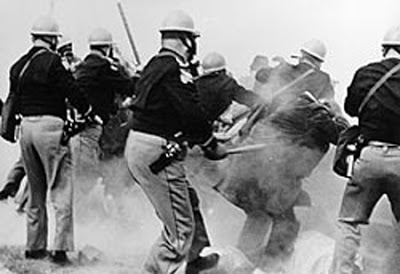
Major figures such as Martin Luther King Jr., Malcolm X, and Rosa Parks were involved in the fight against the race-based discrimination of the Civil Rights Movement. Rosa Parks's refusal to give up her bus seat in 1955 sparked the Montgomery bus boycott—a large movement in Montgomery, Alabama, that was an integral period at the beginning of the Civil Rights Movement. The Bus Boycott lasted a total of 381 days before the Supreme Court of the United States deemed that segregated seating is unconstitutional. Dr. Martin Luther King Jr., a peaceful activist and pastor, led many such protests, advocating for the improvement of African-Americans in American's society. His role in the Montgomery Bus Boycott helped to launch his role in the Civil Rights Movement. King organized many protests attended not only by African-American, but also Caucasians.
While King organized peaceful protests, Malcolm X went a different route. His main supporters, The Nation of Islam, and he stressed the idea of black power, and black pride. Although Malcolm X's actions were radical, especially when they contradicted that of Dr. King, but he is still considered one of the pioneers in fighting back against racial discrimination in daily life and not just from a political standpoint. His ideas of black nationalism and the use of violence to fight back helped to spark the political group in the Black Panther Party for Self-Defense, which later became known as the Black Panther Party. Formed by Bobby Seale and Huey P. Newton, the organization was created in October 1966, in Oakland, California. Usually seen in all black and armed, as a group, the Black Panthers first started off patrolling Oakland Police Department activity, but soon grew to widespread support in cities like Los Angeles, and Chicago. Although they were seen as a violent gang and a danger to society, the Black Panthers brought numerous social programs such as free breakfast for school children and free clinics across numerous cities. What the Black Panthers were fighting for was outlined in their Ten-Point Program. They were ultimately taken down by the FBI, led by J. Edgar Hoover, in the early 1970s. Other factors such as internal tensions, and financial struggles also played into the demise of the Black Panther Party and by 1982 they were completely gone.
In the education system, the Civil Rights Movement further became huge after the ruling of Brown v. Board of Education in 1954. Oliver Brown challenged the Board of Education of Topeka, Kanas, when his daughter was not allowed to enroll in any of the all white schools claiming that "separate but equal" violates the protection clause of the Fourteenth Amendment. Ruby Bridges, along with the Little Rock Nine, dealt with discrimination from Caucasian peers, their parents, and the community in general during the desegregation of schools. The Little Rock Nine were a group of nine African-American students who volunteered to attend school at the Central High School in Little Rock, Arkansas. They continuously had problems with the public and faced harsh treatment from other students, parents, and even the Little Rock National Guard. However, a change occurred when President Dwight D. Eisenhower intervened by sending federal troops to escort the students. For Ruby Bridges, she joined the Civil Rights Movement in the November 14, 1960, when she became enrolled in William Frantz Elementary School. Due to many parents not allowing their children in her class, Bridges was in class by herself, which was taught by Barbara Henry, and oftentimes ate alone and had recess alone. Ruby, along with her family, did face a lot of backlash throughout Louisiana from the desegregation; however, they did receive support from numerous people in the North and Bridges was able to finish the year.
Hub AI
Discrimination in the United States AI simulator
(@Discrimination in the United States_simulator)
Discrimination in the United States
Discrimination comprises "base or the basis of class or category without regard to individual merit, especially to show prejudice on the basis of ethnicity, gender, or a similar social factor". This term is used to highlight the difference in treatment between members of different groups when one group is intentionally singled out and treated worse, or not given the same opportunities. Attitudes toward minorities have been marked by discrimination in the history of the United States. Many forms of discrimination have come to be recognized in American society, particularly on the basis of national origin, race and ethnicity, non-English languages, religion, gender, and sexual orientation.
Colorism is a form of racially-based discrimination where people are treated unequally due to skin color. It initially came about in the United States during slavery. Lighter skinned slaves tended to work indoors, while dark skinned worked outdoors. In 1865, during the Reconstruction period after the American Civil War, the Thirteenth Amendment to the United States Constitution was passed and it abolished slavery. This was soon followed by the Fourteenth Amendment to the United States Constitution that granted citizenship to all persons "born or naturalized in the United States", and the Fifteenth Amendment to the United States Constitution that protected the rights to vote for everyone. These Amendments passed during the Reconstruction period extended protection to the newly emancipated slaves. However, in the 1870s Jim Crow laws were introduced in the Southeastern United States. These laws promoted the idea of "Separate but equal" which was first brought about from the Plessy v. Ferguson decision in 1896, meaning that all races were equal, but they had to have separate public facilities. The mixing of races was illegal in most places such as public schools, public transportation and restaurants. These laws increased discrimination and segregation in the United States. Oftentimes, the products and sections designated for the "Colored" were inferior and not as nice for the "White Only" in fact Jim Crow represented the legitimization of anti-black racism. Water fountains, bathrooms, and park benches were just a few of the areas segregated by Caucasians due to Jim Crow laws. Furthermore, the Jim Crow laws systematically made life harder for African-Americans and people of color. It made voting harder to accomplish, due to the fact that African-Americans had to do literacy tests and go through other obstacles before getting the chance to vote.
In the modern United States, Racial injustice and discrimination is not only present, but pressing. gay black men are extremely likely to experience intersectional discrimination. In the United States, the children of gay African-American men have a poverty rate of 52 percent, the highest in the country. Gay African-American men in partnerships are also six times more likely to live in poverty than gay white male couples.
Some have made the controversial claim that the racist treatment of African-Americans amounts to genocide, elaborated on in Black genocide with foci on slavery, Jim Crow, and other racist institutions in the U.S.
In August 2020, the U.S. Justice Department argued that Yale University discriminated against Asian candidates on the basis of their race, a charge the university denied.
Major figures such as Martin Luther King Jr., Malcolm X, and Rosa Parks were involved in the fight against the race-based discrimination of the Civil Rights Movement. Rosa Parks's refusal to give up her bus seat in 1955 sparked the Montgomery bus boycott—a large movement in Montgomery, Alabama, that was an integral period at the beginning of the Civil Rights Movement. The Bus Boycott lasted a total of 381 days before the Supreme Court of the United States deemed that segregated seating is unconstitutional. Dr. Martin Luther King Jr., a peaceful activist and pastor, led many such protests, advocating for the improvement of African-Americans in American's society. His role in the Montgomery Bus Boycott helped to launch his role in the Civil Rights Movement. King organized many protests attended not only by African-American, but also Caucasians.
While King organized peaceful protests, Malcolm X went a different route. His main supporters, The Nation of Islam, and he stressed the idea of black power, and black pride. Although Malcolm X's actions were radical, especially when they contradicted that of Dr. King, but he is still considered one of the pioneers in fighting back against racial discrimination in daily life and not just from a political standpoint. His ideas of black nationalism and the use of violence to fight back helped to spark the political group in the Black Panther Party for Self-Defense, which later became known as the Black Panther Party. Formed by Bobby Seale and Huey P. Newton, the organization was created in October 1966, in Oakland, California. Usually seen in all black and armed, as a group, the Black Panthers first started off patrolling Oakland Police Department activity, but soon grew to widespread support in cities like Los Angeles, and Chicago. Although they were seen as a violent gang and a danger to society, the Black Panthers brought numerous social programs such as free breakfast for school children and free clinics across numerous cities. What the Black Panthers were fighting for was outlined in their Ten-Point Program. They were ultimately taken down by the FBI, led by J. Edgar Hoover, in the early 1970s. Other factors such as internal tensions, and financial struggles also played into the demise of the Black Panther Party and by 1982 they were completely gone.
In the education system, the Civil Rights Movement further became huge after the ruling of Brown v. Board of Education in 1954. Oliver Brown challenged the Board of Education of Topeka, Kanas, when his daughter was not allowed to enroll in any of the all white schools claiming that "separate but equal" violates the protection clause of the Fourteenth Amendment. Ruby Bridges, along with the Little Rock Nine, dealt with discrimination from Caucasian peers, their parents, and the community in general during the desegregation of schools. The Little Rock Nine were a group of nine African-American students who volunteered to attend school at the Central High School in Little Rock, Arkansas. They continuously had problems with the public and faced harsh treatment from other students, parents, and even the Little Rock National Guard. However, a change occurred when President Dwight D. Eisenhower intervened by sending federal troops to escort the students. For Ruby Bridges, she joined the Civil Rights Movement in the November 14, 1960, when she became enrolled in William Frantz Elementary School. Due to many parents not allowing their children in her class, Bridges was in class by herself, which was taught by Barbara Henry, and oftentimes ate alone and had recess alone. Ruby, along with her family, did face a lot of backlash throughout Louisiana from the desegregation; however, they did receive support from numerous people in the North and Bridges was able to finish the year.
Recent media