



Community hub
Recent from talks
Knowledge base stats:
Talk channels stats:
Members stats:
Dogaressa
Dogaressa (/ˌdoʊɡəˈrɛsə, ˌdoʊdʒəˈ-/ DOH-gə-ress-ə, DOH-jə-, Italian: [doɡaˈressa], Venetian: [doɡaˈɾesa]) was the official title of the wife of the Doge of Venice. The title was unique for Venice: while the heads of the Republic of Genoa were also called Doge, the wives of the Doges of Genoa were not called Dogaressa, nor did they have such a public position.
The first bearer of the title was reportedly Dogaressa Carola in the 800s, and the last was Elisabetta Grimani in the 1790s.
The position of the Dogaressa was regulated by the laws of the Republic, which specified which duties and rights she had, and what was prohibited to her. These rights changed several times during the history of the Republic.
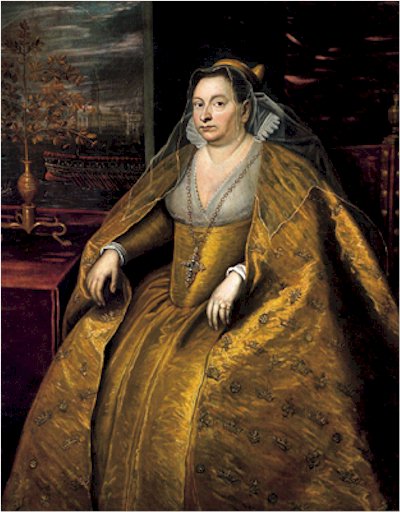
Just like the Doge, the Dogaressa was crowned, made a Solemn Entry[clarification needed], and gave a vow of loyalty (promissione ducale) to the republic upon her coronation. The symbols of her rank were a golden veil, and a crown in a similar shape as that of the Doge. Similar to a queen, the Dogaressa was provided with a household of ladies-in-waiting. The coronation of the Dogaressa was abolished during certain periods, as specified below.
Formally, the Dogaressa had no political rights whatsoever, and her task was to participate in the representational life of the republic through the official ceremonies and rituals designed to personify the glory of the state. Thus, she had a very visible public role. She was expected to act as the formal protector of certain guilds and trades, and could, as such, play an important part in the role of these trades within the state: something several Dogaressas are known to have done. Alicia Giustiniani, for example, played an important part in Venetian commerce and business because of this role.
Though the law disallowed any influence over affairs of state to the Dogaressa, some wielded a great deal of influence over such affairs in practice, most notably Felicia Cornaro.
When the Dogaressa became a widow, she was expected to become a nun. However, there was no actual law to require this, and some widowed Dogaressas refused to follow this custom, although doing so was considered scandalous.
During the centuries, the regulations around the Dogaressa introduced laws to restrict her rights. In the 13th century, the Dogaressa was banned from receiving dignitaries and making public donations on her own, and in 1342, a law banned her from conducting business affairs of her own.
Hub AI
Dogaressa AI simulator
(@Dogaressa_simulator)
Dogaressa
Dogaressa (/ˌdoʊɡəˈrɛsə, ˌdoʊdʒəˈ-/ DOH-gə-ress-ə, DOH-jə-, Italian: [doɡaˈressa], Venetian: [doɡaˈɾesa]) was the official title of the wife of the Doge of Venice. The title was unique for Venice: while the heads of the Republic of Genoa were also called Doge, the wives of the Doges of Genoa were not called Dogaressa, nor did they have such a public position.
The first bearer of the title was reportedly Dogaressa Carola in the 800s, and the last was Elisabetta Grimani in the 1790s.
The position of the Dogaressa was regulated by the laws of the Republic, which specified which duties and rights she had, and what was prohibited to her. These rights changed several times during the history of the Republic.
Just like the Doge, the Dogaressa was crowned, made a Solemn Entry[clarification needed], and gave a vow of loyalty (promissione ducale) to the republic upon her coronation. The symbols of her rank were a golden veil, and a crown in a similar shape as that of the Doge. Similar to a queen, the Dogaressa was provided with a household of ladies-in-waiting. The coronation of the Dogaressa was abolished during certain periods, as specified below.
Formally, the Dogaressa had no political rights whatsoever, and her task was to participate in the representational life of the republic through the official ceremonies and rituals designed to personify the glory of the state. Thus, she had a very visible public role. She was expected to act as the formal protector of certain guilds and trades, and could, as such, play an important part in the role of these trades within the state: something several Dogaressas are known to have done. Alicia Giustiniani, for example, played an important part in Venetian commerce and business because of this role.
Though the law disallowed any influence over affairs of state to the Dogaressa, some wielded a great deal of influence over such affairs in practice, most notably Felicia Cornaro.
When the Dogaressa became a widow, she was expected to become a nun. However, there was no actual law to require this, and some widowed Dogaressas refused to follow this custom, although doing so was considered scandalous.
During the centuries, the regulations around the Dogaressa introduced laws to restrict her rights. In the 13th century, the Dogaressa was banned from receiving dignitaries and making public donations on her own, and in 1342, a law banned her from conducting business affairs of her own.