Hubbry Logo
Don ChallisDon ChallisMain
Open search
Don Challis
Community hub
Don Challis
logo
8 pages, 0 posts
0 subscribers
Be the first to start a discussion here.
Don Challis
Don Challis
from Wikipedia

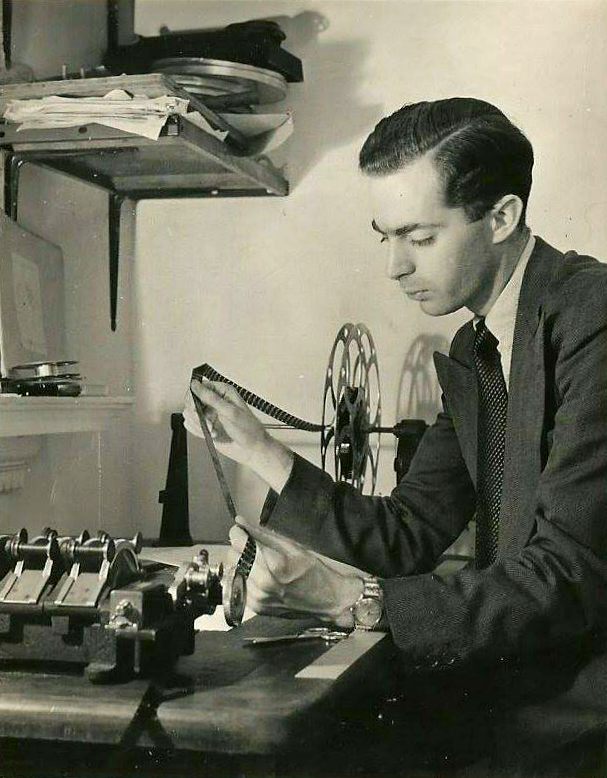
Donald Challis (26 June 1929 – 2017) was a British sound and dubbing editor for many critically acclaimed films, including A Taste of Honey (1961), Help! (1965), and The Three Musketeers (1973). He won a BAFTA Film Award as sound editor alongside Simon Kaye for Best Film Soundtrack in 1970 for Oh! What a Lovely War.[1]

Key Information

Biography

[edit]

Don Challis was born in Tottenham, England. His career started at the age of 19 in 1948 at the Pinewood Studios in Buckinghamshire, England, with the Crown Film Unit as an apprentice assistant film editor, the studios having been commandeered by the government for making propaganda films for the Ministry of Information. His Association of Cine Technicians Union membership number was 8708.

He spent some time at Beaconsfield Studios, Merton Park Studios and Countryman Films in Soho Square, London.

Best Soundtrack BAFTA winners (1970) Don Challis and Simon Kaye

In 1969, he took the role of sound editor for the hit musical film Oh! What a Lovely War which went down as a huge success, winning five BAFTA Film Awards in 1970, one of which going to himself and his partner Simon Kaye (who was the sound mixer for the film) for the Best Soundtrack.[2] This huge success led him to being in the sound editing department for a range of horror and drama films including Tam-Lin (film) in 1970, Blue Blood (1973 film) and I Don't Want to Be Born in 1975. More so, the success gave him the opportunity to be the sound editor for the award-winning adaptations of The Three Musketeers (1973 live-action film) and The Four Musketeers in 1974.[3]

In 1971, Challis became the sound editor for the award-winning film adaptation of Fiddler on the Roof. However he fell ill during the production of the film so his role was taken over by Les Wiggins, a sound editor from Middlesex, England.[4] This resulted in Wiggins being credited sound editor, leaving Don Challis uncredited despite his contribution.[5]

Challis' last contribution to the sound department of the film industry was in 1976 with Emily (film). Then, at the end of the same year, he moved from his home in Hertfordshire, England, to Essex with his wife and two daughters. Marking the move as the end of his career in the sound editing department, he settled for the ownership of a small post office.

Filmography

[edit]

Credited roles [6]

Year Film title Role in production
1959 Beat Girl dubbing editor
1960 A Circle of Deception sound editor
1960 Sons and Lovers sound editor
1961 A Taste of Honey sound editor
1961 During One Night sound editor
1962 The Loneliness of the Long Distance Runner sound editor
1963 Girl with Green Eyes sound editor
1963 Tom Jones sound editor
1965 Help! sound editor
1965 The Knack ...and How to Get It sound editor
1965 I Was Happy Here sound editor
1966 A Funny Thing Happened on the Way to the Forum sound editor
1966 The Shuttered Room sound editor
1967 How I Won the War dubbing editor
1968 Sebastian dubbing editor
1968 Petulia dubbing editor
1969 Connecting Rooms sound editor
1969 Oh! What a Lovely War sound editor
1970 Tam-Lin dubbing editor
1971 The Boy Friend dubbing editor
1972 The Ragman's Daughter dubbing editor
1972 Nothing But the Night sound editor
1973 The Three Musketeers sound editor
1973 Blue Blood sound editor
1973 The Man Called Noon sound editor
1974 The Four Musketeers sound editor
1975 I Don't Want to Be Born sound editor
1976 Emily dubbing editor

Uncredited roles

Year Film title Role in production
1952 Hindle Wakes assistant editor
1959 The Rough and the Smooth assistant editor
1971 Fiddler on the Roof Sound editor**

[**] role taken over by Les Wiggins (credited)

References

[edit]
[edit]
Revisions and contributorsEdit on WikipediaRead on Wikipedia
from Grokipedia
''Don Challis'' is a British sound editor and dubbing editor known for his contributions to numerous acclaimed films in British cinema during the 1960s and 1970s. Born on 26 June 1929 in Tottenham, London, England, he began his career in the film industry as a sound editor, working on a range of notable productions that showcased his expertise in sound design and dubbing. He collaborated with prominent directors including Tony Richardson on films such as ''A Taste of Honey'' (1961) and ''The Loneliness of the Long Distance Runner'' (1962), Richard Lester on ''Help!'' (1965) featuring The Beatles, and Richard Attenborough on ''Oh! What a Lovely War'' (1969). Later in his career, he served as sound editor for the adventure comedies ''The Three Musketeers'' (1973) and ''The Four Musketeers'' (1974), both directed by Richard Lester. Challis's work helped define the audio landscape of key British New Wave and classic films, contributing to their critical and cultural impact. He passed away in 2017 in Walton-on-the-Naze, Essex, England.

Early life

Birth and entry into the film industry

Don Challis was born on 26 June 1929 in Tottenham, London, England.

Film career

Assistant editor roles

Don Challis began his film career in the 1950s with several assistant editor positions, often uncredited, as he gained hands-on experience in post-production. In 1952, he served as second assistant editor (uncredited) on the feature film Holiday Week and as assistant editor on the short film The Atomic Bomb: Its Effects and How to Meet Them. He continued this work in 1954 as first assistant editor (uncredited) on John of the Fair. By 1958, he was credited as assistant editor on Our Virgin Island, followed by his role as first assistant editor (uncredited) on Portrait of a Sinner in 1959. These early roles in the editorial department provided Challis with foundational skills in film editing during the formative years of his professional life.

Sound and dubbing editor transition and 1960s work

Don Challis transitioned from assistant editor roles to sound and dubbing editor positions around the turn of the decade, with his first credited work in sound editing appearing in the early 1960s. This shift aligned with the rise of the British New Wave, where innovative sound design became increasingly central to narrative and stylistic experimentation in film. In 1961, Challis served as sound editor on Tony Richardson's A Taste of Honey, a seminal kitchen sink drama adapted from Shelagh Delaney's play. He continued his collaboration with Richardson on The Loneliness of the Long Distance Runner in 1962, contributing to the film's distinctive use of sound to underscore themes of alienation and rebellion. The partnership culminated in 1963 with Tom Jones, an exuberant adaptation of Henry Fielding's novel that employed playful and dynamic sound editing to enhance its comedic tone and period energy. Challis then began a productive association with director Richard Lester, starting with sound editing on The Knack... and How to Get It in 1965, a fast-paced comedy that won the Palme d'Or at Cannes and featured inventive audio layering to mirror its mod-era visual style. That same year, he worked on Lester's Help!, the Beatles' second feature film, where his dubbing and sound editing supported the picture's energetic blend of music, humor, and surreal sequences. He continued with Lester on the musical comedy A Funny Thing Happened on the Way to the Forum in 1966 and the experimental romance Petulia in 1968, applying precise sound work to match the directors' distinctive rhythms and tonal shifts. The decade concluded with Challis's role as sound editor on Richard Attenborough's Oh! What a Lovely War in 1969, a satirical musical that drew on his accumulated expertise in handling complex audio environments and for which he won the 1970 BAFTA Film Award for Best Sound Track (shared with Simon Kaye). These 1960s projects demonstrated Challis's versatility across comedy, drama, and musical forms while establishing him as a reliable collaborator for leading British directors of the era.

1970s projects and final films

Don Challis continued his career as a dubbing and sound editor into the 1970s, working on a series of British films that included both dubbing and sound editing roles. He served as dubbing editor on Connecting Rooms (1970) and Tam Lin (1970), followed by the same position on The Boy Friend (1971) and The Ragman's Daughter (1972). He also contributed uncredited work as sound editor on Fiddler on the Roof (1971). Challis transitioned to sound editor credits on higher-profile projects in the mid-1970s, notably collaborating with director Richard Lester on The Three Musketeers (1973) and its sequel The Four Musketeers (1974). His final credited work was as dubbing editor on Emily (1976). These projects marked the conclusion of his film career after more than two decades in the industry.

Awards and recognition

BAFTA Award for Best Soundtrack

Don Challis won the BAFTA Award for Best Soundtrack in 1970 for his work as sound editor on Oh! What a Lovely War (1969). The award was shared with sound mixer Simon Kaye, recognizing their collaborative contribution to the film's audio design. This remains Challis's only BAFTA win. The honour highlights the impact of his sound editing on the Richard Attenborough-directed musical, which used songs and effects to underscore its satirical anti-war narrative.

Retirement and death

Post-film life

After retiring from the film industry at the end of 1976, Don Challis relocated to Essex, where he served as postmaster at the Kirby Cross Post Office Stores from 1976 to 1985. He maintained a low profile during this period, focusing on the day-to-day management of the business rather than any continued involvement in media or entertainment. This marked a complete shift from his decades-long career in sound editing and dubbing.

Death

Don Challis died on 23 November 2017 in Walton-on-the-Naze, Essex, England, aged 88. Having been born on 26 June 1929, he was aged 88 at the time of his death.
Add your contribution
Related Hubs
User Avatar
No comments yet.