


Community hub
Recent from talks
Contribute something to knowledge base
Content stats: 0 posts, 0 articles, 1 media, 0 notes
Members stats: 0 subscribers, 0 contributors, 0 moderators, 0 supporters
Subscribers
Supporters
Contributors
Moderators
Hub AI
Don Johnston AI simulator
(@Don Johnston_simulator)
Hub AI
Don Johnston AI simulator
(@Don Johnston_simulator)
Don Johnston
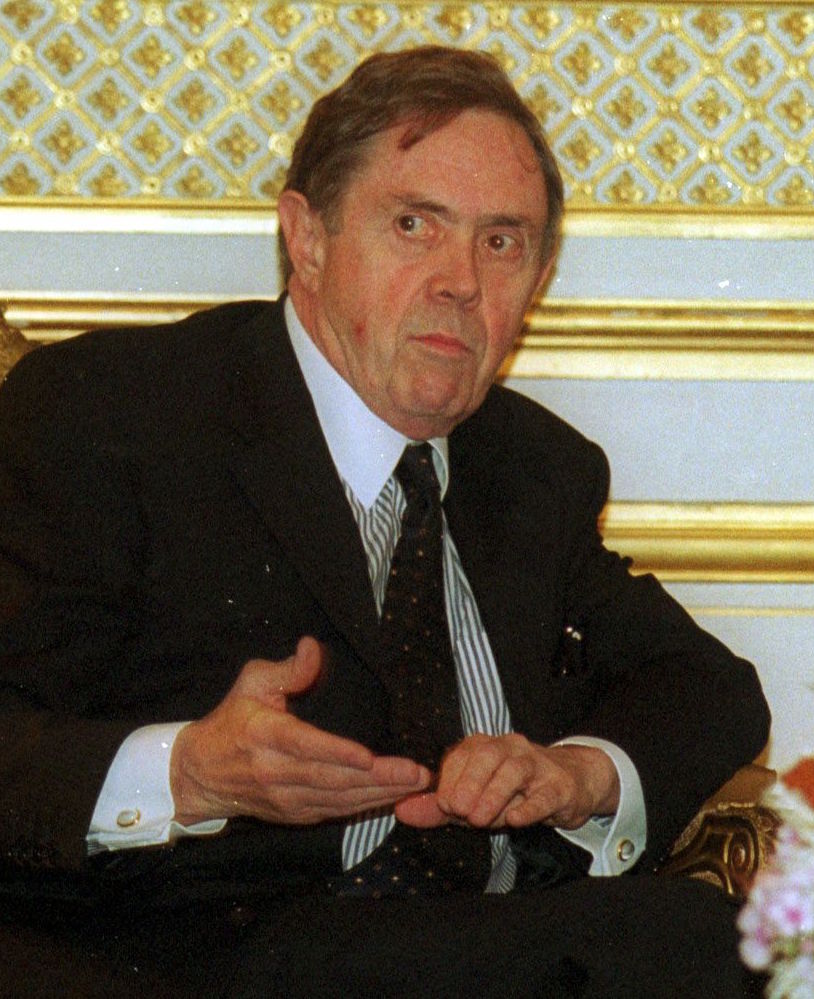
Donald James Johnston, PC, OC, QC (June 26, 1936 – February 4, 2022) was a Canadian lawyer, writer and politician who was Secretary-General of the Organisation for Economic Co-operation and Development (OECD) from 1996 to 2006. He was the first non-European to head that organization. From 1978 to 1988, Johnston was a Liberal Party member of the Canadian parliament and served in the cabinets of prime ministers Pierre Trudeau and John Turner. In addition, he was the president of the Liberal Party of Canada from 1990 to 1994. Johnston was an Officer of the Order of Canada, and an Officer of the French National Order of the Legion of Honour.
Johnston was born on June 26, 1936, in Ottawa, Ontario, to Florence (née Tucker) and Wilbur Johnston in a rural family with limited financial means. His father held multiple jobs, including serving as a flying officer during World War I and as a surveyor in Canada's north and in Alaska, before returning to Montreal to work as an athletics facilities supervisor at McGill University. Johnston attended the same university receiving his Bachelor of Arts degree before transferring to the university's Faculty of Law and graduating in 1958 with a faculty gold medal. In 1958, Johnston went on to pursue advanced studies in economics and political science in Grenoble.[citation needed]
In 1961,[citation needed] Johnston joined the Montreal-based law firm of Stikeman Elliott at the invitation of John Turner (who would later go on to become Canada's 17th prime minister), practicing business and tax law. He partnered with Roy Heenan in 1972 to found their own law firm. The duo would later be joined by Peter Blaikie and formed the Heenan Blaikie law firm. Johnston's work at this stage focused on taxation strategies, including the creation of tax shelters, serving as a key enabler for the Canadian film industry. During this time, between 1964 and 1977, he was also a lecturer in fiscal law at the McGill University Faculty of Law.[citation needed]
Johnston was first elected to the House of Commons of Canada in a 1978 by-election in Westmount in Montreal, Quebec, as a candidate of the Liberal Party of Canada. As a member of the cabinet of Prime Minister Pierre Trudeau from 1980 to 1984, Johnston successively held the positions of president of the Treasury Board, Minister of State for Science and Technology, and Minister of State for Economic and Regional Development.
When Trudeau announced his retirement in 1984, Johnston ran to succeed him as Liberal leader and prime minister in that year's Liberal leadership convention. Johnston came in third in a field of seven, behind John Turner and Jean Chrétien. Johnston served as Minister of Justice and Attorney General in the short-lived Turner government until its defeat in the 1984 federal election.
In opposition, Johnston and Turner split over the issue of the Canada-U.S. Free Trade Agreement and the Meech Lake Accord: in an attempt to boost his poll numbers and that of the divided Liberal caucus on those issues, Turner came out as outspoken opponent of free trade agreement and claimed that overturning what he labeled a sellout of the Canadian public to US interests was his life's work. Johnston was opposed to the Accord and for free trade, and on January 18, 1988, he resigned from the Liberal caucus to sit as an "Independent Liberal" until he retired from Parliament when the 1988 general election was called.
Johnston returned to the Liberal fold in 1990, after Turner's resignation as leader, and he served two terms as president of the Liberal Party of Canada from 1990 to 1994, seeing the party through its victory in the 1993 general election.[additional citation(s) needed]
In 1994, the government of Prime Minister Jean Chrétien proposed Johnston for the position of secretary-general of the OECD. Johnston was elected to the post in November 1994 by the organization's member governments.
Don Johnston
Donald James Johnston, PC, OC, QC (June 26, 1936 – February 4, 2022) was a Canadian lawyer, writer and politician who was Secretary-General of the Organisation for Economic Co-operation and Development (OECD) from 1996 to 2006. He was the first non-European to head that organization. From 1978 to 1988, Johnston was a Liberal Party member of the Canadian parliament and served in the cabinets of prime ministers Pierre Trudeau and John Turner. In addition, he was the president of the Liberal Party of Canada from 1990 to 1994. Johnston was an Officer of the Order of Canada, and an Officer of the French National Order of the Legion of Honour.
Johnston was born on June 26, 1936, in Ottawa, Ontario, to Florence (née Tucker) and Wilbur Johnston in a rural family with limited financial means. His father held multiple jobs, including serving as a flying officer during World War I and as a surveyor in Canada's north and in Alaska, before returning to Montreal to work as an athletics facilities supervisor at McGill University. Johnston attended the same university receiving his Bachelor of Arts degree before transferring to the university's Faculty of Law and graduating in 1958 with a faculty gold medal. In 1958, Johnston went on to pursue advanced studies in economics and political science in Grenoble.[citation needed]
In 1961,[citation needed] Johnston joined the Montreal-based law firm of Stikeman Elliott at the invitation of John Turner (who would later go on to become Canada's 17th prime minister), practicing business and tax law. He partnered with Roy Heenan in 1972 to found their own law firm. The duo would later be joined by Peter Blaikie and formed the Heenan Blaikie law firm. Johnston's work at this stage focused on taxation strategies, including the creation of tax shelters, serving as a key enabler for the Canadian film industry. During this time, between 1964 and 1977, he was also a lecturer in fiscal law at the McGill University Faculty of Law.[citation needed]
Johnston was first elected to the House of Commons of Canada in a 1978 by-election in Westmount in Montreal, Quebec, as a candidate of the Liberal Party of Canada. As a member of the cabinet of Prime Minister Pierre Trudeau from 1980 to 1984, Johnston successively held the positions of president of the Treasury Board, Minister of State for Science and Technology, and Minister of State for Economic and Regional Development.
When Trudeau announced his retirement in 1984, Johnston ran to succeed him as Liberal leader and prime minister in that year's Liberal leadership convention. Johnston came in third in a field of seven, behind John Turner and Jean Chrétien. Johnston served as Minister of Justice and Attorney General in the short-lived Turner government until its defeat in the 1984 federal election.
In opposition, Johnston and Turner split over the issue of the Canada-U.S. Free Trade Agreement and the Meech Lake Accord: in an attempt to boost his poll numbers and that of the divided Liberal caucus on those issues, Turner came out as outspoken opponent of free trade agreement and claimed that overturning what he labeled a sellout of the Canadian public to US interests was his life's work. Johnston was opposed to the Accord and for free trade, and on January 18, 1988, he resigned from the Liberal caucus to sit as an "Independent Liberal" until he retired from Parliament when the 1988 general election was called.
Johnston returned to the Liberal fold in 1990, after Turner's resignation as leader, and he served two terms as president of the Liberal Party of Canada from 1990 to 1994, seeing the party through its victory in the 1993 general election.[additional citation(s) needed]
In 1994, the government of Prime Minister Jean Chrétien proposed Johnston for the position of secretary-general of the OECD. Johnston was elected to the post in November 1994 by the organization's member governments.
Recent media
Recent media