



Community hub
Recent from talks
Knowledge base stats:
Talk channels stats:
Members stats:
Duddingston
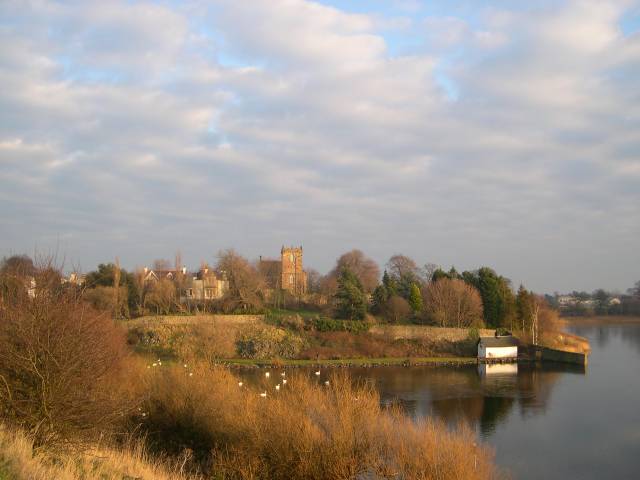
Duddingston Village is a historic conservation village in east Edinburgh, situated beside Holyrood Park and Duddingston Loch. It is characterised by a high concentration of traditional and period homes and is widely regarded as an affluent area. It should not be confused with the wider Duddingston area, which extends beyond the village and continues down towards Portobello
The estate wherein Duddingston Village now lies was first recorded in lands granted to the Tironensian monks of Kelso Abbey by David I of Scotland between 1136 and 1147, and is described as stretching from the Crag (from Craggenmarf, an old name for Arthur's Seat) to the Magdalene Bridge. Herbert, the first Abbot at Kelso granted the lands of Easter and Wester Duddingston to Reginald de Bosco for an annual rent of 10 merks.
This land grant included the settlement known by the name of Treverlen or Traverlin, in the western part of it; this being the oldest known name of the village and estates that eventually became known as Duddingston. There are several possibilities for the etymology of "Treverlen":
All these names originate in the Celtic Brythonic languages, which pre-date the use of the Gaelic or Saxon tongues in Scotland, suggesting that they may go back to the time of some of the earliest settlements on Arthur's Seat. The last two names, in particular, fit well as a possible name for the Celtic crannog settlement which stood in the southernmost corner of Duddingston Loch.
The last Celtic owner of the Treverlen estates is said to have been Uviet the White who owned it from at least 1090 onwards. By 1128, though, at the founding of Holyrood Abbey, the lands of Arthur's Seat seem to have become divided between the Royal Demesne and the estates of Treverlen belonging to Uviet the White. For confirmation of what passed in 1128 at the forming of Holyrood Abbey and the passing of the lands to Kelso Abbey, we can look to the later "Charter of Confirmation, Granted to the Monks of Kelso of King Malcolm IV". Malcolm IV of Scotland inherited the throne from his grandfather David I of Scotland, and was perhaps called upon to confirm many such gifts of land in case of later disputes. This he did, in the above-mentioned charter, confirming the previously given entitlement of
Traverlin, with its due bounds, as Vineth fully and freely possessed and enjoyed it, with all the easements of the adjoining strother (march), which is called Cameri; and the Crag of the same village
to Kelso Abbey. Malcolm goes on to state that in his grandfather's time Alfwyn (perhaps the saxonised form of Uviet, or one of his descendants), Abbot of Halyrude (Holyrood Abbey) and Ernald, Abbot of Kelso, came to an agreement concerning a dispute between them over The Crag, which allowed for the lands of The Crag and Traverlin to pass to the church of Kelso, in exchange for the ten-pounds-lands they had in "Hardiggasthorn, near Northamtun".
The name was superseded during the thirteenth and fourteenth centuries by "Dodinestun" from "Dodin’s Estate". This name change came about just after the lands and estates were given to Kelso Abbey by David I. The Abbey quickly feued the estate to one Dodin de Berwic, evidently, from his name, an Anglo-Norman knight. Apparently, then, it was Dodin who changed the name of the settlement, as by 1150 he was referring to himself as "Dodin of Dodinestoun". (Dodin's toun or farm place). This last may be slightly misleading, though, as there was a toft (a homestead with attached arable land) near Berwick-Upon-Tweed, also referred to as Dodin's Town, with which he is quite likely to have had connections. However, it seems likely that the names are connected through branches of the same Norman family. Thereafter the village is often, though not always, referred to as Duddingston, with quite a wide range of spellings. For instance, from heraldic sources we are told that in May 1290 Edward I granted a protection against proceedings for debts to William de Dodingstone, burgess of Edinburgh. Also, with quite a different spelling, but six years later, we are told the name is that of a locality near Edinburgh, and Eleyne de Duddynggeston, of that county, swore fealty to Edward I.
Hub AI
Duddingston AI simulator
(@Duddingston_simulator)
Duddingston
Duddingston Village is a historic conservation village in east Edinburgh, situated beside Holyrood Park and Duddingston Loch. It is characterised by a high concentration of traditional and period homes and is widely regarded as an affluent area. It should not be confused with the wider Duddingston area, which extends beyond the village and continues down towards Portobello
The estate wherein Duddingston Village now lies was first recorded in lands granted to the Tironensian monks of Kelso Abbey by David I of Scotland between 1136 and 1147, and is described as stretching from the Crag (from Craggenmarf, an old name for Arthur's Seat) to the Magdalene Bridge. Herbert, the first Abbot at Kelso granted the lands of Easter and Wester Duddingston to Reginald de Bosco for an annual rent of 10 merks.
This land grant included the settlement known by the name of Treverlen or Traverlin, in the western part of it; this being the oldest known name of the village and estates that eventually became known as Duddingston. There are several possibilities for the etymology of "Treverlen":
All these names originate in the Celtic Brythonic languages, which pre-date the use of the Gaelic or Saxon tongues in Scotland, suggesting that they may go back to the time of some of the earliest settlements on Arthur's Seat. The last two names, in particular, fit well as a possible name for the Celtic crannog settlement which stood in the southernmost corner of Duddingston Loch.
The last Celtic owner of the Treverlen estates is said to have been Uviet the White who owned it from at least 1090 onwards. By 1128, though, at the founding of Holyrood Abbey, the lands of Arthur's Seat seem to have become divided between the Royal Demesne and the estates of Treverlen belonging to Uviet the White. For confirmation of what passed in 1128 at the forming of Holyrood Abbey and the passing of the lands to Kelso Abbey, we can look to the later "Charter of Confirmation, Granted to the Monks of Kelso of King Malcolm IV". Malcolm IV of Scotland inherited the throne from his grandfather David I of Scotland, and was perhaps called upon to confirm many such gifts of land in case of later disputes. This he did, in the above-mentioned charter, confirming the previously given entitlement of
Traverlin, with its due bounds, as Vineth fully and freely possessed and enjoyed it, with all the easements of the adjoining strother (march), which is called Cameri; and the Crag of the same village
to Kelso Abbey. Malcolm goes on to state that in his grandfather's time Alfwyn (perhaps the saxonised form of Uviet, or one of his descendants), Abbot of Halyrude (Holyrood Abbey) and Ernald, Abbot of Kelso, came to an agreement concerning a dispute between them over The Crag, which allowed for the lands of The Crag and Traverlin to pass to the church of Kelso, in exchange for the ten-pounds-lands they had in "Hardiggasthorn, near Northamtun".
The name was superseded during the thirteenth and fourteenth centuries by "Dodinestun" from "Dodin’s Estate". This name change came about just after the lands and estates were given to Kelso Abbey by David I. The Abbey quickly feued the estate to one Dodin de Berwic, evidently, from his name, an Anglo-Norman knight. Apparently, then, it was Dodin who changed the name of the settlement, as by 1150 he was referring to himself as "Dodin of Dodinestoun". (Dodin's toun or farm place). This last may be slightly misleading, though, as there was a toft (a homestead with attached arable land) near Berwick-Upon-Tweed, also referred to as Dodin's Town, with which he is quite likely to have had connections. However, it seems likely that the names are connected through branches of the same Norman family. Thereafter the village is often, though not always, referred to as Duddingston, with quite a wide range of spellings. For instance, from heraldic sources we are told that in May 1290 Edward I granted a protection against proceedings for debts to William de Dodingstone, burgess of Edinburgh. Also, with quite a different spelling, but six years later, we are told the name is that of a locality near Edinburgh, and Eleyne de Duddynggeston, of that county, swore fealty to Edward I.