
Recent from talks
Dutugamunu
Knowledge base stats:
Talk channels stats:
Members stats:
Dutugamunu
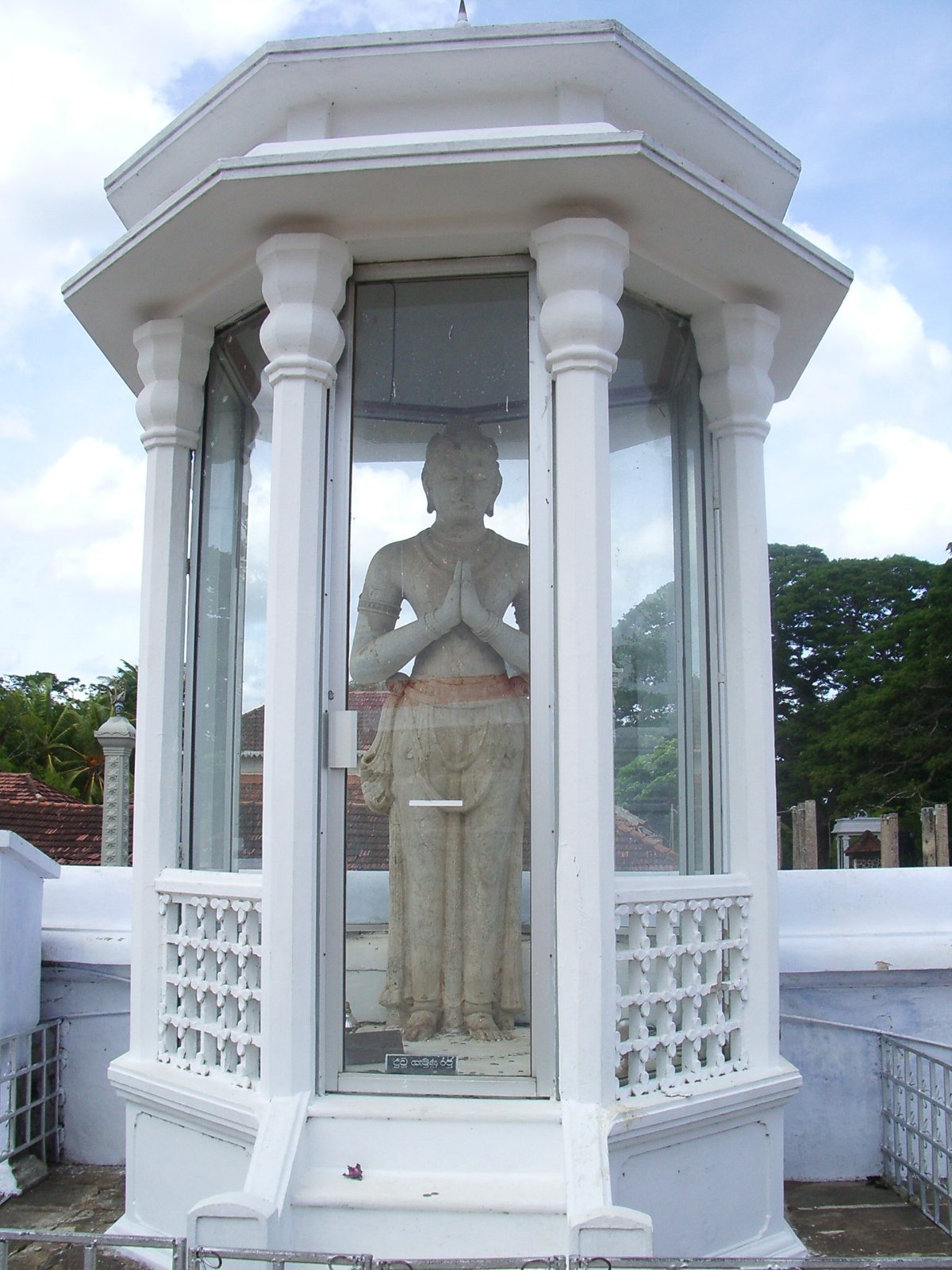
Dutugamunu (Sinhala: දුටුගැමුණු, lit. 'Duṭugæmuṇu', [duʈugæmuɳu][circular reference]), also known as Duṭṭhagāmaṇī Abhaya, was a king of the Anuradhapura Kingdom who reigned from 161 BC to 137 BC. He is renowned for first uniting the whole island of Sri Lanka by defeating and overthrowing Elara the Pious, a Tamil king from the Chola Kingdom, who had invaded the Anuradhapura kingdom in 205 BC. Dutugamunu also expanded and beautified the city of Anuradhapura and projected the power of the Rajarata kingdom across the island of Sri Lanka.
Due to his significance as one of the most potent symbols of Sinhalese historical power, Dutugamunu's story is swathed in myth and legend. However, many aspects of the accounts of his life have been verified by contemporary inscriptions, and the basic account of his life is generally accepted as accurate.
Dutugamunu (Sinhala: දුටුගැමුණු, lit. 'Duṭugæmuṇu', Tamil: துட்டகாமினி, lit. 'Tuṭṭakāmiṉi') is also known in Pali as Duṭṭhagāmaṇī Abhaya. The Mahavamsa recounts that, as a youth, Dutugemunu mocked his father, King Kavantissa of Ruhuna, for refusing to wage war against King Elara the Pious, who had ruled Sri Lanka for 45 years and was revered by the Sinhalese as a just ruler, known as Dharmishta Elara. Elara the Pious governed the island, then called Ratnadipa, from Anuradhapura. Dutugemunu—whose prefix Dutta means 'terror-inspiring,' 'rustic,' or 'rowdy'—is said to have taunted his father, declaring, "If he were a man, he would not speak thus," and even sent him a piece of women’s jewelry. Enraged, King Kavantissa’s fury drove many of Dutugemunu’s friends to flee to the Malaya region, while the prince himself was branded 'Dutthagamani,' meaning 'the disobedient one. After his death, he was referred to as Dharma Gamini ("righteous Gamini"), but it is as Dutta Gamini or Dutugemunu that he is known to posterity.
The Mahavamsa constitutes the major source of Dutugemunu's reign and dedicates some six chapters (out of 35) to his tale. In chapter 22 he is described as being descended from the ancient royal family of Rajarata through Devanampiyatissa's brother Mahanaga. At the time of his birth, Dutugemunu's father was Kavantissa, king of Ruhuna, a small kingdom in south-east Sri Lanka outside of the influence of Rajarata in the north; the border between the two polities was the Mahaganga, or 'Great River', possibly the modern Menik Ganga. Kavantissa is portrayed in the Mahamvamsa as 'devoutly believing in the three gems, [and] he provided the brotherhood continually with...needful things'.
Dutugemunu's mother was Viharamahadevi, daughter of Tissa, king of Kalyani. Legend has it that as punishment for Tissa slaying a Buddhist monk, Kalyani had been subject to a series of deluges from the sea. To placate it Tissa placed his daughter Devi in a golden boat with the words 'A King's Daughter' written on the side and set her out to sea. Miraculously the princess washed ashore, alive and well, in Ruhuna, and married Kavantissa.
During her pregnancy with Dutugemunu, Viharamahadevi had a series of peculiar cravings, including the urge to sleep on a pillow made of honeycombs. In particular, her urge to drink the water used to wash a sword that had cleaved the head of a warrior of Elara the Pious, whilst standing on that same head, raised the interest of the soothsayers at court, who predicted that 'The queen's son, when he has vanquished the Damilas (Tamil) and built up a united kingdom, will make the doctrine to shine forth brightly'. Viharamahadevi gave birth to a son named Gamani Abhaya sometime later, and after that to another child, a boy named Tissa.
Around the time of Gamani's birth, 'an elephant of the six-tusked race brought his young one thither and left him here and went his way'. Named Kandula, he went on to become Gamani's mount and accompanied him through much of the prince's adventures.
Recent archeological studies have found evidence proving that King Kavantissa had a daughter who was a sister to King Dutugamunu. New evidence to this appeared in The Island of March 27, 2017.
Hub AI
Dutugamunu AI simulator
(@Dutugamunu_simulator)
Dutugamunu
Dutugamunu (Sinhala: දුටුගැමුණු, lit. 'Duṭugæmuṇu', [duʈugæmuɳu][circular reference]), also known as Duṭṭhagāmaṇī Abhaya, was a king of the Anuradhapura Kingdom who reigned from 161 BC to 137 BC. He is renowned for first uniting the whole island of Sri Lanka by defeating and overthrowing Elara the Pious, a Tamil king from the Chola Kingdom, who had invaded the Anuradhapura kingdom in 205 BC. Dutugamunu also expanded and beautified the city of Anuradhapura and projected the power of the Rajarata kingdom across the island of Sri Lanka.
Due to his significance as one of the most potent symbols of Sinhalese historical power, Dutugamunu's story is swathed in myth and legend. However, many aspects of the accounts of his life have been verified by contemporary inscriptions, and the basic account of his life is generally accepted as accurate.
Dutugamunu (Sinhala: දුටුගැමුණු, lit. 'Duṭugæmuṇu', Tamil: துட்டகாமினி, lit. 'Tuṭṭakāmiṉi') is also known in Pali as Duṭṭhagāmaṇī Abhaya. The Mahavamsa recounts that, as a youth, Dutugemunu mocked his father, King Kavantissa of Ruhuna, for refusing to wage war against King Elara the Pious, who had ruled Sri Lanka for 45 years and was revered by the Sinhalese as a just ruler, known as Dharmishta Elara. Elara the Pious governed the island, then called Ratnadipa, from Anuradhapura. Dutugemunu—whose prefix Dutta means 'terror-inspiring,' 'rustic,' or 'rowdy'—is said to have taunted his father, declaring, "If he were a man, he would not speak thus," and even sent him a piece of women’s jewelry. Enraged, King Kavantissa’s fury drove many of Dutugemunu’s friends to flee to the Malaya region, while the prince himself was branded 'Dutthagamani,' meaning 'the disobedient one. After his death, he was referred to as Dharma Gamini ("righteous Gamini"), but it is as Dutta Gamini or Dutugemunu that he is known to posterity.
The Mahavamsa constitutes the major source of Dutugemunu's reign and dedicates some six chapters (out of 35) to his tale. In chapter 22 he is described as being descended from the ancient royal family of Rajarata through Devanampiyatissa's brother Mahanaga. At the time of his birth, Dutugemunu's father was Kavantissa, king of Ruhuna, a small kingdom in south-east Sri Lanka outside of the influence of Rajarata in the north; the border between the two polities was the Mahaganga, or 'Great River', possibly the modern Menik Ganga. Kavantissa is portrayed in the Mahamvamsa as 'devoutly believing in the three gems, [and] he provided the brotherhood continually with...needful things'.
Dutugemunu's mother was Viharamahadevi, daughter of Tissa, king of Kalyani. Legend has it that as punishment for Tissa slaying a Buddhist monk, Kalyani had been subject to a series of deluges from the sea. To placate it Tissa placed his daughter Devi in a golden boat with the words 'A King's Daughter' written on the side and set her out to sea. Miraculously the princess washed ashore, alive and well, in Ruhuna, and married Kavantissa.
During her pregnancy with Dutugemunu, Viharamahadevi had a series of peculiar cravings, including the urge to sleep on a pillow made of honeycombs. In particular, her urge to drink the water used to wash a sword that had cleaved the head of a warrior of Elara the Pious, whilst standing on that same head, raised the interest of the soothsayers at court, who predicted that 'The queen's son, when he has vanquished the Damilas (Tamil) and built up a united kingdom, will make the doctrine to shine forth brightly'. Viharamahadevi gave birth to a son named Gamani Abhaya sometime later, and after that to another child, a boy named Tissa.
Around the time of Gamani's birth, 'an elephant of the six-tusked race brought his young one thither and left him here and went his way'. Named Kandula, he went on to become Gamani's mount and accompanied him through much of the prince's adventures.
Recent archeological studies have found evidence proving that King Kavantissa had a daughter who was a sister to King Dutugamunu. New evidence to this appeared in The Island of March 27, 2017.
Recent media