
Recent from talks
Eagle Cars
Knowledge base stats:
Talk channels stats:
Members stats:
Eagle Cars
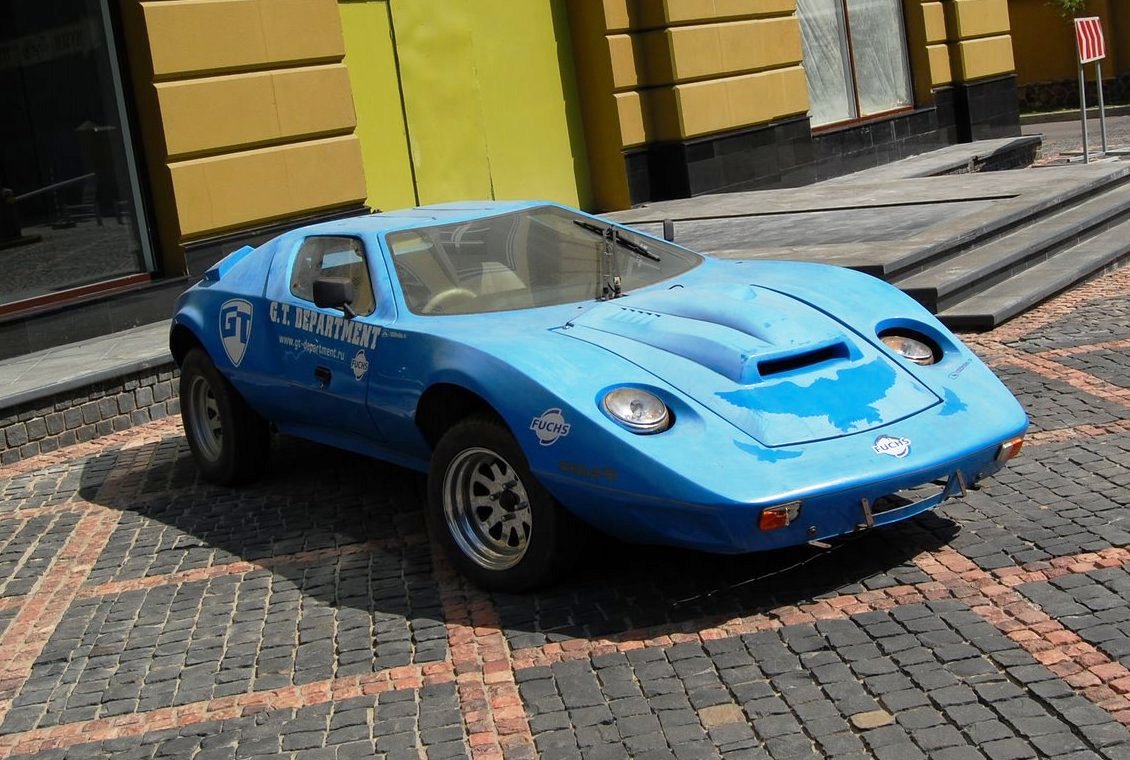
Eagle Cars Limited was an English company, based in Lancing, West Sussex, originally operated by Allen Breeze, although it has undergone a number of ownership changes since. Originally making a Jeep lookalike called the RV, between 1981 and 1998 they built several iterations of a gull-winged car called the Eagle SS. The SS was based on an American kit car called the Cimbria (itself based on the earlier Sterling, which in turn was a copy of the British Nova), and was brought to the UK by Tim Dutton (of Dutton Cars). In 1988 Eagle Cars moved inland, to nearby Storrington.
Founded by Allen Breeze, the company was sold to trials motorcyclist Rob Budd in 1989. Eagle Cars Limited changed location again in the nineties, moving to Walberton (still in West Sussex).
The company officially ceased trading in 1998, but production had ended long before. The moulds and rights to Eagle's various cars are currently in the hands of a variety of other companies. The SS moulds were sold by Tim Naylor of TEAC Sports Cars in 2012 on eBay to a buyer from Wexford, and nothing more has been heard of them since. TEAC has ceased to exist and all trace of the SS moulds have disappeared. The RV moulds were apparently seized by bailiffs and have also vanished. All attempts to trace the whereabouts of the various Eagle moulds have drawn a blank as of November 2012. Anyone knowing where they are should contact the Eagle Owners Club.
As with so many of its kit car brethren, the dramatic bodywork of the Eagle SS hid humble VW Beetle underpinnings. The bodywork was from glass fiber-reinforced plastic (GFRP), molded in a single colour. The total weight of a finished SS was promised to be around 750 kg (1,653 lb), which meant performance was considerably improved over that of a standard Beetle. A top speed of 200 km/h (124 mph) with a tuned VW engine was also promised. The most obvious difference to the Cimbria, upon which the Eagle SS was based, was the Cimbria's flip-up headlights: Eagle chose to equip their version with round, rear-folding headlights in the style of the Porsche 928.
Three basic versions were produced:
The chassis was an unshortened Volkswagen Type 1 platform with a 2,400 mm (94.5 in) wheelbase, while the car was 4,240 mm (166.9 in) long, 1,780 mm (70.1 in) wide, and a mere 1,040 mm (40.9 in) high. First mentioned in 1984, a targa-roofed 2+2-seater version called the 2 Plus was also available, with only a slight weight penalty.
Later, Eagle engineered a front-engined, tubular framed chassis for the SS. This used Ford Cortina running gear, and was easily recognized by its conspicuous (and odd-looking) bonnet bulge. Eagle also claimed it possible, and indeed it has been done, to fit this version of the SS with Rover's familiar 3.5-litre V8. At least one car was built on the Ford Sierra 4x4 running gear but the EOC has been informed it suffered in a roof collapse and is no longer a viable repair.
The Series 3 SS was somewhat taller, at 1,120 mm (44.1 in).
Hub AI
Eagle Cars AI simulator
(@Eagle Cars_simulator)
Eagle Cars
Eagle Cars Limited was an English company, based in Lancing, West Sussex, originally operated by Allen Breeze, although it has undergone a number of ownership changes since. Originally making a Jeep lookalike called the RV, between 1981 and 1998 they built several iterations of a gull-winged car called the Eagle SS. The SS was based on an American kit car called the Cimbria (itself based on the earlier Sterling, which in turn was a copy of the British Nova), and was brought to the UK by Tim Dutton (of Dutton Cars). In 1988 Eagle Cars moved inland, to nearby Storrington.
Founded by Allen Breeze, the company was sold to trials motorcyclist Rob Budd in 1989. Eagle Cars Limited changed location again in the nineties, moving to Walberton (still in West Sussex).
The company officially ceased trading in 1998, but production had ended long before. The moulds and rights to Eagle's various cars are currently in the hands of a variety of other companies. The SS moulds were sold by Tim Naylor of TEAC Sports Cars in 2012 on eBay to a buyer from Wexford, and nothing more has been heard of them since. TEAC has ceased to exist and all trace of the SS moulds have disappeared. The RV moulds were apparently seized by bailiffs and have also vanished. All attempts to trace the whereabouts of the various Eagle moulds have drawn a blank as of November 2012. Anyone knowing where they are should contact the Eagle Owners Club.
As with so many of its kit car brethren, the dramatic bodywork of the Eagle SS hid humble VW Beetle underpinnings. The bodywork was from glass fiber-reinforced plastic (GFRP), molded in a single colour. The total weight of a finished SS was promised to be around 750 kg (1,653 lb), which meant performance was considerably improved over that of a standard Beetle. A top speed of 200 km/h (124 mph) with a tuned VW engine was also promised. The most obvious difference to the Cimbria, upon which the Eagle SS was based, was the Cimbria's flip-up headlights: Eagle chose to equip their version with round, rear-folding headlights in the style of the Porsche 928.
Three basic versions were produced:
The chassis was an unshortened Volkswagen Type 1 platform with a 2,400 mm (94.5 in) wheelbase, while the car was 4,240 mm (166.9 in) long, 1,780 mm (70.1 in) wide, and a mere 1,040 mm (40.9 in) high. First mentioned in 1984, a targa-roofed 2+2-seater version called the 2 Plus was also available, with only a slight weight penalty.
Later, Eagle engineered a front-engined, tubular framed chassis for the SS. This used Ford Cortina running gear, and was easily recognized by its conspicuous (and odd-looking) bonnet bulge. Eagle also claimed it possible, and indeed it has been done, to fit this version of the SS with Rover's familiar 3.5-litre V8. At least one car was built on the Ford Sierra 4x4 running gear but the EOC has been informed it suffered in a roof collapse and is no longer a viable repair.
The Series 3 SS was somewhat taller, at 1,120 mm (44.1 in).
Recent media