


Community hub
Recent from talks
Contribute something to knowledge base
Content stats: 0 posts, 0 articles, 1 media, 0 notes
Members stats: 0 subscribers, 0 contributors, 0 moderators, 0 supporters
Subscribers
Supporters
Contributors
Moderators
Hub AI
Ectodermal dysplasia AI simulator
(@Ectodermal dysplasia_simulator)
Hub AI
Ectodermal dysplasia AI simulator
(@Ectodermal dysplasia_simulator)
Ectodermal dysplasia
Ectodermal dysplasia (ED) refers to a group of genetic disorders characterized by the abnormal development or function of two or more structures that originate from the ectoderm, the outer layer of an embryo. These structures include hair, teeth, nails, and sweat glands, all of which may develop abnormally in people with ED. There are over 200 different syndromes classified under ED, each with a range of symptoms and genetic causes. The most common type is hypohidrotic ectodermal dysplasia (HED), which affects approximately 1 in every 5,000 to 10,000 live births. HED primarily affects males because it is typically inherited through the X chromosome.
The genetic cause of ED lies in mutations, or changes, in certain genes that play an essential role in forming ectodermal structures. These genes are part of signalling pathways—most notably, the EDA/NF-kappaB pathway—which guide the development of hair, skin, nails, teeth, and glands during embryonic growth. Genes such as EDA, EDAR, and EDARADD are key players in this process, and variants in these genes disrupt normal development, resulting in the characteristic symptoms of ED. Beyond HED, other types of ED follow different inheritance patterns, such as autosomal dominant or autosomal recessive, but often show similar physical traits, though with different genetic mutations.
Diagnosing ED usually involves a clinical examination focused on core symptoms, such as lack of sweating, specific dental and hair abnormalities, and characteristic facial features. Genetic testing can confirm the diagnosis, especially when there is a family history of ED or when prenatal screening is considered.
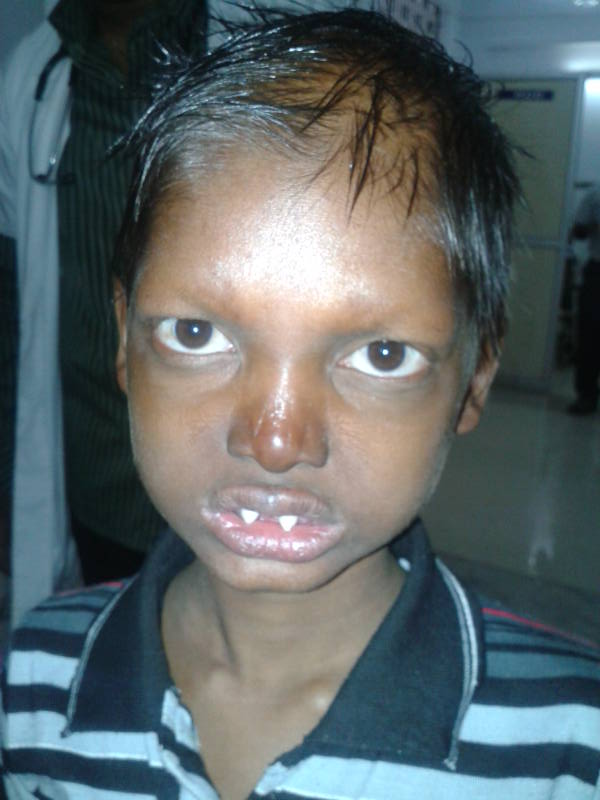
Individuals with ED commonly experience sparse or absent hair, a condition known as hypotrichosis. Scalp hair is typically fine and brittle and may lack pigmentation, appearing light or wispy. Eyebrows and eyelashes may also be sparse or absent, contributing to the distinct facial appearance seen in ED. The pattern of hair growth on the body and face can vary among ED types, with some individuals retaining body or facial hair while others do not.
Nail abnormalities in ED often manifest as dysplastic or poorly formed nails. Affected individuals may have thin, brittle, or ridged nails that are prone to splitting and breaking. In severe cases, nails may be entirely absent or exhibit atypical growth patterns, including spoon-like (koilonychia) or thickened (pachyonychia) appearances.
Skin in individuals with ED is frequently dry and thin, and may display hyperkeratosis, especially on the palms and soles. This dryness is largely due to reduced sebaceous gland function, which normally helps maintain skin moisture. Periorbital hyperpigmentation, or darkening around the eyes, is also common, and the skin can appear more fragile or prone to infections.
A significant feature of many ED types is the absence or reduced function of sweat glands, leading to conditions known as hypohidrosis or anhidrosis. The inability to produce sufficient sweat disrupts normal thermoregulation, particularly in warm environments, and can lead to overheating or hyperthermia. This lack of sweat production is especially pronounced in hypohidrotic ectodermal dysplasia (HED), where sweat gland function is minimal to nonexistent.
Dysfunction or underdevelopment of the salivary glands, known as salivary hypoplasia, is a common feature in ED and results in xerostomia, or dry mouth. This lack of saliva can increase the risk of dental decay, as saliva is essential for oral health. Reduced saliva production can also complicate swallowing and speech, making it necessary for individuals to consume fluids frequently during meals.
Ectodermal dysplasia
Ectodermal dysplasia (ED) refers to a group of genetic disorders characterized by the abnormal development or function of two or more structures that originate from the ectoderm, the outer layer of an embryo. These structures include hair, teeth, nails, and sweat glands, all of which may develop abnormally in people with ED. There are over 200 different syndromes classified under ED, each with a range of symptoms and genetic causes. The most common type is hypohidrotic ectodermal dysplasia (HED), which affects approximately 1 in every 5,000 to 10,000 live births. HED primarily affects males because it is typically inherited through the X chromosome.
The genetic cause of ED lies in mutations, or changes, in certain genes that play an essential role in forming ectodermal structures. These genes are part of signalling pathways—most notably, the EDA/NF-kappaB pathway—which guide the development of hair, skin, nails, teeth, and glands during embryonic growth. Genes such as EDA, EDAR, and EDARADD are key players in this process, and variants in these genes disrupt normal development, resulting in the characteristic symptoms of ED. Beyond HED, other types of ED follow different inheritance patterns, such as autosomal dominant or autosomal recessive, but often show similar physical traits, though with different genetic mutations.
Diagnosing ED usually involves a clinical examination focused on core symptoms, such as lack of sweating, specific dental and hair abnormalities, and characteristic facial features. Genetic testing can confirm the diagnosis, especially when there is a family history of ED or when prenatal screening is considered.
Individuals with ED commonly experience sparse or absent hair, a condition known as hypotrichosis. Scalp hair is typically fine and brittle and may lack pigmentation, appearing light or wispy. Eyebrows and eyelashes may also be sparse or absent, contributing to the distinct facial appearance seen in ED. The pattern of hair growth on the body and face can vary among ED types, with some individuals retaining body or facial hair while others do not.
Nail abnormalities in ED often manifest as dysplastic or poorly formed nails. Affected individuals may have thin, brittle, or ridged nails that are prone to splitting and breaking. In severe cases, nails may be entirely absent or exhibit atypical growth patterns, including spoon-like (koilonychia) or thickened (pachyonychia) appearances.
Skin in individuals with ED is frequently dry and thin, and may display hyperkeratosis, especially on the palms and soles. This dryness is largely due to reduced sebaceous gland function, which normally helps maintain skin moisture. Periorbital hyperpigmentation, or darkening around the eyes, is also common, and the skin can appear more fragile or prone to infections.
A significant feature of many ED types is the absence or reduced function of sweat glands, leading to conditions known as hypohidrosis or anhidrosis. The inability to produce sufficient sweat disrupts normal thermoregulation, particularly in warm environments, and can lead to overheating or hyperthermia. This lack of sweat production is especially pronounced in hypohidrotic ectodermal dysplasia (HED), where sweat gland function is minimal to nonexistent.
Dysfunction or underdevelopment of the salivary glands, known as salivary hypoplasia, is a common feature in ED and results in xerostomia, or dry mouth. This lack of saliva can increase the risk of dental decay, as saliva is essential for oral health. Reduced saliva production can also complicate swallowing and speech, making it necessary for individuals to consume fluids frequently during meals.
Recent media
Recent media