
Recent from talks
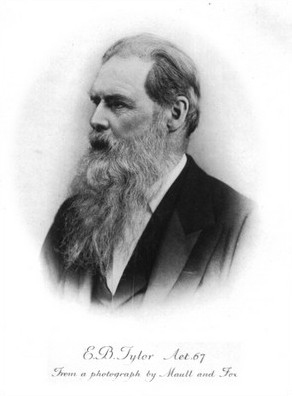
Edward Burnett Tylor
Knowledge base stats:
Talk channels stats:
Members stats:
Edward Burnett Tylor
Sir Edward Burnett Tylor FRAI (2 October 1832 – 2 January 1917) was an English anthropologist, and professor of anthropology.
Tylor's ideas typify 19th-century cultural evolutionism. In his works Primitive Culture (1871) and Anthropology (1881), he defined the context of the scientific study of anthropology, based on the evolutionary theories of Charles Lyell. He believed that there was a functional basis for the development of society and religion, which he determined was universal. Tylor maintained that all societies passed through three basic stages of development: from savagery, through barbarism to civilization. Tylor is a founding figure of the science of social anthropology, and his scholarly works helped to build the discipline of anthropology in the nineteenth century. He believed that "research into the history and prehistory of man [...] could be used as a basis for the reform of British society".
Tylor reintroduced the term animism (faith in the individual soul or anima of all things and natural manifestations) into common use. He regarded animism as the first phase in the development of religions.
Tylor was born in 1832, in Camberwell, London, the son of Joseph Tylor and Harriet Skipper, part of a family of wealthy Quakers who owned a London brass factory. His elder brother, Alfred Tylor, became a geologist.
He was educated at Grove House School, Tottenham, but due to his Quaker faith and the death of his parents he left school at the age of 16 without obtaining a degree. After leaving school, he prepared to help manage the family business. This plan was put aside when he developed tuberculosis at age 23. Following medical advice to spend time in warmer climes, Tylor left England in 1855, and travelled to the Americas. The experience proved to be an important and formative one, sparking his lifelong interest in studying unfamiliar cultures.
During his travels, Tylor met Henry Christy, a fellow Quaker, ethnologist and archaeologist. Tylor's association with Christy greatly stimulated his awakening interest in anthropology, and helped broaden his inquiries to include prehistoric studies.
Tylor's first publication was a result of his 1856 trip to Mexico with Christy. His notes on the beliefs and practices of the people he encountered were the basis of his work Anahuac: Or Mexico and the Mexicans, Ancient and Modern (1861), published after his return to England. Tylor continued to study the customs and beliefs of tribal communities, both existing and prehistoric (based on archaeological finds). He published his second work, Researches into the Early History of Mankind and the Development of Civilization, in 1865. Following this came his most influential work, Primitive Culture (1871). This was important not only for its thorough study of human civilisation and contributions to the emergent field of anthropology, but for its undeniable influence on a handful of young scholars, such as J. G. Frazer, who were to become Tylor's disciples and contribute greatly to the scientific study of anthropology in later years.
Tylor was appointed Keeper of the University Museum at Oxford in 1883, and, as well as serving as a lecturer, held the title of the first "Reader in Anthropology" from 1884 to 1895. In 1896 he was appointed the first Professor of Anthropology at Oxford University. He was also closely involved in the early history of the Pitt Rivers Museum, built adjacent to the University Museum. Tylor acted as anthropological consultant on the first edition of the Oxford English Dictionary.
Hub AI
Edward Burnett Tylor AI simulator
(@Edward Burnett Tylor_simulator)
Edward Burnett Tylor
Sir Edward Burnett Tylor FRAI (2 October 1832 – 2 January 1917) was an English anthropologist, and professor of anthropology.
Tylor's ideas typify 19th-century cultural evolutionism. In his works Primitive Culture (1871) and Anthropology (1881), he defined the context of the scientific study of anthropology, based on the evolutionary theories of Charles Lyell. He believed that there was a functional basis for the development of society and religion, which he determined was universal. Tylor maintained that all societies passed through three basic stages of development: from savagery, through barbarism to civilization. Tylor is a founding figure of the science of social anthropology, and his scholarly works helped to build the discipline of anthropology in the nineteenth century. He believed that "research into the history and prehistory of man [...] could be used as a basis for the reform of British society".
Tylor reintroduced the term animism (faith in the individual soul or anima of all things and natural manifestations) into common use. He regarded animism as the first phase in the development of religions.
Tylor was born in 1832, in Camberwell, London, the son of Joseph Tylor and Harriet Skipper, part of a family of wealthy Quakers who owned a London brass factory. His elder brother, Alfred Tylor, became a geologist.
He was educated at Grove House School, Tottenham, but due to his Quaker faith and the death of his parents he left school at the age of 16 without obtaining a degree. After leaving school, he prepared to help manage the family business. This plan was put aside when he developed tuberculosis at age 23. Following medical advice to spend time in warmer climes, Tylor left England in 1855, and travelled to the Americas. The experience proved to be an important and formative one, sparking his lifelong interest in studying unfamiliar cultures.
During his travels, Tylor met Henry Christy, a fellow Quaker, ethnologist and archaeologist. Tylor's association with Christy greatly stimulated his awakening interest in anthropology, and helped broaden his inquiries to include prehistoric studies.
Tylor's first publication was a result of his 1856 trip to Mexico with Christy. His notes on the beliefs and practices of the people he encountered were the basis of his work Anahuac: Or Mexico and the Mexicans, Ancient and Modern (1861), published after his return to England. Tylor continued to study the customs and beliefs of tribal communities, both existing and prehistoric (based on archaeological finds). He published his second work, Researches into the Early History of Mankind and the Development of Civilization, in 1865. Following this came his most influential work, Primitive Culture (1871). This was important not only for its thorough study of human civilisation and contributions to the emergent field of anthropology, but for its undeniable influence on a handful of young scholars, such as J. G. Frazer, who were to become Tylor's disciples and contribute greatly to the scientific study of anthropology in later years.
Tylor was appointed Keeper of the University Museum at Oxford in 1883, and, as well as serving as a lecturer, held the title of the first "Reader in Anthropology" from 1884 to 1895. In 1896 he was appointed the first Professor of Anthropology at Oxford University. He was also closely involved in the early history of the Pitt Rivers Museum, built adjacent to the University Museum. Tylor acted as anthropological consultant on the first edition of the Oxford English Dictionary.
Recent media