
Recent from talks
Edward C. Tolman
Knowledge base stats:
Talk channels stats:
Members stats:
Edward C. Tolman
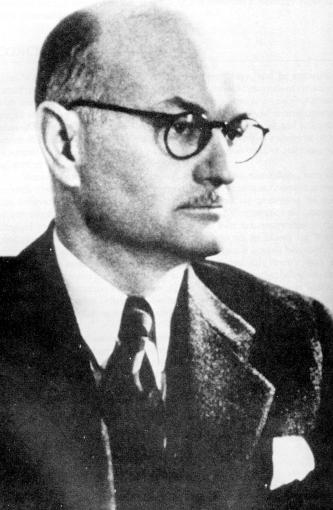
Edward Chace Tolman (April 14, 1886 – November 19, 1959) was an American psychologist and a professor of psychology at the University of California, Berkeley. Through Tolman's theories and works, he founded what is now a branch of psychology known as purposive behaviorism. Tolman also promoted the concept known as latent learning first coined by Blodgett (1929). A Review of General Psychology survey, published in 2002, ranked Tolman as the 45th most cited psychologist of the 20th century.
Tolman was one of the leading figures in protecting academic freedom during the McCarthy era in early 1950s. In recognition of Tolman's contributions to both the development of psychology and academic freedom, the Education and Psychology building on Berkeley campus, the "Tolman Hall", was named after him.
Born in West Newton, Massachusetts, brother of Caltech physicist Richard Chace Tolman, Edward C. Tolman studied at the Massachusetts Institute of Technology, receiving B.S. in electrochemistry in 1911. Tolman's father was a president of a manufacturing company and his mother was adamant of her Quaker background. Tolman attended MIT because of family pressures, but after reading William James' Principles of Psychology he decided to abandon physics, chemistry, and mathematics in order to study philosophy and psychology. James' influence on Tolman could be seen in Tolman's courageous attitude and his willingness to cope with issues that cause controversy and are against the popular views of the time. Tolman always said he was strongly influenced by the Gestalt psychologists, especially Kurt Lewin and Kurt Koffka.
In 1912, Tolman went to Giessen in Germany to study for his PhD examination. While there he was introduced to and later returned to study Gestalt psychology. Later, Tolman transferred to Harvard University for graduate studies and worked in the laboratory of Hugo Munsterburg. He received his PhD from Harvard University in 1915.
Tolman is best known for his studies of learning in rats using mazes, and he published many experimental articles, of which his paper with Ritchie and Kalish in 1946 was probably the most influential. His major theoretical contributions came in his 1932 book, Purposive Behavior in Animals and Men, and in a series of papers in the Psychological Review, "The determinants of behavior at a choice point" (1938), "Cognitive maps in rats and men" (1948), and "Principles of performance" (1955).
Some of Tolman's early researches were early developments of what is now called behavioral genetics. Tolman would selectively breed rats for the ability to learn the mazes he constructed. Despite the fact that his major research focus involved instinct and purpose, he was open to the idea of researching innate abilities in the rats. Tolman's study was the first experiment to examine the genetic basis of maze learning by breeding distinct lineages of rats selected for their maze performance. Tolman started and continued this research project until 1932, where, after coming back from Europe on a sabbatical leave, his interest started to decrease. Tolman's theoretical model was described in his paper "The Determiners of Behavior at a Choice Point" (1938). The three different variables that influence behavior are: independent, intervening, and dependent variables. The experimenter can manipulate the independent variables; these independent variables (e.g., stimuli provided) in turn influence the intervening variables (e.g., motor skill, appetite). Independent variables are also factors of the subject that the experimenter specifically chooses for. The dependent variables (e.g., speed, number of errors) allows the psychologist to measure the strength of the intervening variables.
Although Tolman was firmly behaviorist in his methodology, he was not a radical behaviorist like B. F. Skinner. In his studies of learning in rats, Tolman sought to demonstrate that animals could learn facts about the world that they could subsequently use in a flexible manner, rather than simply learning automatic responses that were triggered off by environmental stimuli. In the language of the time, Tolman was an "S-S" (stimulus-stimulus), non-reinforcement theorist: he drew on Gestalt psychology to argue that animals could learn the connections between stimuli and did not need any explicit biologically significant event to make learning occur. This is known as latent learning. The rival theory, the much more mechanistic "S-R" (stimulus-response) reinforcement-driven view, was taken up by Clark L. Hull.
A key paper by Tolman, Ritchie, and Kalish in 1946 demonstrated that rats learned the layout of a maze, which they explored freely without reinforcement. After some trials, a food item was placed to a certain point of the maze, and the rats learned to navigate to that point very quickly. However, Hull and his followers were able to produce alternative explanations of Tolman's findings, and the debate between S-S and S-R learning theories became increasingly complicated. Skinner's iconoclastic paper of 1950, entitled "Are theories of learning necessary?", persuaded many psychologists interested in animal learning that it was more productive to focus on the behavior itself rather than using it to make hypotheses about mental states. The influence of Tolman's ideas faded temporarily in the later 1950s and 1960s.[citation needed] However, his achievements had been considerable. His 1938 and 1955 papers, produced to answer Hull's charge that he left the rat "buried in thought" in the maze, unable to respond, anticipated and prepared the ground for much later work in cognitive psychology, as psychologists began to discover and apply decision theory – a stream of work that was recognized by the award of a Nobel Prize to Daniel Kahneman in 2002. In his 1948 paper "Cognitive Maps in Rats and Men", Tolman introduced the concept of a cognitive map, which has found extensive application in almost every field of psychology, frequently among scientists who are unaware that they are using the early ideas that were formulated to explain the behavior of rats in mazes. Tolman assessed both response learning and place learning. Response learning is when the rat knows that the response of going a certain way in the maze will always lead to food; place learning is when the rats learn to associate the food in a specific spot each time. In his trials he observed that all of the rats in the place-learning maze learned to run the correct path within eight trials and that none of the response-learning rats learned that quickly, and some did not even learn it at all after seventy-two trials.
Hub AI
Edward C. Tolman AI simulator
(@Edward C. Tolman_simulator)
Edward C. Tolman
Edward Chace Tolman (April 14, 1886 – November 19, 1959) was an American psychologist and a professor of psychology at the University of California, Berkeley. Through Tolman's theories and works, he founded what is now a branch of psychology known as purposive behaviorism. Tolman also promoted the concept known as latent learning first coined by Blodgett (1929). A Review of General Psychology survey, published in 2002, ranked Tolman as the 45th most cited psychologist of the 20th century.
Tolman was one of the leading figures in protecting academic freedom during the McCarthy era in early 1950s. In recognition of Tolman's contributions to both the development of psychology and academic freedom, the Education and Psychology building on Berkeley campus, the "Tolman Hall", was named after him.
Born in West Newton, Massachusetts, brother of Caltech physicist Richard Chace Tolman, Edward C. Tolman studied at the Massachusetts Institute of Technology, receiving B.S. in electrochemistry in 1911. Tolman's father was a president of a manufacturing company and his mother was adamant of her Quaker background. Tolman attended MIT because of family pressures, but after reading William James' Principles of Psychology he decided to abandon physics, chemistry, and mathematics in order to study philosophy and psychology. James' influence on Tolman could be seen in Tolman's courageous attitude and his willingness to cope with issues that cause controversy and are against the popular views of the time. Tolman always said he was strongly influenced by the Gestalt psychologists, especially Kurt Lewin and Kurt Koffka.
In 1912, Tolman went to Giessen in Germany to study for his PhD examination. While there he was introduced to and later returned to study Gestalt psychology. Later, Tolman transferred to Harvard University for graduate studies and worked in the laboratory of Hugo Munsterburg. He received his PhD from Harvard University in 1915.
Tolman is best known for his studies of learning in rats using mazes, and he published many experimental articles, of which his paper with Ritchie and Kalish in 1946 was probably the most influential. His major theoretical contributions came in his 1932 book, Purposive Behavior in Animals and Men, and in a series of papers in the Psychological Review, "The determinants of behavior at a choice point" (1938), "Cognitive maps in rats and men" (1948), and "Principles of performance" (1955).
Some of Tolman's early researches were early developments of what is now called behavioral genetics. Tolman would selectively breed rats for the ability to learn the mazes he constructed. Despite the fact that his major research focus involved instinct and purpose, he was open to the idea of researching innate abilities in the rats. Tolman's study was the first experiment to examine the genetic basis of maze learning by breeding distinct lineages of rats selected for their maze performance. Tolman started and continued this research project until 1932, where, after coming back from Europe on a sabbatical leave, his interest started to decrease. Tolman's theoretical model was described in his paper "The Determiners of Behavior at a Choice Point" (1938). The three different variables that influence behavior are: independent, intervening, and dependent variables. The experimenter can manipulate the independent variables; these independent variables (e.g., stimuli provided) in turn influence the intervening variables (e.g., motor skill, appetite). Independent variables are also factors of the subject that the experimenter specifically chooses for. The dependent variables (e.g., speed, number of errors) allows the psychologist to measure the strength of the intervening variables.
Although Tolman was firmly behaviorist in his methodology, he was not a radical behaviorist like B. F. Skinner. In his studies of learning in rats, Tolman sought to demonstrate that animals could learn facts about the world that they could subsequently use in a flexible manner, rather than simply learning automatic responses that were triggered off by environmental stimuli. In the language of the time, Tolman was an "S-S" (stimulus-stimulus), non-reinforcement theorist: he drew on Gestalt psychology to argue that animals could learn the connections between stimuli and did not need any explicit biologically significant event to make learning occur. This is known as latent learning. The rival theory, the much more mechanistic "S-R" (stimulus-response) reinforcement-driven view, was taken up by Clark L. Hull.
A key paper by Tolman, Ritchie, and Kalish in 1946 demonstrated that rats learned the layout of a maze, which they explored freely without reinforcement. After some trials, a food item was placed to a certain point of the maze, and the rats learned to navigate to that point very quickly. However, Hull and his followers were able to produce alternative explanations of Tolman's findings, and the debate between S-S and S-R learning theories became increasingly complicated. Skinner's iconoclastic paper of 1950, entitled "Are theories of learning necessary?", persuaded many psychologists interested in animal learning that it was more productive to focus on the behavior itself rather than using it to make hypotheses about mental states. The influence of Tolman's ideas faded temporarily in the later 1950s and 1960s.[citation needed] However, his achievements had been considerable. His 1938 and 1955 papers, produced to answer Hull's charge that he left the rat "buried in thought" in the maze, unable to respond, anticipated and prepared the ground for much later work in cognitive psychology, as psychologists began to discover and apply decision theory – a stream of work that was recognized by the award of a Nobel Prize to Daniel Kahneman in 2002. In his 1948 paper "Cognitive Maps in Rats and Men", Tolman introduced the concept of a cognitive map, which has found extensive application in almost every field of psychology, frequently among scientists who are unaware that they are using the early ideas that were formulated to explain the behavior of rats in mazes. Tolman assessed both response learning and place learning. Response learning is when the rat knows that the response of going a certain way in the maze will always lead to food; place learning is when the rats learn to associate the food in a specific spot each time. In his trials he observed that all of the rats in the place-learning maze learned to run the correct path within eight trials and that none of the response-learning rats learned that quickly, and some did not even learn it at all after seventy-two trials.
Recent media