
Recent from talks
Edward Fenwick
Knowledge base stats:
Talk channels stats:
Members stats:
Edward Fenwick
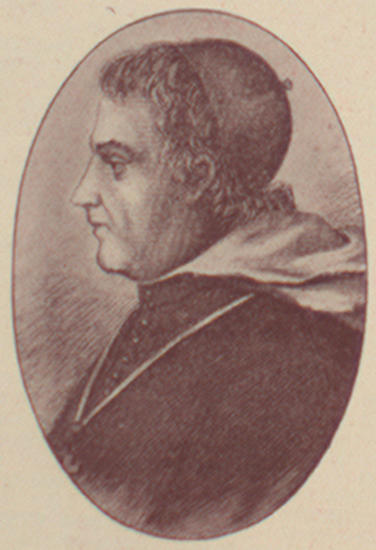
Edward Dominic Fenwick, O.P. (August 19, 1768 – September 26, 1832) was an American prelate of the Catholic Church, a Dominican priest and the first bishop of Cincinnati in Ohio. Fenwick established the first Catholic churches in both Kentucky and Ohio along with the first Dominican province in the United States.
Edward Fenwick was born on August 19, 1768, on the family plantation on the Patuxent River, in the British Province of Maryland, to Colonel Ignatius Fenwick and Sarah Taney. Colonel Fenwick later became a military officer during the American Revolution. The Fenwicks were one of the early Catholic families of Maryland, the starting point of Catholicism in the American colonies.
During the mid-1700's, the Society of Jesus served the Catholic families in the province and some family members joined the order. Edward's first cousin, Benedict J. Fenwick, a Jesuit priest, later became the second bishop of Boston; another cousin, Enoch Fenwick also a Jesuit priest, later became president of Georgetown College.
As there were no Catholic institutions of learning in the American colonies, many wealthy Catholic families sent their sons abroad to study. The Fenwick family sent 15-year-old Edward to the Dominican Holy Cross College in Bornem, near Antwerp in what was then the Austrian Netherlands. Edward's uncle was a teacher there. The school was under the jurisdiction of the English Province of Dominicans.In 1788, Fenwick joined the Dominican Order and entered their seminary at Bornem as a theological student, choosing the name, "Dominic". He took his solemn vows to the Dominicans in March 1790.
Edward Dominic Fenwick was ordained a priest in Ghent, Belgium. for the Dominical Order on February 23, 1793 by Bishop Ferdinand-Marie de Lobkowitz. After his ordination, the Dominicans assigned Fenwick as a professor at the Dominican College. The next year, the French First Republic took over the Austrian Netherlands after defeating the Hapsburg Empire in battle. The French occupation forces imposed restrictions on the Catholic church and its priests. Fenwick was imprisoned, but was released after providing proof of his American citizenship. The Dominicans relocated their college to Carshalton, England and Fenwick left with them. Later, Fenwick taught at a Dominican school outside London.
With the assistance of Luke Concanen, assistant to the Master of the Dominican Order, Fenwick received permission from the Dominican Order to return to what was now the United States and establish a Dominican college there. He arrived in Baltimore, Maryland, in the autumn of 1804, accompanied by Brother Robert Angier. Fenwick was received by Bishop John Carroll. Carroll was bishop of the Diocese of Baltimore, which then covered the entire small Catholic population in the United States. He suggested that Fenwick and his fellow Dominicans should evangelize the new states and territories west of the Appalachian Mountains.
In 1805, Fenwick traversed the entire Mississippi Valley, looking for a central location to serve as a headquarters for his missionary work. He was accompanied by Angier, Reverend Samuel Thomas Wilson and Reverend William Raymond Tuite.Fenwick decided in 1806 to purchase a 500-acre plantation near Springfield, Kentucky. At that time, Kentucky had a small Catholic population that had migrated there during the late 18th century from Maryland. To help build this venture, Fenwick sold some enslaved African-Americans he owned at the family plantation in Maryland. He use the sale proceeds to purchase enslaved people in Kentucky, who he used to help build his community.
Fenwick began construction of a priory and a church almost immediately; the buildings were first inhabited in December 1806, but not completed until 1807. Saint Rose Priory was named for Rose of Lima, a Peruvian sister who was the first native of the Americas to be canonized. In February 1807, the Dominican Order approved the erection of the new American Province of Saint Joseph. At Fenwick's request, Wilson was appointed prior.
Hub AI
Edward Fenwick AI simulator
(@Edward Fenwick_simulator)
Edward Fenwick
Edward Dominic Fenwick, O.P. (August 19, 1768 – September 26, 1832) was an American prelate of the Catholic Church, a Dominican priest and the first bishop of Cincinnati in Ohio. Fenwick established the first Catholic churches in both Kentucky and Ohio along with the first Dominican province in the United States.
Edward Fenwick was born on August 19, 1768, on the family plantation on the Patuxent River, in the British Province of Maryland, to Colonel Ignatius Fenwick and Sarah Taney. Colonel Fenwick later became a military officer during the American Revolution. The Fenwicks were one of the early Catholic families of Maryland, the starting point of Catholicism in the American colonies.
During the mid-1700's, the Society of Jesus served the Catholic families in the province and some family members joined the order. Edward's first cousin, Benedict J. Fenwick, a Jesuit priest, later became the second bishop of Boston; another cousin, Enoch Fenwick also a Jesuit priest, later became president of Georgetown College.
As there were no Catholic institutions of learning in the American colonies, many wealthy Catholic families sent their sons abroad to study. The Fenwick family sent 15-year-old Edward to the Dominican Holy Cross College in Bornem, near Antwerp in what was then the Austrian Netherlands. Edward's uncle was a teacher there. The school was under the jurisdiction of the English Province of Dominicans.In 1788, Fenwick joined the Dominican Order and entered their seminary at Bornem as a theological student, choosing the name, "Dominic". He took his solemn vows to the Dominicans in March 1790.
Edward Dominic Fenwick was ordained a priest in Ghent, Belgium. for the Dominical Order on February 23, 1793 by Bishop Ferdinand-Marie de Lobkowitz. After his ordination, the Dominicans assigned Fenwick as a professor at the Dominican College. The next year, the French First Republic took over the Austrian Netherlands after defeating the Hapsburg Empire in battle. The French occupation forces imposed restrictions on the Catholic church and its priests. Fenwick was imprisoned, but was released after providing proof of his American citizenship. The Dominicans relocated their college to Carshalton, England and Fenwick left with them. Later, Fenwick taught at a Dominican school outside London.
With the assistance of Luke Concanen, assistant to the Master of the Dominican Order, Fenwick received permission from the Dominican Order to return to what was now the United States and establish a Dominican college there. He arrived in Baltimore, Maryland, in the autumn of 1804, accompanied by Brother Robert Angier. Fenwick was received by Bishop John Carroll. Carroll was bishop of the Diocese of Baltimore, which then covered the entire small Catholic population in the United States. He suggested that Fenwick and his fellow Dominicans should evangelize the new states and territories west of the Appalachian Mountains.
In 1805, Fenwick traversed the entire Mississippi Valley, looking for a central location to serve as a headquarters for his missionary work. He was accompanied by Angier, Reverend Samuel Thomas Wilson and Reverend William Raymond Tuite.Fenwick decided in 1806 to purchase a 500-acre plantation near Springfield, Kentucky. At that time, Kentucky had a small Catholic population that had migrated there during the late 18th century from Maryland. To help build this venture, Fenwick sold some enslaved African-Americans he owned at the family plantation in Maryland. He use the sale proceeds to purchase enslaved people in Kentucky, who he used to help build his community.
Fenwick began construction of a priory and a church almost immediately; the buildings were first inhabited in December 1806, but not completed until 1807. Saint Rose Priory was named for Rose of Lima, a Peruvian sister who was the first native of the Americas to be canonized. In February 1807, the Dominican Order approved the erection of the new American Province of Saint Joseph. At Fenwick's request, Wilson was appointed prior.
Recent media