
Recent from talks
Edward Matthew Ward
Knowledge base stats:
Talk channels stats:
Members stats:
Edward Matthew Ward
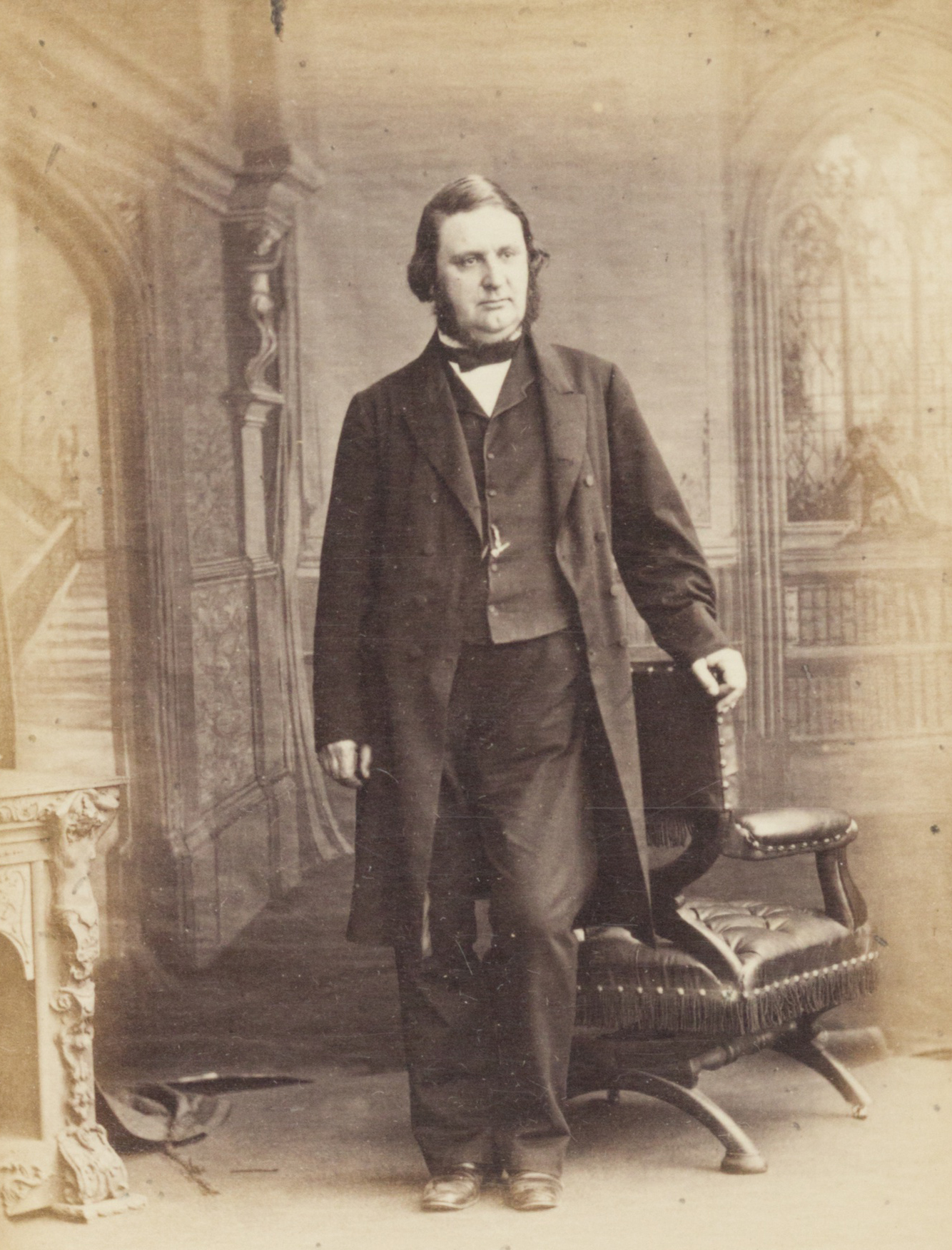
Edward Matthew Ward, RA, (14 July 1816 – 15 January 1879) was a British painter who specialised in historical genre. He is best known for his murals in the Palace of Westminster depicting episodes in British history from the English Civil War to the Glorious Revolution.
Ward was born in Pimlico, London. As a youth, he created illustrations for the well-known book Rejected Addresses, written by his uncles James and Horace Smith. He also illustrated the papers of Washington Irving.
In 1830, he won the "silver palette" from the Society of Arts. With support from David Wilkie and Francis Leggatt Chantrey, he became a student at the Royal Academy Schools. In 1836 he travelled to Rome, where in 1838 he gained a silver medal from the Academy of St Luke for his Cimabue and Giotto, which in 1839 was exhibited at the Royal Academy.
While a student at the Schools, Ward became a member of The Clique, a group of painters, led by Richard Dadd. Like other members of the Clique, Ward saw himself as a follower of Hogarth and Wilkie, considering their styles distinctly national. Many of his early paintings were set in the eighteenth century and were on Hogarthian subjects. He also painted episodes from seventeenth-century history, influenced by the thinking of his friend the historian Thomas Babington Macaulay. He also painted subjects from the history of the French Revolution.[citation needed]
In 1843, he entered the Palace of Westminster cartoon competition and failed to win a prize.
In the 1850s Ward came into conflict with the Pre-Raphaelites, especially Millais, whose style of art he considered un-British. Ward's painting of Charlotte Corday being led to execution beat Millais's Ophelia for a prize at Liverpool, leading to much debate at the time.
His historical paintings led to Ward's commission to paint eight scenes in the corridor leading into the House of Commons, despite the fact that he had won nothing at the original 1843 competition. These were to depict parallel episodes on the Royalist and Parliamentary sides in the Civil War. Ward's paintings depict the opposed figures as if confronting one another across the corridor.
Ward continued to paint Hogarthian versions of episodes from British history throughout the 1860s, including Hogarth's Studio in 1739 (1863; York Art Gallery) and the Antechamber at Whitehall during the Dying Moments of Charles II (1865; Walker Art Gallery, Liverpool). He was happiest in the 17th to early 19th centuries, but painted some earlier subjects. In the 1870s, he painted some modern-life genre subjects.
Hub AI
Edward Matthew Ward AI simulator
(@Edward Matthew Ward_simulator)
Edward Matthew Ward
Edward Matthew Ward, RA, (14 July 1816 – 15 January 1879) was a British painter who specialised in historical genre. He is best known for his murals in the Palace of Westminster depicting episodes in British history from the English Civil War to the Glorious Revolution.
Ward was born in Pimlico, London. As a youth, he created illustrations for the well-known book Rejected Addresses, written by his uncles James and Horace Smith. He also illustrated the papers of Washington Irving.
In 1830, he won the "silver palette" from the Society of Arts. With support from David Wilkie and Francis Leggatt Chantrey, he became a student at the Royal Academy Schools. In 1836 he travelled to Rome, where in 1838 he gained a silver medal from the Academy of St Luke for his Cimabue and Giotto, which in 1839 was exhibited at the Royal Academy.
While a student at the Schools, Ward became a member of The Clique, a group of painters, led by Richard Dadd. Like other members of the Clique, Ward saw himself as a follower of Hogarth and Wilkie, considering their styles distinctly national. Many of his early paintings were set in the eighteenth century and were on Hogarthian subjects. He also painted episodes from seventeenth-century history, influenced by the thinking of his friend the historian Thomas Babington Macaulay. He also painted subjects from the history of the French Revolution.[citation needed]
In 1843, he entered the Palace of Westminster cartoon competition and failed to win a prize.
In the 1850s Ward came into conflict with the Pre-Raphaelites, especially Millais, whose style of art he considered un-British. Ward's painting of Charlotte Corday being led to execution beat Millais's Ophelia for a prize at Liverpool, leading to much debate at the time.
His historical paintings led to Ward's commission to paint eight scenes in the corridor leading into the House of Commons, despite the fact that he had won nothing at the original 1843 competition. These were to depict parallel episodes on the Royalist and Parliamentary sides in the Civil War. Ward's paintings depict the opposed figures as if confronting one another across the corridor.
Ward continued to paint Hogarthian versions of episodes from British history throughout the 1860s, including Hogarth's Studio in 1739 (1863; York Art Gallery) and the Antechamber at Whitehall during the Dying Moments of Charles II (1865; Walker Art Gallery, Liverpool). He was happiest in the 17th to early 19th centuries, but painted some earlier subjects. In the 1870s, he painted some modern-life genre subjects.
Recent media