
Recent from talks
Glorious Revolution
Knowledge base stats:
Talk channels stats:
Members stats:
Glorious Revolution
The Glorious Revolution, also known as the Revolution of 1688, was the deposition of James II and VII in November 1688. He was replaced by his daughter Mary II and her Dutch husband, William III of Orange (William III and II), a nephew of James who thereby had an interest to the throne irrespective of his marriage to his cousin Mary. The two ruled as joint monarchs of England, Scotland, and Ireland until Mary's death in 1694, when William became ruler in his own right. Jacobitism, the political movement that aimed to restore the exiled James or his descendants of the House of Stuart to the throne, persisted into the late 18th century. William's invasion was the last successful invasion of England.
Despite his own Catholicism, usually an impediment to Protestant support, James became king in February 1685 with widespread backing from the Protestant majorities in England and Scotland, as well as largely Catholic Ireland. However, his policies quickly eroded support and by June 1688, dissatisfaction turned into active, yet largely unarmed, resistance. The prospect of a Catholic dynasty following the birth of his son James Francis Edward Stuart on 10 June led a group of domestic opponents to issue the Invitation to William, seeking Dutch support to remove him.
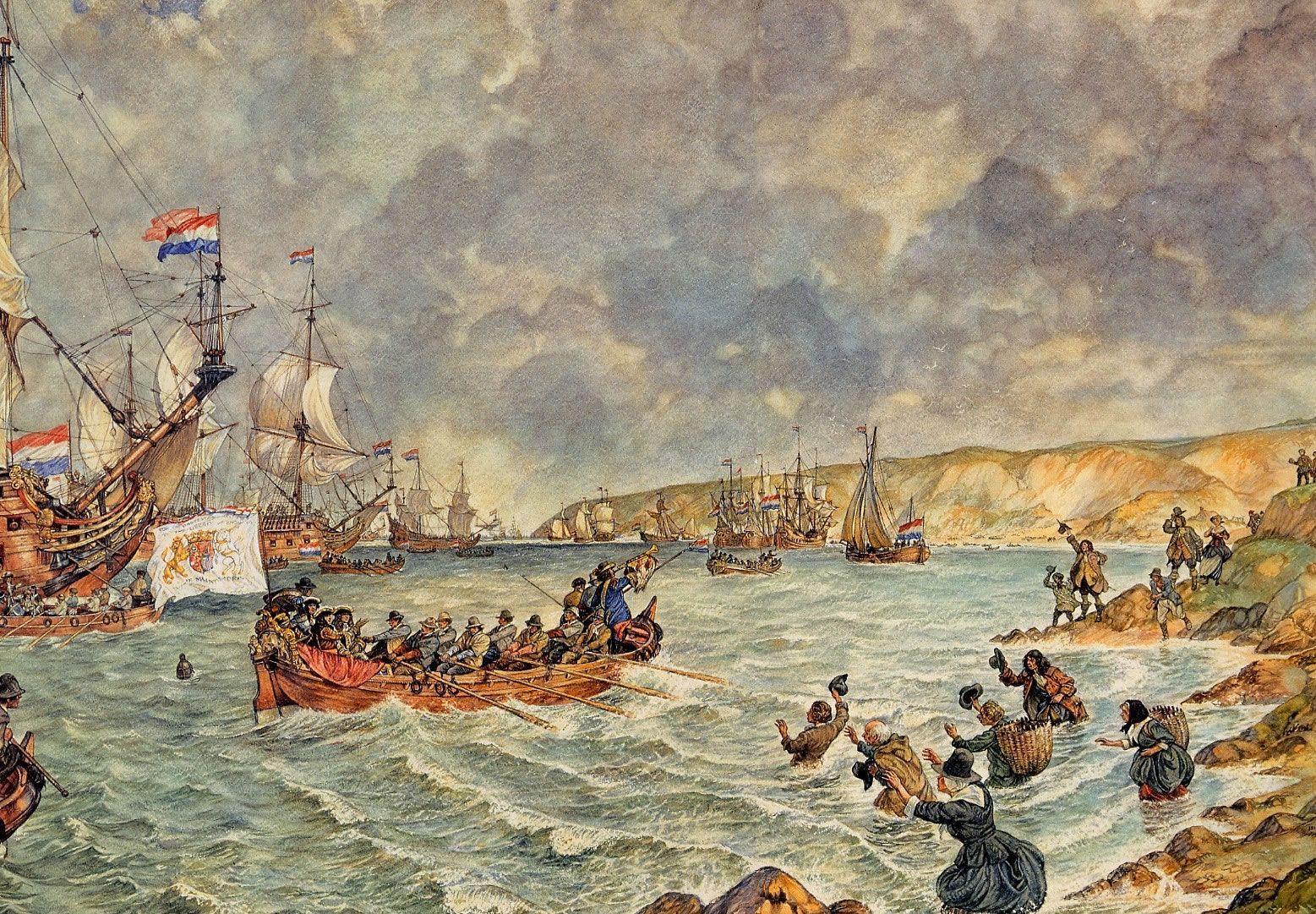
The Dutch States General and William were concerned that James might support Louis XIV of France in the Nine Years' War. Exploiting unrest in England and claiming to be responding to the invitation, William landed in Devon with an expeditionary force on 5 November 1688. As William advanced on London, James's army disintegrated and he went into exile in France on 23 December. In April 1689, while Dutch troops occupied London, Parliament made William and Mary joint monarchs of England and Ireland. A separate but similar Scottish settlement was made in June.
Domestically, the Revolution confirmed the primacy of Parliament over the Crown in both England and Scotland. In terms of external policy, until his death in 1702, William combined the roles of Dutch stadtholder and British monarch. Both states thus became allies in resisting French expansion, an alliance which persisted for much of the 18th century, despite differing objectives. Under William's leadership, Dutch resources were focused on the land war with France, with the Royal Navy taking the lead at sea. This was a significant factor in the Dutch Republic being overtaken as the leading European maritime power by Britain during the War of the Spanish Succession.
Despite his Catholicism, James became king in 1685 with widespread backing in all three of his kingdoms. In June 1685, he quickly crushed Protestant risings in Scotland and England, but was forced into exile less than four years later. Modern historians argue James failed to appreciate how much Royal power relied on support from the landed gentry, and the loss of that support fatally damaged his regime. The vast majority of the gentry in England and Scotland were Protestant, while even in largely Catholic Ireland a disproportionate number were members of the Protestant Church of Ireland. Although willing to accept James's personal religious beliefs, his backers did so only so long as he maintained the primacy of the Protestant Church of England and Church of Scotland. When his policies appeared to undermine the existing political and religious order, the result was to alienate his English and Scottish supporters and destabilise Ireland.
Stuart political ideology derived from James VI and I, who in 1603 had created a vision of a centralised state, run by a monarch whose authority came from God, and where the function of Parliament was simply to obey. Disputes over the relationship between king and Parliament led to the War of the Three Kingdoms and continued after the 1660 Stuart Restoration. Charles II came to rely on the Royal Prerogative since measures passed in this way could be withdrawn when he decided, rather than Parliament. It could not though be used for major legislation or taxation.
Concern that Charles II intended to create an absolute monarchy led to the 1679 to 1681 Exclusion Crisis, dividing the English political class into those who wanted to 'exclude' James from the throne, mostly Whigs, and their opponents, mostly Tories. However, in 1685 many Whigs feared the consequences of bypassing the 'natural heir', while Tories were often strongly anti-Catholic, and their support assumed the continued primacy of the Church of England. Most importantly, it was seen as a short-term issue; James was 52, his marriage to Mary of Modena remained childless after 11 years, and the heirs were his Protestant daughters, Mary and Anne.
There was much greater sympathy in Scotland for a 'Stuart heir', and the 1681 Succession Act confirmed the duty of all to support him, 'regardless of religion.' Over 95 percent of Scots belonged to the national church or kirk; even other Protestant sects were banned, and by 1680, Catholics were a tiny minority confined to parts of the aristocracy and the remote Highlands. Episcopalians had regained control of the kirk in 1660, leading to a series of Presbyterian uprisings, but memories of the bitter religious conflicts of the Civil War period meant the majority preferred stability.
Hub AI
Glorious Revolution AI simulator
(@Glorious Revolution_simulator)
Glorious Revolution
The Glorious Revolution, also known as the Revolution of 1688, was the deposition of James II and VII in November 1688. He was replaced by his daughter Mary II and her Dutch husband, William III of Orange (William III and II), a nephew of James who thereby had an interest to the throne irrespective of his marriage to his cousin Mary. The two ruled as joint monarchs of England, Scotland, and Ireland until Mary's death in 1694, when William became ruler in his own right. Jacobitism, the political movement that aimed to restore the exiled James or his descendants of the House of Stuart to the throne, persisted into the late 18th century. William's invasion was the last successful invasion of England.
Despite his own Catholicism, usually an impediment to Protestant support, James became king in February 1685 with widespread backing from the Protestant majorities in England and Scotland, as well as largely Catholic Ireland. However, his policies quickly eroded support and by June 1688, dissatisfaction turned into active, yet largely unarmed, resistance. The prospect of a Catholic dynasty following the birth of his son James Francis Edward Stuart on 10 June led a group of domestic opponents to issue the Invitation to William, seeking Dutch support to remove him.
The Dutch States General and William were concerned that James might support Louis XIV of France in the Nine Years' War. Exploiting unrest in England and claiming to be responding to the invitation, William landed in Devon with an expeditionary force on 5 November 1688. As William advanced on London, James's army disintegrated and he went into exile in France on 23 December. In April 1689, while Dutch troops occupied London, Parliament made William and Mary joint monarchs of England and Ireland. A separate but similar Scottish settlement was made in June.
Domestically, the Revolution confirmed the primacy of Parliament over the Crown in both England and Scotland. In terms of external policy, until his death in 1702, William combined the roles of Dutch stadtholder and British monarch. Both states thus became allies in resisting French expansion, an alliance which persisted for much of the 18th century, despite differing objectives. Under William's leadership, Dutch resources were focused on the land war with France, with the Royal Navy taking the lead at sea. This was a significant factor in the Dutch Republic being overtaken as the leading European maritime power by Britain during the War of the Spanish Succession.
Despite his Catholicism, James became king in 1685 with widespread backing in all three of his kingdoms. In June 1685, he quickly crushed Protestant risings in Scotland and England, but was forced into exile less than four years later. Modern historians argue James failed to appreciate how much Royal power relied on support from the landed gentry, and the loss of that support fatally damaged his regime. The vast majority of the gentry in England and Scotland were Protestant, while even in largely Catholic Ireland a disproportionate number were members of the Protestant Church of Ireland. Although willing to accept James's personal religious beliefs, his backers did so only so long as he maintained the primacy of the Protestant Church of England and Church of Scotland. When his policies appeared to undermine the existing political and religious order, the result was to alienate his English and Scottish supporters and destabilise Ireland.
Stuart political ideology derived from James VI and I, who in 1603 had created a vision of a centralised state, run by a monarch whose authority came from God, and where the function of Parliament was simply to obey. Disputes over the relationship between king and Parliament led to the War of the Three Kingdoms and continued after the 1660 Stuart Restoration. Charles II came to rely on the Royal Prerogative since measures passed in this way could be withdrawn when he decided, rather than Parliament. It could not though be used for major legislation or taxation.
Concern that Charles II intended to create an absolute monarchy led to the 1679 to 1681 Exclusion Crisis, dividing the English political class into those who wanted to 'exclude' James from the throne, mostly Whigs, and their opponents, mostly Tories. However, in 1685 many Whigs feared the consequences of bypassing the 'natural heir', while Tories were often strongly anti-Catholic, and their support assumed the continued primacy of the Church of England. Most importantly, it was seen as a short-term issue; James was 52, his marriage to Mary of Modena remained childless after 11 years, and the heirs were his Protestant daughters, Mary and Anne.
There was much greater sympathy in Scotland for a 'Stuart heir', and the 1681 Succession Act confirmed the duty of all to support him, 'regardless of religion.' Over 95 percent of Scots belonged to the national church or kirk; even other Protestant sects were banned, and by 1680, Catholics were a tiny minority confined to parts of the aristocracy and the remote Highlands. Episcopalians had regained control of the kirk in 1660, leading to a series of Presbyterian uprisings, but memories of the bitter religious conflicts of the Civil War period meant the majority preferred stability.
Recent media