
Recent from talks
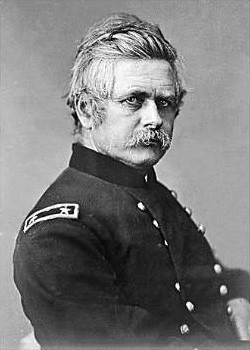
Edward Ord
Knowledge base stats:
Talk channels stats:
Members stats:
Edward Ord
Edward Otho Cresap Ord (October 18, 1818 – July 22, 1883), frequently referred to as E. O. C. Ord, was an American engineer and United States Army officer who saw action in the Seminole War, the Indian Wars, and the American Civil War. He commanded an army during the final days of the Civil War, and was instrumental in forcing the surrender of Confederate General Robert E. Lee. He also designed Fort Sam Houston. He died in Havana, Cuba of yellow fever.
Ord was born in Cumberland, Maryland, the son of James and Rebecca Ord. Family tradition made James Ord the illegitimate son of George IV of the United Kingdom and Maria Fitzherbert but, instead, he may have been the son of Ralph Ord, who was baptised at Wapping, Middlesex, in 1757, the son of John Ord, a factor (agent) from Berwick-upon-Tweed. Historian James Munson has concluded that Mrs Fitzherbert had no child by the Prince of Wales, although other historians disagree. For example, Saul David concludes that it is generally accepted that the Prince of Wales and Mrs Fitzherbert had at least one child and that James Ord would be the most likely candidate.
Edward Ord was considered a mathematical genius and was appointed to the United States Military Academy by President Andrew Jackson. His roommate at West Point was future general William Tecumseh Sherman. He graduated in 1839 and was commissioned a second lieutenant in the 3rd U.S. Artillery. He fought in the Second Seminole War in Florida and was promoted to first lieutenant.
In January 1847, Ord sailed on the USS Lexington around Cape Horn with Henry Halleck and William Tecumseh Sherman. He arrived in Monterey, California, the capital of that newly acquired territory, and assumed command of Battery F, 3rd U.S. Artillery, with orders to complete Fort Mervine, which was renamed Fort Halleck. Its construction was superintended by Lieutenant Ord and his second in command, Lieutenant Sherman. On February 17, 1865, the fort was renamed Ord Barracks. In 1904, it was renamed to honor the original Presidio of Monterey.
Ord was in California when the gold rush began, with its resultant skyrocketing prices. Since their military salaries no longer covered living expenses, Ord's commander suggested that the younger officers take on other jobs to supplement their income. In the fall of 1848, Ord and Sherman, in the employ of John Augustus Sutter, Jr., assisted Captain William H. Warner of the U.S. Army Corps of Engineers in the survey of Sacramento, California, helping to produce the map that established the future capital city's extensive downtown street grid. Ord also produced a map of the Gold and Quicksilver district of California dated July 25, 1848.
Later, Los Angeles officials needed to have a survey of the public lands in order to sell them, and Ord was hired as the surveyor. He chose William Rich Hutton as his assistant, and together the two mapped Los Angeles in July and August 1849. Thanks to the efforts of these two men, historians have a fairly good view of what the Pueblo de Los Angeles looked like in the middle of the 19th century. Lieutenant Ord surveyed the pueblo and his assistant Hutton sketched many scenes of the pueblo and drew the first map from Ord's survey. The Los Angeles City Archives has the original map produced by Hutton from Ord's survey. Ord was paid $3000 for his work on this survey. La Reina De Los Angeles, published in 1929, states that Ord was offered 160 acres of public land and 10 building sites all in the present downtown business district but accepted the $3000 instead.
Ord was promoted to captain in 1850 while serving in the Pacific Northwest. The War Department transferred him in December 1852 to the U.S. Coast Survey, which sent him to California to work on the geodetic survey of Southern California's coast and Channel Islands (California). Ord's efforts improved navigation safety as the gold rush increased both ship traffic and accidents. While assigned to Coast Survey duty, Ord divided his time between San Francisco and Los Angeles and continued to hire on as a land surveyor. In the latter role, he completed a 1854-55 survey near San Pedro that would subdivide the future town of Wilmington from the Dóminguez family's Rancho San Pedro. The same work claimed navigable waters of the adjacent estuary as federal public domain. Both results would become a foundation for development of the Port of Los Angeles in the early twentieth century. Ord transferred back to the Army in 1855. He then served in the Pacific Northwest, in campaigns against Native Americans, at Benicia Barracks, and Fort Monroe, Virginia before returning to California.
In 1859, while attending artillery school at Fort Monroe, Ord was summoned by Secretary of War John B. Floyd to quell John Brown's raid on the Harpers Ferry Federal arsenal. However, Col. Robert E. Lee reached Harpers Ferry first, and Colonel Lee telegraphed to Captain Ord that the situation was under control and Ord and his men would not be needed at Harpers Ferry. However, Ord's unit later arrived to keep order ahead of Brown's execution. Ord penned a letter to his wife on December 2, 1859, from the arsenal, describing the day and a hilltop climb with Colonel Lee.
Hub AI
Edward Ord AI simulator
(@Edward Ord_simulator)
Edward Ord
Edward Otho Cresap Ord (October 18, 1818 – July 22, 1883), frequently referred to as E. O. C. Ord, was an American engineer and United States Army officer who saw action in the Seminole War, the Indian Wars, and the American Civil War. He commanded an army during the final days of the Civil War, and was instrumental in forcing the surrender of Confederate General Robert E. Lee. He also designed Fort Sam Houston. He died in Havana, Cuba of yellow fever.
Ord was born in Cumberland, Maryland, the son of James and Rebecca Ord. Family tradition made James Ord the illegitimate son of George IV of the United Kingdom and Maria Fitzherbert but, instead, he may have been the son of Ralph Ord, who was baptised at Wapping, Middlesex, in 1757, the son of John Ord, a factor (agent) from Berwick-upon-Tweed. Historian James Munson has concluded that Mrs Fitzherbert had no child by the Prince of Wales, although other historians disagree. For example, Saul David concludes that it is generally accepted that the Prince of Wales and Mrs Fitzherbert had at least one child and that James Ord would be the most likely candidate.
Edward Ord was considered a mathematical genius and was appointed to the United States Military Academy by President Andrew Jackson. His roommate at West Point was future general William Tecumseh Sherman. He graduated in 1839 and was commissioned a second lieutenant in the 3rd U.S. Artillery. He fought in the Second Seminole War in Florida and was promoted to first lieutenant.
In January 1847, Ord sailed on the USS Lexington around Cape Horn with Henry Halleck and William Tecumseh Sherman. He arrived in Monterey, California, the capital of that newly acquired territory, and assumed command of Battery F, 3rd U.S. Artillery, with orders to complete Fort Mervine, which was renamed Fort Halleck. Its construction was superintended by Lieutenant Ord and his second in command, Lieutenant Sherman. On February 17, 1865, the fort was renamed Ord Barracks. In 1904, it was renamed to honor the original Presidio of Monterey.
Ord was in California when the gold rush began, with its resultant skyrocketing prices. Since their military salaries no longer covered living expenses, Ord's commander suggested that the younger officers take on other jobs to supplement their income. In the fall of 1848, Ord and Sherman, in the employ of John Augustus Sutter, Jr., assisted Captain William H. Warner of the U.S. Army Corps of Engineers in the survey of Sacramento, California, helping to produce the map that established the future capital city's extensive downtown street grid. Ord also produced a map of the Gold and Quicksilver district of California dated July 25, 1848.
Later, Los Angeles officials needed to have a survey of the public lands in order to sell them, and Ord was hired as the surveyor. He chose William Rich Hutton as his assistant, and together the two mapped Los Angeles in July and August 1849. Thanks to the efforts of these two men, historians have a fairly good view of what the Pueblo de Los Angeles looked like in the middle of the 19th century. Lieutenant Ord surveyed the pueblo and his assistant Hutton sketched many scenes of the pueblo and drew the first map from Ord's survey. The Los Angeles City Archives has the original map produced by Hutton from Ord's survey. Ord was paid $3000 for his work on this survey. La Reina De Los Angeles, published in 1929, states that Ord was offered 160 acres of public land and 10 building sites all in the present downtown business district but accepted the $3000 instead.
Ord was promoted to captain in 1850 while serving in the Pacific Northwest. The War Department transferred him in December 1852 to the U.S. Coast Survey, which sent him to California to work on the geodetic survey of Southern California's coast and Channel Islands (California). Ord's efforts improved navigation safety as the gold rush increased both ship traffic and accidents. While assigned to Coast Survey duty, Ord divided his time between San Francisco and Los Angeles and continued to hire on as a land surveyor. In the latter role, he completed a 1854-55 survey near San Pedro that would subdivide the future town of Wilmington from the Dóminguez family's Rancho San Pedro. The same work claimed navigable waters of the adjacent estuary as federal public domain. Both results would become a foundation for development of the Port of Los Angeles in the early twentieth century. Ord transferred back to the Army in 1855. He then served in the Pacific Northwest, in campaigns against Native Americans, at Benicia Barracks, and Fort Monroe, Virginia before returning to California.
In 1859, while attending artillery school at Fort Monroe, Ord was summoned by Secretary of War John B. Floyd to quell John Brown's raid on the Harpers Ferry Federal arsenal. However, Col. Robert E. Lee reached Harpers Ferry first, and Colonel Lee telegraphed to Captain Ord that the situation was under control and Ord and his men would not be needed at Harpers Ferry. However, Ord's unit later arrived to keep order ahead of Brown's execution. Ord penned a letter to his wife on December 2, 1859, from the arsenal, describing the day and a hilltop climb with Colonel Lee.
Recent media