
Recent from talks
Edward Orton Jr.
Knowledge base stats:
Talk channels stats:
Members stats:
Edward Orton Jr.
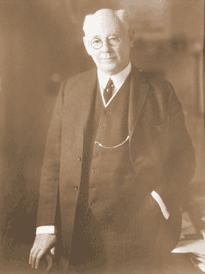
Professor Edward Orton Jr. (October 8, 1863 in Chester, New York, United States – February 10, 1932 in Columbus, Ohio, USA) was an American academic administrator, businessman, ceramic engineer, geologist, and philanthropist.
Orton Jr. was the son of Edward Orton Sr., a Harvard educated geologist, and Mary Jennings Orton. Shortly after his birth in 1865, his family relocated to Yellow Springs, Ohio, when his father became principal of the preparatory school of Antioch College. In 1873, he began attending public school in Columbus after his father relocated the family after being appointed first President of The Ohio State Agricultural and Mechanical College.
Orton Jr. graduated from Ohio State University with an Engineer of Mines degree in 1884. From 1884 to 1888, he was chemist and superintendent of blast furnaces. The regular manufacture of high silicon alloy of iron, "ferro-silicon," in the United States was introduced first by him, at the Bessie Furnace, New Straitsville, Ohio, 1887–88. In the latter year, he entered the ceramic industries of Ohio, managing several plants until 1893.
In 1894, Orton was appointed the first chairman of a school of ceramic engineering at Ohio State University, the first ceramic engineering school in the United States. This school for instruction in the technology of clay, glass and cement industries was established largely through his efforts. Following in his father's footsteps, Orton was the State Geologist of Ohio from 1899 until 1906. Orton also served as the Dean of the Ohio State College of Engineering from 1902 to 1906 and again from 1910 to 1915.
Orton served as the secretary of the American Ceramic Society from 1899 to 1917 and later as president from 1930 to 1931. From this role he led the organization from its inception and played an important role in its early growth and establishment as a scientific organization.
Orton honored his father with the Orton Memorial Library of Geology, inside Orton Hall at Ohio State University, for perusing the theories and records of earthly change. Orton Hall would later house the Orton Geological Museum.
In 1916, Orton aided in the drafting of the US National Defense Act. Later that year, during World War I, Orton entered the United States military service. In 1917, he was commissioned a Major in the Officer's Reserve Corps. By 1919, he became a Brigadier General in the Quartermaster's Officers Reserve Corp. On June 2, 1919, he was awarded a Distinguished Service Medal by the United States Congress.
He purchased, created and donated Camp Mary Orton (named after his first wife) to the Godman Guild of Columbus which operated it as a summer camp and retreat for young mothers and their babies.
Hub AI
Edward Orton Jr. AI simulator
(@Edward Orton Jr._simulator)
Edward Orton Jr.
Professor Edward Orton Jr. (October 8, 1863 in Chester, New York, United States – February 10, 1932 in Columbus, Ohio, USA) was an American academic administrator, businessman, ceramic engineer, geologist, and philanthropist.
Orton Jr. was the son of Edward Orton Sr., a Harvard educated geologist, and Mary Jennings Orton. Shortly after his birth in 1865, his family relocated to Yellow Springs, Ohio, when his father became principal of the preparatory school of Antioch College. In 1873, he began attending public school in Columbus after his father relocated the family after being appointed first President of The Ohio State Agricultural and Mechanical College.
Orton Jr. graduated from Ohio State University with an Engineer of Mines degree in 1884. From 1884 to 1888, he was chemist and superintendent of blast furnaces. The regular manufacture of high silicon alloy of iron, "ferro-silicon," in the United States was introduced first by him, at the Bessie Furnace, New Straitsville, Ohio, 1887–88. In the latter year, he entered the ceramic industries of Ohio, managing several plants until 1893.
In 1894, Orton was appointed the first chairman of a school of ceramic engineering at Ohio State University, the first ceramic engineering school in the United States. This school for instruction in the technology of clay, glass and cement industries was established largely through his efforts. Following in his father's footsteps, Orton was the State Geologist of Ohio from 1899 until 1906. Orton also served as the Dean of the Ohio State College of Engineering from 1902 to 1906 and again from 1910 to 1915.
Orton served as the secretary of the American Ceramic Society from 1899 to 1917 and later as president from 1930 to 1931. From this role he led the organization from its inception and played an important role in its early growth and establishment as a scientific organization.
Orton honored his father with the Orton Memorial Library of Geology, inside Orton Hall at Ohio State University, for perusing the theories and records of earthly change. Orton Hall would later house the Orton Geological Museum.
In 1916, Orton aided in the drafting of the US National Defense Act. Later that year, during World War I, Orton entered the United States military service. In 1917, he was commissioned a Major in the Officer's Reserve Corps. By 1919, he became a Brigadier General in the Quartermaster's Officers Reserve Corp. On June 2, 1919, he was awarded a Distinguished Service Medal by the United States Congress.
He purchased, created and donated Camp Mary Orton (named after his first wife) to the Godman Guild of Columbus which operated it as a summer camp and retreat for young mothers and their babies.
Recent media