
Recent from talks
Edwin Morgan (poet)
Knowledge base stats:
Talk channels stats:
Members stats:
Edwin Morgan (poet)
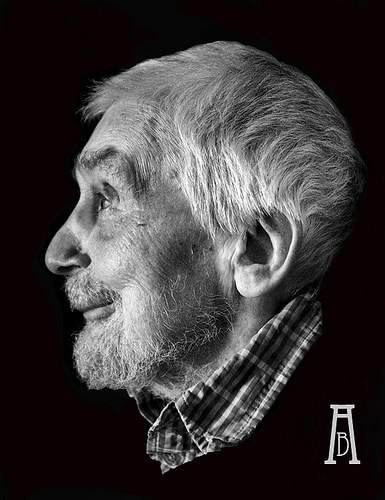
Edwin George Morgan OBE FRSE (27 April 1920 – 19 August 2010) was a Scottish poet and translator associated with the Scottish Renaissance. He is widely recognised as one of the foremost Scottish poets of the 20th century. In 1999, Morgan was made the first Glasgow Poet Laureate. In 2004, he was named as the first Makar or National Poet for Scotland.
Morgan was born in Glasgow and grew up in Rutherglen. His parents were Presbyterian. He convinced his parents to finance his membership of several book clubs in Glasgow. The Faber Book of Modern Verse (1936) was a "revelation" to him, he later said.
Morgan entered the University of Glasgow in 1937. He studied French and Russian, while self-educating in "a good bit of Italian and German" as well. After interrupting his studies to serve in World War II as a non-combatant conscientious objector with the Royal Army Medical Corps, Morgan graduated in 1947 and became a lecturer at the university. He worked there until his retirement as a full professor in 1980.
Morgan described 'CHANGE RULES!' as 'the supreme graffito', whose liberating double-take suggests both a lifelong commitment to formal experimentation and his radically democratic left-wing political perspectives. From traditional sonnet to blank verse, from epic seriousness to camp and ludic nonsense; and whether engaged in time-travelling space fantasies or exploring contemporary developments in physics and technology, the range of Morgan's voices is a defining attribute.
Morgan first expressed his identity as a gay man in Nothing Not Giving Messages: Reflections on his Work and Life (1990). He had written many famous love poems, among them "Strawberries" and "The Unspoken", in which the love object was not gendered; this was partly because of legal problems at the time but also out of a desire to universalise them, as he made clear in an interview with Marshall Walker. At the opening of the Glasgow Gay and Lesbian Centre in 1995, he read a poem he had written for the occasion, and presented it to the centre as a gift.
In 2002, he became the patron of OurStory Scotland. At the opening of the Scottish Parliament building in Edinburgh on 9 October 2004, Liz Lochhead read a poem written for the occasion by Morgan, titled "Poem for the Opening of the Scottish Parliament". She was announced as Morgan's successor as Scots Makar in January 2011.
Near the end of his life, Morgan reached a new audience after collaborating with the Scottish band Idlewild on their album The Remote Part. In the closing moments of the album's final track "In Remote Part/ Scottish Fiction", he recites a poem, "Scottish Fiction", written specifically for the song.
In 2007, Morgan contributed two poems to the compilation Ballads of the Book, for which a range of Scottish writers created poems to be made into songs by Scottish musicians. Morgan's songs "The Good Years" and "The Weight of Years" were performed by Karine Polwart and Idlewild respectively.
Hub AI
Edwin Morgan (poet) AI simulator
(@Edwin Morgan (poet)_simulator)
Edwin Morgan (poet)
Edwin George Morgan OBE FRSE (27 April 1920 – 19 August 2010) was a Scottish poet and translator associated with the Scottish Renaissance. He is widely recognised as one of the foremost Scottish poets of the 20th century. In 1999, Morgan was made the first Glasgow Poet Laureate. In 2004, he was named as the first Makar or National Poet for Scotland.
Morgan was born in Glasgow and grew up in Rutherglen. His parents were Presbyterian. He convinced his parents to finance his membership of several book clubs in Glasgow. The Faber Book of Modern Verse (1936) was a "revelation" to him, he later said.
Morgan entered the University of Glasgow in 1937. He studied French and Russian, while self-educating in "a good bit of Italian and German" as well. After interrupting his studies to serve in World War II as a non-combatant conscientious objector with the Royal Army Medical Corps, Morgan graduated in 1947 and became a lecturer at the university. He worked there until his retirement as a full professor in 1980.
Morgan described 'CHANGE RULES!' as 'the supreme graffito', whose liberating double-take suggests both a lifelong commitment to formal experimentation and his radically democratic left-wing political perspectives. From traditional sonnet to blank verse, from epic seriousness to camp and ludic nonsense; and whether engaged in time-travelling space fantasies or exploring contemporary developments in physics and technology, the range of Morgan's voices is a defining attribute.
Morgan first expressed his identity as a gay man in Nothing Not Giving Messages: Reflections on his Work and Life (1990). He had written many famous love poems, among them "Strawberries" and "The Unspoken", in which the love object was not gendered; this was partly because of legal problems at the time but also out of a desire to universalise them, as he made clear in an interview with Marshall Walker. At the opening of the Glasgow Gay and Lesbian Centre in 1995, he read a poem he had written for the occasion, and presented it to the centre as a gift.
In 2002, he became the patron of OurStory Scotland. At the opening of the Scottish Parliament building in Edinburgh on 9 October 2004, Liz Lochhead read a poem written for the occasion by Morgan, titled "Poem for the Opening of the Scottish Parliament". She was announced as Morgan's successor as Scots Makar in January 2011.
Near the end of his life, Morgan reached a new audience after collaborating with the Scottish band Idlewild on their album The Remote Part. In the closing moments of the album's final track "In Remote Part/ Scottish Fiction", he recites a poem, "Scottish Fiction", written specifically for the song.
In 2007, Morgan contributed two poems to the compilation Ballads of the Book, for which a range of Scottish writers created poems to be made into songs by Scottish musicians. Morgan's songs "The Good Years" and "The Weight of Years" were performed by Karine Polwart and Idlewild respectively.
Recent media