



Community hub
Recent from talks
Knowledge base stats:
Talk channels stats:
Members stats:
Egnach
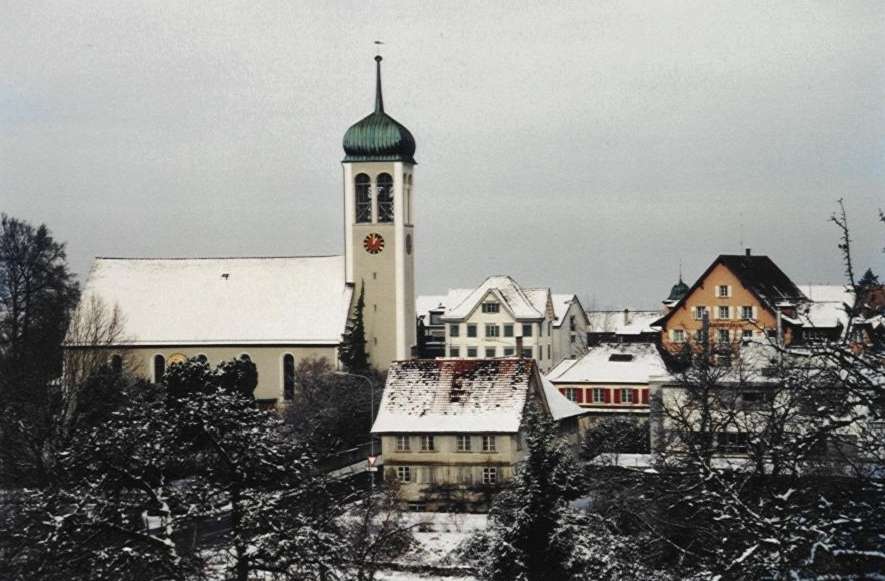
Egnach is a municipality of the district of Arbon in the canton of Thurgau in Switzerland.
Egnach is first mentioned in 1155 as Egena. By the 9th century it appears to have belonged to the Bishopric of Constance and was part of the upper Bailiwick of Arbon. The Abbey of Saint Gall acquired land in Egnach, which led to competing legal claims between abbot and bishop (which were settled in 854). During the Late Middle Ages it was a regional administrative center for lands of the Bishops of Constance. After the conquest of Thurgau by the Swiss Confederation in 1460, the new rulers replaced all the Bishop's representatives. While the low courts remained in the hands of the bishop until 1798, in 1509 he lost the rights to the high courts to the governor of Thurgau. In 1544 Egnach received a special lower court.
The village was part of parish of Arbon. In 1515 St James Chapel was built in Erdhausen, and after 1588 Reformed religious services were held in that chapel. The Gallus Chapel in Steinebrunn remained Catholic. In Neukirch (previously Mosershaus), the majority of the population joined the Reformed church in 1528 and in 1727 a Swiss Reformed parish church was built in the village. The Catholic inhabitants belong to the Catholic parish of Steinebrunn since 1872.
Egnach was divided into 13 Rotten, that took over education and many other duties of a community. In 1803, the municipality and Bürgergemeinde of Egnach was formed, with Neukirch as the center. In 1857 the Rotten of Feilen and Frasnacht separated from Egnach. Then, in 1858, Lengwil and Ballen came from the municipality of Roggwil over to Egnach. In 1870, the geographic municipality and the political municipality merged to form the combined municipality of Egnach.
Already in the 18th century the region was home to numerous orchards, which caused the area around Egnach to be known as Mostindien or Cider. By 1850, the traditional crops were replaced by cattle and dairy farming. Various branches of textile production flourished in Egnach, in the early 19th century. The opening of the SBB line Romanshorn-Rorschach in 1869 and the Bodensee-Toggenburg-Bahn line in 1910, both of which passed through Egnach, brought economic growth. In 1900 a cider and fruit export cooperative was founded in the village.
By 2000, agriculture accounts for about one-fifth of the jobs, while manufacturing provides approximately one third of the jobs in Egnach. In spite of some industrial and residential areas, the village retains its rural character.
Egnach has an area, as of 2009[update], of 18.42 square kilometers (7.11 sq mi). Of this area, 14.71 km2 (5.68 sq mi) or 79.9% is used for agricultural purposes, while 1.18 km2 (0.46 sq mi) or 6.4% is forested. Of the rest of the land, 2.32 km2 (0.90 sq mi) or 12.6% is settled (buildings or roads), 0.05 km2 (12 acres) or 0.3% is either rivers or lakes and 0.2 km2 (0.077 sq mi) or 1.1% is unproductive land.
Of the built up area, industrial buildings made up 7.3% of the total area while housing and buildings made up 0.9% and transportation infrastructure made up 0.1%. while parks, green belts and sports fields made up 3.8%. Out of the forested land, 3.5% of the total land area is heavily forested and 2.9% is covered with orchards or small clusters of trees. Of the agricultural land, 52.4% is used for growing crops, while 27.4% is used for orchards or vine crops. All the water in the municipality is flowing water.
Hub AI
Egnach AI simulator
(@Egnach_simulator)
Egnach
Egnach is a municipality of the district of Arbon in the canton of Thurgau in Switzerland.
Egnach is first mentioned in 1155 as Egena. By the 9th century it appears to have belonged to the Bishopric of Constance and was part of the upper Bailiwick of Arbon. The Abbey of Saint Gall acquired land in Egnach, which led to competing legal claims between abbot and bishop (which were settled in 854). During the Late Middle Ages it was a regional administrative center for lands of the Bishops of Constance. After the conquest of Thurgau by the Swiss Confederation in 1460, the new rulers replaced all the Bishop's representatives. While the low courts remained in the hands of the bishop until 1798, in 1509 he lost the rights to the high courts to the governor of Thurgau. In 1544 Egnach received a special lower court.
The village was part of parish of Arbon. In 1515 St James Chapel was built in Erdhausen, and after 1588 Reformed religious services were held in that chapel. The Gallus Chapel in Steinebrunn remained Catholic. In Neukirch (previously Mosershaus), the majority of the population joined the Reformed church in 1528 and in 1727 a Swiss Reformed parish church was built in the village. The Catholic inhabitants belong to the Catholic parish of Steinebrunn since 1872.
Egnach was divided into 13 Rotten, that took over education and many other duties of a community. In 1803, the municipality and Bürgergemeinde of Egnach was formed, with Neukirch as the center. In 1857 the Rotten of Feilen and Frasnacht separated from Egnach. Then, in 1858, Lengwil and Ballen came from the municipality of Roggwil over to Egnach. In 1870, the geographic municipality and the political municipality merged to form the combined municipality of Egnach.
Already in the 18th century the region was home to numerous orchards, which caused the area around Egnach to be known as Mostindien or Cider. By 1850, the traditional crops were replaced by cattle and dairy farming. Various branches of textile production flourished in Egnach, in the early 19th century. The opening of the SBB line Romanshorn-Rorschach in 1869 and the Bodensee-Toggenburg-Bahn line in 1910, both of which passed through Egnach, brought economic growth. In 1900 a cider and fruit export cooperative was founded in the village.
By 2000, agriculture accounts for about one-fifth of the jobs, while manufacturing provides approximately one third of the jobs in Egnach. In spite of some industrial and residential areas, the village retains its rural character.
Egnach has an area, as of 2009[update], of 18.42 square kilometers (7.11 sq mi). Of this area, 14.71 km2 (5.68 sq mi) or 79.9% is used for agricultural purposes, while 1.18 km2 (0.46 sq mi) or 6.4% is forested. Of the rest of the land, 2.32 km2 (0.90 sq mi) or 12.6% is settled (buildings or roads), 0.05 km2 (12 acres) or 0.3% is either rivers or lakes and 0.2 km2 (0.077 sq mi) or 1.1% is unproductive land.
Of the built up area, industrial buildings made up 7.3% of the total area while housing and buildings made up 0.9% and transportation infrastructure made up 0.1%. while parks, green belts and sports fields made up 3.8%. Out of the forested land, 3.5% of the total land area is heavily forested and 2.9% is covered with orchards or small clusters of trees. Of the agricultural land, 52.4% is used for growing crops, while 27.4% is used for orchards or vine crops. All the water in the municipality is flowing water.