
Recent from talks
El Malpais National Monument
Knowledge base stats:
Talk channels stats:
Members stats:
El Malpais National Monument
El Malpais National Monument is a National Monument located in western New Mexico, in the Southwestern United States. The name El Malpais is from the Spanish term Malpaís, meaning badlands, due to the extremely barren and dramatic volcanic field that covers much of the park's area.
It is on the Trails of the Ancients Byway, one of the designated New Mexico Scenic Byways. There are many geologic features, including lava tubes and ice caves. There is also abundant wildlife to be encountered year round. Native Americans have used the area for centuries, and it became a National Monument in 1987.
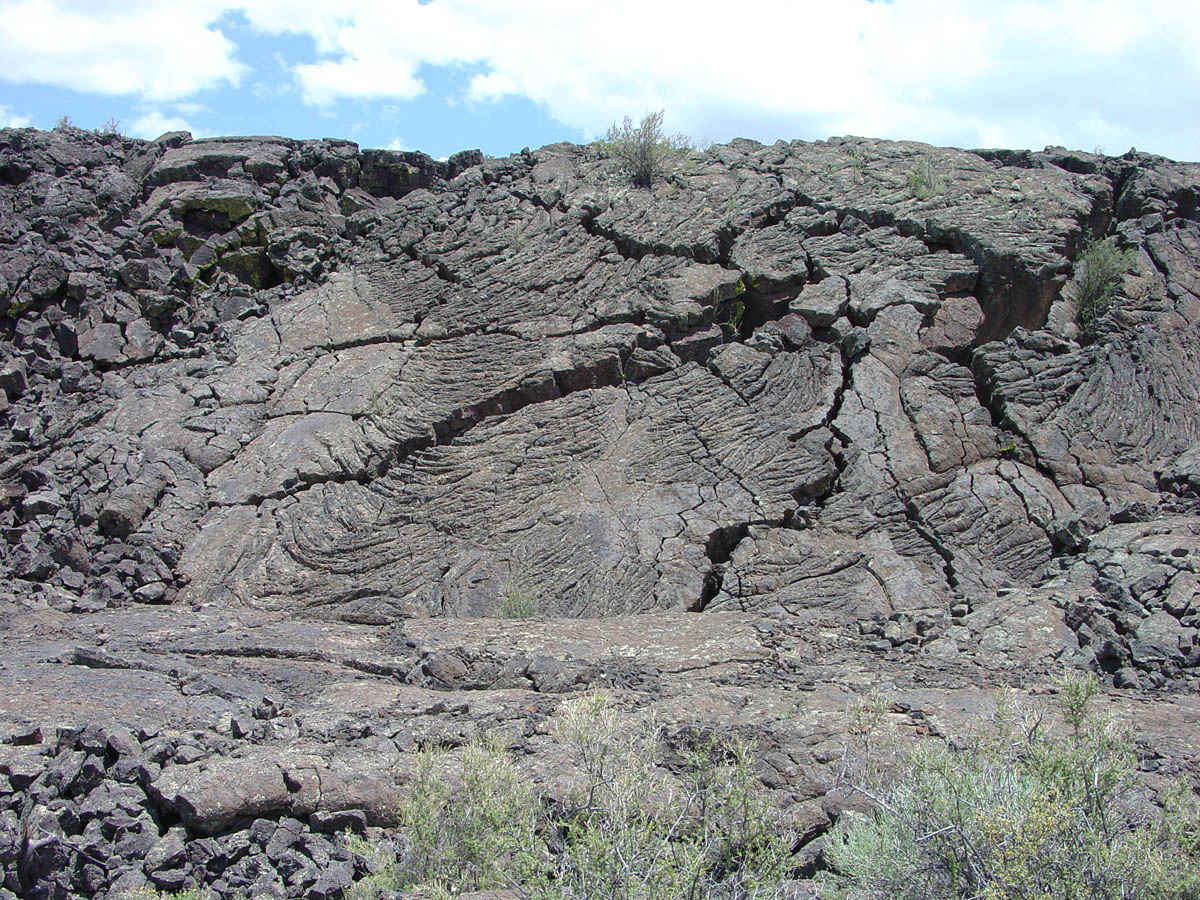
The lava flows, cinder cones, and other volcanic features of El Malpais are part of the Zuni-Bandera volcanic field, the second largest volcanic field in the Basin and Range Province. This volcanically active area on the southeast margin of the Colorado Plateau is located on the ancient Jemez Lineament, which provides the crustal weakness that recent magmatic intrusions and Cenozoic volcanism are attributed to.
The rugged pahoēhoē and ʻaʻā lava flows of the Zuni-Bandera eruptions (also called the Grants Lava Flows) filled a large basin, created by normal faulting associated with the Rio Grande Rift, between the high mesas of the Acoma Pueblo to the east, Mt. Taylor to the north, and the Zuni Mountain anticline to the northwest. Vents associated with these flows include Bandera Crater, El Calderon, and several other cinder cones; more than a dozen older cinder cones follow a roughly north–south distribution along the Chain of Craters west of the monument.
El Malpais has many lava tubes; two are open to explore (unguided) with a free caving permit, available at NPS-staffed facilities. The two caves currently accessible by permit are Giant Ice in the Big Tubes area, and Lava Bomb in the Hoya de Cibola area. The Junction Bridge lava tube ia also accessible as part of the El Calderon trail.
A nearby scenic overlook at Sandstone Bluffs offers spectacular panoramic views over the monument's lava flows.
Some of the oldest Rocky Mountain Douglas-firs (Pseudotsuga menziesii subsp. glauca) on Earth can be found living in El Malpais Monument. In 2020, a new population of hart's-tongue ferns (Asplenium scolopendrium) was discovered inside of a cave with basaltic lava flows in El Malpais, which represents the first confirmed population of the species in the United States or Canada west of the Mississippi; all other known populations of the fern are around the Great Lakes, Alabama, and Tennessee. Genetic analyses and surveys are currently being performed to determine the population's variation and overall health.
El Malpais’ lava flows and associated lava-tubes provide a unique and critical roosting habitat for bats. These underground structures offer stable temperatures, protection, and proximity to limited water resources, making them essential hibernacula for diverse bat species, setting the park apart from others with similar woodlands and water resources. Conservation efforts to preserve these lava-tubes are vital for safeguarding bat populations, especially in light of potential threats like White-nose syndrome. From December 2010 to June 2013, all caves were temporarily closed to recreational use to protect bats from the spread of White Nose Syndrome (WNS) until a permitting process, including visitor screening for WNS, could be implemented. Recent research at El Malpais shows that the bacterial microbiome of bats and the bacterial microbiome in the caves can affect each other, which may provide more insight into the connections between cave environments, defense systems of bats, and WNS.
Hub AI
El Malpais National Monument AI simulator
(@El Malpais National Monument_simulator)
El Malpais National Monument
El Malpais National Monument is a National Monument located in western New Mexico, in the Southwestern United States. The name El Malpais is from the Spanish term Malpaís, meaning badlands, due to the extremely barren and dramatic volcanic field that covers much of the park's area.
It is on the Trails of the Ancients Byway, one of the designated New Mexico Scenic Byways. There are many geologic features, including lava tubes and ice caves. There is also abundant wildlife to be encountered year round. Native Americans have used the area for centuries, and it became a National Monument in 1987.
The lava flows, cinder cones, and other volcanic features of El Malpais are part of the Zuni-Bandera volcanic field, the second largest volcanic field in the Basin and Range Province. This volcanically active area on the southeast margin of the Colorado Plateau is located on the ancient Jemez Lineament, which provides the crustal weakness that recent magmatic intrusions and Cenozoic volcanism are attributed to.
The rugged pahoēhoē and ʻaʻā lava flows of the Zuni-Bandera eruptions (also called the Grants Lava Flows) filled a large basin, created by normal faulting associated with the Rio Grande Rift, between the high mesas of the Acoma Pueblo to the east, Mt. Taylor to the north, and the Zuni Mountain anticline to the northwest. Vents associated with these flows include Bandera Crater, El Calderon, and several other cinder cones; more than a dozen older cinder cones follow a roughly north–south distribution along the Chain of Craters west of the monument.
El Malpais has many lava tubes; two are open to explore (unguided) with a free caving permit, available at NPS-staffed facilities. The two caves currently accessible by permit are Giant Ice in the Big Tubes area, and Lava Bomb in the Hoya de Cibola area. The Junction Bridge lava tube ia also accessible as part of the El Calderon trail.
A nearby scenic overlook at Sandstone Bluffs offers spectacular panoramic views over the monument's lava flows.
Some of the oldest Rocky Mountain Douglas-firs (Pseudotsuga menziesii subsp. glauca) on Earth can be found living in El Malpais Monument. In 2020, a new population of hart's-tongue ferns (Asplenium scolopendrium) was discovered inside of a cave with basaltic lava flows in El Malpais, which represents the first confirmed population of the species in the United States or Canada west of the Mississippi; all other known populations of the fern are around the Great Lakes, Alabama, and Tennessee. Genetic analyses and surveys are currently being performed to determine the population's variation and overall health.
El Malpais’ lava flows and associated lava-tubes provide a unique and critical roosting habitat for bats. These underground structures offer stable temperatures, protection, and proximity to limited water resources, making them essential hibernacula for diverse bat species, setting the park apart from others with similar woodlands and water resources. Conservation efforts to preserve these lava-tubes are vital for safeguarding bat populations, especially in light of potential threats like White-nose syndrome. From December 2010 to June 2013, all caves were temporarily closed to recreational use to protect bats from the spread of White Nose Syndrome (WNS) until a permitting process, including visitor screening for WNS, could be implemented. Recent research at El Malpais shows that the bacterial microbiome of bats and the bacterial microbiome in the caves can affect each other, which may provide more insight into the connections between cave environments, defense systems of bats, and WNS.
Recent media