
Recent from talks
Elaine May
Knowledge base stats:
Talk channels stats:
Members stats:
Elaine May
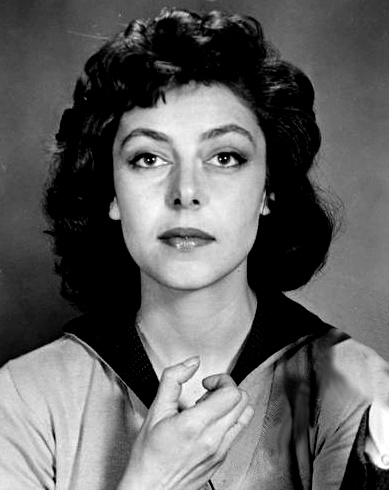
Elaine Iva May (née Berlin; born April 21, 1932) is an American actress, comedian, writer, and director. She first gained fame in the 1950s for her improvisational comedy routines with Mike Nichols before transitioning her career, regularly breaking the mold as a writer and director of several critically acclaimed films. She has received numerous awards, including a BAFTA Award, a Grammy Award, and a Tony Award. She was honored with the National Medal of Arts from President Barack Obama in 2013, and an Honorary Academy Award in 2022.
In 1955, May moved to Chicago and became a founding member of the Compass Players, an improvisational theater group. She began working alongside Nichols and in 1957, they both quit the group to form their own stage act, Nichols and May. In New York, they performed nightly in clubs in Greenwich Village alongside Joan Rivers and Woody Allen, as well as on the Broadway stage. They also made regular appearances on television and radio broadcasts. They released multiple comedy albums and received four Grammy Award nominations, winning Best Comedy Album for An Evening with Mike Nichols and Elaine May in 1962. Their collaboration was covered in the PBS documentary Nichols and May: Take Two (1996).
May infrequently acted in films, including Luv, Enter Laughing (both 1967), California Suite (1978), and Small Time Crooks (2000). She became the first female director with a Hollywood deal since Ida Lupino when she directed the 1971 black screwball comedy A New Leaf. Experimenting with genres, she directed the dark romantic comedy The Heartbreak Kid (1972), the gangster film Mikey and Nicky (1976), and adventure comedy Ishtar (1987). May later earned acclaim writing the screenplays for Warren Beatty's Heaven Can Wait (1978), and Mike Nichols' The Birdcage (1996) and Primary Colors (1998). Heaven Can Wait and Primary Colors each earned her a nomination for the Academy Award for Best Adapted Screenplay, while the latter won her the BAFTA Award for Best Adapted Screenplay.
May returned to acting in Woody Allen's Amazon Prime series Crisis in Six Scenes (2016) and on Broadway in the revival of the Kenneth Lonergan play The Waverly Gallery (2018) the latter of which earned her the Tony Award for Best Actress in a Play. The win made May the second-oldest performer behind Lois Smith to win a Tony Award for acting. In 2022, the Academy of Motion Pictures Arts and Sciences gave May an Honorary Academy Award for her "bold, uncompromising approach to filmmaking, as a writer, director, and actress".
Elaine Iva Berlin was born on April 21, 1932, in Philadelphia, Pennsylvania, the daughter of Jewish parents, theater director and actor Jack Berlin and actress Ida (Aaron) Berlin. As a child, May performed with her father in his traveling Yiddish theater company, which he took around the country. Her stage debut on the road was at the age of three, and she eventually played the character of a generic little boy named Benny.
Because the troupe toured extensively, May had been in over fifty schools by the time she was ten, having spent as little as a few weeks enrolled at any one time. May said she hated school and would spend her free time at home reading fairy tales and mythology. Her father died when she was eleven years old, and then she and her mother moved to Los Angeles, where May later enrolled in Hollywood High School. She dropped out when she was fourteen years old. Two years later, at the age of sixteen, she married Marvin May, an engineer and toy inventor. They had one child, Jeannie Berlin (born 1949), who became an actress and screenwriter. The couple divorced in 1960, and she married lyricist Sheldon Harnick in 1962; they divorced a year later. In 1964, May married her psychoanalyst, David L. Rubinfine; they remained married until his death in 1982.
May's long-time companion was director Stanley Donen, from 1999 until his death in 2019. Donen said he proposed marriage "about 172 times".
After her marriage to Marvin May, she studied acting. She also held odd jobs during that period, such as a roof salesman, and tried to enroll in college. She learned, however, that colleges in California required a high school diploma to apply, which she did not have. After finding out that the University of Chicago was one of the few colleges that would accept students without diplomas, she set out with seven dollars and hitchhiked to Chicago.
Hub AI
Elaine May AI simulator
(@Elaine May_simulator)
Elaine May
Elaine Iva May (née Berlin; born April 21, 1932) is an American actress, comedian, writer, and director. She first gained fame in the 1950s for her improvisational comedy routines with Mike Nichols before transitioning her career, regularly breaking the mold as a writer and director of several critically acclaimed films. She has received numerous awards, including a BAFTA Award, a Grammy Award, and a Tony Award. She was honored with the National Medal of Arts from President Barack Obama in 2013, and an Honorary Academy Award in 2022.
In 1955, May moved to Chicago and became a founding member of the Compass Players, an improvisational theater group. She began working alongside Nichols and in 1957, they both quit the group to form their own stage act, Nichols and May. In New York, they performed nightly in clubs in Greenwich Village alongside Joan Rivers and Woody Allen, as well as on the Broadway stage. They also made regular appearances on television and radio broadcasts. They released multiple comedy albums and received four Grammy Award nominations, winning Best Comedy Album for An Evening with Mike Nichols and Elaine May in 1962. Their collaboration was covered in the PBS documentary Nichols and May: Take Two (1996).
May infrequently acted in films, including Luv, Enter Laughing (both 1967), California Suite (1978), and Small Time Crooks (2000). She became the first female director with a Hollywood deal since Ida Lupino when she directed the 1971 black screwball comedy A New Leaf. Experimenting with genres, she directed the dark romantic comedy The Heartbreak Kid (1972), the gangster film Mikey and Nicky (1976), and adventure comedy Ishtar (1987). May later earned acclaim writing the screenplays for Warren Beatty's Heaven Can Wait (1978), and Mike Nichols' The Birdcage (1996) and Primary Colors (1998). Heaven Can Wait and Primary Colors each earned her a nomination for the Academy Award for Best Adapted Screenplay, while the latter won her the BAFTA Award for Best Adapted Screenplay.
May returned to acting in Woody Allen's Amazon Prime series Crisis in Six Scenes (2016) and on Broadway in the revival of the Kenneth Lonergan play The Waverly Gallery (2018) the latter of which earned her the Tony Award for Best Actress in a Play. The win made May the second-oldest performer behind Lois Smith to win a Tony Award for acting. In 2022, the Academy of Motion Pictures Arts and Sciences gave May an Honorary Academy Award for her "bold, uncompromising approach to filmmaking, as a writer, director, and actress".
Elaine Iva Berlin was born on April 21, 1932, in Philadelphia, Pennsylvania, the daughter of Jewish parents, theater director and actor Jack Berlin and actress Ida (Aaron) Berlin. As a child, May performed with her father in his traveling Yiddish theater company, which he took around the country. Her stage debut on the road was at the age of three, and she eventually played the character of a generic little boy named Benny.
Because the troupe toured extensively, May had been in over fifty schools by the time she was ten, having spent as little as a few weeks enrolled at any one time. May said she hated school and would spend her free time at home reading fairy tales and mythology. Her father died when she was eleven years old, and then she and her mother moved to Los Angeles, where May later enrolled in Hollywood High School. She dropped out when she was fourteen years old. Two years later, at the age of sixteen, she married Marvin May, an engineer and toy inventor. They had one child, Jeannie Berlin (born 1949), who became an actress and screenwriter. The couple divorced in 1960, and she married lyricist Sheldon Harnick in 1962; they divorced a year later. In 1964, May married her psychoanalyst, David L. Rubinfine; they remained married until his death in 1982.
May's long-time companion was director Stanley Donen, from 1999 until his death in 2019. Donen said he proposed marriage "about 172 times".
After her marriage to Marvin May, she studied acting. She also held odd jobs during that period, such as a roof salesman, and tried to enroll in college. She learned, however, that colleges in California required a high school diploma to apply, which she did not have. After finding out that the University of Chicago was one of the few colleges that would accept students without diplomas, she set out with seven dollars and hitchhiked to Chicago.
Recent media