Hubbry Logo
Eleanor CalvertEleanor CalvertMain
Open search
Eleanor Calvert
Community hub
Eleanor Calvert
logo
8 pages, 0 posts
0 subscribers
Be the first to start a discussion here.
Eleanor Calvert
Eleanor Calvert
from Wikipedia

Eleanor Calvert Custis Stuart (born Eleanor Calvert; 1758 – September 28, 1811) was a member of the wealthy American Calvert family of Maryland. She was the wife of politician John Parke Custis who was the son of Daniel Parke Custis and Martha Custis (later Washington), and the stepson of President George Washington. She and John had seven children. She was widowed when John Parke Custis died of disease at the end of the American Revolution at Yorktown where he served with his stepfather, George Washington. Eleanor married David Stuart, an Alexandria physician and business associate of George Washington on November 20, 1783.

Key Information

As of 2024, her portrait still hangs at Mount Airy Mansion in Rosaryville State Park, Maryland.[1]

Early life

[edit]
Arms of the Barons Baltimore

Eleanor Calvert was born in 1758 at the Calvert family's Mount Airy plantation near Upper Marlboro in Prince George's County, Maryland.[2] She was the second-eldest daughter[3] of Benedict Swingate Calvert, illegitimate son of Charles Calvert, 5th Baron Baltimore, and Benedict's wife and first cousin Elizabeth Calvert.[4] She was known to her family as "Nelly".[4]

Marriages and children

[edit]
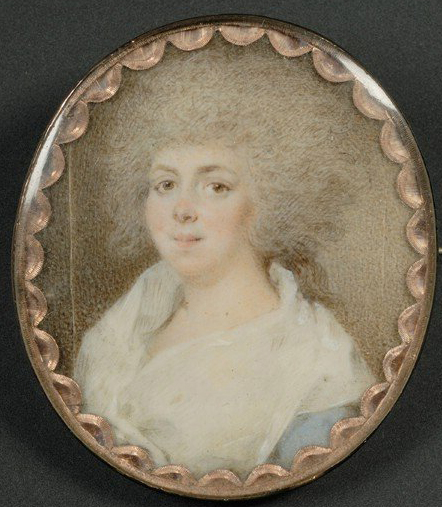
Painting of Eleanor Calvert by John Hesselius, 1761

Eleanor married John Parke Custis, son of Daniel Parke Custis and Martha Dandridge Custis Washington (and stepson of George Washington), on February 3, 1774, at Mount Airy. When "Jacky", as he was known by his family, announced the engagement to his parents, they were greatly surprised due to the couple's youth.[4]

After their marriage, the couple settled at the White House plantation, a Custis estate on the Pamunkey River in New Kent County, Virginia.[5] After the couple had lived at the White House for more than two years, John Custis purchased the Abingdon plantation in Fairfax County, Virginia (now in Arlington County, Virginia), into which the couple settled during the winter of 1778–1779.[5][6]

Eleanor and John had seven children:

In 1781, John died of "camp fever", believed to be typhus, following the Siege of Yorktown.[5][6] Eleanor's two elder daughters, Elizabeth and Martha, continued to live with her at the Abingdon plantation. She sent her two younger children, Eleanor and George, to Mount Vernon to live with their grandmother, Martha Washington, and her husband George Washington, future president.[6] John died intestate, so his widow was granted a dower third, the lifetime use of one-third of the Custis estate assets, including its more than 300 slaves.[7] The balance of the John Parke Custis estate was held in trust for the children of John and Eleanor. The estate was distributed as the daughters married and the son reached his majority while Calvert's share was held by her for her use until her death.[8]

On November 20, 1783, Eleanor married Dr. David Stuart, an Alexandria physician and business associate of George Washington.[6][9][10] Her living children became the stepchildren and wards of Dr. David Stuart, even while George and Nelly lived at Mount Vernon with their grandmother, Martha Dandridge Custis Washington and her husband George Washington.

Eleanor and David had sixteen children together:[3][11][12]

  • Ann Calvert Stuart (1784–1823), married William Robinson[3][11]
  • Sarah Stuart (1786–1870), married Obed Waite[3][11]
  • Ariana Calvert Stuart (1789–1855), died unmarried[3][11]
  • William Sholto Stuart (1792–1820), died unmarried[3][11]
  • Charles Calvert Stuart (1794–1846), married Cornelia Lee[3][11]
  • Eleanor Custis Stuart (1796–1875), died unmarried[3][11]
  • Rosalie Eugenia Stuart (1801–1886), married William Greenleaf Webster[3][9][11]
  • Nine other children who were stillborn or died shortly after birth

Later life

[edit]

In 1792, Eleanor, David and their family left Abingdon (which had become part of the District of Columbia) and moved to David's plantation and mill known as Hope Park in Fairfax County.[6] About ten years later, they moved to Ossian Hall near Annandale, also in Fairfax County.[6]

Calvert died on September 28, 1811, at age 53 at Tudor Place, the home of her daughter, Martha Parke Custis Peter, in Georgetown, District of Columbia.[13] She was originally buried at Col. William Alexander's Effingham Plantation in Prince William County, Virginia.[14]

She was reinterred in Page's Chapel, St. Thomas' Church, Croom, Maryland, following the War of 1812 near the graves of her parents. Her resting place remained unmarked until a limestone grave slab was installed in the chapel floor in autumn 2008.[15]

See also

[edit]

References

[edit]
[edit]
Revisions and contributorsEdit on WikipediaRead on Wikipedia
from Grokipedia
Eleanor Calvert (c. 1758 – September 28, 1811) was an American landowner and member of the colonial elite in , best known as the wife of , the only surviving son of from her first marriage and stepson of . Born at the family's in Prince George's County, she was the daughter of , a provincial official and illegitimate son of the fifth , and his wife Elizabeth Bordley. Her marriage to Custis in February 1774 united two prominent families and produced four children who survived to adulthood, including and Eleanor "Nelly" Parke Custis, both of whom were raised in part by the Washingtons after their father's death. Following John Parke Custis's death from illness in November 1781 shortly after the Siege of Yorktown, Calvert Custis, then widowed at age 23 with young children, briefly resided with George and Martha Washington at before remarrying physician David Stuart in 1783. The union with Stuart produced additional children and involved managing estates inherited from her Calvert lineage, including interests in Mount Airy, a grand Palladian mansion indicative of the planter aristocracy's wealth derived from cultivation and enslaved labor. Her life exemplified the social and economic networks of the during the and early republic, with familial ties influencing political and personal spheres around the Washington household. Calvert's descendants through her children with Custis played roles in preserving Washington family legacy, such as George Washington Parke Custis's establishment of Arlington House and his writings on the first president, underscoring her indirect but enduring connection to foundational American history. She died at in Georgetown, leaving a legacy tied to landownership and elite intermarriages rather than public achievements of her own.

Early Life and Family Background

Birth and Parentage

Eleanor Calvert was born circa 1753 at Mount Airy, the family plantation in . Her father was (c. 1722–1788), the illegitimate but acknowledged son of Charles Calvert, fifth and Proprietary Governor of . Benedict immigrated to Maryland around 1742, where he pursued a career in law and planting, eventually acquiring and developing the 4,000-acre Mount Airy estate. Her mother was Elizabeth Calvert (1731–1788), Benedict's first cousin, daughter of Charles Calvert (a descendant of earlier Calvert proprietors) and Rebecca Gerard. The couple married in and resided at Mount Airy, where they raised a large family, including Eleanor as one of their younger daughters.

Upbringing at Mount Airy Plantation

Eleanor Calvert spent her formative years at Mount Airy, a sprawling tobacco plantation in Prince George's County, Maryland, owned by her family since the mid-17th century. The estate originated as a hunting lodge constructed around 1660 by Charles Calvert, the third Baron Baltimore, and was later inherited by Eleanor's father, Benedict Swingate Calvert, the illegitimate but acknowledged son of the fifth Baron Baltimore. Benedict expanded the property significantly, building the current mansion circa 1751 to reflect the family's elevated status as provincial elites. As the daughter of , a planter, judge, and member of the Maryland provincial conventions, and his wife Elizabeth Bordley, Eleanor was raised in an environment of relative affluence typical of 18th-century Chesapeake households. The family resided at Mount Airy following its expansion, with the serving as the center of their agricultural operations and social life. Benedict's position ensured connections among 's proprietary elite, shaping Eleanor's exposure to the customs and networks of colonial aristocracy. Details of Eleanor's personal education and daily routines remain sparse in contemporary records, but as the eldest surviving daughter in a large family—her parents had at least five documented children, including siblings who reached maturity—she likely received instruction in domestic arts, , and suited to her class, often through private tutors or family oversight common in planter households. Mount Airy, encompassing extensive lands worked by enslaved laborers, exemplified the labor-intensive tobacco economy that underpinned such lifestyles, instilling in young women like Eleanor an early familiarity with estate management and hierarchical social structures.

First Marriage and Domestic Life

Courtship and Wedding to John Parke Custis

In the spring of 1773, 19-year-old , son of from her first marriage, became engaged to 15-year-old Eleanor Calvert, daughter of , a prominent Maryland planter and proprietor of Mount Airy estate. The courtship likely arose from social connections among elite colonial families in and , though specific details of their initial meetings remain undocumented in primary sources. George Washington, Custis's stepfather and legal guardian, initially opposed the match due to the couple's youth and Custis's unfinished education at (now ). In a letter to Benedict Calvert dated April 3, 1773, Washington urged postponing the wedding for two to three years to allow Custis to mature and complete his studies, warning that premature marriage risked long-term unhappiness given their inexperience. He noted Custis's substantial independent inheritance—including lands near Williamsburg, city lots, £8,000–10,000 in bonds, and 200–300 enslaved individuals—as a factor that could support a delayed union, while expecting Calvert to provide a suitable . Despite Washington's reservations, Custis's determination, combined with Martha Washington's support and family pressures, led to consent by December 1773, shortening the delay to less than a year. The wedding occurred on February 3, 1774, at Mount Airy in , Eleanor's family estate. George Washington attended the ceremony, marking the union of two affluent families whose combined estates included extensive lands and enslaved labor forces, affording the couple significant economic security.

Children and Household at Abingdon

Following their marriage on February 3, 1774, Eleanor Calvert and John Parke Custis had seven children over the next seven years, though only four survived infancy: Elizabeth Parke Custis (born February 21, 1776), Martha Parke Custis (born December 31, 1777), Eleanor "Nelly" Parke Custis (born March 31, 1779), and George Washington Parke Custis (born April 30, 1781). The first two daughters, Elizabeth and Martha, were born prior to the family's relocation, while Nelly and George were delivered at Abingdon itself. In December 1778, Custis purchased the 1,000-acre Abingdon plantation in Fairfax County (now Arlington, Virginia) from Robert Alexander for £10,000 and relocated the family there from prior residences, including properties near Mount Airy in Maryland. The household initially comprised Custis, Calvert, and their two young daughters, aged approximately two and one, respectively, along with domestic staff and an enslaved labor force that supported plantation operations such as tobacco cultivation and livestock management. By Custis's death in November 1781, the Abingdon estate included at least 72 enslaved individuals across his holdings, many of whom labored at Abingdon to sustain the family's planter lifestyle. Abingdon's manor house served as the family residence, where Calvert managed daily domestic affairs amid Custis's absences for political duties in the and wartime service. The births of and George during this period expanded the immediate family nucleus, with the household reflecting typical elite colonial planter dynamics: oversight of enslaved workers for agricultural and household tasks, though specific inventories of Abingdon's domestic enslaved personnel remain limited in surviving records. Custis's financial strains, including attempts to renegotiate the Abingdon purchase in 1781 due to depreciated currency, underscored the household's reliance on productivity.

Widowhood and Transition

Death of John Parke Custis

, husband of Eleanor Calvert, contracted "camp fever"—likely or —while serving in a civilian capacity with the Continental Army during the Siege of Yorktown in October 1781. He had written to his mother, , from the army camp on October 12, expressing optimism about the impending victory over British forces under Lord Cornwallis, whose surrender occurred on October 19. The illness progressed rapidly amid the unsanitary conditions of the military encampment along Queen's Creek, where disease was rampant following the battle. Custis was transported to Eltham Plantation in —the estate of his uncle Burwell Bassett—for care, but he succumbed to the fever on , 1781, at the age of 26. George and Martha Washington, along with other family members, attended his funeral two days later; he was interred in a family plot near the plantation or in York County adjacent to Williamsburg. The death left Eleanor Calvert Custis, then approximately 23 years old, a widow with seven children, four of whom—Elizabeth, Martha, Eleanor (known as Nelly), and George Washington Parke Custis—survived to adulthood. Custis's estates, including Abingdon plantation, passed to his heirs under entailment laws, but the immediate loss compounded the family's vulnerabilities amid wartime disruptions, prompting Eleanor to seek support from the Washingtons for her youngest children.

Temporary Residence with the Washingtons at Mount Vernon

Following the death of her husband, , on November 5, 1781, from "camp fever" (likely ) contracted during the , Eleanor Calvert Custis, aged approximately 23, relocated with her four surviving children—Elizabeth (age 5), Martha (age 4), Eleanor "Nelly" (age 2), and the infant —to , the estate of her in-laws, Washington. This temporary residence, spanning roughly two years until late 1783, offered immediate familial stability amid the disruptions of the Revolutionary War's conclusion, including logistical challenges in managing the Custis properties at Abingdon and elsewhere. At , Calvert Custis integrated into the Washington household, which functioned as both a family refuge and operational . assumed a maternal role, particularly toward the youngest children, and , who remained under her and George's guardianship long-term after their mother's departure; the older daughters, Elizabeth and , returned with Calvert Custis upon remarriage. Correspondence from the period, including letters penned by Calvert Custis from , indicates her active involvement in family matters and estate oversight, such as Custis inheritance distributions, while relying on the Washingtons' resources during a time of economic strain from wartime debts and disrupted agriculture. The arrangement underscored the interconnected Custis-Washington family dynamics, with George Washington, often absent on military duties until his resignation on December 23, 1783, delegating household support; upon his return, Mount Vernon briefly hosted the extended group before Calvert Custis's transition. In late 1783, she married David Stuart, a 30-year-old Alexandria physician and future Washington confidant, after which the couple and older children relocated to nearby Abingdon plantation, while the youngest Custis heirs stayed at Mount Vernon. This period marked a pivotal interlude of dependency and recovery for Calvert Custis, bridging her first marriage's abrupt end to her subsequent family expansion with Stuart.

Second Marriage and Extended Family

Marriage to David Stuart

Eleanor Calvert Custis, widowed since the death of in November 1781, married David Stuart on November 20, 1783. Stuart, born in 1753, was a physician based in , and maintained professional ties as a business partner and advisor to . The union integrated Stuart into Washington's extended family network, given Eleanor's prior connection as daughter-in-law to . By September 1783, was aware of the impending marriage, as noted in his correspondence. No records detail the ceremony's location or proceedings, though it occurred amid Eleanor's management of estates from her first marriage and care for her surviving children.

Additional Children and Family Dynamics

Eleanor Calvert and David Stuart welcomed seven children into their marriage, consisting of five daughters and two sons, born between the mid-1780s and early 1800s. Among the documented offspring were Sarah Stuart, born in 1786 and later married to Obed Waite, a and ; Ann Calvert Stuart; and Charles Calvert Stuart, born in 1794 and died in 1846, who wed Cornelia Lee Turberville. These births expanded the household significantly, contributing to a of eleven children in total when including Eleanor's four surviving offspring from her first marriage to . The blended family dynamics reflected the complexities of early American elite households, with Stuart assuming the role of stepfather and legal guardian to the Custis children—Elizabeth Parke Custis (born 1776), Martha Parke Custis (born 1777), Eleanor Parke Custis (born 1779), and George Washington Parke Custis (born 1781). The two eldest Custis daughters resided primarily with their mother and Stuart at Abingdon plantation in Fairfax County, Virginia, integrating into the daily life of the estate, while the younger pair, still infants at the time of their father's death in 1781, were raised under the guardianship of George and Martha Washington at Mount Vernon. Eleanor expressed distress over the separation from her younger children in correspondence, highlighting the emotional strains of divided custody arrangements influenced by familial alliances and inheritance considerations. Stuart proved a reliable parental figure across the extended brood, managing responsibilities amid the demands of medical practice, land investments, and estate oversight. The family's residence at Abingdon, originally part of the Custis holdings, facilitated a unified environment for the elder stepchildren and new Stuart offspring, though financial pressures from wartime debts and plantation economics occasionally tested household stability. This structure underscored Stuart's commitment to paternal duties, blending biological and stepparental roles without evident discord in contemporary accounts.

Estate Management and Economic Role

Oversight of Calvert and Custis Properties

Following the death of her first husband, , in November 1781, Eleanor Calvert Custis retained dower rights to a portion of the Custis estates, which encompassed several plantations in , including Abingdon in Fairfax County. Abingdon, purchased by Custis from Gerard in 1778 for £12 per acre, served as a key residence for the family and involved tobacco cultivation and other agricultural operations typical of Tidewater plantations. After her remarriage to David Stuart in November 1783, Stuart assumed administration of the Custis estate, handling financial and operational matters while the couple resided at Abingdon with their combined children. Eleanor's role as widow and guardian of her Custis heirs positioned her to influence decisions on property use and maintenance, though day-to-day supervision fell to Stuart and on-site overseers. Eleanor's inheritance from her Calvert family further expanded her property interests. Her father, , died on January 9, 1788, leaving an estate of over 4,000 acres in , much of it prime land centered around the , where Eleanor was raised. The estate was divided among Calvert's surviving children, granting Eleanor a one-eleventh share (reflecting ten siblings), which she held for her lifetime use with rights to income from rents, crops, and sales. Mount Airy itself, originally developed as a hunting lodge by Charles Calvert in the 1660s and expanded into a substantial manor, generated revenue through farming and milling, with Eleanor's portion managed via family agents or tenants to support her household. This inheritance complemented her Custis holdings, enabling her to direct resources toward family needs, though practical oversight often involved coordination with Stuart, who corresponded with on related financial matters.

Management of Enslaved Labor Force

As the widow of following his death on November 5, 1781, Eleanor Calvert Custis held rights to one-third of his estate, encompassing enslaved people allocated for plantation maintenance across properties including Abingdon, where the family resided from 1779. These enslaved individuals, numbering approximately seventy at Abingdon alone, performed field labor in and cultivation, as well as domestic tasks supporting the household and operations. Custis properties overall involved nearly 200 enslaved people distributed among multiple sites, with labor directed toward sustaining agricultural output amid Revolutionary War disruptions and postwar economic recovery. Eleanor's oversight as plantation mistress focused on household management, including directing domestic enslaved workers for cooking, cleaning, and childcare, while field operations likely relied on overseers for task allocation, supervision, and enforcement of work quotas—practices standard to Chesapeake Tidewater estates dependent on coerced labor for profitability. No records indicate her direct involvement in or hiring, but her entitlement ensured continued use of enslaved labor to generate income from rents, sales, and produce, preserving family wealth amid inheritance trusts for her children. After remarrying David Stuart on September 17, 1783, Stuart assumed primary supervision of the Custis lands and enslaved workforce, including those in King William and New Kent counties, as documented in correspondence noting his coordination of planting and harvests. Eleanor retained legal interest in the enslaved people until relinquishing these rights, along with Fairfax County lands, to her son in 1802, transferring control amid estate settlements. This transition reflected typical widow remarriage dynamics, where spousal authority supplanted direct female management without altering the underlying reliance on unfree labor for economic viability.

Later Years and Connections to Founding Era Figures

Life at Ossian Hall and Tudor Place

In 1801, David Stuart and Eleanor Calvert relocated from Hope Park to Ossian Hall, an existing structure originally an overseer's house on the tract in , approximately six miles from . The family formally purchased Ossian Hall and 831 surrounding acres in 1804 from Nicholas Fitzhugh, establishing it as their primary residence thereafter. Ossian Hall served as the Stuart family seat, where they raised Eleanor's children from her first marriage—particularly Eliza Parke Custis and —alongside their own seven surviving children, including daughters Ann Calvert Stuart, Sarah Stuart, Ariana Calvert Stuart, and sons William Sholto Stuart and Charles Calvert Stuart. David Stuart, a physician and former commissioner for the , managed the plantation's operations, which included agricultural pursuits typical of early 19th-century estates, while providing tutors for the children's education. Family life at Ossian Hall emphasized stability and ties to the Washington extended family, with events such as the 1804 marriage of Eleanor's stepson occurring amid the transition to the property. The residence facilitated social and economic connections in Fairfax County, though specific daily accounts remain limited in primary records, reflecting the era's plantation-based routines centered on oversight of land and enslaved labor. The Stuarts resided there continuously until David Stuart's death in 1814, after which the property passed to their son William Sholto Stuart. Eleanor's final days connected Ossian Hall to , the Georgetown mansion built in 1816 by her daughter and son-in-law Thomas Peter, though completed after her passing. She died on September 28, 1811, at age 53, at during a stay there, likely for family reasons or health decline, rather than as a . This event underscored the enduring familial networks linking the Calvert-Custis-Stuart lineage across and the emerging .

Interactions with Washington Family and Broader Influence

Following her second marriage to David Stuart on January 16, 1783, Eleanor Calvert sustained intimate connections with the Washington family, centered on the welfare and education of her Custis children. Her two youngest, Eleanor "Nelly" Parke Custis (born March 31, 1779) and George Washington Parke Custis (born April 30, 1781), resided primarily at Mount Vernon under George and Martha Washington's guardianship, where they received formal education and were treated as de facto grandchildren. Washington personally oversaw their Custis inheritance finances until they reached maturity, corresponding with them on matters of conduct and opportunity. Eleanor directly engaged with the Washington household through correspondence, including letters to Tobias Lear, Washington's private secretary, expressing concern for her children's progress and defending associates amid public scrutiny, as in her October 8, 1789, missive from Abingdon inquiring after "Bett and George." A February 28, 1790, letter to Lear further documented her involvement in family logistics. Stuart, as Custis estate executor and guardian to all four surviving children, coordinated with Washington on property management, reinforcing these bonds. Stuart's marriage to elevated the family's proximity to national leadership; he exchanged over 100 letters with Washington starting in 1783, advising on Potomac Company ventures, translating diplomatic documents, and distributing Papers during constitutional debates from 1787 to 1788. In a December 18, 1796, letter, Stuart updated Washington on politics, immigrant voting restrictions, and threats from , while noting Eleanor's recovery from childbirth, illustrating the intertwining of domestic and political spheres. Washington appointed Stuart a commissioner for the in , leveraging these ties for in the nascent capital. Through these channels, Eleanor's familial position indirectly amplified Stuart's counsel to Washington on , bridging Maryland-Virginia elite networks and Custis estate assets—valued at over 17,779 acres by 1781—into early federal and discussions, though her documented contributions remained confined to household oversight and child-rearing.

Death and Posthumous Impact

Final Illness and Death

Eleanor Calvert Stuart died on September 28, 1811, at in Georgetown, District of Columbia, the residence of her daughter . She was approximately 53 years old, though some records estimate her age at 57 or 58 based on a 1753 birth year. Historical accounts do not specify the or details of any preceding illness, with no contemporary letters or documents preserved that describe her final days beyond the location and date. She was buried in the Saint Thomas Episcopal Churchyard in .

Inheritance, Descendants, and Preservation of Family Legacy

Upon the death of her first husband, , in November 1781, the substantial Custis estate—including plantations such as Abingdon, enslaved individuals numbering in the hundreds across family properties, and other assets—was placed in trust for their four surviving children, with Eleanor Calvert Custis receiving rights and oversight responsibilities as executrix alongside . She relocated temporarily to with her younger children, while managing portions of the estate, including the division of enslaved laborers among the Washington and Custis households. Following her remarriage to David Stuart in 1783 and the birth of additional children, Calvert Custis continued to administer family properties until her death on September 28, 1811, at age 53, after which the remaining John Parke Custis estate was liquidated and distributed to the Custis heirs, including allocations of enslaved individuals and landholdings. Specific bequests included approximately forty additional enslaved people to her daughter . Calvert Custis and John Parke Custis had four children who carried forward the family lines: Elizabeth Parke Custis (1776–1832), who married Thomas Law in 1796; Martha Parke Custis (1777–1854), who married Thomas Peter in 1795; Eleanor "Nelly" Parke Custis (1779–1852), who married Lawrence Lewis (a nephew of ) in 1799; and (1781–1857). With David Stuart, she bore at least ten more children between 1784 and 1806, including William Stuart (1784–1787), who died young, and surviving offspring such as Charles Calvert Stuart (1795–1873) and Rosalie Eugenia Stuart (1801–1886), though the primary continuity of the Calvert-Custis elite status flowed through the Custis progeny due to their Washington ties. The Custis descendants intermarried with prominent families, extending influence; for instance, 's daughter Mary Anna Randolph Custis (1807–1873) wed in 1831. The preservation of the Calvert-Custis legacy centered on the Custis children's stewardship of inherited properties and artifacts, which emphasized ties to the founding era. George Washington Parke Custis constructed Arlington House (completed 1802) on 1,100 acres inherited from the estate, transforming it into a repository for relics, portraits, and memorabilia to honor his adoptive grandfather, with the site later designated a national memorial. Eleanor Parke Custis Lewis actively curated Washington mementos, corresponded with historians to verify facts, and contributed to the 1835 Mount Vernon tomb project, while inheriting 2,000 acres, a , and distillery directly from George Washington's 1799 will. Martha Parke Custis Peter maintained (built 1805–1816) in Washington, D.C., as a showcase for family heirlooms, including silver and furnishings from , ensuring generational transmission of the lineage's aristocratic and revolutionary heritage. These efforts, alongside Elizabeth Parke Custis Law's social prominence, sustained the family's historical narrative amid 19th-century transitions, including the Civil War's impact on Arlington.

References

Add your contribution
Related Hubs
User Avatar
No comments yet.