


Community hub
Recent from talks
Contribute something
Nothing was collected or created yet.
Elisabeth Biebl
View on Wikipedia
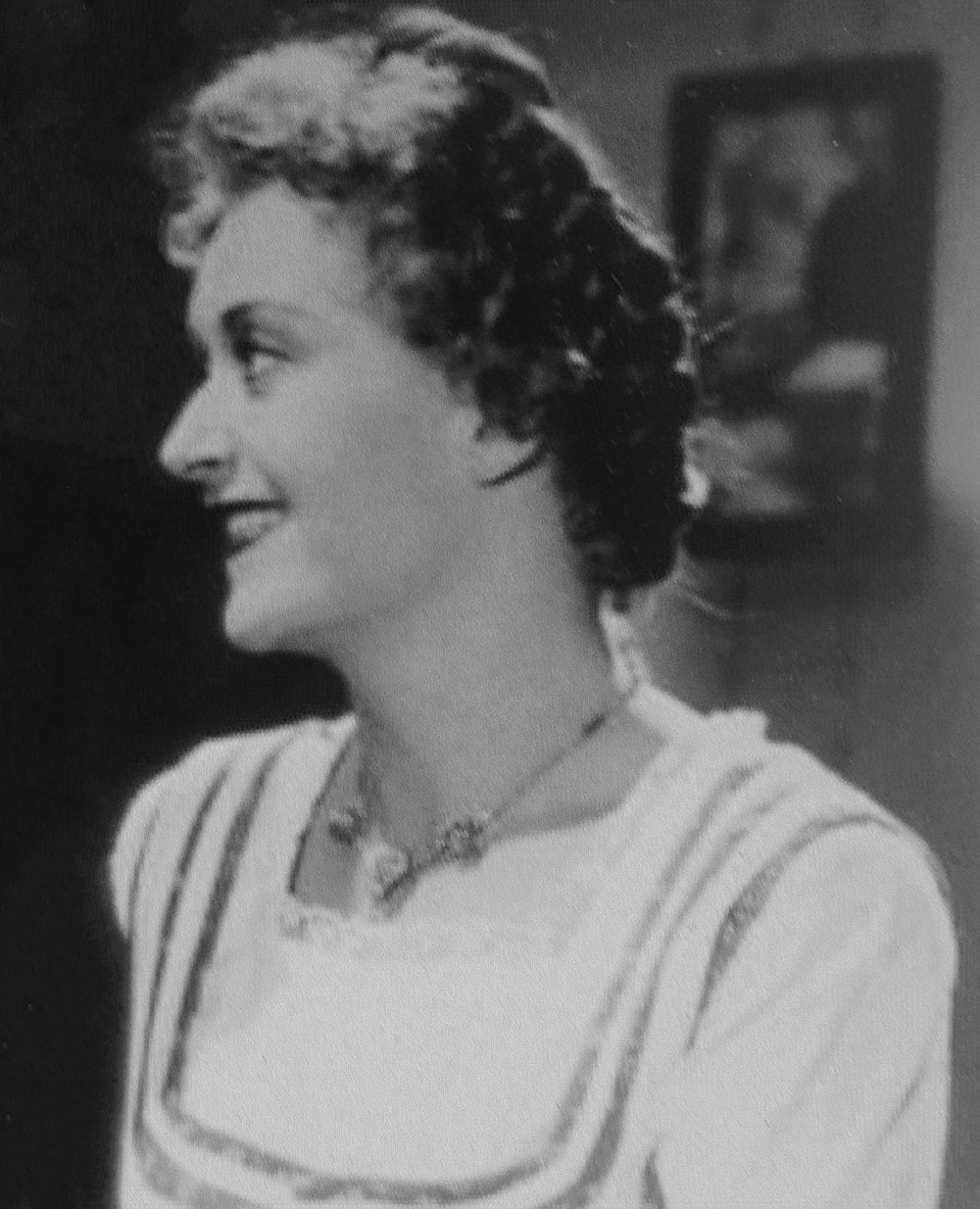
Elisabeth Biebl (8 May 1915 – 4 December 1989), also Elisabeth Biebl von Klipstein-Sporrer, was a German operetta singer and actress.
Life and career
[edit]Born in Munich, Beibl appeared as a child at the Bavarian State Opera, where she received training as a dancer. From 1930 to 1931 she was engaged as such at the Staatstheater am Gärtnerplatz, then for a year at the Bayerische Musikbühne, a travelling company. She then studied music and singing in her hometown. Her musical career began as an operetta soubrette at the Stadttheater Fürth, to which she belonged from 1934 to 1938. In 1940 she changed to the Staatstheater am Gärtnerplatz.
There she performed in 1942 under Fritz Fischer's direction in the musical comedy "Gitta". In the 1950s and 1960s she was a highly acclaimed star at the aforementioned theatre, where she played alongside Harry Friedauer, Rosl Schwaiger, Dorothea Chryst, Ferry Gruber, Martha Kunig-Rinach and others and belonged to the permanent ensemble until 1978. Furthermore Biebl took part in some (TV) movies. She played among other roles Annamirl in the first film adaptation of Die drei Dorfheiligen,[1] and the landlady Neudecker in Der Hochzeitslader of the TV series Königlich Bayerisches Amtsgericht. She also played a part in the 1951 Border Post 58 film.
Biebl was married three times, including to the operetta singer Hans-Heinz Bollmann and Ernst von Klipstein, whom she met during the shooting of Die drei Dorfheiligen.
Biebl died in Munich at age 79 and is buried at Munich Waldfriedhof.
References
[edit]- ^ Die drei Dorfheiligen on IMDb
Literature
[edit]- Bayerisches Staatstheater am Gärtnerplatz (publisher): 100 Jahre Theater am Gärtnerplatz München, Munich 1965
External links
[edit]

| International | |
|---|---|
| People | |

Elisabeth Biebl
View on GrokipediaEarly Life
Birth and Family Background
Elisabeth Biebl was born on 8 May 1915 in Munich, Germany. [1] [2] As a native of Munich, the capital of Bavaria, she held German nationality and grew up with Bavarian cultural roots. [1] No verified details are available regarding her parents, siblings, or further early family environment from reliable sources.Childhood and Education
Elisabeth Biebl spent her childhood in Munich, Germany, during the 1920s and 1930s.[1] As a child, she appeared as a dancer at the Munich State Opera, marking her earliest involvement in the performing arts.[1] [3] She later completed dance training at the Bavarian State Opera.[3] In Munich, Biebl pursued further training by studying acting and singing.[1] This early education in dance, acting, and music formed the foundation of her development as a performer.[1] No records indicate attendance at general academic institutions or specific teachers during this period.Career
Entry into Acting
Elisabeth Biebl began her performing career as a child dancer at the Munich State Opera, appearing on stage in that capacity before pursuing formal training. [1] [3] She studied dance and was professionally engaged as a dancer at the Staatstheater am Gärtnerplatz in Munich from 1930 to 1931. [1] [3] Following this, she continued her education in Munich, training in both acting and singing to prepare for a career in music theater. [1] Her first sustained professional engagement came as a singer at the Stadttheater Fürth from 1934 to 1938, where she performed in operetta productions that integrated singing with acting as a soubrette. [1] [3] After a period away from the stage due to marriage and personal circumstances, she returned to professional performance in 1940 at the Staatstheater am Gärtnerplatz, where she gained notable success in the musical comedy Gitta alongside actor and director Fritz Fischer. [1] This reentry solidified her position as an ensemble member specializing in operetta roles that demanded acting alongside vocal performance. She remained a permanent ensemble member at the Staatstheater am Gärtnerplatz until 1978, primarily performing as a soprano in operettas. [1] [3] Biebl transitioned to film acting with her debut screen role as Annamirl in the 1949 production Die drei Dorfheiligen. [2] [4] This marked her entry into the film industry during the post-war era, following her established career in stage operetta.1940s Film Roles
Elisabeth Biebl entered film acting in the late 1940s with her debut role as Annamirl in the West German comedy Die drei Dorfheiligen (1949). [2] Directed by Ferdinand Dörfler, the black-and-white feature marked her transition from stage work in operetta to on-screen performances. [5] This role represented her sole credited film appearance during the decade, following years of theater engagements in Munich. [2] No other film credits from earlier in the 1940s are documented in major film databases. [2]Post-War Career and Retirement
Elisabeth Biebl's screen career continued into the post-war period alongside her ongoing stage work. She appeared in the comedy film Die drei Dorfheiligen in 1949, followed by a role as Maria Brandl in the drama Grenzstation 58 in 1951. [2] She made occasional television appearances in the 1960s and early 1970s, including as a market woman (Marktfrau) in the 1967 TV movie Gemüse und Liebe engros, as Juno in Orpheus in der Unterwelt (1969), and as Wirtin Neudecker in an episode of the television series Königlich Bayerisches Amtsgericht (1971). [2] Her stage tenure at the Staatstheater am Gärtnerplatz continued until 1978. [1] Her screen credits tapered off after the early 1970s.Personal Life
Relationships and Family
Elisabeth Biebl was married three times. Her first husband was operetta singer Hans-Heinz Bollmann; the couple had a son. Her second husband was actor Ernst von Klipstein, whom she met during the filming of ''Die drei Dorfheiligen'' (1949); the marriage was short-lived. Her third husband was Peter Sporrer; this marriage also ended in divorce. After her marriages, she used the name Elisabeth Biebl von Klipstein-Sporrer.[1] She lived in Munich until her death on 4 December 1989 and is buried at Waldfriedhof in Munich.[1]Death
Later Years and Passing
Elisabeth Biebl resided in Munich during her later years. She died on December 4, 1989, in Munich, Germany, at the age of 74. [2] No further details regarding her activities, health, or specific circumstances in the period following her professional career are documented in available sources.Filmography
Film Credits
Elisabeth Biebl appeared in two feature films during her career.[2] She made her screen debut in 1949, playing the role of Annamirl in Die drei Dorfheiligen.[2] In 1951, she portrayed Maria Brandl in Grenzstation 58.[2]Other Media Appearances
Elisabeth Biebl made appearances in television productions, primarily during the 1960s and early 1970s.[2] She appeared in the Bavarian television series Königlich Bayerisches Amtsgericht (1969–1971), playing the role of Wirtin Neudecker in the episode "Der Hochzeitslader" (1971).[2] She also featured in the television film Orpheus in der Unterwelt (1969) as Juno, seine Gemahlin.[2] Additional television credits include:- Banditenstreiche (1964) as Eine Räuberbraut
- Das Kabinett des Professor Enslen (1964) as Actress
- Die göttlichen Träume ... zu der Musik von Jacques Offenbach (1964) as Actress
- Gemüse und Liebe engros (1967) as Marktfrau[2]