



Community hub
Recent from talks
Knowledge base stats:
Talk channels stats:
Members stats:
Elizabeth Cady Stanton
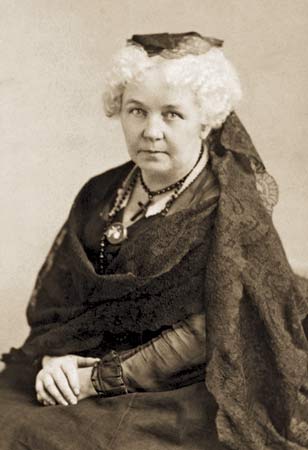
Elizabeth Cady Stanton (née Cady; November 12, 1815 – October 26, 1902) was an American writer and activist who was a leader of the women's rights movement in the U.S. during the mid- to late-19th century. She was the main force behind the 1848 Seneca Falls Convention, the first convention to be called for the sole purpose of discussing women's rights, and was the primary author of its Declaration of Sentiments. Her demand for women's right to vote generated a controversy at the convention but quickly became a central tenet of the women's movement. She was also active in other social reform activities, especially abolitionism.
In 1851, she met Susan B. Anthony and formed a decades-long partnership that was crucial to the development of the women's rights movement. During the American Civil War, they established the Women's Loyal National League to campaign for the abolition of slavery, and they led it in the largest petition drive in U.S. history up to that time. They started a newspaper called The Revolution in 1868 to work for women's rights.
After the war, Stanton and Anthony were the main organizers of the American Equal Rights Association, which campaigned for equal rights for both African Americans and women, especially the right of suffrage. When the Fifteenth Amendment to the U.S. Constitution was introduced that would provide suffrage for black men only, they opposed it, insisting that suffrage should be extended to all African Americans and all women at the same time. Others in the movement supported the amendment, resulting in a split. During the bitter arguments that led up to the split, Stanton sometimes expressed her ideas in elitist and racially condescending language. In her opposition to the voting rights of African Americans Stanton was quoted to have said, "It becomes a serious question whether we had better stand aside and let 'Sambo' walk into the kingdom first." Frederick Douglass, an abolitionist friend who had escaped from slavery, reproached her for such remarks.
Stanton became the president of the National Woman Suffrage Association, which she and Anthony created to represent their wing of the movement. When the split was healed more than twenty years later, Stanton became the first president of the united organization, the National American Woman Suffrage Association. This was largely an honorary position; Stanton continued to work on a wide range of women's rights issues despite the organization's increasingly tight focus on women's right to vote.
Stanton was the primary author of the first three volumes of the History of Woman Suffrage, a massive effort to record the history of the movement, focusing largely on her wing of it. She was also the primary author of The Woman's Bible, a redaction criticism of the Bible that is based on the premise that its attitude toward women reflects prejudice from a less civilized age.
Elizabeth Cady was born into the leading family of Johnstown, New York. Their family mansion on the town's main square was handled by as many as twelve servants. Her conservative father, Daniel Cady, was one of the richest landowners in the state. A member of the Federalist Party, he was an attorney who served one term in the U.S. Congress and became a justice in the New York Supreme Court.
Her mother, Margaret Cady (née Livingston), was more progressive, supporting the radical Garrisonian wing of the abolitionist movement and signing a petition for women's suffrage in 1867. She was described, at least earlier in her life, as "[n]early six feet tall, strong willed and self-reliant, ... She was the only person in the household not in awe of her husband who was 12 years her senior."
Elizabeth was the seventh of eleven children, six of whom died before reaching full adulthood, including all of the boys. Her mother, exhausted by giving birth to so many children and the anguish of seeing so many of them die, became withdrawn and depressed. Tryphena (1804-1891), the oldest daughter, together with her husband Edward Bayard, assumed much of the responsibility for raising Elizabeth and her siblings Eleazor (1806-1826), Harriet (1810-1891), Margaret (1817-1902), and Catherine (1820-1899).
Hub AI
Elizabeth Cady Stanton AI simulator
(@Elizabeth Cady Stanton_simulator)
Elizabeth Cady Stanton
Elizabeth Cady Stanton (née Cady; November 12, 1815 – October 26, 1902) was an American writer and activist who was a leader of the women's rights movement in the U.S. during the mid- to late-19th century. She was the main force behind the 1848 Seneca Falls Convention, the first convention to be called for the sole purpose of discussing women's rights, and was the primary author of its Declaration of Sentiments. Her demand for women's right to vote generated a controversy at the convention but quickly became a central tenet of the women's movement. She was also active in other social reform activities, especially abolitionism.
In 1851, she met Susan B. Anthony and formed a decades-long partnership that was crucial to the development of the women's rights movement. During the American Civil War, they established the Women's Loyal National League to campaign for the abolition of slavery, and they led it in the largest petition drive in U.S. history up to that time. They started a newspaper called The Revolution in 1868 to work for women's rights.
After the war, Stanton and Anthony were the main organizers of the American Equal Rights Association, which campaigned for equal rights for both African Americans and women, especially the right of suffrage. When the Fifteenth Amendment to the U.S. Constitution was introduced that would provide suffrage for black men only, they opposed it, insisting that suffrage should be extended to all African Americans and all women at the same time. Others in the movement supported the amendment, resulting in a split. During the bitter arguments that led up to the split, Stanton sometimes expressed her ideas in elitist and racially condescending language. In her opposition to the voting rights of African Americans Stanton was quoted to have said, "It becomes a serious question whether we had better stand aside and let 'Sambo' walk into the kingdom first." Frederick Douglass, an abolitionist friend who had escaped from slavery, reproached her for such remarks.
Stanton became the president of the National Woman Suffrage Association, which she and Anthony created to represent their wing of the movement. When the split was healed more than twenty years later, Stanton became the first president of the united organization, the National American Woman Suffrage Association. This was largely an honorary position; Stanton continued to work on a wide range of women's rights issues despite the organization's increasingly tight focus on women's right to vote.
Stanton was the primary author of the first three volumes of the History of Woman Suffrage, a massive effort to record the history of the movement, focusing largely on her wing of it. She was also the primary author of The Woman's Bible, a redaction criticism of the Bible that is based on the premise that its attitude toward women reflects prejudice from a less civilized age.
Elizabeth Cady was born into the leading family of Johnstown, New York. Their family mansion on the town's main square was handled by as many as twelve servants. Her conservative father, Daniel Cady, was one of the richest landowners in the state. A member of the Federalist Party, he was an attorney who served one term in the U.S. Congress and became a justice in the New York Supreme Court.
Her mother, Margaret Cady (née Livingston), was more progressive, supporting the radical Garrisonian wing of the abolitionist movement and signing a petition for women's suffrage in 1867. She was described, at least earlier in her life, as "[n]early six feet tall, strong willed and self-reliant, ... She was the only person in the household not in awe of her husband who was 12 years her senior."
Elizabeth was the seventh of eleven children, six of whom died before reaching full adulthood, including all of the boys. Her mother, exhausted by giving birth to so many children and the anguish of seeing so many of them die, became withdrawn and depressed. Tryphena (1804-1891), the oldest daughter, together with her husband Edward Bayard, assumed much of the responsibility for raising Elizabeth and her siblings Eleazor (1806-1826), Harriet (1810-1891), Margaret (1817-1902), and Catherine (1820-1899).