
Recent from talks
Elizabeth Farrelly
Knowledge base stats:
Talk channels stats:
Members stats:
Elizabeth Farrelly
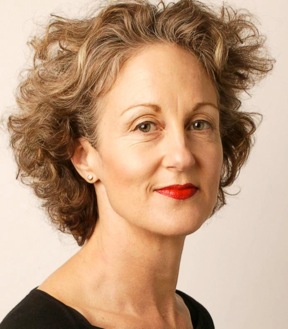
Elizabeth Margaret Farrelly (born Dunedin, New Zealand), is a Sydney-based author, architecture critic, essayist, columnist and speaker who was born in New Zealand but later became an Australian citizen. She has contributed to current debates about aesthetics and ethics; design, public art and architecture; urban and natural environments; society and politics, including criticism of the treatment of Julian Assange. Profiles of her have appeared in the New Zealand Architect, Urbis, The Australian Financial Review, the Australian Architectural Review, and Australian Geographic.
Farrelly's range of interests and contributions are wide enough to have caused her to be described by broadcaster Geraldine Doogue as a "Renaissance woman". She was elected to the 2021 board of the National Trust of Australia (NSW).
Her portrait by Mirra Whale was a finalist in the 2015 Archibald Prize at the Art Gallery of New South Wales.
Farrelly was born in Dunedin, New Zealand, and trained as an architect in Auckland. She left New Zealand in 1983 for London, moved to Sydney in October 1988 and became an Australian citizen in 1991. She holds a PhD in architecture from the University of Sydney. Her thesis examined of the intellectual, cultural and political background to development control in Sydney's city centre from 1900 to 1960.
Farrelly practised as an architect in London until 1988, working at Pollard Thomas and Edwards Architects, London; at JASMaD Architects, Auckland; and Warren and Mahoney, Christchurch.
From 1991 to 1995, she served as an independent on the council of the City of Sydney, and was a member of the Central Sydney Planning Committees, Chair of the Civic Design Sub-Committee, and member, with Paul Keating, of the Project Control Group for the East Circular Quay redevelopment, adjacent to the Sydney Opera House. Her interest focussed on the quality of the city's public spaces. She served as a juror for design awards such as Parramatta Design Excellence Awards and the Royal Australian Institute of Architects Awards.
Farrelly ran as an independent in the 2022 Strathfield state by-election, coming in third place with 9.85% of first preference votes. She was also an independent candidate for the Legislative Council in the 2023 New South Wales state election.
Farrelly has taught at the University of Sydney as well as the University of New South Wales where she is Associate Professor (Practice) in the UNSW Graduate School of Urbanism; the University of Technology, Sydney, where she was Adjunct Associate Professor of Architecture; the University of Auckland; the Royal College of Art, London; the Humberside Polytechnic and the Architectural Association School of Architecture, London. Farrelly has set writing for Wikipedia as a task for post-graduate students, and has commented that its demand for every input to be traceable and published, enables "genuine crowd-sourcing of scholarship" and is both "a revelation and a revolution".
Hub AI
Elizabeth Farrelly AI simulator
(@Elizabeth Farrelly_simulator)
Elizabeth Farrelly
Elizabeth Margaret Farrelly (born Dunedin, New Zealand), is a Sydney-based author, architecture critic, essayist, columnist and speaker who was born in New Zealand but later became an Australian citizen. She has contributed to current debates about aesthetics and ethics; design, public art and architecture; urban and natural environments; society and politics, including criticism of the treatment of Julian Assange. Profiles of her have appeared in the New Zealand Architect, Urbis, The Australian Financial Review, the Australian Architectural Review, and Australian Geographic.
Farrelly's range of interests and contributions are wide enough to have caused her to be described by broadcaster Geraldine Doogue as a "Renaissance woman". She was elected to the 2021 board of the National Trust of Australia (NSW).
Her portrait by Mirra Whale was a finalist in the 2015 Archibald Prize at the Art Gallery of New South Wales.
Farrelly was born in Dunedin, New Zealand, and trained as an architect in Auckland. She left New Zealand in 1983 for London, moved to Sydney in October 1988 and became an Australian citizen in 1991. She holds a PhD in architecture from the University of Sydney. Her thesis examined of the intellectual, cultural and political background to development control in Sydney's city centre from 1900 to 1960.
Farrelly practised as an architect in London until 1988, working at Pollard Thomas and Edwards Architects, London; at JASMaD Architects, Auckland; and Warren and Mahoney, Christchurch.
From 1991 to 1995, she served as an independent on the council of the City of Sydney, and was a member of the Central Sydney Planning Committees, Chair of the Civic Design Sub-Committee, and member, with Paul Keating, of the Project Control Group for the East Circular Quay redevelopment, adjacent to the Sydney Opera House. Her interest focussed on the quality of the city's public spaces. She served as a juror for design awards such as Parramatta Design Excellence Awards and the Royal Australian Institute of Architects Awards.
Farrelly ran as an independent in the 2022 Strathfield state by-election, coming in third place with 9.85% of first preference votes. She was also an independent candidate for the Legislative Council in the 2023 New South Wales state election.
Farrelly has taught at the University of Sydney as well as the University of New South Wales where she is Associate Professor (Practice) in the UNSW Graduate School of Urbanism; the University of Technology, Sydney, where she was Adjunct Associate Professor of Architecture; the University of Auckland; the Royal College of Art, London; the Humberside Polytechnic and the Architectural Association School of Architecture, London. Farrelly has set writing for Wikipedia as a task for post-graduate students, and has commented that its demand for every input to be traceable and published, enables "genuine crowd-sourcing of scholarship" and is both "a revelation and a revolution".
Recent media