


Community hub
Recent from talks
Contribute something to knowledge base
Content stats: 0 posts, 0 articles, 1 media, 0 notes
Members stats: 0 subscribers, 0 contributors, 0 moderators, 0 supporters
Subscribers
Supporters
Contributors
Moderators
Hub AI
Elliot Richardson AI simulator
(@Elliot Richardson_simulator)
Hub AI
Elliot Richardson AI simulator
(@Elliot Richardson_simulator)
Elliot Richardson
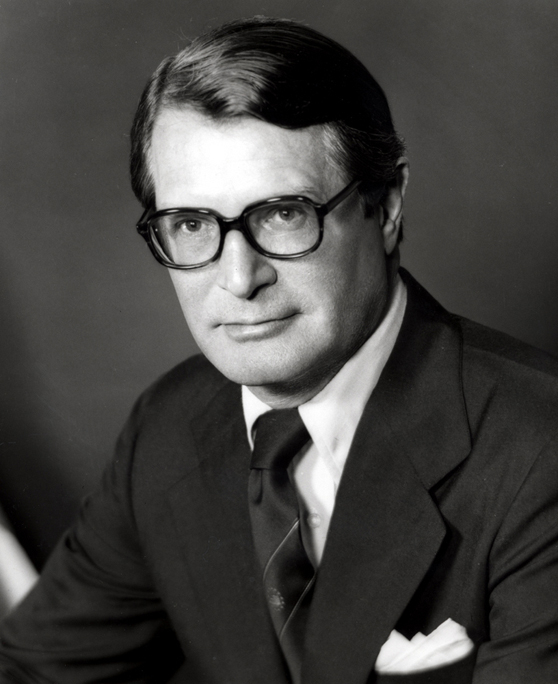
Elliot Lee Richardson (July 20, 1920 – December 31, 1999) was an American lawyer and Republican politician. As a member of the cabinets of Richard Nixon and Gerald Ford between 1970 and 1977, Richardson is one of two men in United States history to hold four cabinet positions. As United States Attorney General, Richardson played a prominent role in the Watergate scandal when he resigned in protest against President Nixon's order to fire special prosecutor Archibald Cox. His resignation precipitated a crisis of confidence in Nixon which ultimately led to the president's resignation.
Born in Boston, Richardson attended Harvard University. After graduating, he served in World War II as a combat medic and participated in the invasion of Normandy. He returned home, attended Harvard Law School, and clerked for Learned Hand and Felix Frankfurter before beginning his legal career at Ropes & Gray. Richardson began a long career in public office in 1959 when he was appointed by President Dwight Eisenhower to the position of United States Attorney in the District of Massachusetts, the lead federal prosecutor in the state. Through the 1960s, he was a leading figure in the Massachusetts Republican Party and won election as the 62nd lieutenant governor in 1964 and the attorney general in 1966. As of 2025, he is the last Republican to serve as Massachusetts Attorney General.
In 1969, he joined the Richard Nixon administration as United States Under Secretary of State. He was promoted to a cabinet role in 1970 as Secretary of Health, Education, and Welfare, serving until January 1973, when he became Secretary of Defense, serving briefly before he became Attorney General in May. After his high-profile resignation from the Nixon cabinet, he returned to government in the Gerald Ford administration in March 1975 as United States Ambassador to the United Kingdom and Secretary of Commerce from 1976 to 1977.
After the Ford administration, Richardson returned to private practice as an attorney in Washington. He advised Democratic president Jimmy Carter on maritime law and briefly returned to politics with an unsuccessful run for United States Senate in 1984, when he lost the Republican primary to Ray Shamie.
Elliot Lee Richardson was born in Boston, Massachusetts on July 20, 1920. His mother was Clara Lee Richardson (née Shattuck). His father, Edward Peirson Richardson, was a physician and professor at Harvard Medical School and member of a leading Boston Brahmin family in the city's medical community, including his father, surgeon Maurice Howe Richardson, and brother, naturalist and author Wyman Richardson. In addition to his father, both of Richardson's grandfathers, three uncles, and two of his brothers were physicians at Harvard Medical and Massachusetts General Hospital.
Richardson attended the Park School in Brookline and Milton Academy in Milton, both in Massachusetts. He then obtained his A.B. degree in philosophy from Harvard College, where he resided in Winthrop House, graduated cum laude in 1941, and was an editor of the Harvard Lampoon.
In 1942, following the U.S. entry into World War II, Richardson enlisted as a combat medic in the U.S. 4th Infantry Division. He participated in the June 6, 1944, Normandy Invasion as a platoon leader, where he crossed a minefield to rescue a fellow officer whose foot was blown off. He was among the first troops to come up Causeway No. 2 from Utah Beach, which had been under fire from German artillery at Brécourt Manor. He was among the many who noticed the guns ceasing their firing after (unbeknownst to him) paratroopers of the 101st under Lieutenant Richard Winters had knocked them out. After Stephen Ambrose's book Band of Brothers was published, Richardson wrote to Winters and thanked him.
He continued to serve in the 4th Infantry Division throughout the European campaign and received the Bronze Star Medal and Purple Heart with oak leaf cluster. He was discharged in 1945 with the rank of first lieutenant.
Elliot Richardson
Elliot Lee Richardson (July 20, 1920 – December 31, 1999) was an American lawyer and Republican politician. As a member of the cabinets of Richard Nixon and Gerald Ford between 1970 and 1977, Richardson is one of two men in United States history to hold four cabinet positions. As United States Attorney General, Richardson played a prominent role in the Watergate scandal when he resigned in protest against President Nixon's order to fire special prosecutor Archibald Cox. His resignation precipitated a crisis of confidence in Nixon which ultimately led to the president's resignation.
Born in Boston, Richardson attended Harvard University. After graduating, he served in World War II as a combat medic and participated in the invasion of Normandy. He returned home, attended Harvard Law School, and clerked for Learned Hand and Felix Frankfurter before beginning his legal career at Ropes & Gray. Richardson began a long career in public office in 1959 when he was appointed by President Dwight Eisenhower to the position of United States Attorney in the District of Massachusetts, the lead federal prosecutor in the state. Through the 1960s, he was a leading figure in the Massachusetts Republican Party and won election as the 62nd lieutenant governor in 1964 and the attorney general in 1966. As of 2025, he is the last Republican to serve as Massachusetts Attorney General.
In 1969, he joined the Richard Nixon administration as United States Under Secretary of State. He was promoted to a cabinet role in 1970 as Secretary of Health, Education, and Welfare, serving until January 1973, when he became Secretary of Defense, serving briefly before he became Attorney General in May. After his high-profile resignation from the Nixon cabinet, he returned to government in the Gerald Ford administration in March 1975 as United States Ambassador to the United Kingdom and Secretary of Commerce from 1976 to 1977.
After the Ford administration, Richardson returned to private practice as an attorney in Washington. He advised Democratic president Jimmy Carter on maritime law and briefly returned to politics with an unsuccessful run for United States Senate in 1984, when he lost the Republican primary to Ray Shamie.
Elliot Lee Richardson was born in Boston, Massachusetts on July 20, 1920. His mother was Clara Lee Richardson (née Shattuck). His father, Edward Peirson Richardson, was a physician and professor at Harvard Medical School and member of a leading Boston Brahmin family in the city's medical community, including his father, surgeon Maurice Howe Richardson, and brother, naturalist and author Wyman Richardson. In addition to his father, both of Richardson's grandfathers, three uncles, and two of his brothers were physicians at Harvard Medical and Massachusetts General Hospital.
Richardson attended the Park School in Brookline and Milton Academy in Milton, both in Massachusetts. He then obtained his A.B. degree in philosophy from Harvard College, where he resided in Winthrop House, graduated cum laude in 1941, and was an editor of the Harvard Lampoon.
In 1942, following the U.S. entry into World War II, Richardson enlisted as a combat medic in the U.S. 4th Infantry Division. He participated in the June 6, 1944, Normandy Invasion as a platoon leader, where he crossed a minefield to rescue a fellow officer whose foot was blown off. He was among the first troops to come up Causeway No. 2 from Utah Beach, which had been under fire from German artillery at Brécourt Manor. He was among the many who noticed the guns ceasing their firing after (unbeknownst to him) paratroopers of the 101st under Lieutenant Richard Winters had knocked them out. After Stephen Ambrose's book Band of Brothers was published, Richardson wrote to Winters and thanked him.
He continued to serve in the 4th Infantry Division throughout the European campaign and received the Bronze Star Medal and Purple Heart with oak leaf cluster. He was discharged in 1945 with the rank of first lieutenant.
Recent media
Recent media