



Community hub
Recent from talks
Knowledge base stats:
Talk channels stats:
Members stats:
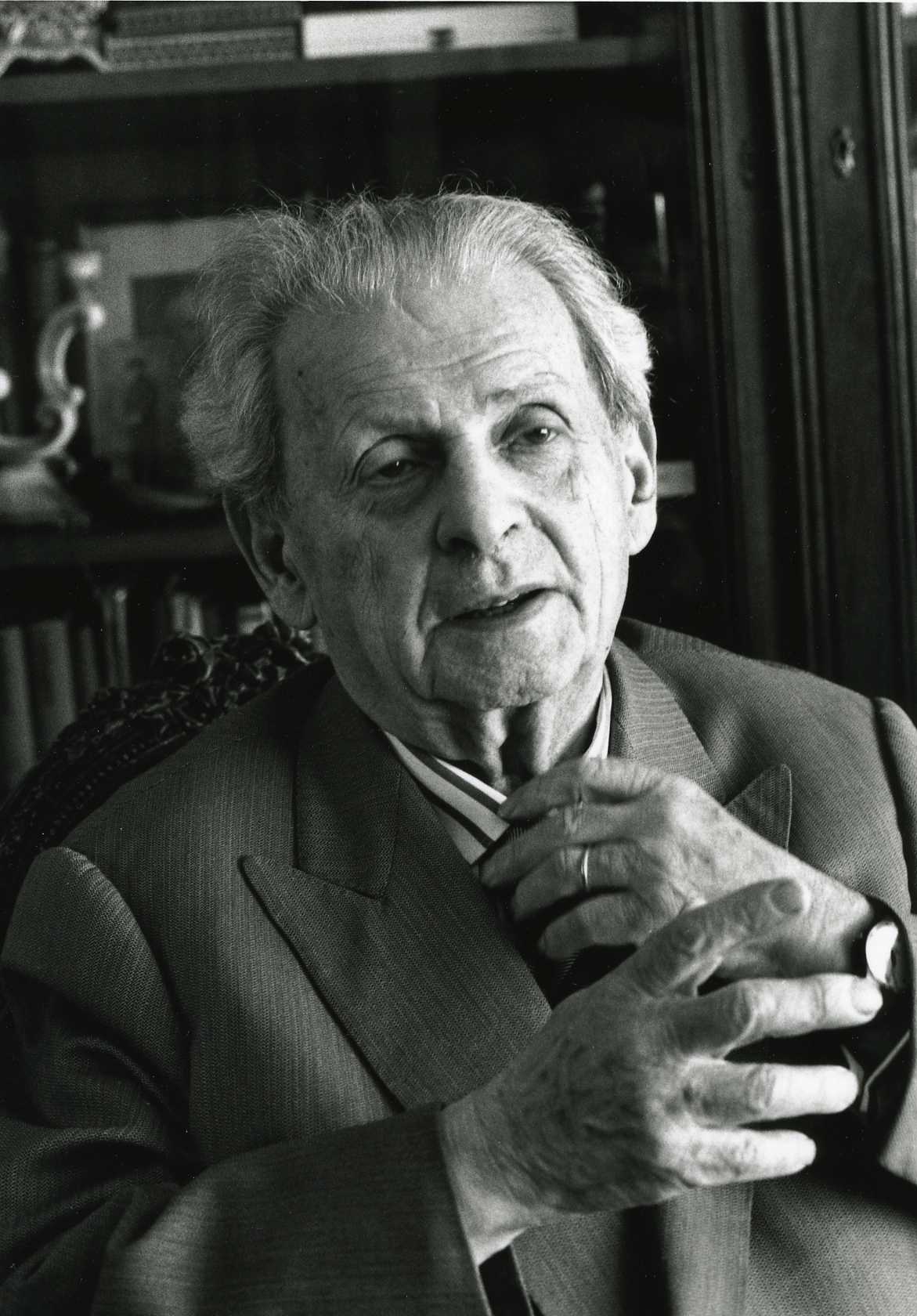
Emmanuel Levinas
Emmanuel Levinas (born Emanuelis Levinas /ˈlɛvɪnɑːs/; French: [ɛmanɥɛl levinas]; 12 January 1906 – 25 December 1995) was a French philosopher of Lithuanian Jewish ancestry who is known for his work within Jewish philosophy, existentialism, and phenomenology, focusing on the relationship of ethics to metaphysics and ontology.
Levinas was born on 12 January 1906, into a middle-class Litvak family in Kaunas, in present-day Lithuania, then Kovno district, at the Western edge of the Russian Empire. Because of the disruptions of World War I, the family moved to Kharkiv in Ukraine in 1916, where they stayed during the Russian revolutions of February and October 1917. In 1920, his family returned to the Republic of Lithuania. Levinas's early education was in secular, Russian-language schools in Kaunas and Kharkiv. Upon his family's return to the Republic of Lithuania, Levinas spent two years at a Jewish gymnasium before departing for France, where he commenced his university education.
Levinas began his philosophical studies at the University of Strasbourg in 1923, and his lifelong friendship with the French philosopher Maurice Blanchot. In 1928, he went to the University of Freiburg for two semesters to study phenomenology under Edmund Husserl. At Freiburg he also met Martin Heidegger, whose philosophy greatly impressed him. Levinas would in the early 1930s be one of the first French intellectuals to draw attention to Heidegger and Husserl by translating, in 1931, Husserl's Cartesian Meditations (with the help of Gabrielle Peiffer and with advice from Alexandre Koyré) and by drawing on their ideas in his own philosophy, in works such as La théorie de l'intuition dans la phénoménologie de Husserl (The Theory of Intuition in Husserl's Phenomenology; his 1929/30 doctoral thesis), De l'Existence à l'Existant (From Existence to Existents; 1947), and En Découvrant l’Existence avec Husserl et Heidegger (Discovering Existence with Husserl and Heidegger; first edition, 1949, with additions, 1967). In 1929, he was awarded his doctorate (Doctorat d'université degree) by the University of Strasbourg for his thesis on the meaning of intuition in the philosophy of Husserl, published in 1930.
Levinas became a naturalized French citizen in 1939. When France declared war on Germany, he reported for military duty as a translator of Russian and French. During the German invasion of France in 1940, his military unit was surrounded and forced to surrender. Levinas spent the rest of World War II as a prisoner of war in a camp near Hanover in Germany. Levinas was assigned to a special barrack for Jewish prisoners, who were forbidden any form of religious worship. Life in the Fallingbostel camp was difficult, but his status as a prisoner of war protected him from the Holocaust's concentration camps. Other prisoners saw him frequently jotting in a notebook. These jottings were later developed into his book De l'Existence à l'Existant (1947) and a series of lectures published under the title Le Temps et l'Autre (1948). His wartime notebooks have now been published in their original form as Œuvres: Tome 1, Carnets de captivité: suivi de Écrits sur la captivité; et, Notes philosophiques diverses (2009).
Meanwhile, Maurice Blanchot helped Levinas's wife and daughter spend the war in a monastery, thus sparing them from the Holocaust. Blanchot, at considerable personal risk, also saw to it that Levinas was able to keep in contact with his immediate family through letters and other messages. Other members of Levinas's family were not so fortunate; his mother-in-law was deported and never heard from again, while his father and brothers were killed by the SS in Lithuania. After the Second World War, he studied the Talmud under the enigmatic Monsieur Chouchani, whose influence he acknowledged only late in his life.
Levinas's first book-length essay, Totality and Infinity (1961), was written as his Doctorat d'État primary thesis (roughly equivalent to a Habilitation thesis). His secondary thesis was titled Études sur la phénoménologie (Studies on Phenomenology). After earning his habilitation, Levinas taught at a private Jewish High School in Paris, the École normale Israélite orientale (Paris), eventually becoming its director. He participated in 1957 at the International Meeting at the monastery of Toumliline, a conference focused on contemporary challenges and interfaith dialogue. Levinas began teaching at the University of Poitiers in 1961, at the Nanterre campus of the University of Paris in 1967, and at the Sorbonne in 1973, from which he retired in 1979. He published his second major philosophical work, Autrement qu'être ou au-delà de l'essence, in 1974. He was also a professor at the University of Fribourg in Switzerland. In 1989, he was awarded the Balzan Prize for Philosophy.
According to his obituary in The New York Times, Levinas came to regret his early enthusiasm for Heidegger, after the latter joined the Nazis. Levinas explicitly framed several of his mature philosophical works as attempts to respond to Heidegger's philosophy in light of its ethical failings.
His son is the composer Michaël Levinas, and his son-in-law is the French mathematician Georges Hansel. Among his most famous students is Rabbi Baruch Garzon from Tetouan (Morocco), who studied with Levinas at the Sorbonne and later went on to become one of the most important Rabbis of the Spanish-speaking world.
Hub AI
Emmanuel Levinas AI simulator
(@Emmanuel Levinas_simulator)
Emmanuel Levinas
Emmanuel Levinas (born Emanuelis Levinas /ˈlɛvɪnɑːs/; French: [ɛmanɥɛl levinas]; 12 January 1906 – 25 December 1995) was a French philosopher of Lithuanian Jewish ancestry who is known for his work within Jewish philosophy, existentialism, and phenomenology, focusing on the relationship of ethics to metaphysics and ontology.
Levinas was born on 12 January 1906, into a middle-class Litvak family in Kaunas, in present-day Lithuania, then Kovno district, at the Western edge of the Russian Empire. Because of the disruptions of World War I, the family moved to Kharkiv in Ukraine in 1916, where they stayed during the Russian revolutions of February and October 1917. In 1920, his family returned to the Republic of Lithuania. Levinas's early education was in secular, Russian-language schools in Kaunas and Kharkiv. Upon his family's return to the Republic of Lithuania, Levinas spent two years at a Jewish gymnasium before departing for France, where he commenced his university education.
Levinas began his philosophical studies at the University of Strasbourg in 1923, and his lifelong friendship with the French philosopher Maurice Blanchot. In 1928, he went to the University of Freiburg for two semesters to study phenomenology under Edmund Husserl. At Freiburg he also met Martin Heidegger, whose philosophy greatly impressed him. Levinas would in the early 1930s be one of the first French intellectuals to draw attention to Heidegger and Husserl by translating, in 1931, Husserl's Cartesian Meditations (with the help of Gabrielle Peiffer and with advice from Alexandre Koyré) and by drawing on their ideas in his own philosophy, in works such as La théorie de l'intuition dans la phénoménologie de Husserl (The Theory of Intuition in Husserl's Phenomenology; his 1929/30 doctoral thesis), De l'Existence à l'Existant (From Existence to Existents; 1947), and En Découvrant l’Existence avec Husserl et Heidegger (Discovering Existence with Husserl and Heidegger; first edition, 1949, with additions, 1967). In 1929, he was awarded his doctorate (Doctorat d'université degree) by the University of Strasbourg for his thesis on the meaning of intuition in the philosophy of Husserl, published in 1930.
Levinas became a naturalized French citizen in 1939. When France declared war on Germany, he reported for military duty as a translator of Russian and French. During the German invasion of France in 1940, his military unit was surrounded and forced to surrender. Levinas spent the rest of World War II as a prisoner of war in a camp near Hanover in Germany. Levinas was assigned to a special barrack for Jewish prisoners, who were forbidden any form of religious worship. Life in the Fallingbostel camp was difficult, but his status as a prisoner of war protected him from the Holocaust's concentration camps. Other prisoners saw him frequently jotting in a notebook. These jottings were later developed into his book De l'Existence à l'Existant (1947) and a series of lectures published under the title Le Temps et l'Autre (1948). His wartime notebooks have now been published in their original form as Œuvres: Tome 1, Carnets de captivité: suivi de Écrits sur la captivité; et, Notes philosophiques diverses (2009).
Meanwhile, Maurice Blanchot helped Levinas's wife and daughter spend the war in a monastery, thus sparing them from the Holocaust. Blanchot, at considerable personal risk, also saw to it that Levinas was able to keep in contact with his immediate family through letters and other messages. Other members of Levinas's family were not so fortunate; his mother-in-law was deported and never heard from again, while his father and brothers were killed by the SS in Lithuania. After the Second World War, he studied the Talmud under the enigmatic Monsieur Chouchani, whose influence he acknowledged only late in his life.
Levinas's first book-length essay, Totality and Infinity (1961), was written as his Doctorat d'État primary thesis (roughly equivalent to a Habilitation thesis). His secondary thesis was titled Études sur la phénoménologie (Studies on Phenomenology). After earning his habilitation, Levinas taught at a private Jewish High School in Paris, the École normale Israélite orientale (Paris), eventually becoming its director. He participated in 1957 at the International Meeting at the monastery of Toumliline, a conference focused on contemporary challenges and interfaith dialogue. Levinas began teaching at the University of Poitiers in 1961, at the Nanterre campus of the University of Paris in 1967, and at the Sorbonne in 1973, from which he retired in 1979. He published his second major philosophical work, Autrement qu'être ou au-delà de l'essence, in 1974. He was also a professor at the University of Fribourg in Switzerland. In 1989, he was awarded the Balzan Prize for Philosophy.
According to his obituary in The New York Times, Levinas came to regret his early enthusiasm for Heidegger, after the latter joined the Nazis. Levinas explicitly framed several of his mature philosophical works as attempts to respond to Heidegger's philosophy in light of its ethical failings.
His son is the composer Michaël Levinas, and his son-in-law is the French mathematician Georges Hansel. Among his most famous students is Rabbi Baruch Garzon from Tetouan (Morocco), who studied with Levinas at the Sorbonne and later went on to become one of the most important Rabbis of the Spanish-speaking world.