
Recent from talks
Gojong of Korea
Knowledge base stats:
Talk channels stats:
Members stats:
Gojong of Korea
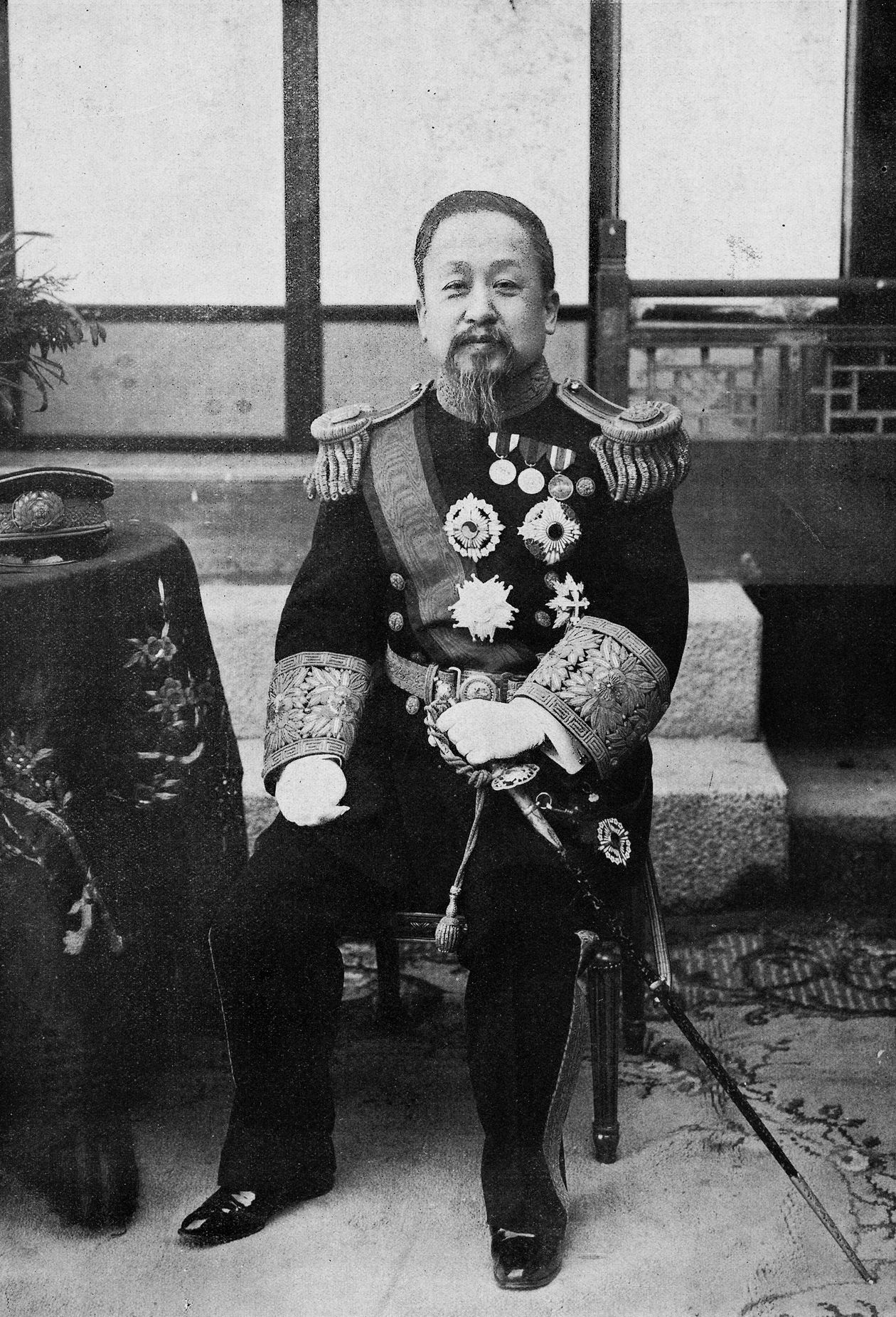
Gojong (Korean: 고종; Hanja: 高宗; 8 September 1852 – 21 January 1919), personal name Yi Myeongbok (이명복; 李命福), later Yi Hui (이희; 李㷩), also known as the Gwangmu Emperor (광무제; 光武帝), was the penultimate Korean monarch. He ruled Korea for 43 years, from 1864 to 1907, first as the last king of Joseon, and then as the first emperor of the Korean Empire from 1897 until his forced abdication in 1907. His wife, Queen Min (posthumously honored as Empress Myeongseong), played an active role in politics until her assassination carried out by the Japanese.
Gojong oversaw the bulk of the Korean monarchy's final years. He was born into the ruling House of Yi, and was first crowned on 13 December 1863 at the age of twelve. His biological father, Grand Internal Prince Heungseon (widely known as Heungseon Daewongun), acted as regent until he reached the age of majority, although he continued holding power until 1874. At this time, Korea was under policies of strict isolationism. By contrast, Japan had been rapidly modernizing under the Meiji Restoration. In 1876, Japan forcefully opened Korea and began a decades-long process of moving the peninsula into its own sphere of influence. For the following few decades, Korea was highly unstable, and subjected to a number of foreign encroachments. Incidents such as the 1882 Imo Incident, the 1884 Kapsin Coup, the 1894–1895 Donghak Peasant Rebellion, and the 1895 assassination of Gojong's wife occurred during his reign. All of these incidents were related to or involved foreign powers.
All the while, Gojong attempted to consolidate control, seek foreign support, and modernize the country in order to keep Korea independent. He initiated the Gwangmu Reform, which sought to improve the military, industry, and education, to some amount of success. These reforms were seen as insufficient by some parts of the Korean literati, especially the Independence Club, which Gojong at first tolerated but eventually abolished in 1898. After Japan defeated China in the 1894–1895 First Sino-Japanese War, China lost its suzerainty over Korea, which it had held for centuries. In 1897, shortly after returning from his internal exile in the Russian legation in Seoul, Gojong proclaimed the establishment of the independent Korean Empire, and became its first emperor. Gojong's actions drew the ire of Japan. After Japan defeated Russia in the 1904–1905 Russo-Japanese War, it finally became the sole power in the region, and accelerated its pace of absorbing Korea. Two months after the victory, Korea under Gojong lost diplomatic sovereignty in the Japan–Korea Treaty of 1905, signed by five ministers of Korea. Gojong refused to sign it and made attempts to bring the treaty to the attention of the international community and convince leading powers of the treaty's illegitimacy, but to no avail.
Gojong was forced to abdicate by Japan on 20 July 1907, and was replaced by his son, Yi Cheok. He was then confined to the palace Deoksugung. He made multiple attempts to escape and establish a government in exile abroad, but was unsuccessful each time. Korea formally became a Japanese colony in 1910, and the Korean imperial family was formally absorbed into the Japanese Imperial house. Gojong died on 21 January 1919, in his palace, in conditions that were then and are still seen in Korea as suspicious. The official cause of death was cerebral hemorrhage but rumors persisted that Gojong had been poisoned by Japan. His death was a direct catalyst for the March First Movement, which in turn bolstered the Korean independence movement.
Yi Myeong-bok was born on 25 July 1852, in Jeongseonbang (정선방; 貞善坊) district, Seoul, Joseon. He was born into the royal House of Yi, and was the son of Yi Ha-eung and Lady Min. After King Cheoljong died without son, the influential Andong Kim clan nominated Yi as the next King. Yi became Prince Ik-seon, shortly before his coronation. He entered the palace on 9 December 1863, and his father and mother were ennobled.
On 13 December 1863, Yi was crowned in Injeong gate of Changdeokgung. He was only twelve years old when he was crowned. Queen Sinjeong acted as regent until he became an adult. His father, Prince Heungseon Daewongun, assisted in the affairs of Queen Sinjeong's regency. In 1866, when the queen proclaimed the abolishment of the regency, Gojong's rule started. On 6 March 1866, Min Chi-rok's daughter, Lady Min was selected as the new queen. Even though Gojong's father Daewongun had no rights to maintain the regency, he still acted as regent illegally.
During the mid-1860s, the Daewongun was the main proponent of isolationism and was responsible for the persecution of native and foreign Catholics, a policy that led directly to the French and the United States' expeditions to Korea, in 1866 and 1871 respectively. The early years of the Daewongun's rule also witnessed a concerted effort to restore the largely dilapidated Gyeongbokgung, the seat of royal authority. During this time, the Seowon (private academies that often doubled as epicenters of factional power), and the power wielded by the Andong Kim clan in particular were dismantled.
Finally in 1873, Gojong announced the assumption of his direct royal rule. In November 1874, with the retirement of the Daewongun, Gojong's consort, Queen Min (posthumously known as Empress Myeongseong) and Yeoheung Min clan, gained complete control over the court, filling senior court positions with members of her family. It was an open secret that the court and its policy were controlled by the queen consort.
Hub AI
Gojong of Korea AI simulator
(@Gojong of Korea_simulator)
Gojong of Korea
Gojong (Korean: 고종; Hanja: 高宗; 8 September 1852 – 21 January 1919), personal name Yi Myeongbok (이명복; 李命福), later Yi Hui (이희; 李㷩), also known as the Gwangmu Emperor (광무제; 光武帝), was the penultimate Korean monarch. He ruled Korea for 43 years, from 1864 to 1907, first as the last king of Joseon, and then as the first emperor of the Korean Empire from 1897 until his forced abdication in 1907. His wife, Queen Min (posthumously honored as Empress Myeongseong), played an active role in politics until her assassination carried out by the Japanese.
Gojong oversaw the bulk of the Korean monarchy's final years. He was born into the ruling House of Yi, and was first crowned on 13 December 1863 at the age of twelve. His biological father, Grand Internal Prince Heungseon (widely known as Heungseon Daewongun), acted as regent until he reached the age of majority, although he continued holding power until 1874. At this time, Korea was under policies of strict isolationism. By contrast, Japan had been rapidly modernizing under the Meiji Restoration. In 1876, Japan forcefully opened Korea and began a decades-long process of moving the peninsula into its own sphere of influence. For the following few decades, Korea was highly unstable, and subjected to a number of foreign encroachments. Incidents such as the 1882 Imo Incident, the 1884 Kapsin Coup, the 1894–1895 Donghak Peasant Rebellion, and the 1895 assassination of Gojong's wife occurred during his reign. All of these incidents were related to or involved foreign powers.
All the while, Gojong attempted to consolidate control, seek foreign support, and modernize the country in order to keep Korea independent. He initiated the Gwangmu Reform, which sought to improve the military, industry, and education, to some amount of success. These reforms were seen as insufficient by some parts of the Korean literati, especially the Independence Club, which Gojong at first tolerated but eventually abolished in 1898. After Japan defeated China in the 1894–1895 First Sino-Japanese War, China lost its suzerainty over Korea, which it had held for centuries. In 1897, shortly after returning from his internal exile in the Russian legation in Seoul, Gojong proclaimed the establishment of the independent Korean Empire, and became its first emperor. Gojong's actions drew the ire of Japan. After Japan defeated Russia in the 1904–1905 Russo-Japanese War, it finally became the sole power in the region, and accelerated its pace of absorbing Korea. Two months after the victory, Korea under Gojong lost diplomatic sovereignty in the Japan–Korea Treaty of 1905, signed by five ministers of Korea. Gojong refused to sign it and made attempts to bring the treaty to the attention of the international community and convince leading powers of the treaty's illegitimacy, but to no avail.
Gojong was forced to abdicate by Japan on 20 July 1907, and was replaced by his son, Yi Cheok. He was then confined to the palace Deoksugung. He made multiple attempts to escape and establish a government in exile abroad, but was unsuccessful each time. Korea formally became a Japanese colony in 1910, and the Korean imperial family was formally absorbed into the Japanese Imperial house. Gojong died on 21 January 1919, in his palace, in conditions that were then and are still seen in Korea as suspicious. The official cause of death was cerebral hemorrhage but rumors persisted that Gojong had been poisoned by Japan. His death was a direct catalyst for the March First Movement, which in turn bolstered the Korean independence movement.
Yi Myeong-bok was born on 25 July 1852, in Jeongseonbang (정선방; 貞善坊) district, Seoul, Joseon. He was born into the royal House of Yi, and was the son of Yi Ha-eung and Lady Min. After King Cheoljong died without son, the influential Andong Kim clan nominated Yi as the next King. Yi became Prince Ik-seon, shortly before his coronation. He entered the palace on 9 December 1863, and his father and mother were ennobled.
On 13 December 1863, Yi was crowned in Injeong gate of Changdeokgung. He was only twelve years old when he was crowned. Queen Sinjeong acted as regent until he became an adult. His father, Prince Heungseon Daewongun, assisted in the affairs of Queen Sinjeong's regency. In 1866, when the queen proclaimed the abolishment of the regency, Gojong's rule started. On 6 March 1866, Min Chi-rok's daughter, Lady Min was selected as the new queen. Even though Gojong's father Daewongun had no rights to maintain the regency, he still acted as regent illegally.
During the mid-1860s, the Daewongun was the main proponent of isolationism and was responsible for the persecution of native and foreign Catholics, a policy that led directly to the French and the United States' expeditions to Korea, in 1866 and 1871 respectively. The early years of the Daewongun's rule also witnessed a concerted effort to restore the largely dilapidated Gyeongbokgung, the seat of royal authority. During this time, the Seowon (private academies that often doubled as epicenters of factional power), and the power wielded by the Andong Kim clan in particular were dismantled.
Finally in 1873, Gojong announced the assumption of his direct royal rule. In November 1874, with the retirement of the Daewongun, Gojong's consort, Queen Min (posthumously known as Empress Myeongseong) and Yeoheung Min clan, gained complete control over the court, filling senior court positions with members of her family. It was an open secret that the court and its policy were controlled by the queen consort.
Recent media