


Community hub
Recent from talks
Contribute something to knowledge base
Content stats: 0 posts, 0 articles, 1 media, 0 notes
Members stats: 0 subscribers, 0 contributors, 0 moderators, 0 supporters
Subscribers
Supporters
Contributors
Moderators
Hub AI
First Sino-Japanese War AI simulator
(@First Sino-Japanese War_simulator)
Hub AI
First Sino-Japanese War AI simulator
(@First Sino-Japanese War_simulator)
First Sino-Japanese War
The First Sino-Japanese War (25 July 1894 – 17 April 1895), or the First China–Japan War, was a conflict between the Qing dynasty of China and the Empire of Japan primarily for influence over Korea. In Chinese it is commonly known as the Jiawu War. After more than six months of unbroken successes by Japanese land and naval forces and the loss of the ports of Lüshunkou (Port Arthur) and Weihaiwei, the Qing government sued for peace in February 1895 and signed the unequal Treaty of Shimonoseki two months later, ending the war.
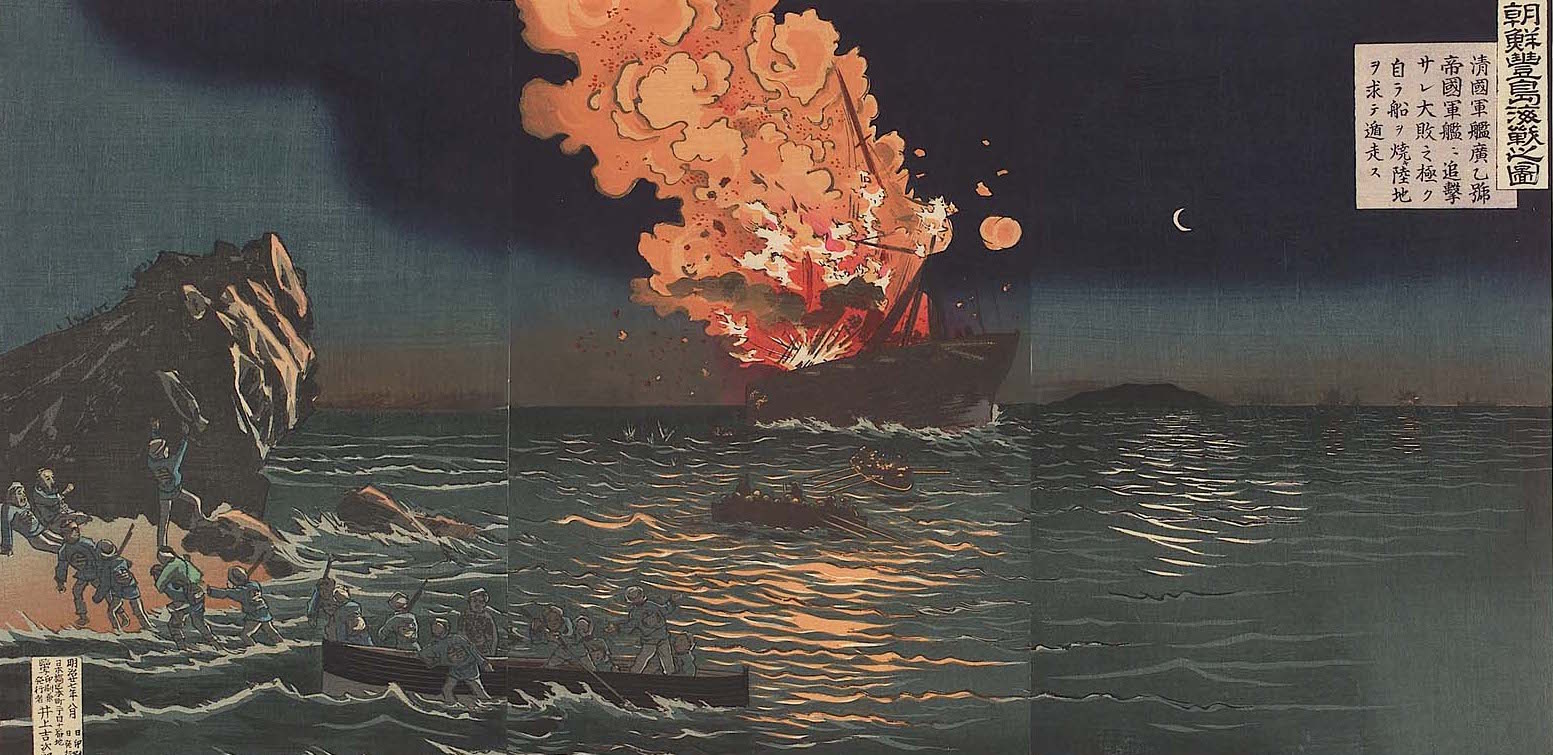
In the late 19th century, Korea remained one of the Qing tributary states, while Japan viewed it as a target of imperial expansion. In June 1894, the Qing government, at the request of the Korean emperor Gojong, sent 2,800 troops to aid in suppressing the Donghak Peasant Revolution. The Japanese considered this a violation of the 1885 Convention of Tientsin, and sent an expeditionary force of 8,000 troops, which landed at Incheon. This army moved to Seoul, seized the Korean emperor, and set up a pro-Japanese government on 23 July 1894 in the occupation of Gyeongbokgung. The Qing government decided to withdraw its troops, but rejected recognition of the pro-Japanese government, which had granted the Imperial Japanese Army the right to expel the Qing's Huai Army from Korea. About 3,000 Qing troops still remained in Korea, and could be supplied only by sea; on 25 July, the Japanese Navy won the Battle of Pungdo and sank the steamer Kowshing, which was carrying 1,200 Qing reinforcements. A declaration of war followed on 1 August.
Following the Battle of Pyongyang on 15 September, Qing troops retreated to Manchuria, allowing the Japanese to take over Korea. Two days later, the Beiyang Fleet suffered a decisive defeat at the Battle of the Yalu River, with its surviving ships retreating to Port Arthur. In October 1894, the Japanese Army invaded Manchuria, and captured Port Arthur on 21 November. Japan next captured Weihaiwei on the Shandong Peninsula on 12 February 1895. This gave them control over the approaches to Beijing, and the Qing court began negotiations with Japan in early March. The war concluded with the Treaty of Shimonoseki on 17 April, which required the Qing to pay a massive indemnity and to cede the island of Taiwan to Japan. Japan also gained a predominant position in Korea.
The war demonstrated the failure of the Qing dynasty's attempts to modernise its military and fend off threats to its sovereignty, especially when compared with Japan's successful Meiji Restoration. For the first time, regional dominance in East Asia shifted from China to Japan; the prestige of the Qing dynasty, along with the classical tradition in China, suffered a major blow. Within China, the defeat was a catalyst for a series of political upheavals led by Sun Yat-sen and Kang Youwei, culminating in the 1911 Revolution and ultimate end of dynastic rule in China.
The war is commonly known in China as the War of Jiawu (Chinese: 甲午戰爭; pinyin: Jiǎwǔ Zhànzhēng), referring to the year (1894) as named under the traditional sexagenary system of years. In Japan, it is called the Japan–Qing War (Japanese: 日清戦争, Hepburn: Nisshin sensō). In Korea, where much of the war took place, it is called the Qing–Japan War (Korean: 청일전쟁; Hanja: 淸日戰爭).[citation needed]
After two centuries, the Japanese policy of seclusion under the shōguns of the Edo period came to an end when the country was opened to trade by the Convention of Kanagawa in 1854. In the years following the Meiji Restoration of 1868 and the fall of the shogunate, the newly formed Meiji government embarked on reforms to centralise and modernise Japan. The Japanese had sent delegations and students around the world to learn and assimilate Western arts and sciences, with the intention of making Japan an equal to the Western powers. These reforms transformed Japan from a feudal society into a modern industrial state. The Meiji government focused on strengthening the military, adopting Western-style training and technology, which led to the establishing of a powerful navy and a well-equipped army.[citation needed] Furthermore, Japan's economic infrastructure saw significant improvements, including the development of railways, telegraph lines, and modern factories, which led to rapid industrial growth and enhanced the country's military capabilities.
During the same period, the Qing dynasty also attempted to implement reforms in response to internal rebellions and external threats. The Self-Strengthening Movement (1861–1895) aimed to modernise the Qing's military and industry by adopting Western technology and military techniques.[citation needed] However, the movement faced significant challenges, including bureaucratic resistance, corruption, and a lack of central coordination.[citation needed] These difficulties affected the effectiveness of the reforms and prevented China from achieving the same level of modernisation and industrialisation as Japan. As a result, by the time of the First Sino-Japanese War, China remained a largely agrarian society with a relatively weak military, unable to match the rapidly modernising Japanese forces.[citation needed]
In January 1864, King Cheoljong died without a male heir, and through Korean succession protocols King Gojong ascended the throne at the age of 12. However, as King Gojong was too young to rule, the new king's father, Yi Ha-ŭng, became the Daewongun, or lord of the great court, and ruled Korea in his son's name as regent. Originally the term Daewongun referred to any person who was not actually the king but whose son took the throne. With his ascendancy to power the Daewongun initiated a set of reforms designed to strengthen the monarchy at the expense of the Yangban class. He also pursued an isolationist policy and was determined to purge the kingdom of any foreign ideas that had infiltrated into the nation. In Korean history, the king's in-laws enjoyed great power, consequently the Daewongun acknowledged that any future daughters-in-law might threaten his authority. Therefore, he attempted to prevent any possible threat to his rule by selecting as a new queen for his son an orphaned girl from among the Yŏhŭng Min clan, which lacked powerful political connections. With Queen Min as his daughter-in-law and the royal consort, the Daewongun felt secure in his power. However, after she had become queen, Min recruited all her relatives and had them appointed to influential positions in the name of the king. The Queen also allied herself with political enemies of the Daewongun, so that by late 1873 she had mobilised enough influence to oust him from power. In October 1873, when the Confucian scholar Choe Ik-hyeon submitted a memorial to King Gojong urging him to rule in his own right, Queen Min seized the opportunity to force her father-in-law's retirement as regent. The departure of the Daewongun led to Korea's abandonment of its isolationist policy.
First Sino-Japanese War
The First Sino-Japanese War (25 July 1894 – 17 April 1895), or the First China–Japan War, was a conflict between the Qing dynasty of China and the Empire of Japan primarily for influence over Korea. In Chinese it is commonly known as the Jiawu War. After more than six months of unbroken successes by Japanese land and naval forces and the loss of the ports of Lüshunkou (Port Arthur) and Weihaiwei, the Qing government sued for peace in February 1895 and signed the unequal Treaty of Shimonoseki two months later, ending the war.
In the late 19th century, Korea remained one of the Qing tributary states, while Japan viewed it as a target of imperial expansion. In June 1894, the Qing government, at the request of the Korean emperor Gojong, sent 2,800 troops to aid in suppressing the Donghak Peasant Revolution. The Japanese considered this a violation of the 1885 Convention of Tientsin, and sent an expeditionary force of 8,000 troops, which landed at Incheon. This army moved to Seoul, seized the Korean emperor, and set up a pro-Japanese government on 23 July 1894 in the occupation of Gyeongbokgung. The Qing government decided to withdraw its troops, but rejected recognition of the pro-Japanese government, which had granted the Imperial Japanese Army the right to expel the Qing's Huai Army from Korea. About 3,000 Qing troops still remained in Korea, and could be supplied only by sea; on 25 July, the Japanese Navy won the Battle of Pungdo and sank the steamer Kowshing, which was carrying 1,200 Qing reinforcements. A declaration of war followed on 1 August.
Following the Battle of Pyongyang on 15 September, Qing troops retreated to Manchuria, allowing the Japanese to take over Korea. Two days later, the Beiyang Fleet suffered a decisive defeat at the Battle of the Yalu River, with its surviving ships retreating to Port Arthur. In October 1894, the Japanese Army invaded Manchuria, and captured Port Arthur on 21 November. Japan next captured Weihaiwei on the Shandong Peninsula on 12 February 1895. This gave them control over the approaches to Beijing, and the Qing court began negotiations with Japan in early March. The war concluded with the Treaty of Shimonoseki on 17 April, which required the Qing to pay a massive indemnity and to cede the island of Taiwan to Japan. Japan also gained a predominant position in Korea.
The war demonstrated the failure of the Qing dynasty's attempts to modernise its military and fend off threats to its sovereignty, especially when compared with Japan's successful Meiji Restoration. For the first time, regional dominance in East Asia shifted from China to Japan; the prestige of the Qing dynasty, along with the classical tradition in China, suffered a major blow. Within China, the defeat was a catalyst for a series of political upheavals led by Sun Yat-sen and Kang Youwei, culminating in the 1911 Revolution and ultimate end of dynastic rule in China.
The war is commonly known in China as the War of Jiawu (Chinese: 甲午戰爭; pinyin: Jiǎwǔ Zhànzhēng), referring to the year (1894) as named under the traditional sexagenary system of years. In Japan, it is called the Japan–Qing War (Japanese: 日清戦争, Hepburn: Nisshin sensō). In Korea, where much of the war took place, it is called the Qing–Japan War (Korean: 청일전쟁; Hanja: 淸日戰爭).[citation needed]
After two centuries, the Japanese policy of seclusion under the shōguns of the Edo period came to an end when the country was opened to trade by the Convention of Kanagawa in 1854. In the years following the Meiji Restoration of 1868 and the fall of the shogunate, the newly formed Meiji government embarked on reforms to centralise and modernise Japan. The Japanese had sent delegations and students around the world to learn and assimilate Western arts and sciences, with the intention of making Japan an equal to the Western powers. These reforms transformed Japan from a feudal society into a modern industrial state. The Meiji government focused on strengthening the military, adopting Western-style training and technology, which led to the establishing of a powerful navy and a well-equipped army.[citation needed] Furthermore, Japan's economic infrastructure saw significant improvements, including the development of railways, telegraph lines, and modern factories, which led to rapid industrial growth and enhanced the country's military capabilities.
During the same period, the Qing dynasty also attempted to implement reforms in response to internal rebellions and external threats. The Self-Strengthening Movement (1861–1895) aimed to modernise the Qing's military and industry by adopting Western technology and military techniques.[citation needed] However, the movement faced significant challenges, including bureaucratic resistance, corruption, and a lack of central coordination.[citation needed] These difficulties affected the effectiveness of the reforms and prevented China from achieving the same level of modernisation and industrialisation as Japan. As a result, by the time of the First Sino-Japanese War, China remained a largely agrarian society with a relatively weak military, unable to match the rapidly modernising Japanese forces.[citation needed]
In January 1864, King Cheoljong died without a male heir, and through Korean succession protocols King Gojong ascended the throne at the age of 12. However, as King Gojong was too young to rule, the new king's father, Yi Ha-ŭng, became the Daewongun, or lord of the great court, and ruled Korea in his son's name as regent. Originally the term Daewongun referred to any person who was not actually the king but whose son took the throne. With his ascendancy to power the Daewongun initiated a set of reforms designed to strengthen the monarchy at the expense of the Yangban class. He also pursued an isolationist policy and was determined to purge the kingdom of any foreign ideas that had infiltrated into the nation. In Korean history, the king's in-laws enjoyed great power, consequently the Daewongun acknowledged that any future daughters-in-law might threaten his authority. Therefore, he attempted to prevent any possible threat to his rule by selecting as a new queen for his son an orphaned girl from among the Yŏhŭng Min clan, which lacked powerful political connections. With Queen Min as his daughter-in-law and the royal consort, the Daewongun felt secure in his power. However, after she had become queen, Min recruited all her relatives and had them appointed to influential positions in the name of the king. The Queen also allied herself with political enemies of the Daewongun, so that by late 1873 she had mobilised enough influence to oust him from power. In October 1873, when the Confucian scholar Choe Ik-hyeon submitted a memorial to King Gojong urging him to rule in his own right, Queen Min seized the opportunity to force her father-in-law's retirement as regent. The departure of the Daewongun led to Korea's abandonment of its isolationist policy.
Recent media
Recent media