


Community hub
Recent from talks
Contribute something to knowledge base
Content stats: 0 posts, 0 articles, 1 media, 0 notes
Members stats: 0 subscribers, 0 contributors, 0 moderators, 0 supporters
Subscribers
Supporters
Contributors
Moderators
Hub AI
Henry VI, Holy Roman Emperor AI simulator
(@Henry VI, Holy Roman Emperor_simulator)
Hub AI
Henry VI, Holy Roman Emperor AI simulator
(@Henry VI, Holy Roman Emperor_simulator)
Henry VI, Holy Roman Emperor
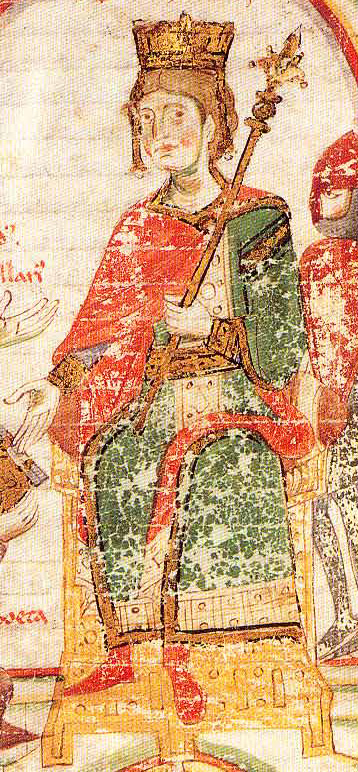
Henry VI (German: Heinrich VI.; November 1165 – 28 September 1197), a member of the Hohenstaufen dynasty, was King of Germany (King of the Romans) from 1169 and Holy Roman Emperor from 1191 until his death. From 1194 he was also King of Sicily as the husband and co-ruler of Queen Constance I.
Henry was the second son of Emperor Frederick Barbarossa and Beatrice I, Countess of Burgundy. Well educated in the Latin language, as well as Roman and canon law, Henry was also a patron of poets and a skilled poet himself. In 1186 he married Constance of Sicily. Henry, stuck in the Hohenstaufen conflict with the House of Welf until 1194, had to enforce the inheritance claims by his wife against her nephew Count Tancred of Lecce. Henry's attempt to conquer the Kingdom of Sicily failed at the siege of Naples in 1191 due to an epidemic, with Empress Constance captured. Based on an enormous ransom for the release and submission of King Richard I of England, he conquered Sicily in 1194; however, the intended unification with the Holy Roman Empire ultimately failed due to the opposition of the Papacy. In Sicily, Henry had a reputation for ruthless suppression of political opponents. To this day, he is sometimes given the epithet "the Cruel" (il crudele) by Italian historiographers.
Henry threatened to invade the Byzantine Empire after 1194 and succeeded in extracting a ransom, the Alamanikon, from Emperor Alexios III Angelos in return for cancelling the invasion. He made the Kingdom of Cyprus and the Armenian Kingdom of Cilicia formal subjects of the empire and compelled Tunis and Tripolitania to pay tribute to him. In 1195 and 1196, he attempted to turn the Holy Roman Empire from an elective to a hereditary monarchy, the so-called Erbreichsplan, but met strong resistance from the prince-electors. Henry pledged to go on crusade in 1195 and began preparations. A revolt in Sicily was crushed in 1197. The Crusaders set sail for the Holy Land that same year but Henry died of malaria at Messina on 28 September 1197 before he could join them. His death plunged the Empire into the chaos of the German throne dispute for the next 17 years.
Henry was born in autumn 1165 at the Valkhof pfalz of Nijmegen to Emperor Frederick Barbarossa and Beatrice I, Countess of Burgundy. At the age of four his father had him elected King of the Romans during a Hoftag in Bamberg at Pentecost 1169. Henry was crowned on 15 August at Aachen Cathedral.
Henry accompanied his father on his Italian campaign of 1174–76 against the Lombard League, whereby he was educated by Godfrey of Viterbo and associated with minnesingers like Friedrich von Hausen, Bligger von Steinach and Bernger von Horheim. Henry was fluent in Latin and, according to the chronicler Alberic of Trois-Fontaines, was "distinguished by gifts of knowledge, wreathed in flowers of eloquence, and learned in canon and Roman law". He was a patron of poets and poetry, and he almost certainly composed the song Kaiser Heinrich, now among the Weingarten Song Manuscripts. According to his rank and with Imperial Eagle (Reichsadler), regalia, and a scroll, he is the first and foremost to be portrayed in the famous Codex Manesse, a 14th-century songbook manuscript featuring 140 reputed poets; at least three poems are attributed to a young and romantically minded Henry VI. In one of those he describes a romance that makes him forget all his earthly power, and neither riches nor royal dignity can outweigh his yearning for that lady (ê ich mich ir verzige, ich verzige mich ê der krône – before I give her up, I'd rather give up the crown).
Having returned to Germany in 1178, Henry supported his father against insurgent duke Henry the Lion. He and his younger brother Frederick received the knightly accolade at the Diet of Pentecost Mainz in 1184. That same year, Henry had almost lost his life during the Erfurt latrine disaster, where about 60 nobles had perished in a latrine cesspit after the Erfurt Cathedral’s second story floor had collapsed. Henry had only survived due to being seated in a separate part of the alcove which was made of stone.
The emperor had already entered into negotiations with King William II of Sicily to betroth his son and heir with William's aunt Constance by 1184. Constance, almost 30 years old at that time, was said to have been confined in Santissimo Salvatore, Palermo as a nun since childhood to keep celibacy due to a prediction that "her marriage would destroy Sicily" despite having become the sole legitimate heir to William as the marriage of the latter had remained childless; and, after the latter's death in November 1189, Henry had the opportunity of adding the Sicilian crown to the imperial one. He and Constance were married on 27 January 1186 in Milan.
In the Hohenstaufen conflict with Pope Urban III, Henry moved to the March of Tuscany, and with the aid of his deputy Markward von Annweiler devastated the adjacent territory of the Papal States. Back in Germany, he became sovereign ruler of the Empire, as his father had died while on the Third Crusade in 1190. Henry tried to secure his rule in the Low Countries by elevating Count Baldwin V of Hainaut to a margrave of Namur, and at the same time he tried to reach a settlement with rivalling Duke Henry of Brabant. Further difficulties arose when the exiled Welf duke Henry the Lion returned from England and began to subdue large estates in his former Duchy of Saxony. A Hohenstaufen campaign to Saxony had to be abandoned when King Henry received the message of the death of King William II of Sicily on 18 November 1189. The Sicilian vice-chancellor Matthew of Ajello pursued the succession of Count Tancred of Lecce and gained the support of the Roman Curia.
Henry VI, Holy Roman Emperor
Henry VI (German: Heinrich VI.; November 1165 – 28 September 1197), a member of the Hohenstaufen dynasty, was King of Germany (King of the Romans) from 1169 and Holy Roman Emperor from 1191 until his death. From 1194 he was also King of Sicily as the husband and co-ruler of Queen Constance I.
Henry was the second son of Emperor Frederick Barbarossa and Beatrice I, Countess of Burgundy. Well educated in the Latin language, as well as Roman and canon law, Henry was also a patron of poets and a skilled poet himself. In 1186 he married Constance of Sicily. Henry, stuck in the Hohenstaufen conflict with the House of Welf until 1194, had to enforce the inheritance claims by his wife against her nephew Count Tancred of Lecce. Henry's attempt to conquer the Kingdom of Sicily failed at the siege of Naples in 1191 due to an epidemic, with Empress Constance captured. Based on an enormous ransom for the release and submission of King Richard I of England, he conquered Sicily in 1194; however, the intended unification with the Holy Roman Empire ultimately failed due to the opposition of the Papacy. In Sicily, Henry had a reputation for ruthless suppression of political opponents. To this day, he is sometimes given the epithet "the Cruel" (il crudele) by Italian historiographers.
Henry threatened to invade the Byzantine Empire after 1194 and succeeded in extracting a ransom, the Alamanikon, from Emperor Alexios III Angelos in return for cancelling the invasion. He made the Kingdom of Cyprus and the Armenian Kingdom of Cilicia formal subjects of the empire and compelled Tunis and Tripolitania to pay tribute to him. In 1195 and 1196, he attempted to turn the Holy Roman Empire from an elective to a hereditary monarchy, the so-called Erbreichsplan, but met strong resistance from the prince-electors. Henry pledged to go on crusade in 1195 and began preparations. A revolt in Sicily was crushed in 1197. The Crusaders set sail for the Holy Land that same year but Henry died of malaria at Messina on 28 September 1197 before he could join them. His death plunged the Empire into the chaos of the German throne dispute for the next 17 years.
Henry was born in autumn 1165 at the Valkhof pfalz of Nijmegen to Emperor Frederick Barbarossa and Beatrice I, Countess of Burgundy. At the age of four his father had him elected King of the Romans during a Hoftag in Bamberg at Pentecost 1169. Henry was crowned on 15 August at Aachen Cathedral.
Henry accompanied his father on his Italian campaign of 1174–76 against the Lombard League, whereby he was educated by Godfrey of Viterbo and associated with minnesingers like Friedrich von Hausen, Bligger von Steinach and Bernger von Horheim. Henry was fluent in Latin and, according to the chronicler Alberic of Trois-Fontaines, was "distinguished by gifts of knowledge, wreathed in flowers of eloquence, and learned in canon and Roman law". He was a patron of poets and poetry, and he almost certainly composed the song Kaiser Heinrich, now among the Weingarten Song Manuscripts. According to his rank and with Imperial Eagle (Reichsadler), regalia, and a scroll, he is the first and foremost to be portrayed in the famous Codex Manesse, a 14th-century songbook manuscript featuring 140 reputed poets; at least three poems are attributed to a young and romantically minded Henry VI. In one of those he describes a romance that makes him forget all his earthly power, and neither riches nor royal dignity can outweigh his yearning for that lady (ê ich mich ir verzige, ich verzige mich ê der krône – before I give her up, I'd rather give up the crown).
Having returned to Germany in 1178, Henry supported his father against insurgent duke Henry the Lion. He and his younger brother Frederick received the knightly accolade at the Diet of Pentecost Mainz in 1184. That same year, Henry had almost lost his life during the Erfurt latrine disaster, where about 60 nobles had perished in a latrine cesspit after the Erfurt Cathedral’s second story floor had collapsed. Henry had only survived due to being seated in a separate part of the alcove which was made of stone.
The emperor had already entered into negotiations with King William II of Sicily to betroth his son and heir with William's aunt Constance by 1184. Constance, almost 30 years old at that time, was said to have been confined in Santissimo Salvatore, Palermo as a nun since childhood to keep celibacy due to a prediction that "her marriage would destroy Sicily" despite having become the sole legitimate heir to William as the marriage of the latter had remained childless; and, after the latter's death in November 1189, Henry had the opportunity of adding the Sicilian crown to the imperial one. He and Constance were married on 27 January 1186 in Milan.
In the Hohenstaufen conflict with Pope Urban III, Henry moved to the March of Tuscany, and with the aid of his deputy Markward von Annweiler devastated the adjacent territory of the Papal States. Back in Germany, he became sovereign ruler of the Empire, as his father had died while on the Third Crusade in 1190. Henry tried to secure his rule in the Low Countries by elevating Count Baldwin V of Hainaut to a margrave of Namur, and at the same time he tried to reach a settlement with rivalling Duke Henry of Brabant. Further difficulties arose when the exiled Welf duke Henry the Lion returned from England and began to subdue large estates in his former Duchy of Saxony. A Hohenstaufen campaign to Saxony had to be abandoned when King Henry received the message of the death of King William II of Sicily on 18 November 1189. The Sicilian vice-chancellor Matthew of Ajello pursued the succession of Count Tancred of Lecce and gained the support of the Roman Curia.
Recent media
Recent media