
Recent from talks
Reichsadler
Knowledge base stats:
Talk channels stats:
Members stats:
Reichsadler
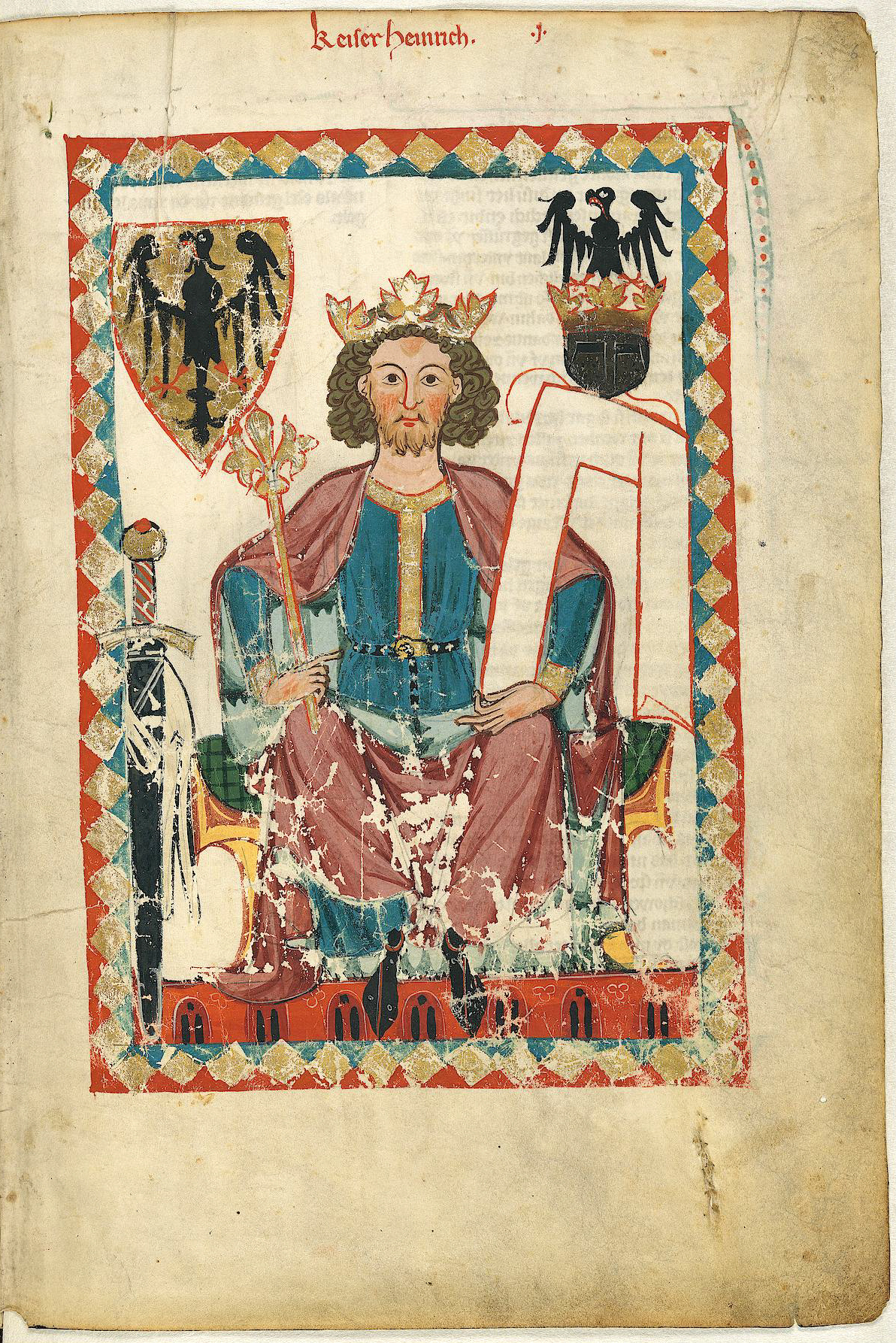
The Reichsadler (German pronunciation: [ˈʁaɪ̯çsˌʔaːdlɐ] ⓘ, "Imperial Eagle") is the heraldic eagle, derived from the Roman eagle standard, used by the Holy Roman Emperors, later by the Emperors of Austria and in modern coat of arms of Austria and Germany. The term is also translated as "Reich's Eagle."
The same design has remained in use by the Federal Republic of Germany since 1950, albeit under the name Bundesadler ("Federal Eagle").
The Reichsadler, i. e. the German Imperial Eagle, originated from a proto-heraldic emblem that was believed to have been used by Charlemagne, the first Frankish ruler whom the Pope crowned as Holy Roman Emperor in AD 800, and derived ultimately from the Aquila, i. e. eagle standard, of the ancient Roman army.
An eagle statue was erected on the roof of the Carolingian palace, and an eagle was placed on the orb of Emperor Otto III. Emperor Frederick Barbarossa popularised use of the eagle as the Imperial emblem by using it in all his banners, coats of arms, coins, and insignia. An eagle pattern was also placed on the Bust of Charlemagne.
The Ottonian and Salian Emperors had themselves depicted with the Roman "eagle sceptre", and Emperor Frederick II depicted the Imperial Eagle on his coins. Before the mid-13th century, however, the Imperial Eagle was an Imperial symbol in its own right, and not used yet as a heraldic charge in a coat of arms.
An early depiction of a double-headed Imperial Eagle in a heraldic shield, attributed to Frederick II of Hohenstaufen, is found in the Chronica Majora by Matthew Paris (circa 1250). Segar's Roll (circa 1280) likewise depicts the double-headed Imperial Eagle as the coat of arms of the King of Germany.
The Imperial Eagle also is depicted in the seals of free Imperial cities, including that of Kaiserswerth in the 13th century, Lübeck in the 14th century, Besançon (1290), Cheb (1277), and others.
Use of the Imperial Eagle in the Imperial coat of arms of a reigning emperor dates to after the interregnum. Sigismund of Luxembourg used a black double-headed Imperial Eagle after he was crowned as Holy Roman Emperor in 1433; thereafter the single-headed Imperial Eagle represented the title of King of the Romans and the double-headed one the title of Emperor. During the following century, Albert II of Germany was the final King-Elect of Germany who did not progress to coronation as Emperor. After the German Reformation, beginning with Ferdinand I (1558), the Holy Roman Emperors ceased to be crowned by the Pope.
Hub AI
Reichsadler AI simulator
(@Reichsadler_simulator)
Reichsadler
The Reichsadler (German pronunciation: [ˈʁaɪ̯çsˌʔaːdlɐ] ⓘ, "Imperial Eagle") is the heraldic eagle, derived from the Roman eagle standard, used by the Holy Roman Emperors, later by the Emperors of Austria and in modern coat of arms of Austria and Germany. The term is also translated as "Reich's Eagle."
The same design has remained in use by the Federal Republic of Germany since 1950, albeit under the name Bundesadler ("Federal Eagle").
The Reichsadler, i. e. the German Imperial Eagle, originated from a proto-heraldic emblem that was believed to have been used by Charlemagne, the first Frankish ruler whom the Pope crowned as Holy Roman Emperor in AD 800, and derived ultimately from the Aquila, i. e. eagle standard, of the ancient Roman army.
An eagle statue was erected on the roof of the Carolingian palace, and an eagle was placed on the orb of Emperor Otto III. Emperor Frederick Barbarossa popularised use of the eagle as the Imperial emblem by using it in all his banners, coats of arms, coins, and insignia. An eagle pattern was also placed on the Bust of Charlemagne.
The Ottonian and Salian Emperors had themselves depicted with the Roman "eagle sceptre", and Emperor Frederick II depicted the Imperial Eagle on his coins. Before the mid-13th century, however, the Imperial Eagle was an Imperial symbol in its own right, and not used yet as a heraldic charge in a coat of arms.
An early depiction of a double-headed Imperial Eagle in a heraldic shield, attributed to Frederick II of Hohenstaufen, is found in the Chronica Majora by Matthew Paris (circa 1250). Segar's Roll (circa 1280) likewise depicts the double-headed Imperial Eagle as the coat of arms of the King of Germany.
The Imperial Eagle also is depicted in the seals of free Imperial cities, including that of Kaiserswerth in the 13th century, Lübeck in the 14th century, Besançon (1290), Cheb (1277), and others.
Use of the Imperial Eagle in the Imperial coat of arms of a reigning emperor dates to after the interregnum. Sigismund of Luxembourg used a black double-headed Imperial Eagle after he was crowned as Holy Roman Emperor in 1433; thereafter the single-headed Imperial Eagle represented the title of King of the Romans and the double-headed one the title of Emperor. During the following century, Albert II of Germany was the final King-Elect of Germany who did not progress to coronation as Emperor. After the German Reformation, beginning with Ferdinand I (1558), the Holy Roman Emperors ceased to be crowned by the Pope.
Recent media