
Recent from talks
Enos Slaughter
Knowledge base stats:
Talk channels stats:
Members stats:
Enos Slaughter
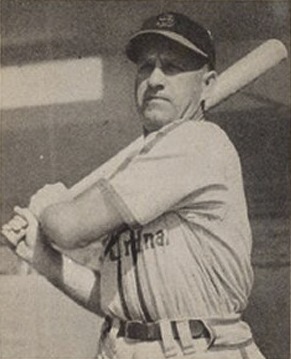
Enos Bradsher Slaughter (April 27, 1916 – August 12, 2002), nicknamed "Country", was an American professional baseball right fielder. He played 19 seasons in Major League Baseball (MLB) for the St. Louis Cardinals, New York Yankees, Kansas City Athletics, and Milwaukee Braves from 1938 to 1959. He is best known for scoring the winning run in Game 7 of the 1946 World Series for the Cardinals. A ten-time All-Star, he has been elected to both the National Baseball Hall of Fame and St. Louis Cardinals Hall of Fame.
Slaughter was born in Roxboro, North Carolina, where he earned the nickname "Country". In 1935, scout Billy Southworth signed him for the St. Louis Cardinals.
The Martinsville Manufacturers were Slaughter's first professional team, in 1935. When Slaughter was a minor leaguer in Columbus, Georgia, he went running towards the dugout from his position in the outfield, slowed down near the infield, and began walking the rest of the way. Manager Eddie Dyer told him, "Son, if you're tired, we'll try to get you some help." During the remainder of his major-league career, Slaughter ran everywhere he went on a baseball field. In 1937, he had 245 hits and 147 runs scored for Columbus.
Slaughter batted left-handed and threw right-handed. He was renowned for his smooth swing that made him a reliable "contact" hitter. Slaughter had 2,383 hits in his major league career, including 169 home runs, and 1,304 RBI in 2,380 games. Slaughter played 19 seasons with the St. Louis Cardinals, New York Yankees, Kansas City Athletics, and Milwaukee Braves. During that period, he was a ten-time All-Star and played in five World Series. His 1,820 games played ranks fifth in Cardinals' history behind Yadier Molina, Ozzie Smith, Lou Brock, and Stan Musial. He presently ranks third in RBI with 1,148; sixth in ABs with 6,775; and seventh in doubles with 366.
After debuting with the Cardinals in 1938, Slaughter became an everyday outfielder for them in 1939.
Slaughter served for three years in the Army Air Corps during World War II. He was a sergeant who taught physical education. Slaughter helped set up baseball teams in Tinian and Saipan, and their games inspired the troops while drawing upwards of 20,000 spectators. Immediately upon return from his military service in 1946, Slaughter led the National League with 130 RBI and led the Cardinals to a World Series win over the Boston Red Sox. In the decisive seventh game of that series, Slaughter, running with the pitch, made a famous "Mad Dash" for home from first base on Harry Walker's hit in the eighth inning, scoring the winning run that beat the throw of Johnny Pesky from the outfield. Walker's hit was ruled a double, although some observers felt it should have been ruled a single, with the throw home allowing Walker to advance to second base. This play was named No. 10 on the Sporting News list of Baseball's 25 Greatest Moments in 1999.
Slaughter was known for his hustle, especially for running hard to first base on walks, a habit later imitated by Pete Rose and David Eckstein.
Slaughter was reported at the time as being one of the leaders in racial taunting against the first black major league player, Jackie Robinson, and was accused of conspiring with teammate Terry Moore in an attempt to get the Cardinals to refuse to play Brooklyn with Robinson on the field. Sportswriter Bob Broeg, who covered the team at that time, refutes this claim and says that NL president Ford C. Frick considered the Cardinals fairer towards Robinson than any of the other teams. Slaughter later injured Robinson during a game by inflicting a seven-inch gash from his shoe spikes on Robinson's leg. Slaughter denied that he had any animosity towards Robinson, claiming that such allegations had been made against him because he was "a Southern boy", and that the injury suffered by Robinson had been typical of Slaughter's rough playing style. The August 21, 1947 edition of St. Louis Star and Times quoted Dodgers' second-baseman Eddie Stanky as saying, "Slaughter deliberately spiked Robinson. I always had the highest regard for Slaughter. He is one of the keenest competitors I know, and I admire him for it. But that was the first time he spiked someone deliberately. I've lost all my respect for him." In the Ken Burns Baseball documentary, it was claimed that Slaughter, despite easily being out, ran and jumped at Robinson, cutting his thigh open. Most other accounts state that the cut was on Robinson's calf, and it was non-intentional, that Slaughter's spike caught Robinson while he was trying to beat the throw to first and Robinson was just not able to pull his leg away in time.[citation needed]
Hub AI
Enos Slaughter AI simulator
(@Enos Slaughter_simulator)
Enos Slaughter
Enos Bradsher Slaughter (April 27, 1916 – August 12, 2002), nicknamed "Country", was an American professional baseball right fielder. He played 19 seasons in Major League Baseball (MLB) for the St. Louis Cardinals, New York Yankees, Kansas City Athletics, and Milwaukee Braves from 1938 to 1959. He is best known for scoring the winning run in Game 7 of the 1946 World Series for the Cardinals. A ten-time All-Star, he has been elected to both the National Baseball Hall of Fame and St. Louis Cardinals Hall of Fame.
Slaughter was born in Roxboro, North Carolina, where he earned the nickname "Country". In 1935, scout Billy Southworth signed him for the St. Louis Cardinals.
The Martinsville Manufacturers were Slaughter's first professional team, in 1935. When Slaughter was a minor leaguer in Columbus, Georgia, he went running towards the dugout from his position in the outfield, slowed down near the infield, and began walking the rest of the way. Manager Eddie Dyer told him, "Son, if you're tired, we'll try to get you some help." During the remainder of his major-league career, Slaughter ran everywhere he went on a baseball field. In 1937, he had 245 hits and 147 runs scored for Columbus.
Slaughter batted left-handed and threw right-handed. He was renowned for his smooth swing that made him a reliable "contact" hitter. Slaughter had 2,383 hits in his major league career, including 169 home runs, and 1,304 RBI in 2,380 games. Slaughter played 19 seasons with the St. Louis Cardinals, New York Yankees, Kansas City Athletics, and Milwaukee Braves. During that period, he was a ten-time All-Star and played in five World Series. His 1,820 games played ranks fifth in Cardinals' history behind Yadier Molina, Ozzie Smith, Lou Brock, and Stan Musial. He presently ranks third in RBI with 1,148; sixth in ABs with 6,775; and seventh in doubles with 366.
After debuting with the Cardinals in 1938, Slaughter became an everyday outfielder for them in 1939.
Slaughter served for three years in the Army Air Corps during World War II. He was a sergeant who taught physical education. Slaughter helped set up baseball teams in Tinian and Saipan, and their games inspired the troops while drawing upwards of 20,000 spectators. Immediately upon return from his military service in 1946, Slaughter led the National League with 130 RBI and led the Cardinals to a World Series win over the Boston Red Sox. In the decisive seventh game of that series, Slaughter, running with the pitch, made a famous "Mad Dash" for home from first base on Harry Walker's hit in the eighth inning, scoring the winning run that beat the throw of Johnny Pesky from the outfield. Walker's hit was ruled a double, although some observers felt it should have been ruled a single, with the throw home allowing Walker to advance to second base. This play was named No. 10 on the Sporting News list of Baseball's 25 Greatest Moments in 1999.
Slaughter was known for his hustle, especially for running hard to first base on walks, a habit later imitated by Pete Rose and David Eckstein.
Slaughter was reported at the time as being one of the leaders in racial taunting against the first black major league player, Jackie Robinson, and was accused of conspiring with teammate Terry Moore in an attempt to get the Cardinals to refuse to play Brooklyn with Robinson on the field. Sportswriter Bob Broeg, who covered the team at that time, refutes this claim and says that NL president Ford C. Frick considered the Cardinals fairer towards Robinson than any of the other teams. Slaughter later injured Robinson during a game by inflicting a seven-inch gash from his shoe spikes on Robinson's leg. Slaughter denied that he had any animosity towards Robinson, claiming that such allegations had been made against him because he was "a Southern boy", and that the injury suffered by Robinson had been typical of Slaughter's rough playing style. The August 21, 1947 edition of St. Louis Star and Times quoted Dodgers' second-baseman Eddie Stanky as saying, "Slaughter deliberately spiked Robinson. I always had the highest regard for Slaughter. He is one of the keenest competitors I know, and I admire him for it. But that was the first time he spiked someone deliberately. I've lost all my respect for him." In the Ken Burns Baseball documentary, it was claimed that Slaughter, despite easily being out, ran and jumped at Robinson, cutting his thigh open. Most other accounts state that the cut was on Robinson's calf, and it was non-intentional, that Slaughter's spike caught Robinson while he was trying to beat the throw to first and Robinson was just not able to pull his leg away in time.[citation needed]
Recent media