
Recent from talks
Epilogue
Knowledge base stats:
Talk channels stats:
Members stats:
Epilogue
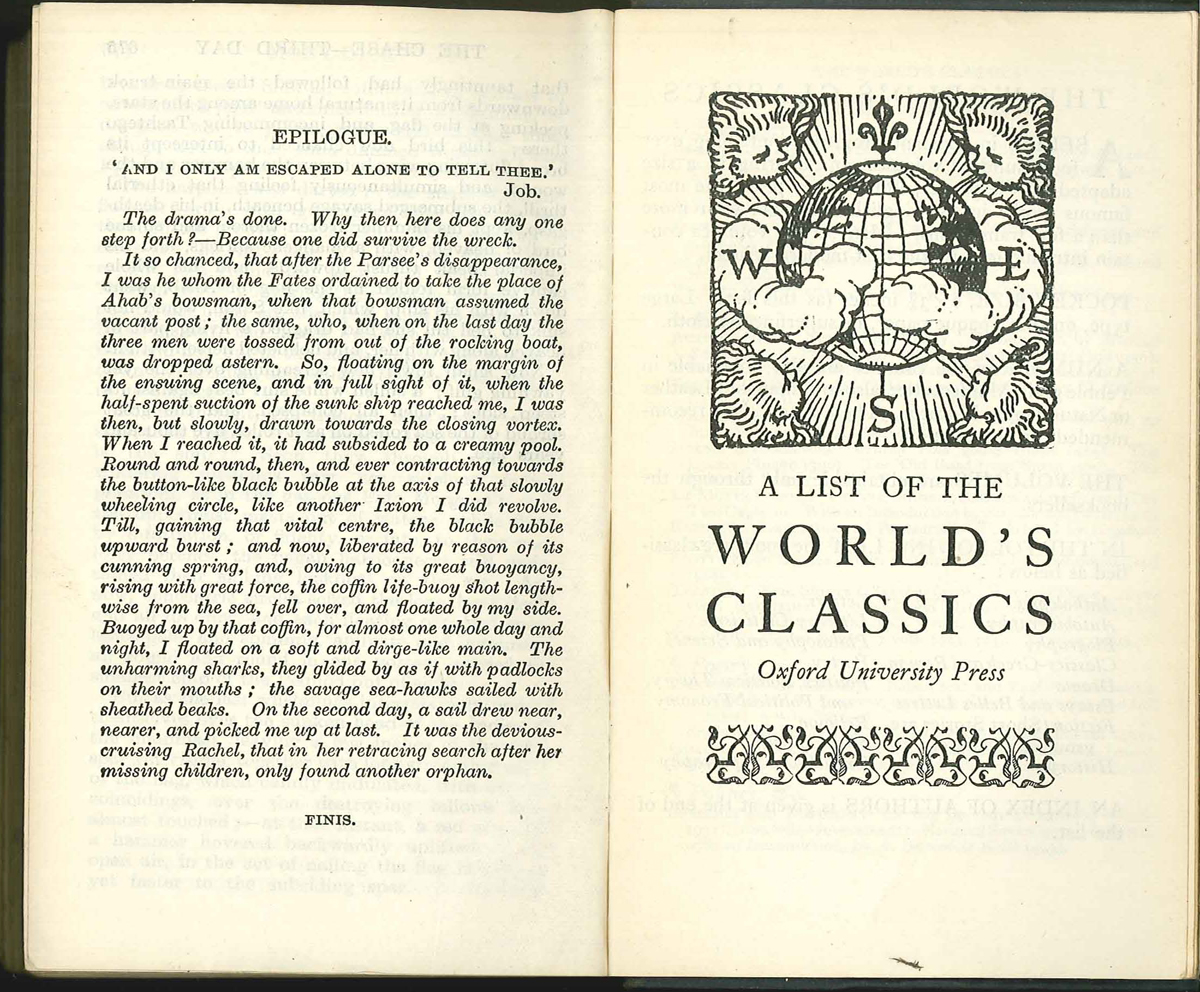
An epilogue or epilog (from Greek ἐπίλογος epílogos, "conclusion" from ἐπί epi, "in addition" and λόγος logos, "word") is a piece of writing at the end of a work of literature, usually used to bring closure to the work. It is presented from the perspective of within the story. When the author steps in and speaks directly to the reader, that is more properly considered an afterword. The opposite is a prologue—a piece of writing at the beginning of a work of literature or drama, usually used to open the story and capture interest. Some genres, for example television programs and video games, call the epilogue an "outro" patterned on the use of "intro" for "introduction".
Epilogues are usually set in the future, after the main story is completed. Within some genres it can be used to hint at the next installment in a series of work. It is also used to satisfy the reader's curiosity and to cover any loose ends of the story.
The first known use of the word epilogue was in the 15th century and it was used as a concluding section for literary work.
In Middle English and Middle French the term "epilogue" was used. In Latin they used epilogus, from Greek epilogos, and then epilegein.
The first citation of the word epilogue in the Oxford English Dictionary is from 1564: "Now at length you are come to the Epilogue (as it were) or full conclusion of your worke." Prior to this the OED only refers to Caxton's term ‘Epylogacion’ in 1474, ‘The Epylogacion and recapitulation of this book’. However, this term was not widely followed and instead ‘conclusion’ was the term used to introduce final words of a text. The first example of a dramatic epilogue in print is John Phillip's The Play of Patient and Meek Grissell (1569). Although in non-dramatic publications, the word does appear prior to this such as in Turbervile's Epitaphs (1566).
The word epilogue could be adopted to describe the end of speeches within medieval plays, but at the time this was primarily used to hint at the connection to later works. Most Greek plays would end with lines from the Chorus, which was different to the epilogues of early modern playwrights as well as Ancient Roman plays.
American Author Henry James has said the epilogue is a place that distributes last "prizes, pensions, husbands, wives, babies, millions, appended paragraphs and cheerful remarks." The word epilogue has also been described as a "Parthian Dart" by Pat Rogers. He said it has the potential to be excessive for some readers as it has a "shift in tense, and a jump in tempo-an accelerando" which quickly changes to a "loosening of the temporal screw, enabling us to move rapidly ahead over a period of years". Epilogues also consisted of traditional "topoi" which was a metaphor introduced by Aristotle, to symbolise writers creating arguments in their story.
An epilogue is the final chapter at the end of a story that often serves to reveal the fates of the characters. Some epilogues may feature scenes only tangentially related to the subject of the story. They can be used to hint at a sequel or wrap up all the loose ends. They can occur at a significant period of time after the main plot has ended. In some cases, the epilogue is used to allow the main character a chance to "speak freely".
Hub AI
Epilogue AI simulator
(@Epilogue_simulator)
Epilogue
An epilogue or epilog (from Greek ἐπίλογος epílogos, "conclusion" from ἐπί epi, "in addition" and λόγος logos, "word") is a piece of writing at the end of a work of literature, usually used to bring closure to the work. It is presented from the perspective of within the story. When the author steps in and speaks directly to the reader, that is more properly considered an afterword. The opposite is a prologue—a piece of writing at the beginning of a work of literature or drama, usually used to open the story and capture interest. Some genres, for example television programs and video games, call the epilogue an "outro" patterned on the use of "intro" for "introduction".
Epilogues are usually set in the future, after the main story is completed. Within some genres it can be used to hint at the next installment in a series of work. It is also used to satisfy the reader's curiosity and to cover any loose ends of the story.
The first known use of the word epilogue was in the 15th century and it was used as a concluding section for literary work.
In Middle English and Middle French the term "epilogue" was used. In Latin they used epilogus, from Greek epilogos, and then epilegein.
The first citation of the word epilogue in the Oxford English Dictionary is from 1564: "Now at length you are come to the Epilogue (as it were) or full conclusion of your worke." Prior to this the OED only refers to Caxton's term ‘Epylogacion’ in 1474, ‘The Epylogacion and recapitulation of this book’. However, this term was not widely followed and instead ‘conclusion’ was the term used to introduce final words of a text. The first example of a dramatic epilogue in print is John Phillip's The Play of Patient and Meek Grissell (1569). Although in non-dramatic publications, the word does appear prior to this such as in Turbervile's Epitaphs (1566).
The word epilogue could be adopted to describe the end of speeches within medieval plays, but at the time this was primarily used to hint at the connection to later works. Most Greek plays would end with lines from the Chorus, which was different to the epilogues of early modern playwrights as well as Ancient Roman plays.
American Author Henry James has said the epilogue is a place that distributes last "prizes, pensions, husbands, wives, babies, millions, appended paragraphs and cheerful remarks." The word epilogue has also been described as a "Parthian Dart" by Pat Rogers. He said it has the potential to be excessive for some readers as it has a "shift in tense, and a jump in tempo-an accelerando" which quickly changes to a "loosening of the temporal screw, enabling us to move rapidly ahead over a period of years". Epilogues also consisted of traditional "topoi" which was a metaphor introduced by Aristotle, to symbolise writers creating arguments in their story.
An epilogue is the final chapter at the end of a story that often serves to reveal the fates of the characters. Some epilogues may feature scenes only tangentially related to the subject of the story. They can be used to hint at a sequel or wrap up all the loose ends. They can occur at a significant period of time after the main plot has ended. In some cases, the epilogue is used to allow the main character a chance to "speak freely".
Recent media