

Eric Oram
View on Wikipedia
Eric Anthony Oram (born October 13, 1968) is an American Wing Chun Kung Fu practitioner and fight choreographer who introduced a new way of filming fight scenes in the film Sherlock Holmes: A Game of Shadows in which the actors fought with real strikes and attacks, which were then featured in slow motion at 500 frames per second in the final movie.[4] He has trained well known actors in Wing Chun such as Christian Bale[1][5] for Batman Begins,[2] Jake Gyllenhaal,[2] and in particular Robert Downey Jr. in Iron Man and Sherlock Holmes as his personal on-set consultant in numerous movies.[6] Oram has been credited for training Downey in Kung Fu since 2003[7] as a way to beat his drug addictions.[8] He wrote a moving letter to judge and California Governor Jerry Brown in support of Downey's pardon.[3]
Key Information


Background
[edit]Oram is one of the leading authorities on Wing Chun[9] kung fu. In 1980 his father Richard sent him to train under William Cheung,[10] the grandmaster of the Traditional Wing Chun lineage, who is a disciple of Ip Man.[11] He started teaching at the age of 16, and over the last 25 years he taught Wing Chun to law enforcement, professional athletes, celebrities, and the general public. He has been a fight choreographer and stuntman for major Hollywood movies for Warner Bros. Pictures and Marvel Studios.
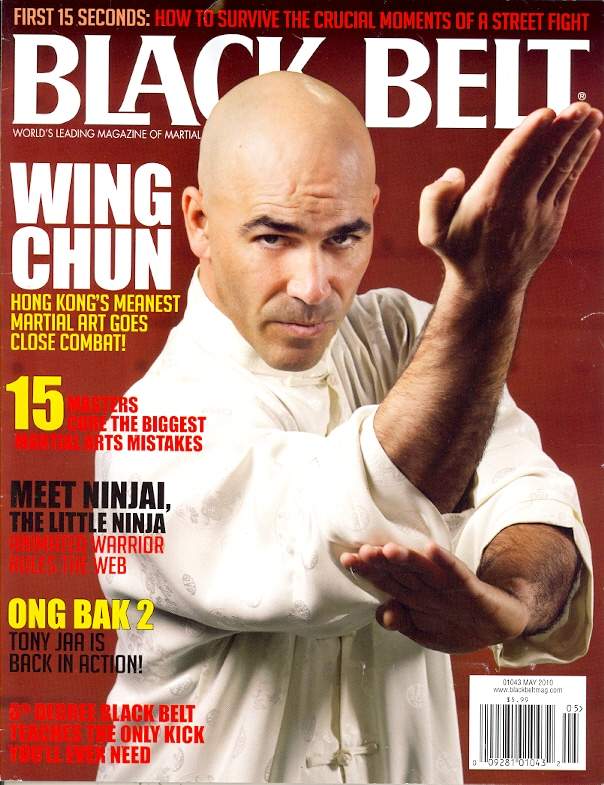
Oram has written numerous articles, and has been featured in, Wing Chun Illustrated, American Health and Fitness, Black Belt Magazine, Inside Kung Fu Magazine, the Los Angeles Times, Men's Journal, Sports Illustrated, and Vanity Fair.[12]
He has appeared on the Oprah Winfrey Show[13] alongside student Robert Downey Jr., whom he has been training since 2003.[14] Oram has been instrumental[15] in helping Downey[16] overcome his drug addictions[3] through Kung Fu training, He then became Downey's personal fight consultant on over a dozen films.[6] Oram has stated in multiple interviews that the most dedicated student he has ever trained is Downey.[17]
Oram also trained Christian Bale[18] in preparation for the Batman Begins trilogy,[11] for which The Dark Knight won the 15th Screen Actors Guild Award for Outstanding Performance by a Stunt Ensemble in a Motion Picture in 2008.
-
 Eric Oram with Kung Fu brothers Brian Laroda and Don Schouten

Career highlights
[edit]Sherlock Holmes: A Game of Shadows
[edit]The fight choreography for Sherlock Holmes: A Game of Shadows was different from how it was traditionally done for other movies, and was met with resistance from the production side of the film. The production team felt the fighting was too fast and direct, and they could not see what was being filmed. When the footage was played at 500 frames per second, it was realised that instead of making the movements larger, they could do the opposite. The stuntman was throwing real punches at Downey and he was defending himself, which worked well on film due to the slow motion scenes in the final cut.[4]
Oram was featured in a video from Warner Bros. Home Entertainment's Stunt Schooled series, which went over a sequence that Holmes used in the film. A fan was chosen to learn the Wing Chun moves which Holmes used to take down assailants in a reenactment.[19]
Call of Duty: Advanced Warfare
[edit]Oram worked with a team of 17 motion capture actors and stunt performers[20] in the video game Call of Duty: Advanced Warfare, released in 2014 The game received multiple awards and nominations.[21]
Captain America: Civil War
[edit]Oram coordinated the combat scenes between Iron Man and Captain America in the movie Captain America: Civil War, in which Iron Man and Captain America enter into a conflict philosophically and physically. The fighting strategy Oram adopted for Iron Man was of "minimum force" necessary to win the fight. His goal was to make it look like Iron Man was not trying to kill or be overcome with anger, which would lead to a lack of control.[22][23] The movie was nominated for the Screen Actors Guild Award for Outstanding Performance by a Stunt Ensemble in a Motion Picture
Filmography
[edit]| Year | Title | Role | Type |
|---|---|---|---|
| 1999-2000 | Kiss Toledo Goodbye | Actor | TV show[24] |
| 2009 | Sherlock Holmes | Fight consultant | Movie[24] |
| 2010 | Iron Man 2 | Fight consultant | Movie[24] |
| 2011 | Sherlock Holmes: A Game of Shadows | Fight consultant | Movie[24] |
| 2013 | House of Lies | Actor | TV show[24] |
| 2013 | Iron Man 3 | Fight choreographer (stunts), Reluctant AIM Guard (actor) | Movie[24] |
| 2014 | Call of Duty: Advanced Warfare | Motion capture actor and stunt performer | Video Game[20] |
| 2015 | Chloe & Theo | Sancho (actor) | Movie[24] |
| 2015 | Avengers: Age of Ultron | Fight choreographer (for Robert Downey Jr.; stunts) | Movie[24] |
| 2016 | Captain America: Civil War | Fight choreographer (for Robert Downey Jr.; stunts) | Movie[24] |
| 2016 | Warner Bros: Stunt Schooled | Actor | Series[19] |
Bibliography
[edit]- Oram, Eric (2011). Modern Wing Chun Kung Fu: A Guide to Practical Combat and Self-Defense. Black Belt Communications, Incorporated. ISBN 9780897502030[12]
References
[edit]- ^ a b Goldsmith, Brian (April 6, 2012). "50 Celebrities Who Train a Form of Martial Arts". Bleacher Report. No. online. Bleacher Report. Retrieved January 7, 2017.
- ^ a b c d Steinberg, Don (November 25, 2011). "Hollywood's New Kick". The Wall Street Journal. No. online. Copyright ©2017 Dow Jones & Company. Retrieved January 7, 2017.
- ^ a b c "ROBERT DOWNEY JR. Martial Arts Master Says KUNG FU A KEY TO SOBRIETY". TMZ. No. online. © 2016 EHM PRODUCTIONS, INC. HPMG NEWS. December 25, 2016. Retrieved December 26, 2016.
- ^ a b Lilleor, Eric (2012). "Eric Oram The Man Behind The Iron Mask". Wing Chun Illustrated. No. Print Issue No. 6, 2012. Mui Fa Publishing Ltd. Retrieved January 9, 2017.
- ^ "THE ULTIMATE LIST: CELEBRITY BLACK BELTS & MARTIAL ARTISTS". martialartsactionmovies.com. April 9, 2015. Retrieved January 7, 2017.
- ^ a b King, Garry (September 30, 2016). "Celebrity Martial Artists – Kung Fu Edition". Last Fighter Standing. No. Online. Last Fighter Standing. Retrieved January 9, 2017.
- ^ Kurchak, Sarah (February 8, 2016). "How Wing Chun helped Robert Downey Jr. battle addiction". Fightland Vice media. No. online. Vice Media Inc. Retrieved December 26, 2016.
- ^ Priyadarshi, Mohit (December 25, 2015). "ROBERT DOWNEY JR. BEAT DRUG ADDICTION WITH KUNG FU". The Inquisitr News. No. online. THE INQUISITR NEWS. Retrieved December 26, 2016.
- ^ Maddison, Paddy (March 1, 2017). "How Robert Downey Jr Stopped Taking Drugs and Started Kicking Ass". The Lad Bible. No. Online. TheLADbible Group Ltd 2015. Retrieved March 2, 2017.
- ^ Oram, Eric (May 2010). "Critical distance". Black Belt Magazine. No. Print Issue cover story. Active Interest Media. Retrieved January 23, 2017.
- ^ a b "Kung Fu Masters and Celebrity Students". Gamer Guide to Kung Fu. No. Online. Mark Media Corp. June 24, 2015. Archived from the original on January 8, 2017. Retrieved January 7, 2017.
- ^ a b Oram, Eric (December 1, 2011). Modern Wing Chun Kung Fu: A Guide to Practical Combat and Self-Defense. Black Belt Communications Inc. ISBN 9780897502030. Retrieved January 9, 2017.
- ^ Oprah, Winfrey. "The Comeback Kid". oprah.com. HARPO PRODUCTIONS, INC. Archived from the original on February 12, 2016. Retrieved February 12, 2017.
- ^ Dehority, Sam (August 2012). "HOLMES IMPROVEMENT". Men's Fitness Magazine. No. online and print. Odysseus Publishing. Archived from the original on February 3, 2017. Retrieved December 26, 2016.
- ^ Palmquist, Chris (December 30, 2015). "Downey attributes Wing Chun training for overcoming drug addiction". Official MMA Database. No. Online. the Mixed Martial Arts llc. Retrieved January 9, 2017.
- ^ Rodrick, Stephen (October 17, 2012). "Robert Downey Jr.'s Cosmic Punishment". Men's journal. No. online. Men's Journal. Archived from the original on June 30, 2016. Retrieved December 26, 2016.
- ^ Barna, Maxwell (2015). "8 Celebrities You Didn't Know Could Kick Your Ass". Cool Material. No. Online. DARTBOARD MEDIA, LLC. Retrieved January 9, 2017.
- ^ Thomas, Melissa (April 1, 2016). "Kicking A** Off Screen: 16 Actors You (Probably) Didn't Know Trained In Martial Arts". Movie Pilot. No. Online. Creators Media, Inc. Archived from the original on December 4, 2016. Retrieved January 9, 2017.
- ^ a b Stephenson, K.L. (October 12, 2016). "Sherlock Holmes' wing chun stunts reenacted by fan". Official MMA Database. No. Online. the Mixed Martial Arts llc. Retrieved January 7, 2017.
- ^ a b "Call of Duty: Advanced Warfare Credits" (PDF). callofduty. Crye Precision. Retrieved March 2, 2017.
- ^ "Best Graphics - Technology". au.ign.com. Ziff Davis. Retrieved March 2, 2017.
- ^ Burlingame, Russ (March 10, 2015). "Robert Downey Jr.'s Fight Coordinator Eric Oram On The Unique Challenges of Captain America: Civil War". ComicBook.com. No. online. Copyright 2015-2016 ComicBook.com. Archived from the original on June 21, 2017. Retrieved December 26, 2016.
- ^ "Captain America Civil War Red carpet London Premiere". London film premieres. No. online. March 10, 2015. Archived from the original on April 16, 2016. Retrieved April 26, 2016.
- ^ a b c d e f g h i "Eric Oram Filmography". Hollywood.com. Retrieved December 26, 2016.
Eric Oram
View on GrokipediaEarly life and background
Childhood and introduction to martial arts
Eric Oram was born in Las Vegas, Nevada, where he grew up in the west Las Vegas valley.[5] During his school years, he experienced bullying, which left him frustrated and seeking effective self-defense options.[4] At age 10, Oram approached his father about the ongoing bully situation, prompting a pivotal discussion on protection.[4] His father, himself a martial artist and competitive shooter, researched various self-defense systems and chose Wing Chun for Oram due to its focus on efficiency, close-range combat, and practicality—qualities deemed ideal for a child facing real-world threats without requiring brute strength.[4] Following this, at age 11, Oram began training in Ed Parker's Kenpo Karate in Las Vegas.[6] This decision introduced Oram to Wing Chun through initial informal training sessions with his father, emphasizing basic principles of balance, economy of motion, and direct counterattacks to build confidence and personal growth.[4] These early experiences fostered Oram's passion for martial arts as a tool for empowerment, setting the stage for more structured apprenticeship a few years later under Grandmaster William Cheung.[4]Formal training under William Cheung
Eric Oram commenced his formal apprenticeship in Traditional Wing Chun Kung Fu in 1980 at the age of 12, when his father enrolled him as a personal student of Grandmaster William Cheung.[7] Cheung, a direct disciple of Ip Man and recognized as Bruce Lee's primary Wing Chun instructor during their youth in Hong Kong, provided Oram with an authentic transmission of the art's core principles and techniques.[8] This structured training marked a pivotal shift from Oram's earlier informal exposure to martial arts, immersing him in a disciplined regimen that emphasized centerline theory, economy of motion, and simultaneous attack and defense. Over the subsequent decades, Oram's dedication to Cheung's lineage resulted in more than 40 years of uninterrupted practice by 2025, culminating in his elevation to senior disciple status within the Traditional Wing Chun system.[1] This extended apprenticeship involved intensive daily drills, wooden dummy forms, and partner sparring sessions tailored to real-world self-defense scenarios, fostering Oram's technical proficiency and philosophical depth. Key milestones during this period included Oram beginning to assist in teaching at age 16 in 1984, where he supported Cheung's classes in New York City and began imparting foundational skills to junior students.[9] By his late teens, Oram had emerged as a recognized master, certified to independently propagate the art after demonstrating mastery of its advanced forms and applications. This recognition solidified his role as a key figure in preserving Cheung's interpretation of Wing Chun, which prioritizes practical efficacy in close-quarters combat. The influence of Bruce Lee's lineage through Cheung shaped Oram's core philosophy, stressing the art's utility for personal protection and conflict resolution over competitive sport, a perspective that guided his lifelong commitment to authentic, functional martial arts training.[6]Martial arts expertise and teaching
Development as a Wing Chun practitioner
Eric Oram has accumulated over 45 years of experience in the martial arts, with more than 40 years dedicated specifically to Wing Chun, evolving his practice from foundational training into a deeply refined expertise focused on practical application.[10][11] His development emphasizes the core principles of Traditional Wing Chun, particularly the centerline theory, which posits an imaginary vertical line dividing the body as the most direct path for attack and defense, allowing practitioners to control the opponent's actions efficiently in confined spaces.[12] This approach prioritizes close-quarters combat techniques, such as trapping hands and simultaneous attack-defense movements, tailored for real-world self-defense scenarios without modifications for competitive sports.[10][13] Oram's personal adaptations highlight the emotional and mental dimensions of Wing Chun, viewing the art not only as a physical discipline but as a means to cultivate inner balance, resilience, and clarity under pressure.[10] He integrates these elements to address modern self-defense needs, stressing economy of motion and adaptability to ensure effectiveness against varied threats, drawing from the system's roots in efficiency and directness.[12] This philosophical depth underscores his commitment to preserving the art's integrity, recognizing its benefits in enhancing mental fortitude alongside physical prowess. As a senior disciple of Grandmaster William Cheung, Oram holds the title of Si-Fu and is regarded as one of the world's leading authorities on Traditional Wing Chun, contributing significantly to the preservation of Bruce Lee's martial lineage through Cheung's direct teachings.[14][10][4] His ongoing practice and demonstrations, including collaborations on instructional materials, reinforce Wing Chun's relevance for authentic self-protection, maintaining its unaltered form for street-level confrontations.[13]Teaching career and notable students
Oram began teaching Wing Chun in 1985 at the age of 17, initially focusing on instruction for the general public as a direct disciple of Grandmaster William Cheung. Over the decades, he expanded his instructional reach to encompass a variety of formats, including in-person classes at his academy in Santa Monica, California; online training programs; international seminars; and appearances on podcasts to disseminate Wing Chun principles.[10][1] His students span diverse fields, including Hollywood actors such as Christian Bale, whom Oram trained for the role in Batman Begins (2005); Jake Gyllenhaal; and Orlando Bloom. Oram has also instructed law enforcement personnel from agencies like the FBI, Delta Force, and Navy SEALs, as well as professional athletes from NFL teams including the San Francisco 49ers, Seattle Seahawks, and Arizona Cardinals. These trainings emphasize practical self-defense applications tailored to each group's needs.[10] A particularly influential student was Robert Downey Jr., whom Oram trained starting in 2003 for films including Iron Man (2008) and the Sherlock Holmes series. Downey has publicly credited Oram's Wing Chun guidance with providing the discipline necessary for his recovery from addiction, stating that the practice helped him maintain sobriety and rebuild his life. Oram highlights Wing Chun's broader benefits, such as fostering discipline, respect, and humility, which have supported students in overcoming personal challenges like addiction.[15][10]Entry into film industry
Initial stunt and choreography work
Oram transitioned from his role as a Wing Chun instructor in Las Vegas to the film industry in the early 2000s, drawing on his extensive martial arts background to secure opportunities in stunt performance and actor training.[4] His debut in Hollywood came with Batman Begins (2005), where he trained lead actor Christian Bale in Wing Chun techniques to prepare for the film's action sequences.[16] This marked his initial work, leveraging his practical expertise in close-quarters combat for authentic on-screen movement.[1] Oram continued building his stunt portfolio with Sherlock Holmes (2009), serving as a utility stunts performer and additional crew member, which highlighted his growing role in coordinating dynamic action.[17] He served as a fight consultant on Iron Man (2008) and Iron Man 2 (2010), where he advised on combat sequences to ensure realistic and efficient execution.[18] Entering the stunt-heavy Hollywood landscape presented challenges for Oram, including establishing credibility among established coordinators and adapting his teaching-honed precision to the repetitive, high-risk demands of film production. By 2025, he had accumulated over 30 years of experience as a stuntman and choreographer, solidifying his position in the industry.[1]Collaboration with Robert Downey Jr.
Eric Oram's professional relationship with Robert Downey Jr. began in 2003 when Downey, seeking a disciplined outlet amid his struggles with addiction, approached Oram at the Los Angeles Wing Chun Academy for private lessons. Oram, initially skeptical due to Downey's reputation and the reluctance of film insurers to bond him for roles, agreed only after Downey demonstrated commitment through consistent attendance, with producers intervening to affirm his seriousness. This training regimen, rooted in Wing Chun principles of focus and economy of motion, quickly became a cornerstone of Downey's personal recovery, with Oram noting that it transformed Downey's scattered mindset into a "laser" of concentration. By 2006, their partnership extended to film preparation, as Oram tailored Wing Chun techniques for Downey's portrayal of Tony Stark in Iron Man (2008), incorporating the art's centerline defense and rapid strikes into the character's combat style.[15] The collaboration evolved into a deep mentorship, with Oram serving as Downey's on-set consultant and personal trainer during a period when Wing Chun provided Downey the structure to maintain sobriety and rebuild his career. In a 2015 letter supporting Downey's presidential pardon application, Oram detailed how their sessions since 2003 had instilled discipline and resilience, crediting the practice for Downey's ability to channel energy productively and avoid relapse. Downey himself has repeatedly acknowledged this influence, describing Wing Chun as a spiritual anchor that grounded him during recovery and enhanced his focus for demanding roles. This bond not only sustained their training but positioned Oram as an integral advisor, fostering Downey's lifelong dedication to the art, which he tested for his medium blue sash under Oram.[19][15] Their joint work expanded to the Sherlock Holmes franchise, where Oram served as fight choreographer specifically for Downey's performance in both Sherlock Holmes (2009) and Sherlock Holmes: A Game of Shadows (2011), adapting Wing Chun to depict Holmes' analytical and precise fighting style. The films employed innovative high-speed filming techniques using cameras like the Phantom to capture slow-motion sequences at up to 500 frames per second, allowing audiences to dissect the intricate movements and full-contact impacts in real time, a method that enhanced the films' visual storytelling of combat dynamics. This approach marked a departure from traditional choreography, emphasizing Wing Chun's efficiency by slowing down the action to reveal strategic decision-making, and Oram coordinated dual techniques for standard and high-speed shots to ensure seamless integration. Downey's insistence on incorporating authentic Wing Chun elements further solidified Oram's role, blending their personal rapport with professional innovation.[3][4][20] Downey has publicly lauded Oram as his sifu and mentor, most notably through the foreword he wrote for Oram's book Modern Wing Chun Kung Fu: A Guide to Practical Combat and Self-Defense (2011), where he praised the work as a "design for living" that applies Wing Chun's principles to self-defense, relationships, and overcoming adversity. In the updated edition, Downey reiterated its transformative impact, calling it an invitation to apprenticeship that fosters growth on and off the mat. Oram has credited Downey's endorsements for elevating Wing Chun's visibility, with Downey highlighting in interviews how the training turned his life around by providing tools for focus and balance. These affirmations underscore the mutual respect in their decades-long association.[21][22][4] The partnership's ongoing influence is evident in Downey's recommendations, which secured Oram's contracts with major studios, including Warner Bros. for the Sherlock Holmes series and Marvel Studios for subsequent projects like Iron Man 3 (2013) and Avengers: Age of Ultron (2015), where Oram continued as Downey's dedicated fight choreographer. Downey ensured Oram's presence on set for these productions, leveraging their established trust to integrate Wing Chun authenticity into high-profile action sequences. This advocacy not only propelled Oram's career in Hollywood but also perpetuated Wing Chun's role in shaping Downey's iconic performances across franchises.[4][3]Major career highlights
Sherlock Holmes films
Eric Oram served as the fight consultant on the 2009 film Sherlock Holmes, directed by Guy Ritchie, where he contributed to the development of the action sequences alongside lead choreographer Richard Ryan.[23] Drawing from his expertise in Wing Chun Kung Fu, Oram helped tailor Robert Downey Jr.'s portrayal of Sherlock Holmes by incorporating martial arts principles that emphasized precision and efficiency in combat.[23] In the sequel Sherlock Holmes: A Game of Shadows (2011), Oram advanced to the role of fight choreographer, particularly for additional photography in London, where he designed key fight scenes that integrated Wing Chun techniques with Victorian-era combat styles such as bartitsu and bare-knuckle boxing.[1] This blend created a distinctive fighting style for Holmes, reflecting the character's intellectual deduction through calculated, close-quarters strikes and defensive maneuvers adapted to the period's weaponry and environments.[23] Oram pioneered an innovative filming technique for these sequences, utilizing high-speed cameras like the Phantom to capture movements at 500 frames per second, allowing intricate Wing Chun motions to be presented in slow motion without post-production speedup, which enhanced the realism and visual impact of the action.[5] This approach, first prominently applied in the 2011 film, marked a departure from traditional methods and influenced subsequent action choreography by prioritizing authentic speed and detail in live performances.[5] The fight scenes received praise for their realism and the innovative depiction of Downey Jr.'s Holmes as a agile, strategically minded combatant, with collaborators crediting Oram's Wing Chun input for grounding the sequences in believable martial dynamics rather than exaggerated Hollywood tropes.[23] This work contributed to the films' reputation for elevating historical action cinema, earning Oram recognition within the industry for bridging traditional martial arts with cinematic storytelling.[4]Marvel Cinematic Universe contributions
Eric Oram served as the fight consultant for Iron Man 2 (2010), where he advised on the martial arts sequences to ensure realistic combat dynamics for the superhero action.[5] His expertise helped shape the film's hand-to-hand confrontations, drawing from his Wing Chun background to inform Tony Stark's defensive maneuvers.[15] In Iron Man 3 (2013), Oram contributed to the fight choreography, particularly tailoring sequences for Robert Downey Jr.'s portrayal of Tony Stark, while also performing as the actor portraying the Reluctant AIM Guard.[24][3] His work emphasized efficient, close-quarters combat inspired by Wing Chun principles, enhancing the authenticity of Stark's unarmored fights against Extremis soldiers.[15] Oram contributed stunts to several subsequent MCU ensemble films, including Avengers: Age of Ultron (2015), Captain America: Civil War (2016), and Avengers: Infinity War (2018).[3] In these projects, he performed utility stunts and influenced choreography for large-scale battle scenes, integrating Wing Chun techniques to add precision and realism to character movements amid chaotic group dynamics.[15] Over these five major films, Oram's involvement solidified his reputation as a key collaborator with Marvel Studios, bridging traditional martial arts with high-stakes cinematic action.[25]Video game motion capture
Eric Oram contributed to video game development by performing motion capture for combat sequences in the Call of Duty franchise. He worked as a motion capture actor and stunt performer on Call of Duty: Advanced Warfare (2014), capturing realistic movements for the game's action-oriented gameplay alongside a team of 16 other performers.[26][27][5] In this capacity, Oram helped translate physical martial arts techniques into digital animations, supporting the title's innovative exoskeleton suit mechanics and fast-paced first-person shooter elements.[3] Oram continued his involvement in the series with stunt performance duties for Call of Duty: WWII (2017), where he provided motion data for historical battle scenes set during World War II. Through these projects, Oram's motion capture work bridged his background in live-action stunts—such as those in the Marvel Cinematic Universe—with the demands of interactive digital media, allowing for more dynamic and believable virtual combat.[3]Complete filmography
Film credits
| Year | Title | Role |
|---|---|---|
| 2005 | Batman Begins | Wing Chun trainer/stunts |
| 2009 | Sherlock Holmes | Stunts |
| 2010 | Iron Man 2 | Fight consultant |
| 2011 | Sherlock Holmes: A Game of Shadows | Fight choreographer |
| 2013 | Iron Man 3 | Fight choreographer/actor (Reluctant AIM Guard)[28] |
| 2015 | Avengers: Age of Ultron | Stunts |
| 2016 | Captain America: Civil War | Stunts |
| 2018 | Avengers: Infinity War | Stunts |