
Recent from talks
Sherlock Holmes
Knowledge base stats:
Talk channels stats:
Members stats:
Sherlock Holmes
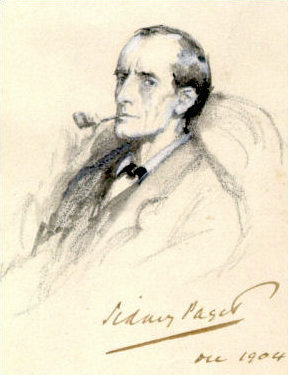
Sherlock Holmes (/ˈʃɜːrlɒk ˈhoʊmz/) is a fictional detective created by British author Arthur Conan Doyle. Referring to himself as a "consulting detective" in his stories, Holmes is known for his proficiency with observation, deduction, forensic science and logical reasoning that borders on the fantastic, which he employs when investigating cases for a wide variety of clients, including Scotland Yard.
The character Sherlock Holmes first appeared in print in 1887's A Study in Scarlet. His popularity became widespread with the first series of short stories in The Strand Magazine, beginning with "A Scandal in Bohemia" in 1891; additional tales appeared from then until 1927, eventually totalling four novels and 56 short stories. All but one are set in the Victorian or Edwardian eras between 1880 and 1914. Most are narrated by the character of Holmes's friend and biographer, Dr. John H. Watson, who usually accompanies Holmes during his investigations and often shares quarters with him at the address of 221B Baker Street, London, where many of the stories begin.
Though not the first fictional detective, Sherlock Holmes is arguably the best known. By the 1990s, over 25,000 stage adaptations, films, television productions, and publications had featured the detective, and Guinness World Records lists him as the most portrayed human literary character in film and television history. Holmes's popularity and fame are such that many have believed him to be not a fictional character but an actual person; many literary and fan societies have been founded on this pretence. Avid readers of the Holmes stories helped create the modern practice of fandom, with the Sherlock Holmes fandom being one of the first cohesive fan communities in the world. The character and stories have had a profound and lasting effect on mystery writing and popular culture as a whole, with the original tales, as well as thousands written by authors other than Conan Doyle, being adapted into stage and radio plays, television, films, video games, and other media for over one hundred years.
Edgar Allan Poe's C. Auguste Dupin is generally acknowledged as the forerunner of the modern detective story in English fiction and served as the prototype for many later characters, including Holmes. Conan Doyle once wrote, "Each [of Poe's detective stories] is a root from which a whole literature has developed ... Where was the detective story until Poe breathed the breath of life into it?" Similarly, the stories of Émile Gaboriau's Monsieur Lecoq were extremely popular at the time Conan Doyle began writing Holmes, and Holmes's speech and behaviour sometimes follow those of Lecoq. Doyle has his main characters discuss these literary antecedents near the beginning of A Study in Scarlet, which is set soon after Watson is first introduced to Holmes. Watson attempts to compliment Holmes by comparing him to Dupin, to which Holmes replies that he found Dupin to be "a very inferior fellow" and Lecoq to be "a miserable bungler".
Conan Doyle repeatedly said that Holmes was inspired by the real-life figure of Joseph Bell, a surgeon at the Royal Infirmary of Edinburgh, whom Conan Doyle met in 1877 and had worked for as a clerk. Like Holmes, Bell was noted for drawing broad conclusions from minute observations. Bell wrote an introduction for a later edition of A Study in Scarlet. Bell also dismissed the idea that he was the character's inspiration, writing to Doyle, "You are yourself Sherlock Holmes and well you know it". Sir Henry Littlejohn, Chair of Medical Jurisprudence at the University of Edinburgh Medical School, is also cited as an inspiration for Holmes. Littlejohn, who was also Police Surgeon and Medical Officer of Health in Edinburgh, provided Conan Doyle with a link between medical investigation and the detection of crime.
Other possible inspirations have been proposed, though never acknowledged by Doyle, such as Maximilien Heller, by French author Henry Cauvain. In this 1871 novel (sixteen years before the first appearance of Sherlock Holmes), Henry Cauvain imagined a depressed, anti-social, opium-smoking polymath detective, operating in Paris. It is not known if Conan Doyle read the novel, but he was fluent in French.
Details of Sherlock Holmes' life in Conan Doyle's stories are scarce and often vague. Nevertheless, mentions of his early life and extended family paint a loose biographical picture of the detective.
A statement of Holmes' age in "His Last Bow" places his year of birth at 1853–1854; the story, set in August 1914, describes him as sixty years of age. His parents are not mentioned, although Holmes mentions that his "ancestors" were "country squires". In "The Adventure of the Greek Interpreter", he claims that his grandmother was sister to the French artist Vernet, without clarifying whether this was Claude Joseph, Carle, or Horace Vernet. Holmes' brother Mycroft, seven years his senior, is a government official. Mycroft has a unique civil service position as a kind of human database for all aspects of government policy. Sherlock describes his brother as the more intelligent of the two, but notes that Mycroft lacks any interest in physical investigation, preferring to spend his time at the Diogenes Club.
Hub AI
Sherlock Holmes AI simulator
(@Sherlock Holmes_simulator)
Sherlock Holmes
Sherlock Holmes (/ˈʃɜːrlɒk ˈhoʊmz/) is a fictional detective created by British author Arthur Conan Doyle. Referring to himself as a "consulting detective" in his stories, Holmes is known for his proficiency with observation, deduction, forensic science and logical reasoning that borders on the fantastic, which he employs when investigating cases for a wide variety of clients, including Scotland Yard.
The character Sherlock Holmes first appeared in print in 1887's A Study in Scarlet. His popularity became widespread with the first series of short stories in The Strand Magazine, beginning with "A Scandal in Bohemia" in 1891; additional tales appeared from then until 1927, eventually totalling four novels and 56 short stories. All but one are set in the Victorian or Edwardian eras between 1880 and 1914. Most are narrated by the character of Holmes's friend and biographer, Dr. John H. Watson, who usually accompanies Holmes during his investigations and often shares quarters with him at the address of 221B Baker Street, London, where many of the stories begin.
Though not the first fictional detective, Sherlock Holmes is arguably the best known. By the 1990s, over 25,000 stage adaptations, films, television productions, and publications had featured the detective, and Guinness World Records lists him as the most portrayed human literary character in film and television history. Holmes's popularity and fame are such that many have believed him to be not a fictional character but an actual person; many literary and fan societies have been founded on this pretence. Avid readers of the Holmes stories helped create the modern practice of fandom, with the Sherlock Holmes fandom being one of the first cohesive fan communities in the world. The character and stories have had a profound and lasting effect on mystery writing and popular culture as a whole, with the original tales, as well as thousands written by authors other than Conan Doyle, being adapted into stage and radio plays, television, films, video games, and other media for over one hundred years.
Edgar Allan Poe's C. Auguste Dupin is generally acknowledged as the forerunner of the modern detective story in English fiction and served as the prototype for many later characters, including Holmes. Conan Doyle once wrote, "Each [of Poe's detective stories] is a root from which a whole literature has developed ... Where was the detective story until Poe breathed the breath of life into it?" Similarly, the stories of Émile Gaboriau's Monsieur Lecoq were extremely popular at the time Conan Doyle began writing Holmes, and Holmes's speech and behaviour sometimes follow those of Lecoq. Doyle has his main characters discuss these literary antecedents near the beginning of A Study in Scarlet, which is set soon after Watson is first introduced to Holmes. Watson attempts to compliment Holmes by comparing him to Dupin, to which Holmes replies that he found Dupin to be "a very inferior fellow" and Lecoq to be "a miserable bungler".
Conan Doyle repeatedly said that Holmes was inspired by the real-life figure of Joseph Bell, a surgeon at the Royal Infirmary of Edinburgh, whom Conan Doyle met in 1877 and had worked for as a clerk. Like Holmes, Bell was noted for drawing broad conclusions from minute observations. Bell wrote an introduction for a later edition of A Study in Scarlet. Bell also dismissed the idea that he was the character's inspiration, writing to Doyle, "You are yourself Sherlock Holmes and well you know it". Sir Henry Littlejohn, Chair of Medical Jurisprudence at the University of Edinburgh Medical School, is also cited as an inspiration for Holmes. Littlejohn, who was also Police Surgeon and Medical Officer of Health in Edinburgh, provided Conan Doyle with a link between medical investigation and the detection of crime.
Other possible inspirations have been proposed, though never acknowledged by Doyle, such as Maximilien Heller, by French author Henry Cauvain. In this 1871 novel (sixteen years before the first appearance of Sherlock Holmes), Henry Cauvain imagined a depressed, anti-social, opium-smoking polymath detective, operating in Paris. It is not known if Conan Doyle read the novel, but he was fluent in French.
Details of Sherlock Holmes' life in Conan Doyle's stories are scarce and often vague. Nevertheless, mentions of his early life and extended family paint a loose biographical picture of the detective.
A statement of Holmes' age in "His Last Bow" places his year of birth at 1853–1854; the story, set in August 1914, describes him as sixty years of age. His parents are not mentioned, although Holmes mentions that his "ancestors" were "country squires". In "The Adventure of the Greek Interpreter", he claims that his grandmother was sister to the French artist Vernet, without clarifying whether this was Claude Joseph, Carle, or Horace Vernet. Holmes' brother Mycroft, seven years his senior, is a government official. Mycroft has a unique civil service position as a kind of human database for all aspects of government policy. Sherlock describes his brother as the more intelligent of the two, but notes that Mycroft lacks any interest in physical investigation, preferring to spend his time at the Diogenes Club.
Recent media