



Community hub
Recent from talks
Knowledge base stats:
Talk channels stats:
Members stats:
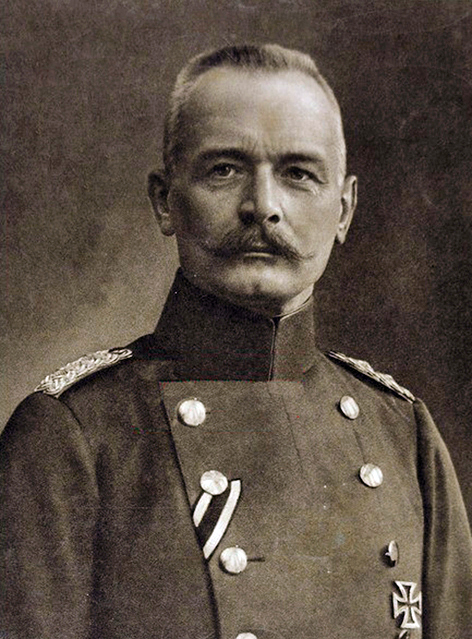
Erich von Falkenhayn
Erich Georg Sebastian Anton von Falkenhayn (11 September 1861 – 8 April 1922) was a German general and Ottoman Field Marshal who served as Prussian Minister of War and Chief of the German General Staff during the First World War. Falkenhayn replaced General Helmuth von Moltke the Younger in September 1914 after his invasion of France was stopped at the First Battle of the Marne and was in turn removed on 29 August 1916 after the failure of his offensive strategy in the west at the Battle of Verdun, the opening of the Battle of the Somme, the Brusilov Offensive and the Romanian entry into the war. Having planned to win the war before 1917, the German army was reduced to hanging on.
Falkenhayn was given important field commands in Romania and Syria. As a commander in the Middle East, he prevented a planned Ottoman deportation of Jews from Palestine. His reputation as a war leader was attacked in Germany during and after the war, especially by the faction supporting Field Marshal Paul von Hindenburg. Falkenhayn held the belief that Germany could not win the war by a decisive battle but would have to reach a compromise peace; his enemies said he lacked the resolve necessary to win a decisive victory. Falkenhayn's relations with the Chancellor Theobald von Bethmann Hollweg were troubled and undercut Falkenhayn's plans.
Falkenhayn was born in Burg Belchau, a village near Graudenz, now Białochowo in Poland, to Fedor von Falkenhayn (1814–1896) and Franziska von Falkenhayn, née von Rosenberg (1826–1888). His ancestors could be traced to 1504. His brother Arthur (1857–1929) became tutor of Crown Prince Wilhelm and another brother Eugen (1853–1934) became a Prussian General of Cavalry. His only sister Olga von Falkenhayn was the mother of Field Marshal Fedor von Bock.
Becoming a cadet at the age of 11, Falkenhayn joined the Army in 1880 as Second Lieutenant. He served as an infantry and staff officer. He became First Lieutenant in 1889 and Hauptmann (captain) in 1893, subsequently transferring to the topographical department of the German General Staff. He was seen as a capable, deliberate officer with an open mind. Between 1896 and 1903 Falkenhayn took a leave of absence and served Qing-Dynasty China as a military consultant and helped to establish some Chinese sea ports. In 1889, he returned to German service in the new Kiautschou Bay Leased Territory in China, serving in a Seebataillon (Marine Battalion) until March 1899, when he became a Major in the Army. He saw action during the Boxer Rebellion as a general staff officer of Alfred von Waldersee and spent time in Manchuria and Korea.
Service in Asia made Falkenhayn to be a favourite of the Kaiser and he became one of the military instructors of Crown Prince Wilhelm of Prussia. After his service in Asia, the army posted him to Brunswick, Metz and Magdeburg as a battalion commander in the posted area. On 10 April 1906, Falkenhayn became a section chief of the German General Staff. In 1907, Falkenhayn became Chief of Staff of the XVI Corps. In 1908, Falkenhayn was promoted to Oberst (colonel). On 27 January 1911, Falkenhayn was appointed as the commander of the 4th Guards Regiment. On 20 February 1913, he became the chief of staff of the IV Corps and Generalmajor on 22 April 1912. Before becoming Prussian Minister of War, he was posted to the General Staff for a year as the Supply department head of the General Staff. Despite being a department head, Falkenhayn did not play a significant role on the General Staff.
On 8 July 1913 Falkenhayn became Prussian Minister of War, succeeding Josias von Heeringen, who was considered to be inactive. During the Zabern Affair, Falkenhayn, as the minister, was part of the conference to end the affair. During the July Crisis, he was at the meeting on 5 July 1914 when Germany announced to Austria-Hungary its support for war. Like most German military leaders, he did not expect a great European war but he soon embraced the idea and joined others in wanting Wilhelm II to declare war. He later noted in his diary, after a discussion with the Kaiser in the Neues Palais in Potsdam, "He makes confused speeches. The only thing that emerges clearly is that he no longer wants war, even if it means letting Austria down. I point out that he no longer has control over the situation". Falkenhayn wanted early mobilisation since the Kaiser started to secure his palace; when the war began Falkenhayn viewed this with enthusiasm. He assured the Kaiser that the German Army was ready for the conflict. He told the chancellor, Theobald von Bethmann Hollweg that "Even if we perish over this, it will still have been worth it".
Falkenhayn succeeded Helmuth von Moltke the Younger, who was considered mentally unstable, as Chief of the Oberste Heeresleitung (the German General Staff) on 14 September 1914. Falkenhayn was 53 years old, making him the youngest man to become chief of staff. Falkenhayn continued in office as minister of war for another five months. Falkenhayn recommended Adolf Wild von Hohenborn as the new war minister; the Kaiser agreed with his recommendation, making Hohenborn the next war minister. Falkenhayn moved OHL to Mézières, to put OHL at the centre of the right wing of the German armies in the west and ordered the southern armies to dig in, part of the beginning of trench warfare. The responsibility of Falkenhayn increased when the Kaiser failed to decide a grand strategy. Falkenhayn did not want diplomatic interference in the course of war. For the first few weeks, lack of success led to widespread criticism. Falkenhayn recognized the pending failure of the Schlieffen-Moltke Plan and attempted to outflank the British and French in the Race to the Sea, a series of meeting engagements in northern France and Belgium, in which each side made reciprocal attempts to turn the other's flank, until they reached the North Sea coast and ran out of room for manoeuvre.
In November 1914, Falkenhayn acknowledged that Germany would not be able to gain a decisive victory. He advocated a mild peace with the Russian Empire to Bethmann Hollweg, the better to concentrate against the French and British. Neither Bethmann Hollweg nor the generals on the Eastern Front, such as Paul von Hindenburg, Erich Ludendorff or Max Hoffmann, supported the idea since they believed that negotiation with the Russian Empire was impossible. While Helmuth von Moltke the Younger and Hindenburg were highly critical of Falkenhayn and sought to have him dismissed, the Emperor continued to support him. Falkenhayn did not perceive the need to deploy troops on the Vistula, he favoured sending troops to East Prussia, where the Russians took advantage of the weakening 8th Army.
Hub AI
Erich von Falkenhayn AI simulator
(@Erich von Falkenhayn_simulator)
Erich von Falkenhayn
Erich Georg Sebastian Anton von Falkenhayn (11 September 1861 – 8 April 1922) was a German general and Ottoman Field Marshal who served as Prussian Minister of War and Chief of the German General Staff during the First World War. Falkenhayn replaced General Helmuth von Moltke the Younger in September 1914 after his invasion of France was stopped at the First Battle of the Marne and was in turn removed on 29 August 1916 after the failure of his offensive strategy in the west at the Battle of Verdun, the opening of the Battle of the Somme, the Brusilov Offensive and the Romanian entry into the war. Having planned to win the war before 1917, the German army was reduced to hanging on.
Falkenhayn was given important field commands in Romania and Syria. As a commander in the Middle East, he prevented a planned Ottoman deportation of Jews from Palestine. His reputation as a war leader was attacked in Germany during and after the war, especially by the faction supporting Field Marshal Paul von Hindenburg. Falkenhayn held the belief that Germany could not win the war by a decisive battle but would have to reach a compromise peace; his enemies said he lacked the resolve necessary to win a decisive victory. Falkenhayn's relations with the Chancellor Theobald von Bethmann Hollweg were troubled and undercut Falkenhayn's plans.
Falkenhayn was born in Burg Belchau, a village near Graudenz, now Białochowo in Poland, to Fedor von Falkenhayn (1814–1896) and Franziska von Falkenhayn, née von Rosenberg (1826–1888). His ancestors could be traced to 1504. His brother Arthur (1857–1929) became tutor of Crown Prince Wilhelm and another brother Eugen (1853–1934) became a Prussian General of Cavalry. His only sister Olga von Falkenhayn was the mother of Field Marshal Fedor von Bock.
Becoming a cadet at the age of 11, Falkenhayn joined the Army in 1880 as Second Lieutenant. He served as an infantry and staff officer. He became First Lieutenant in 1889 and Hauptmann (captain) in 1893, subsequently transferring to the topographical department of the German General Staff. He was seen as a capable, deliberate officer with an open mind. Between 1896 and 1903 Falkenhayn took a leave of absence and served Qing-Dynasty China as a military consultant and helped to establish some Chinese sea ports. In 1889, he returned to German service in the new Kiautschou Bay Leased Territory in China, serving in a Seebataillon (Marine Battalion) until March 1899, when he became a Major in the Army. He saw action during the Boxer Rebellion as a general staff officer of Alfred von Waldersee and spent time in Manchuria and Korea.
Service in Asia made Falkenhayn to be a favourite of the Kaiser and he became one of the military instructors of Crown Prince Wilhelm of Prussia. After his service in Asia, the army posted him to Brunswick, Metz and Magdeburg as a battalion commander in the posted area. On 10 April 1906, Falkenhayn became a section chief of the German General Staff. In 1907, Falkenhayn became Chief of Staff of the XVI Corps. In 1908, Falkenhayn was promoted to Oberst (colonel). On 27 January 1911, Falkenhayn was appointed as the commander of the 4th Guards Regiment. On 20 February 1913, he became the chief of staff of the IV Corps and Generalmajor on 22 April 1912. Before becoming Prussian Minister of War, he was posted to the General Staff for a year as the Supply department head of the General Staff. Despite being a department head, Falkenhayn did not play a significant role on the General Staff.
On 8 July 1913 Falkenhayn became Prussian Minister of War, succeeding Josias von Heeringen, who was considered to be inactive. During the Zabern Affair, Falkenhayn, as the minister, was part of the conference to end the affair. During the July Crisis, he was at the meeting on 5 July 1914 when Germany announced to Austria-Hungary its support for war. Like most German military leaders, he did not expect a great European war but he soon embraced the idea and joined others in wanting Wilhelm II to declare war. He later noted in his diary, after a discussion with the Kaiser in the Neues Palais in Potsdam, "He makes confused speeches. The only thing that emerges clearly is that he no longer wants war, even if it means letting Austria down. I point out that he no longer has control over the situation". Falkenhayn wanted early mobilisation since the Kaiser started to secure his palace; when the war began Falkenhayn viewed this with enthusiasm. He assured the Kaiser that the German Army was ready for the conflict. He told the chancellor, Theobald von Bethmann Hollweg that "Even if we perish over this, it will still have been worth it".
Falkenhayn succeeded Helmuth von Moltke the Younger, who was considered mentally unstable, as Chief of the Oberste Heeresleitung (the German General Staff) on 14 September 1914. Falkenhayn was 53 years old, making him the youngest man to become chief of staff. Falkenhayn continued in office as minister of war for another five months. Falkenhayn recommended Adolf Wild von Hohenborn as the new war minister; the Kaiser agreed with his recommendation, making Hohenborn the next war minister. Falkenhayn moved OHL to Mézières, to put OHL at the centre of the right wing of the German armies in the west and ordered the southern armies to dig in, part of the beginning of trench warfare. The responsibility of Falkenhayn increased when the Kaiser failed to decide a grand strategy. Falkenhayn did not want diplomatic interference in the course of war. For the first few weeks, lack of success led to widespread criticism. Falkenhayn recognized the pending failure of the Schlieffen-Moltke Plan and attempted to outflank the British and French in the Race to the Sea, a series of meeting engagements in northern France and Belgium, in which each side made reciprocal attempts to turn the other's flank, until they reached the North Sea coast and ran out of room for manoeuvre.
In November 1914, Falkenhayn acknowledged that Germany would not be able to gain a decisive victory. He advocated a mild peace with the Russian Empire to Bethmann Hollweg, the better to concentrate against the French and British. Neither Bethmann Hollweg nor the generals on the Eastern Front, such as Paul von Hindenburg, Erich Ludendorff or Max Hoffmann, supported the idea since they believed that negotiation with the Russian Empire was impossible. While Helmuth von Moltke the Younger and Hindenburg were highly critical of Falkenhayn and sought to have him dismissed, the Emperor continued to support him. Falkenhayn did not perceive the need to deploy troops on the Vistula, he favoured sending troops to East Prussia, where the Russians took advantage of the weakening 8th Army.